
Analizar los indicadores AHRQ de seguridad del paciente (PSI) obtenidos a través del conjunto mínimo básico de datos (CMBD) en la mejora de la seguridad del paciente.
MétodoEstudio observacional, descriptivo y retrospectivo. Se incluyeron el registro de altas hospitalarias CMBD de 342 hospitales del Sistema Nacional de Salud. Los indicadores y ejes de análisis del CMBD fueron del año 2021 y la información del CMBD de hospitalización incluyó los siguientes datos generales: altas totales, estancia media, edad media y porcentaje de mortalidad. Se analizaron 4 PSI: úlceras de decúbito (PSI 03), neumotórax iatrogénico (PSI 06), punción o desgarro accidental en adultos (PSI 15) e infecciones relacionadas con catéter venosos central (PSI 07).
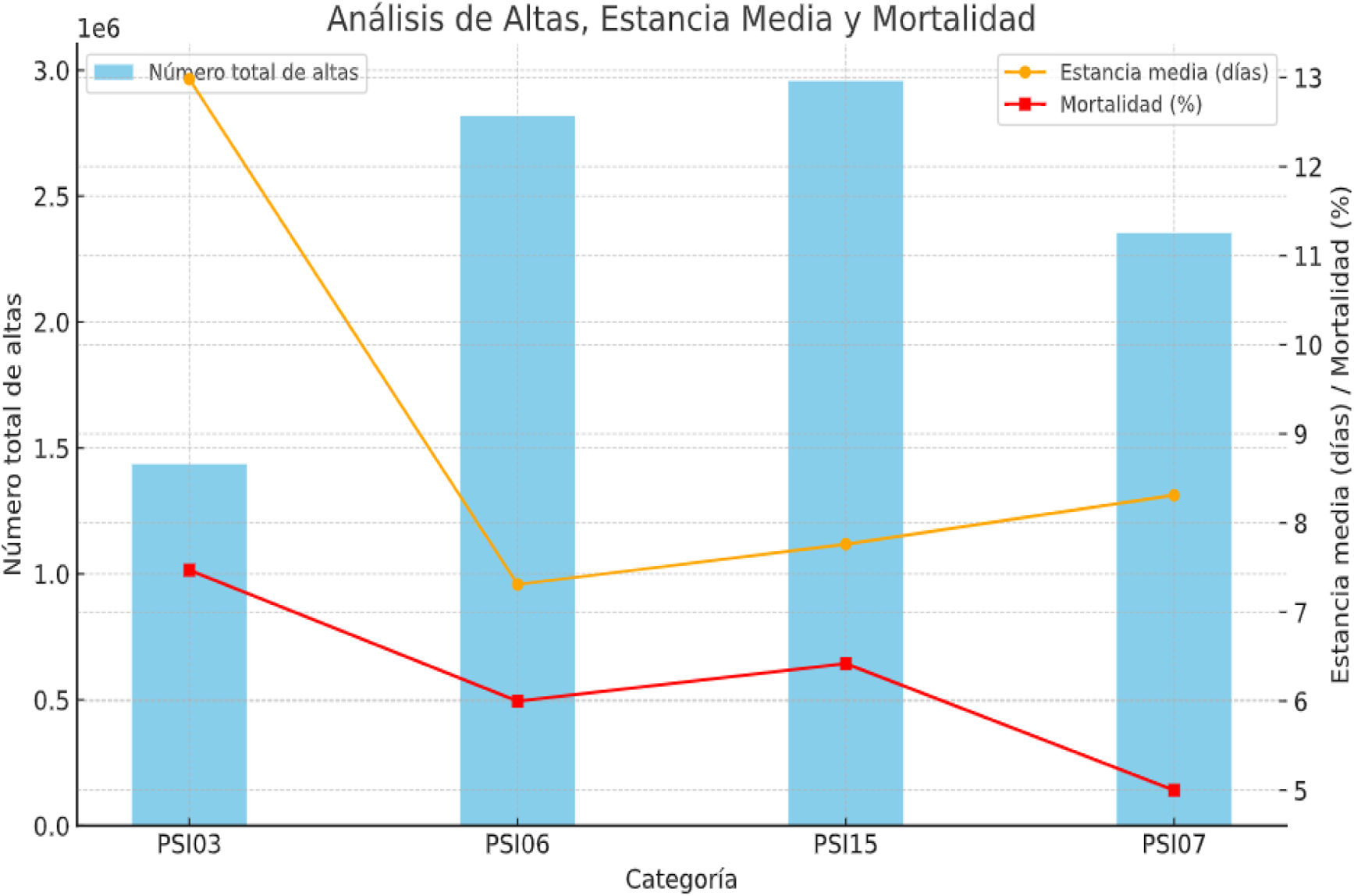
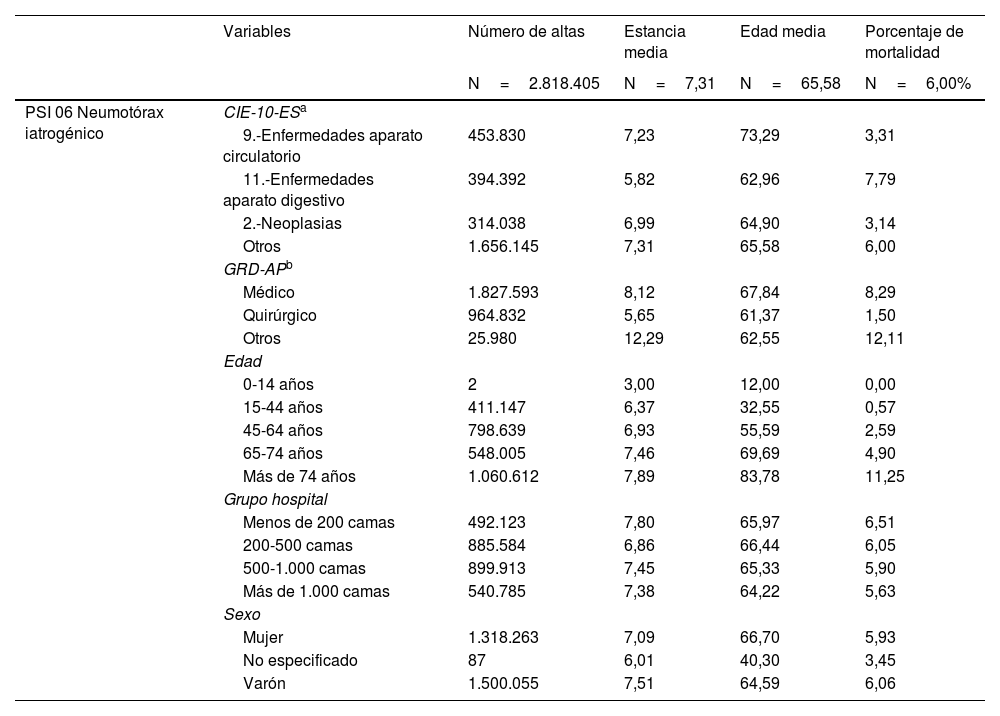
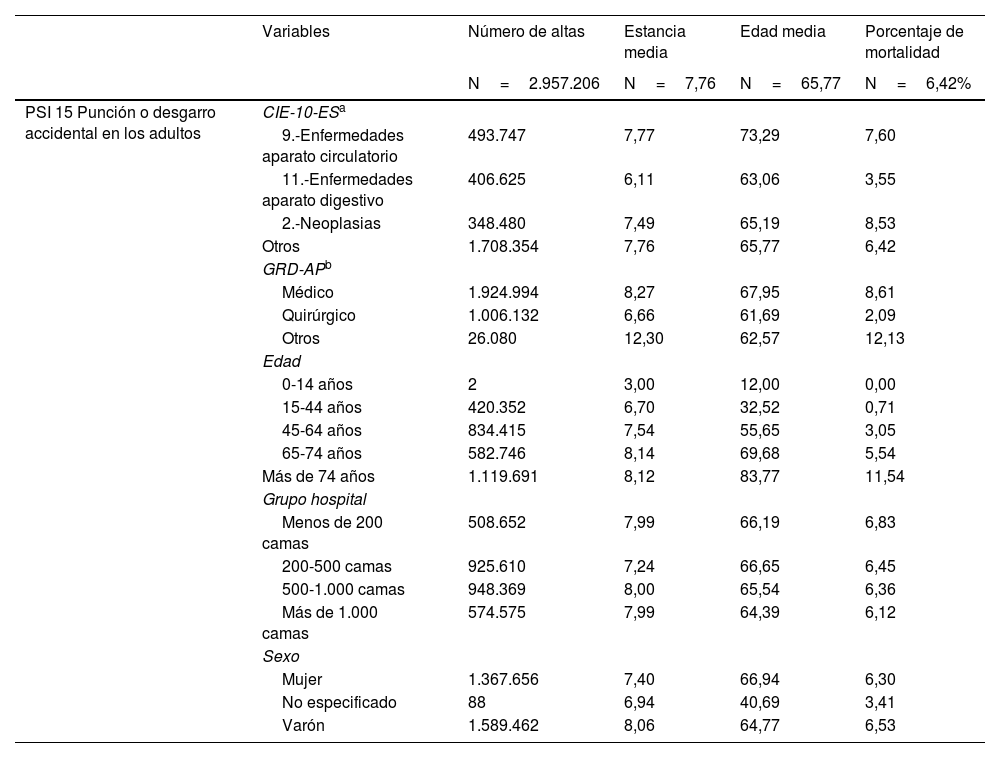
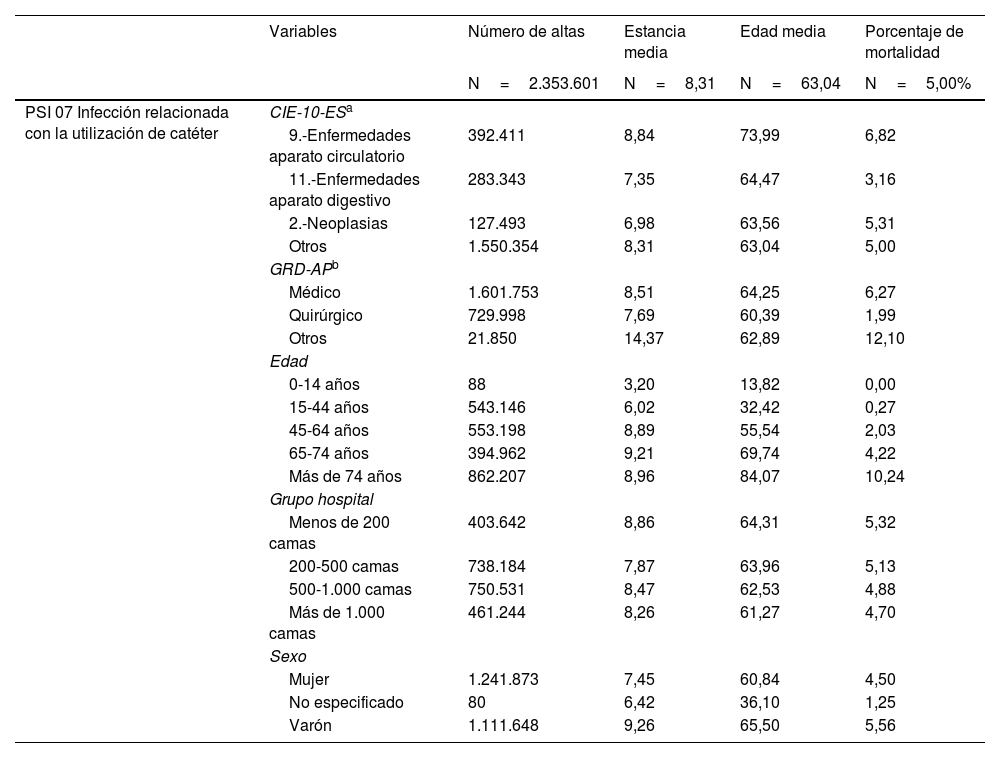
ResultadosLas categorías PSI 06 y PSI 07 no solo tienen un número más alto de altas, sino también una mayor estancia media y mortalidad. En comparación, las categorías PSI 03 y PSI 15 muestran un número mucho menor de altas, y una menor mortalidad y estancia media. Las condiciones asociadas con las categorías PSI 06 y PSI 07 podrían ser más graves o complejas, lo que lleva a una mayor estancia en el hospital y un mayor riesgo de mortalidad. Según los análisis del riesgo relativo, todos los indicadores muestran un riesgo de mortalidad ligeramente mayor en los varones que en las mujeres.
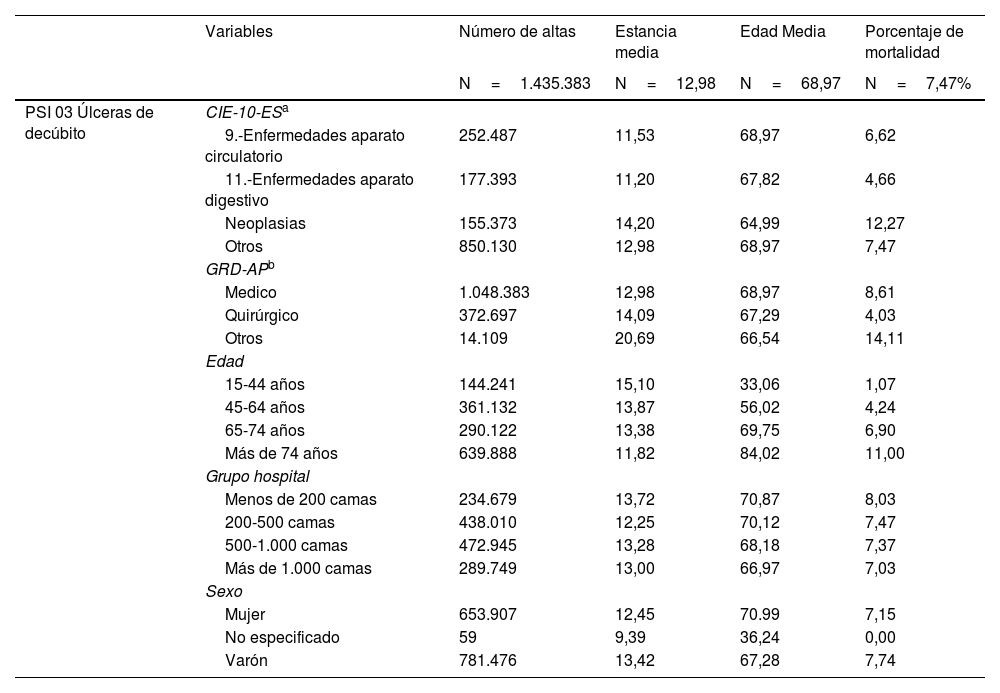
ConclusionesLa edad avanzada y los diagnósticos graves, como enfermedades circulatorias o neoplasias, están asociados con mayor mortalidad y estancia hospitalaria. En relación con el tamaño de los hospitales, los más pequeños muestran mayores riesgos y peores resultados en mortalidad. Por lo tanto, estos resultados podrían guiar estrategias para mejorar la seguridad del paciente, para optimizar recursos y para focalizar intervenciones en los grupos más vulnerables.
To Analyze AHRQ Patient Safety Indicators (PSI) obtained through the Minimum Basic Data Set (MBDS) in improving patient safety.
MethodObservational descriptive and retroprective study. The CMBD hospital discharge registry of 342 hospitals of the National Health System was included. The MBDS indicators and analysis axes were from 2021 and the hospitalization MBDS information included the following general data: total discharges, average stay, average age and % mortality. Four patient safety indicators were analyzed: Pressure ulcers (PSI 03), Iatrogenic pneumothorax (PSI 06), Accidental puncture or tear in adults (PSI 15) and CVC-related to bloodstream infection (PSI 07).
ResultsThe PSI 06 and PSI 07 categories not only have a higher number of discharges, but also a longer average stay and mortality. In comparison, PSI 03 and PSI 15 categories show a much lower number of discharges, and a lower mortality and average stay. Conditions associated with PSI 06 and PSI 07 categories could be more severe or complex, leading to a longer hospital stay and a higher risk of mortality. According to relative risk analyses, all indicators show a slightly higher mortality risk in men than in women.
ConclusionsAdvanced age and serious diagnoses, such as circulatory diseases or neoplasia, are associated with higher mortality and hospital stay. In relation to hospital size, smaller ones show higher risks and worse mortality outcomes. Therefore, these results could guide strategies to optimize resources and focus interventions on the most vulnerable groups.