



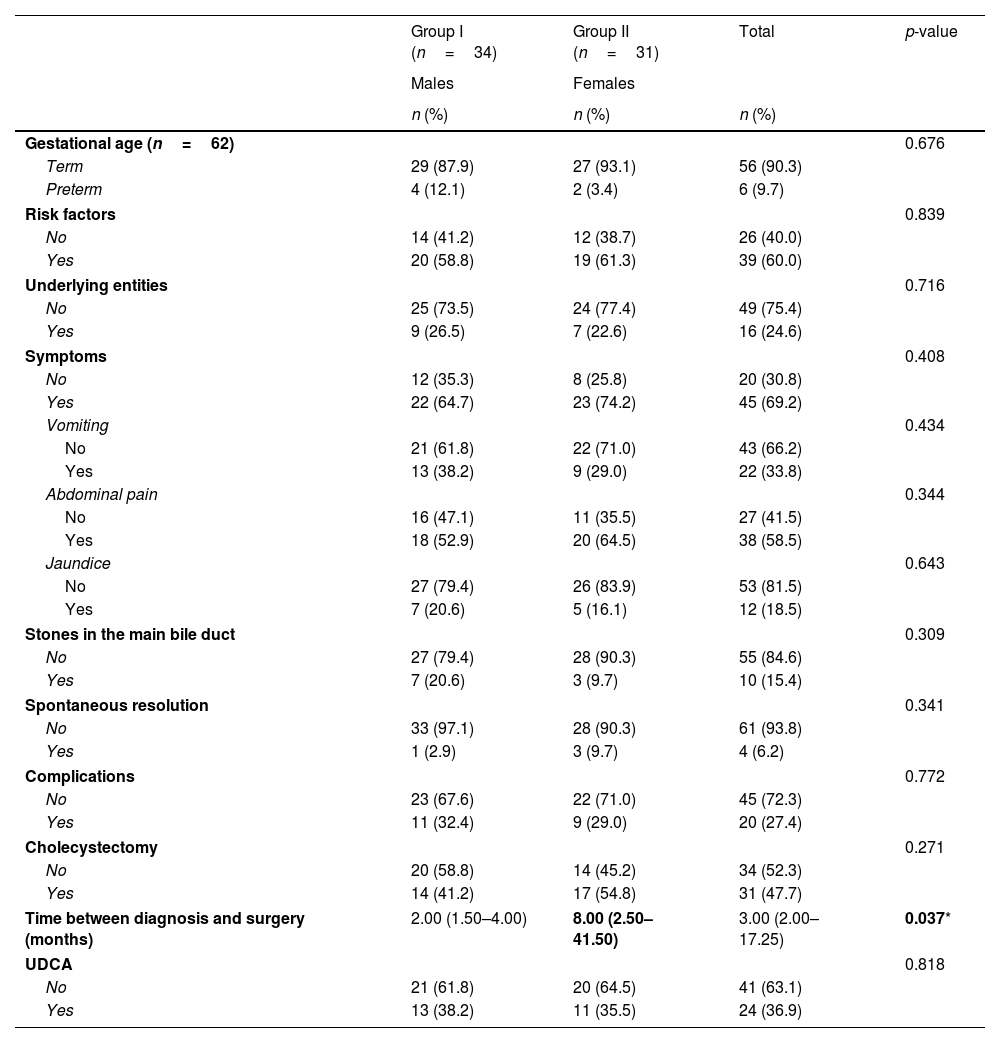

Gallstone disease (GD) is no longer an exclusive condition of adulthood, and its prevalence is increasing in pediatric age. The management and the extent of the etiological investigation of GD in children and adolescents remains controversial. This study aimed to analyze the difficulties in the work-up and management of pediatric GD patients.
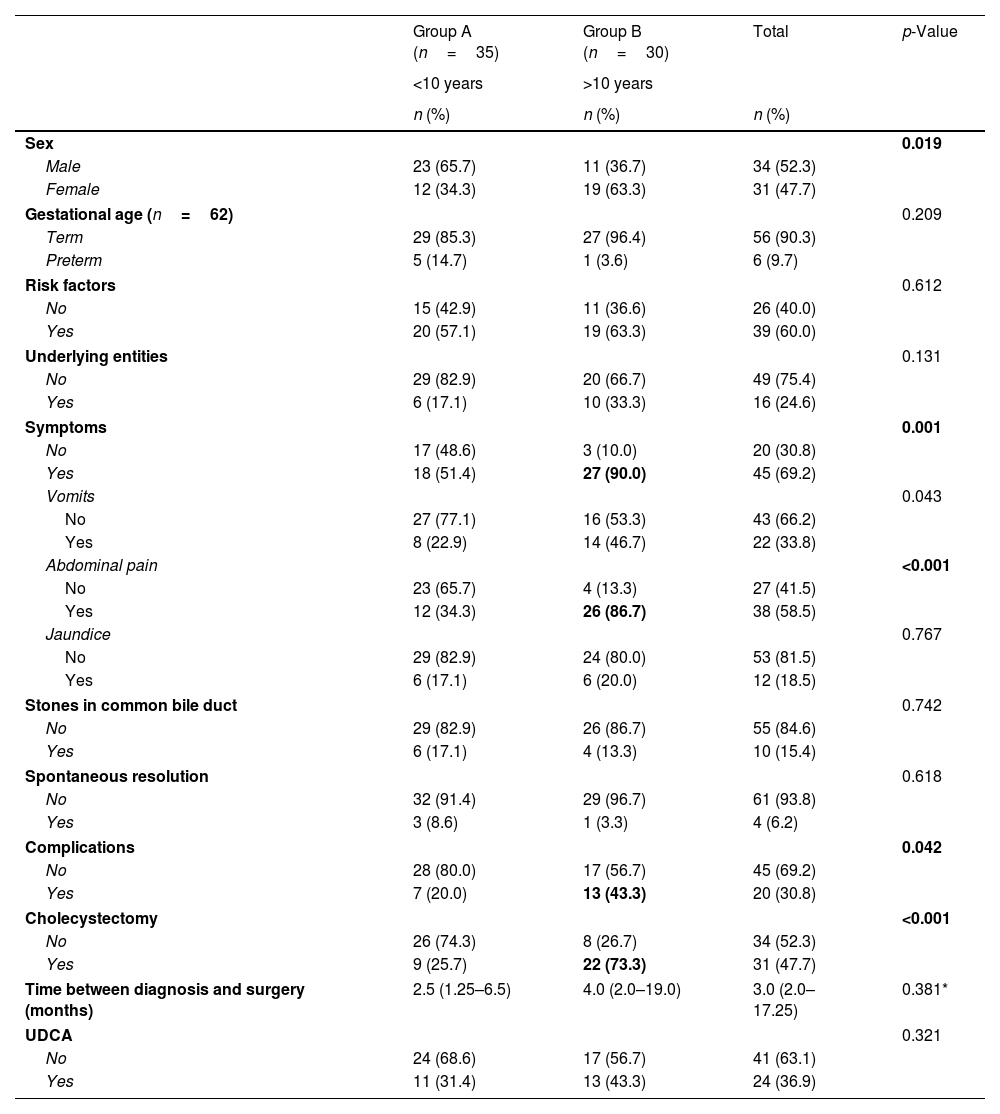
MethodsA retrospective study performed in a single tertiary center enrolled sixty-five patients with GD followed from January 2014 to June 2021. Patients were categorized conveniently according to their age at diagnosis: Group A (<10years, n=35) and Group B (≥10years, n=30). We analyzed demographic, clinical and laboratory data, ultrasonographic findings at presentation, therapeutics and complications.
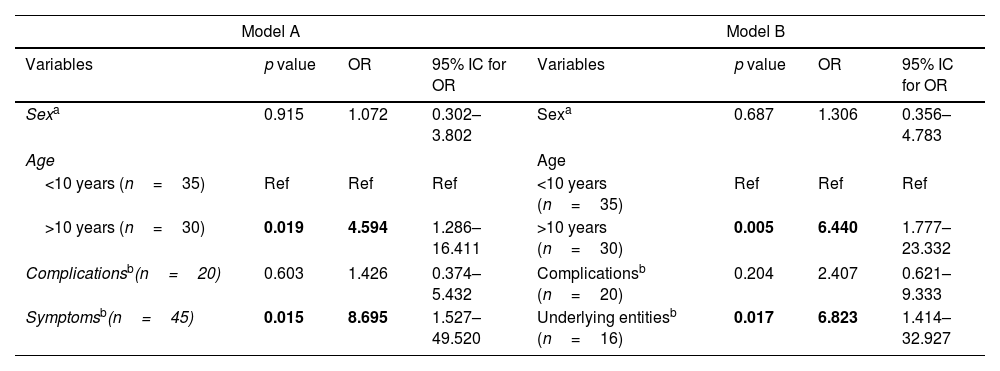
ResultsSymptoms were more frequent in patients >10years old (p=0.001). Cholecystectomy was performed in 31 patients (47.7%). A multivariate regression logistic model identified the age >10years (OR=6.440, p=0.005) and underlying entities (OR=6.823, p=0.017) as independent variables to perform surgery. Spontaneous resolution of GD was more common in children <2years old. A multivariate regression logistic model showed a trend for those >10years old to develop more complications. Two out of 18 patients were diagnosed with ABCB4 gene mutations in heterozygosity.
ConclusionsDecision-making on cholecystectomy remains challenging in asymptomatic patients. Identifying predictive factors for the development of complications has proven difficult. However, we found a trend toward the development of complications in individuals older than 10years.
La litiasis biliar (LB) ya no es una condición exclusiva de la población adulta, y su prevalencia está creciendo en la edad pediátrica. El manejo y la investigación etiológica de LB en niños y adolescentes son controvertidas. El objetivo de este estudio fue analizar las dificultades en la evaluación y en el manejo de pacientes pediátricos con LB.
MétodosEstudio retrospectivo en un único centro terciario que incluyó a 65 pacientes con LB seguidos de enero de 2014 hasta junio de 2021. Los pacientes se categorizaron por edad al diagnóstico: Grupo A (<10años, n=35) y Grupo B (≥10años, n=30). Se analizaron datos demográficos, clínicos y de laboratorio, hallazgos ultrasonográficos, tratamientos y complicaciones.
ResultadosLos síntomas fueron más frecuentes en pacientes >10años (p=0,001). Se realizó colecistectomía en 31 pacientes (47,7%). Un modelo logístico de regresión multivariante identificó la edad > 10 años (OR=6,440, p=0,005) y las entidades subyacentes (OR=6,823, p=0,017) como variables independientes para realizar cirugía. La resolución espontánea de la LB fue más común en niños < 2años. Un modelo logístico de regresión multivariante mostró un riesgo mayor de complicaciones en > 10 años. Dos de 18 pacientes tenían mutaciones del gen ABCB4 en heterocigosis.
ConclusiónLa decisión sobre la colecistectomía en pacientes asintomáticos es desafiante. No se identificaron factores predictivos para el desarrollo de complicaciones, pero se observó una mayor tendencia en individuos mayores de 10años.

