


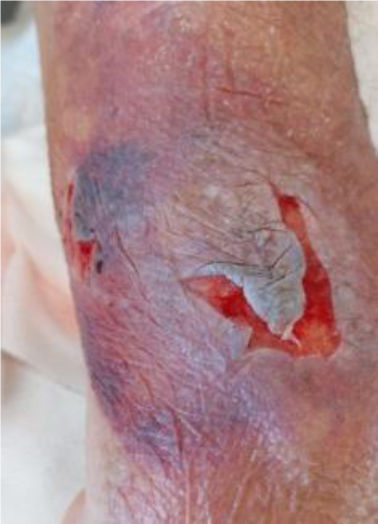
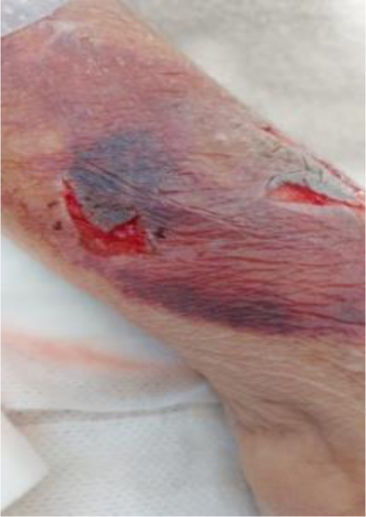
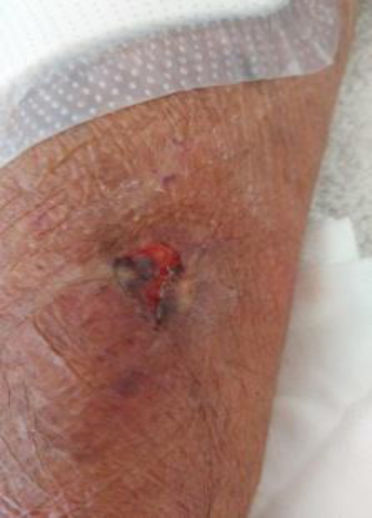
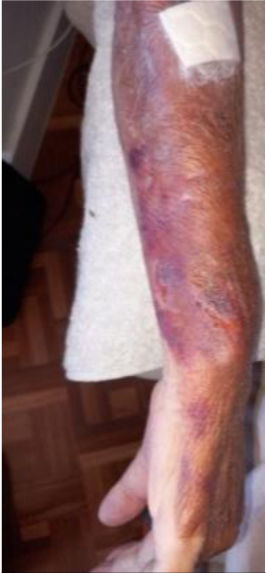
We present the clinical case of a 64-year-old multi-pathological patient who presents numerous skin tears in the upper extremities.
The aim is to restore skin integrity in a patient with numerous skin tears (ST) on both forearms using a new class I medical device composed of elastic and adjustable medical grade encapsulated gel.
Once the NANDA International diagnostic labels were identified using the NNNConsult online tool, the expected results were planned along with the nursing interventions.
The care plan and cure guidelines are detailed based on the consensus evidence of the International Skin Tear Advisory Panel, also including preventive activities in risk areas (General Health, Mobility and Skin), in addition to the implementation of a new class I medical device. Finally, skin integrity is restored.
This work shows the positive preventive and therapeutic results in fragile skin and ST when carrying out a multiple care strategy with a new medical device.
Se presenta el caso clínico de una paciente pluripatológica de 64 años con numerosos desgarros cutáneos (DC) en extremidades superiores.
El objetivo es restablecer la integridad cutánea en una paciente con numerosos desgarros cutáneos en ambos antebrazos utilizando un nuevo dispositivo médico clase I compuesto por gel encapsulado de grado médico elástico y ajustable.
Una vez identificadas las etiquetas diagnósticas NANDA Internacional utilizando la herramienta online NNNConsult, se planificaron los resultados esperados junto con las intervenciones enfermeras.
Se detalla el plan de cuidados y pauta de curas basadas en las evidencias de consenso del Internacional Skin Tear Advisory Panel, recogiendo también las actividades preventivas en las áreas de riesgo (Salud general, Movilidad y Piel), además de la implementación de un nuevo dispositivo médico clase I. Finalmente, se consigue restablecer la integridad cutánea.
Este trabajo muestra los resultados positivos preventivos y terapéuticos en piel frágil y DC al llevar a cabo una estrategia de cuidados múltiple con un nuevo dispositivo médico.

Skin tears (STs) constitute an acute condition that has been included in the conceptual framework of dependence-related skin lesions (DRSL) since 2021. STs are becoming increasingly common due to population aging and the substantial changes that occur in the skin over time.1
The literature records highly variable prevalence rates, depending on the care environment, with higher rates observed at long-term care centres.2 In Spain, the recent Sixth National Prevalence Study of DRSLs established a prevalence of 0.8% for the adult population in hospitals, 2.38% in care homes and social healthcare centres, and 0.0.8% for primary care in adults aged over 65 years.3,4 Among the latter, 92.6% of cases took place at home, compared with 7.4% in hospital or care home settings.
There are multiple factors that may contribute to a skin lesion, ranging from factors related to the patient, to exogenous stressors and structural elements of the system, and all of these must be taken into consideration.5 For this reason, holistic strategies aimed at promoting and maintaining skin integrity should be implemented.6 Specifically, in the case of STs, the International Skin Tear Advisory Panel (ISTAP) identifies 3 main target areas to prevent the occurrence of these lesions: General Health, Mobility and Skin.2
In terms of manifestations and characteristics, the most frequent locations are the upper limbs, with 70–80% of cases appearing in the hands and arms, followed by the lower limbs.2
This work presents the clinical case of a 64-year-old woman with multiple comorbidities (multi-pathological), who suffered multiple STs on both upper limbs. These were treated following the principles of moist wound healing, using a new, Class I medical device7 which acted both preventively, to avoid new STs, and therapeutically, contributing to the resolution of existing lesions.
STs can be stressful and painful for patients and their family. Considering that these are preventable lesions that generate avoidable costs, particularly in complex cases or in patients with multiple comorbidities, this device could be very useful for this patient profile, as well as to maximise safety and protection of high-risk areas. This preventive garment is comprised by 3 layers, one of which contains encapsulated gel that redistributes pressure, absorbs impacts, and is breathable and elastic.7 The patient occasionally presented STs on the upper limbs, but there was a moment in time when multiple STs coexisted simultaneously, which significantly complicated the approach.
ObjectiveTo restore skin integrity in a patient with numerous STs on both forearms using a new Class I medical device composed of elastic and adjustable, medical-grade encapsulated gel.7
Presentation of the caseThe patient was a 64-year-old female with no known drug allergies, with multiple comorbidities, who presented with multiple recurrent STs on the forearms, with difficult resolution.
Medical history: arterial hypertension, acute myeloblastic leukaemia, bone marrow transplant, bithalamic infarction, functional urinary incontinence, grade IIa-b acute arterial ischemia of the lower limbs, seronegative polyarthritis, pulmonary thromboembolism, deep vein thrombosis, humeral chondrosarcoma, acute pericarditis, cataracts, and acute arterial embolectomy of the lower limbs. No toxic habits.
Current medication: apixaban 5 mg 1 tablet/12 h, sulfamethoxazole 800 mg/trimethoprim 160 mg 1 tablet/24 h, simvastatin 20 mg 1 tablet/24 h, mianserin 10 mg 1 tablet/12 h, folic acid 5 mg 1 tablet/24 h, citalopram 20 mg 1.5 tablets/24 h, and omeprazole 40 mg 1 tablet/24 h.
General assessmentDuring a home visit following notification of multiple lesions, a nursing assessment was conducted using the Virginia Henderson 14 needs model.
Baseline condition: the patient was conscious and oriented in all directions (Glasgow Coma Scale: 15 points). The patient used a wheelchair when outdoors and a walking frame at home. She lived with her husband, who was self-employed and conducted his activities at home. She also had an informal caregiver during the daytime. No cognitive impairment (Pfeiffer test: 0). Home oxygen therapy via nasal cannula at 2 L/min.
Although all altered needs were addressed, this work focused on prevention of hazards, as well as skin and mucous membrane integrity and hygiene, given the skin fragility observed and the presence of multiple STs on both arms. The following measures were used to complement this assessment:
- –
Barthel index – level of dependence: 55 (moderate dependence).
- –
EMINA pressure injury risk scale for adults: 3 (low risk).
- –
Wound-QoL scale: 3.23 (“Body” subscale: 2.6; “Psyche” subscale: 4, and “Daily life” subscale: 3.6) (a higher score indicates a worse quality of life).8–10
- –
Numerical verbal scale (NVS) – numerical assessment of pain: 5.
- –
Downton fall risk scale: 7 (high risk of falls).
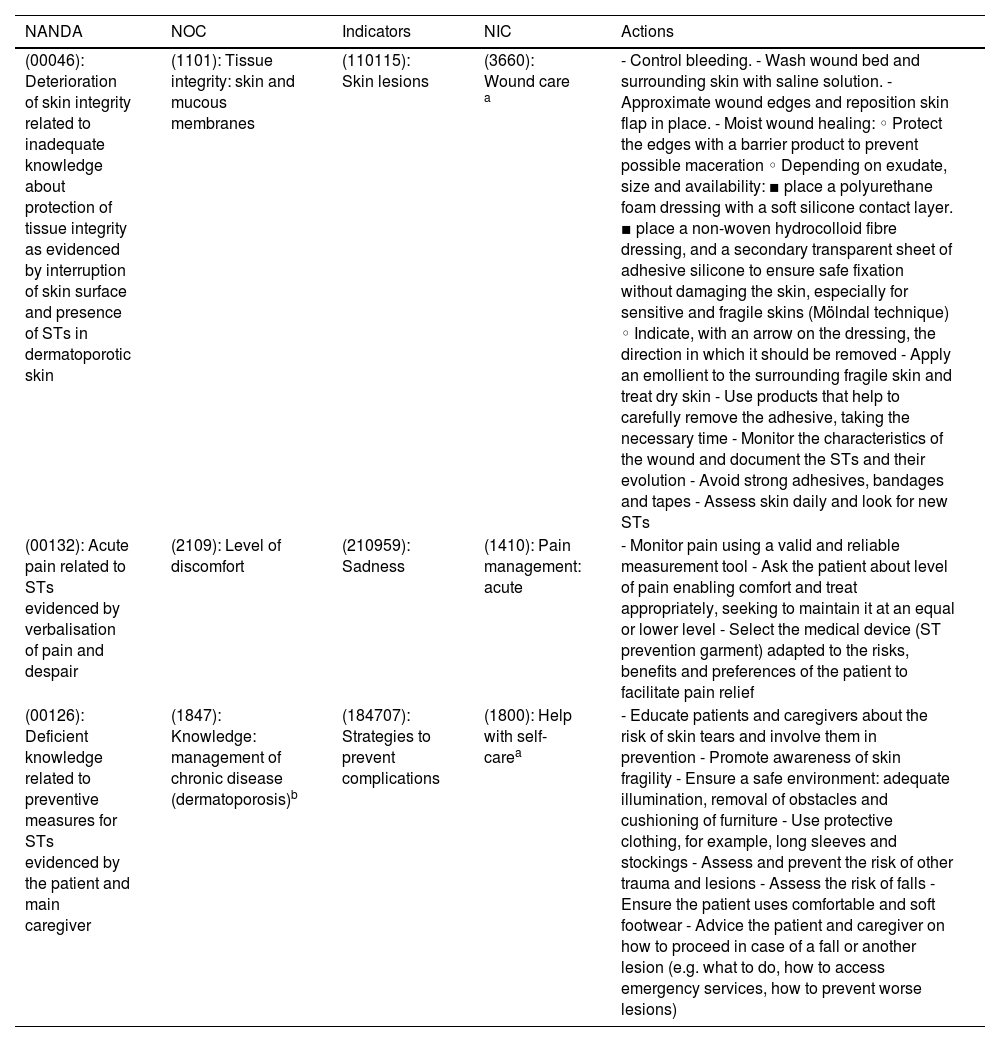
Following the nursing assessment, NANDA diagnostic labels were identified, using the online platform NNNConsult (see Table 1). The following diagnoses were identified11:
- –
Impaired skin integrity related to inadequate knowledge about tissue integrity protection, manifested by disruption of skin surface and presence of STs on dermatoporotic skin.
- –
Acute pain related to STs, manifested by verbalisation of pain and despair.
- –
Deficient knowledge related to preventive measures for STs, manifested by the patient and primary caregiver.
Action plan.
| NANDA | NOC | Indicators | NIC | Actions |
|---|---|---|---|---|
| (00046): Deterioration of skin integrity related to inadequate knowledge about protection of tissue integrity as evidenced by interruption of skin surface and presence of STs in dermatoporotic skin | (1101): Tissue integrity: skin and mucous membranes | (110115): Skin lesions | (3660): Wound care a | - Control bleeding. - Wash wound bed and surrounding skin with saline solution. - Approximate wound edges and reposition skin flap in place. - Moist wound healing: ◦ Protect the edges with a barrier product to prevent possible maceration ◦ Depending on exudate, size and availability: ▪ place a polyurethane foam dressing with a soft silicone contact layer. ▪ place a non-woven hydrocolloid fibre dressing, and a secondary transparent sheet of adhesive silicone to ensure safe fixation without damaging the skin, especially for sensitive and fragile skins (Mölndal technique) ◦ Indicate, with an arrow on the dressing, the direction in which it should be removed - Apply an emollient to the surrounding fragile skin and treat dry skin - Use products that help to carefully remove the adhesive, taking the necessary time - Monitor the characteristics of the wound and document the STs and their evolution - Avoid strong adhesives, bandages and tapes - Assess skin daily and look for new STs |
| (00132): Acute pain related to STs evidenced by verbalisation of pain and despair | (2109): Level of discomfort | (210959): Sadness | (1410): Pain management: acute | - Monitor pain using a valid and reliable measurement tool - Ask the patient about level of pain enabling comfort and treat appropriately, seeking to maintain it at an equal or lower level - Select the medical device (ST prevention garment) adapted to the risks, benefits and preferences of the patient to facilitate pain relief |
| (00126): Deficient knowledge related to preventive measures for STs evidenced by the patient and main caregiver | (1847): Knowledge: management of chronic disease (dermatoporosis)b | (184707): Strategies to prevent complications | (1800): Help with self-carea | - Educate patients and caregivers about the risk of skin tears and involve them in prevention - Promote awareness of skin fragility - Ensure a safe environment: adequate illumination, removal of obstacles and cushioning of furniture - Use protective clothing, for example, long sleeves and stockings - Assess and prevent the risk of other trauma and lesions - Assess the risk of falls - Ensure the patient uses comfortable and soft footwear - Advice the patient and caregiver on how to proceed in case of a fall or another lesion (e.g. what to do, how to access emergency services, how to prevent worse lesions) |
ST: Skin tear.
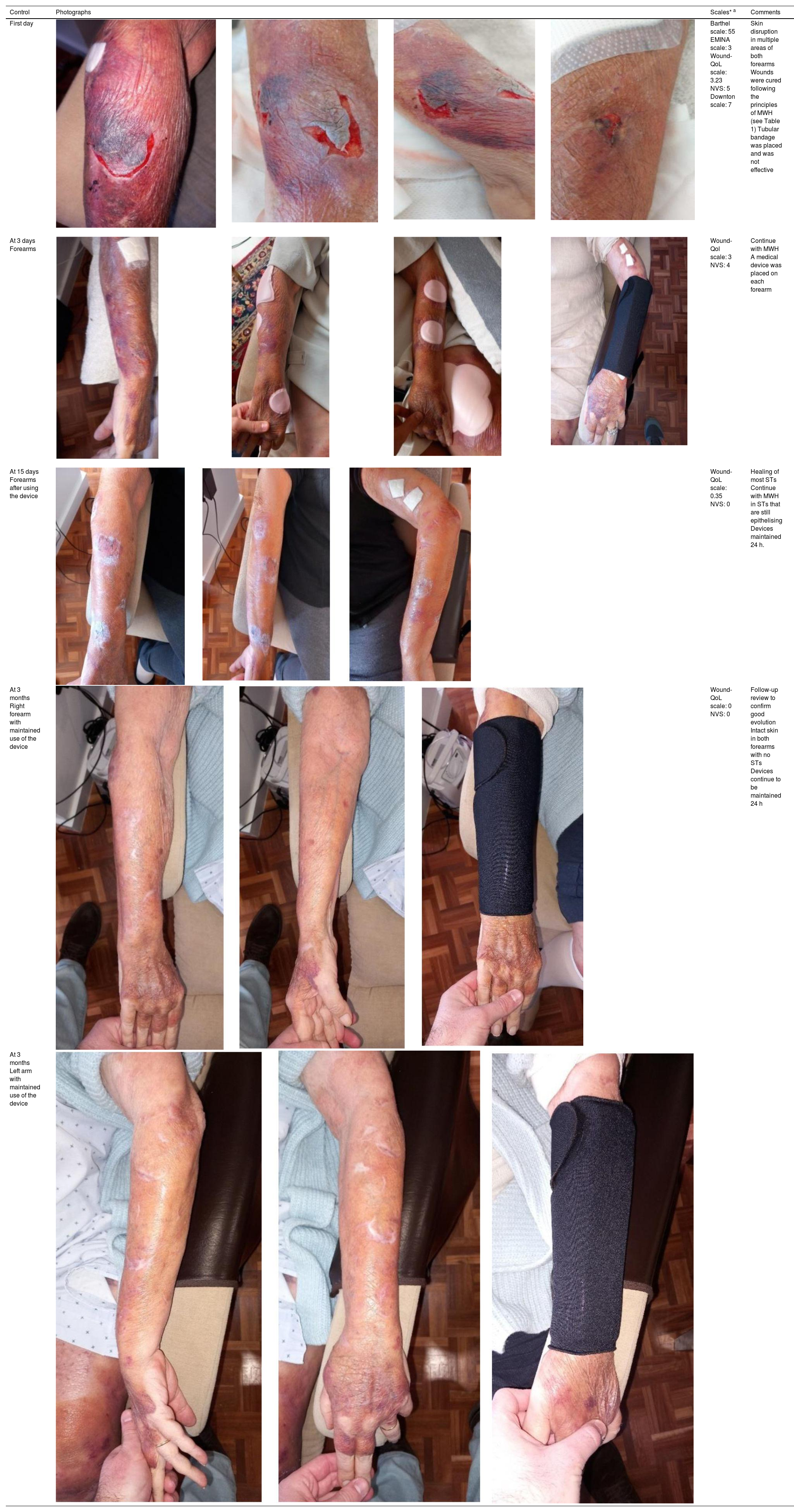
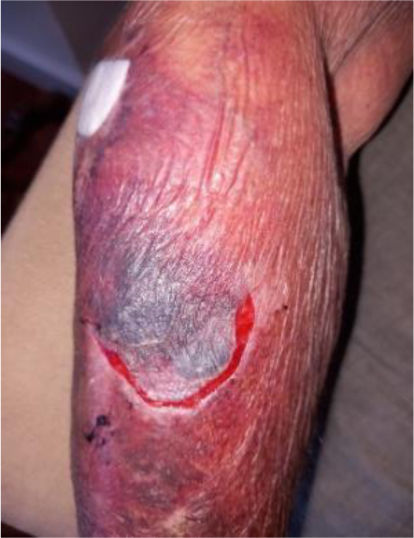
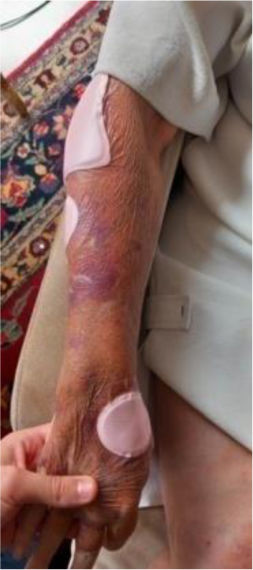
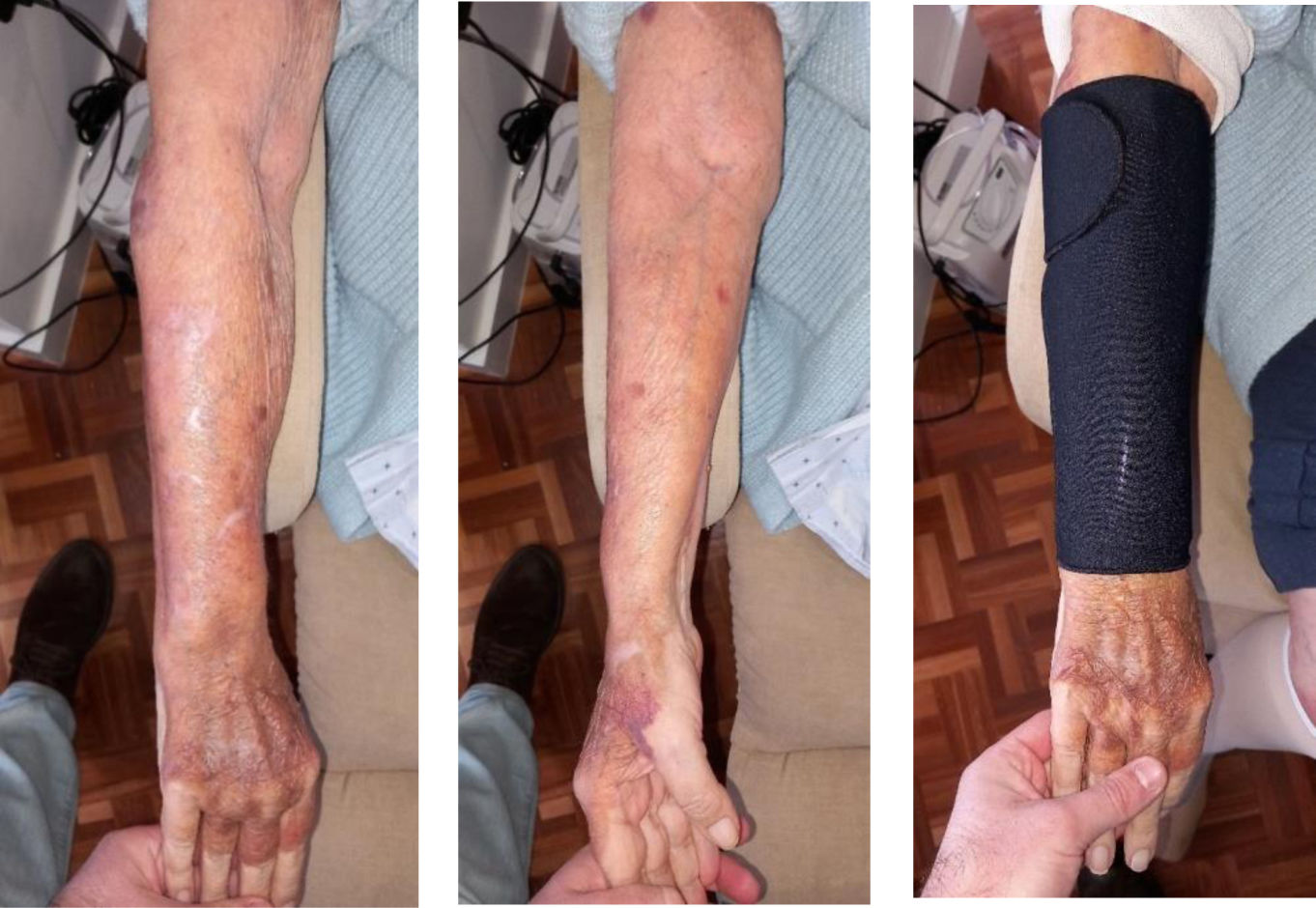
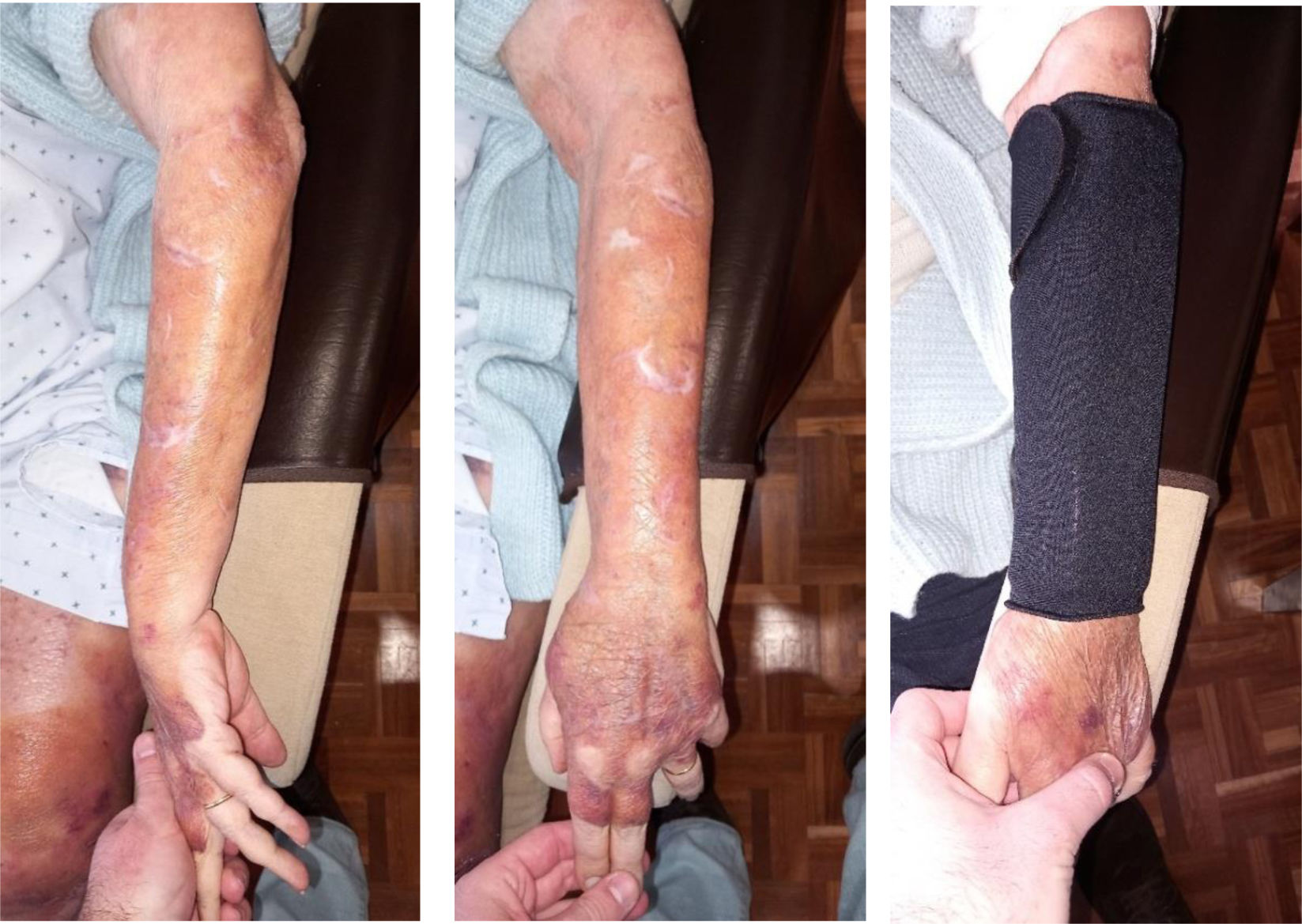
On the first day, all existing STs were assessed, local wound cures were performed and tubular bandages were placed on both forearms.
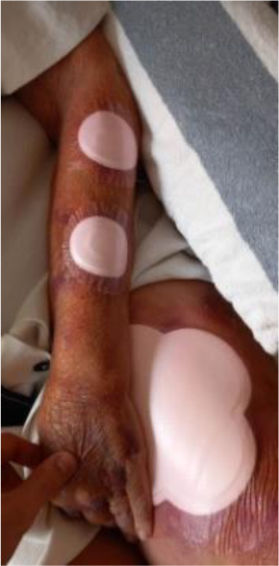
A second control visit took place after 2 days, confirming that the tubular bandage was not effective; in addition, a new ST appeared. At that moment, a new medical device comprised of encapsulated gel in sleeve format was placed on each forearm, leaving them in place all day, and the same wound cures were maintained. Another visit took place after one week to assess the condition of the skin and need for local cures.
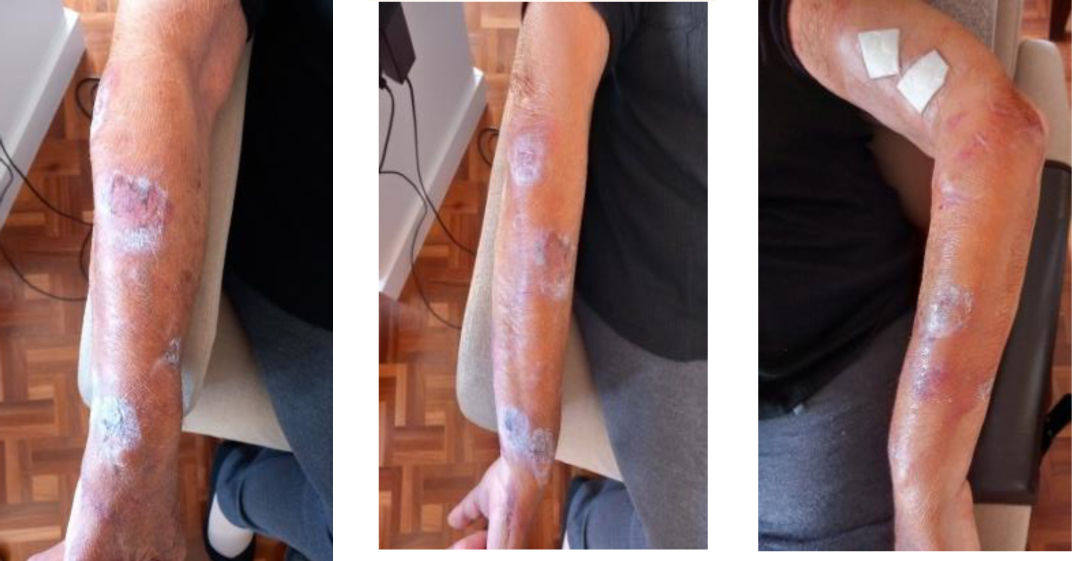
After 15 days, practically all STs except for one had epithelised, and no new STs had appeared. After 3 weeks, all the STs were healed, and the sleeves were maintained.
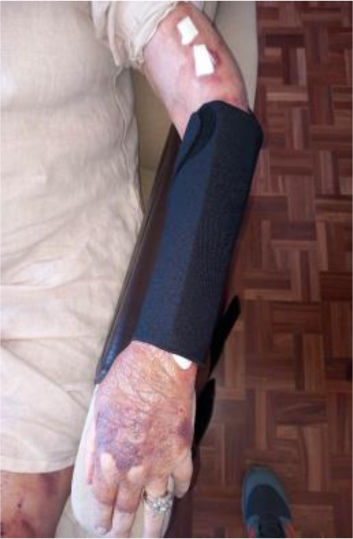
Lastly, a new control and follow-up visit took place after 3 months, confirming good skin integrity on both forearms, without appearance of new STs. The sleeves were used daily.
Moreover, pain and quality of life related to wounds were monitored at each visit, with both improving considerably.
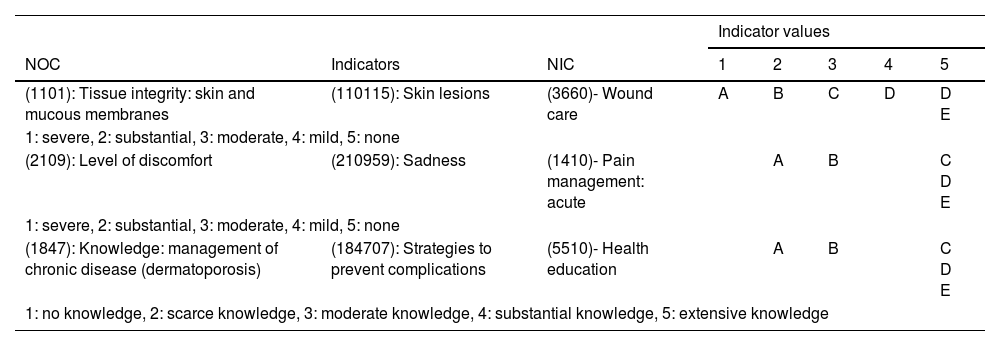
The evolution of the lesions can be followed in Table 2, and the evaluation of the care plan in Table 3.
Evolution of skin tears.
| Control | Photographs | Scales* a | Comments | |||
|---|---|---|---|---|---|---|
| First day | Barthel scale: 55 EMINA scale: 3 Wound-QoL scale: 3.23 NVS: 5 Downton scale: 7 | Skin disruption in multiple areas of both forearms Wounds were cured following the principles of MWH (see Table 1) Tubular bandage was placed and was not effective | ||||
| At 3 days Forearms | Wound-Qol scale: 3 NVS: 4 | Continue with MWH A medical device was placed on each forearm | ||||
| At 15 days Forearms after using the device | Wound-QoL scale: 0.35 NVS: 0 | Healing of most STs Continue with MWH in STs that are still epithelising Devices maintained 24 h. | ||||
| At 3 months Right forearm with maintained use of the device | Wound-QoL scale: 0 NVS: 0 | Follow-up review to confirm good evolution Intact skin in both forearms with no STs Devices continue to be maintained 24 h | ||||
| At 3 months Left arm with maintained use of the device | ||||||
MWH: moist wound healing; NVS: numerical verbal scale; ST: skin tear.
Evaluation of the care plan for skin tears.
| Indicator values | |||||||
|---|---|---|---|---|---|---|---|
| NOC | Indicators | NIC | 1 | 2 | 3 | 4 | 5 |
| (1101): Tissue integrity: skin and mucous membranes | (110115): Skin lesions | (3660)- Wound care | A | B | C | D | D E |
| 1: severe, 2: substantial, 3: moderate, 4: mild, 5: none | |||||||
| (2109): Level of discomfort | (210959): Sadness | (1410)- Pain management: acute | A | B | C D E | ||
| 1: severe, 2: substantial, 3: moderate, 4: mild, 5: none | |||||||
| (1847): Knowledge: management of chronic disease (dermatoporosis) | (184707): Strategies to prevent complications | (5510)- Health education | A | B | C D E | ||
| 1: no knowledge, 2: scarce knowledge, 3: moderate knowledge, 4: substantial knowledge, 5: extensive knowledge | |||||||
NIC: Nursing Interventions Classification; NOC: Nursing Outcomes Classification.
A: assessment at the time of the episode day 1; B: assessment on day 3; device placed and maintained indefinitely; C: assessment on day 10; D: assessment on days 17 and 24; E: assessment after 90 days.
This clinical case illustrated an increasingly common population profile (older adults with multiple comorbidities). Such patients present with extreme skin fragility, increased risk of skin tears and appearance of lesions. For this reason, it is necessary to employ all possible preventive strategies that are known and feasible for both the healthcare system and the individuals suffering STs.1,2
Prevention is widely recognised as the best approach to treat lesions, and since STs are considered as a highly preventable adverse event, it is important to adopt measures to prevent an increase in their incidence. To this end, it is necessary not only to understand the risk factors with a reversible or modifiable component —so as to act upon them—, but also to conduct a general assessment in order to individualise and adapt interventions, as far as possible, to the health condition, environment, circumstances and comorbidities of each patient.2,5
Despite emphasising the preventive areas identified by ISTAP (General Health, Mobility and Skin) prior to the appearance of numerous STs, to the patient, caregiver and main caregivers, STs continued to appear and be resolved. However, there came a point when the situation worsened, with multiple active STs in the upper limbs.2 STs generally appear in the hands and arms, as was the case in this patient. Vulnerability to damage caused by any microtrauma caused new STs, with and without flap loss, affecting various sites on the same limb, and adding difficulty to wound cures, despite the emphasis on preventive measures. At a local level, wound cures were carried out following the principles of moist wound healing and, initially, a tubular bandage was placed, but this was ineffective, caused discomfort and friction, became displaced and did not prevent the appearance of a new ST. At this stage, the possibility of implementing a new preventive strategy arose, based on the use of a sleeve with Class I medical grade encapsulated gel.7 Thanks to its configuration and composition, no bruising or new STs appeared (see Table 2), and a complete epithelisation of all the existing STs was achieved. Above all, the use of the device allowed skin integrity to be re-established in spite of the extreme fragility of the patient.
Lastly, we wish to highlight how the life of the patient gradually changed in its emotional and physical aspects by using this device. A reduction of localised pain (NVS) due to ST was observed as they healed, in parallel to an increase in quality of life (measured using the Wound-QoL scale). Her mood, confidence and autonomy for basic activities of daily life (ADL) improved, and she lost her fear to carry out everyday activities which she had been forced to abandon and was saddened by, like playing with her grandchildren.
ConclusionsThis work aims to demonstrate the challenge of treating numerous STs in both upper limbs in a highly vulnerable skin conditioned by the medical history of the patient, highlighting the importance of adopting an approach based on a continuous preventive perspective and, lastly, to introduce the medical device and the advantages that it may provide, as an effective solution for patients with similar characteristics. In addition, we highlight its safety and comfort in use, as expressed by the patient.
Moreover, we are aware that the model has undergone modifications in composition and structure in order to improve the final result of the product, based on the feedback provided by patients such as the present clinical case.
Ethical considerationsImages were taken with the consent of the patient, and authorisation in writing was obtained for their use in teaching and research.
FinancingThe present study did not receive any specific financing from public, private or non-profit entities.
The authors have no conflict of interests to declare.
The authors wish to thank the patient for sharing her experience, and the industry for creating this new device.


