


metricas
Cirugía Española (English Edition) Transient intraoperative Ileo-Caval shunt in the resection of locally advanced p...
Journal Information
Visits
207
Innovation in surgical technique
Full text access
Available online 28 November 2025

Transient intraoperative Ileo-Caval shunt in the resection of locally advanced pancreatic head adenocarcinoma: breaking through a glass ceiling?

Shunt Ileo-Cava intraoperatorio transitorio en la resección de adenocarcinoma de cabeza de páncreas localmente avanzado: ¿rompiendo un techo?
Visits
207
Juli Busquetsa,b,
Corresponding author
jbusquets@bellvitgehospital.cat

Corresponding author.
, Núria Peláeza, Luis Secanellaa,c, Maria Sorribasa, Elena Iborrad
a Unidad de Cirugía Pancreática y Sarcomas Retroperitoneales, Hospital Universitari de Bellvitge, Research Group of Hepato-biliary and Pancreatic Diseases, Institut d’Investigació Biomèdica de Bellvitge - IDIBELL, L’Hospitalet de Llobregat, Barcelona, Spain
b Departament de Ciències Clíniques, Facultat de Medicina i Ciències de la Salut, Universitat de Barcelona (UB), Barcelona, Spain
c Departament d´Infermeria Fonamental i Medicoquirúrgica, Facultat de Medicina i Ciències de la Salut, Universitat de Barcelona (UB), Barcelona, Spain
d Servicio de Angiología y Cirugía Vascular, Hospital Universitari de Bellvitge, Institut d’Investigació Biomèdica de Bellvitge - IDIBELL, L’Hospitalet de Llobregat, Barcelona, Spain
This item has received
Article information
Abstract
Full Text
Bibliography
Download PDF
Statistics
Figures (8)
fig0005
fig0010
fig0015
fig0020
fig0025
fig0030
fig0035
fig0040
Show moreShow less
Additional material (1)
Abstract

The resection of locally advanced adenocarcinoma of the pancreatic head with occlusion of the superior mesenteric vein and involvement of the splenomesenteric portal confluence (EMP) sometimes requires prolonged venous clamping with risk of intestinal ischemia. The use of intraoperative venous shunts has been published by reference groups to allow successful resection. In our centre we performed a total pancreatoduodenectomy for locally advanced pancreatic head adenocarcinoma with superior mesenteric vein occlusion (SMV) and splenomesenteric portal confluence. The use of a temporary ileo-caval shunt via a venous graft allowed resection of the tumour without repercussion on the bowel. The surgery ended with closure of the shunt, anastomosis of the graft to the portal vein and digestive reconstruction. The patient presented good tolerance to surgery and was discharged on the 7th postoperative day. The pathology report described pancreatic adenocarcinoma ypT1N0(R0) regression grade GRT2/IIa, with 0/30 affected adenopathies.

Keywords:
Locally advanced pancreatic cancer
Venous resection
Ileo-Caval shunt
Conversion surgery
Resúmen

La resección de adenocarcinoma de cabeza de páncreas localmente avanzado con oclusión de la vena mesentérica superior y afectación del confluente esplenomesentéricoportal (EMP) obliga en ocasiones a un clampaje venoso prolongado con riesgo de isquemia intestinal. La utilización de shunts venosos intraoperatorios ha sido publicado por grupos de referencia para permitir la resección con éxito. En nuestro centro realizamos una duodenopancreatectomía total por adenocarcinoma de cabeza de páncreas localmente avanzado con oclusión de vena mesentérica superior (VMS) y confluente esplenomesentéricoportal. El uso de un shunt ileo-caval transitorio mediante un injerto venoso permitió la resección del tumor sin repercusión en el intestino. La cirugía finalizó con el cierre del shunt, anastomosis del injerto a la vena porta y reconstrucción digestiva. El paciente presentó buena tolerancia a la cirugía, siendo dado de alta el 7 ° día postoperatorio. El estudio anatomopatológico describió adenocarcinoma pancreático ypT1N0(R0) grado regresión GRT2/IIa, con 0/30 adenopatías afectas.


Palabras clave:
Cáncer de páncreas localmente avanzado
Resección venosa
Shunt Ileo-Cava
Cirugia de conversion
Full Text
Introduction

The treatment of locally advanced pancreatic adenocarcinoma is based on neoadjuvant chemotherapy and subsequent resection.1–3 Prehepatic portal hypertension due to tumour obstruction of the EMP axis usually involves the appearance of venous collaterals that make it difficult to dissect the pancreas and its surrounding tissues. The use of intraoperative venous shunts has been a technical resource used by reference groups for years, to perform exeretic surgery.4–12

We present a clinical case with the use of temporary ileo-caval shunt performed by cadaver venous graft in the course of a total duodenopancreatectomy with splenectomy for pancreatic adenocarcinoma.

Surgical technique (video surgery)

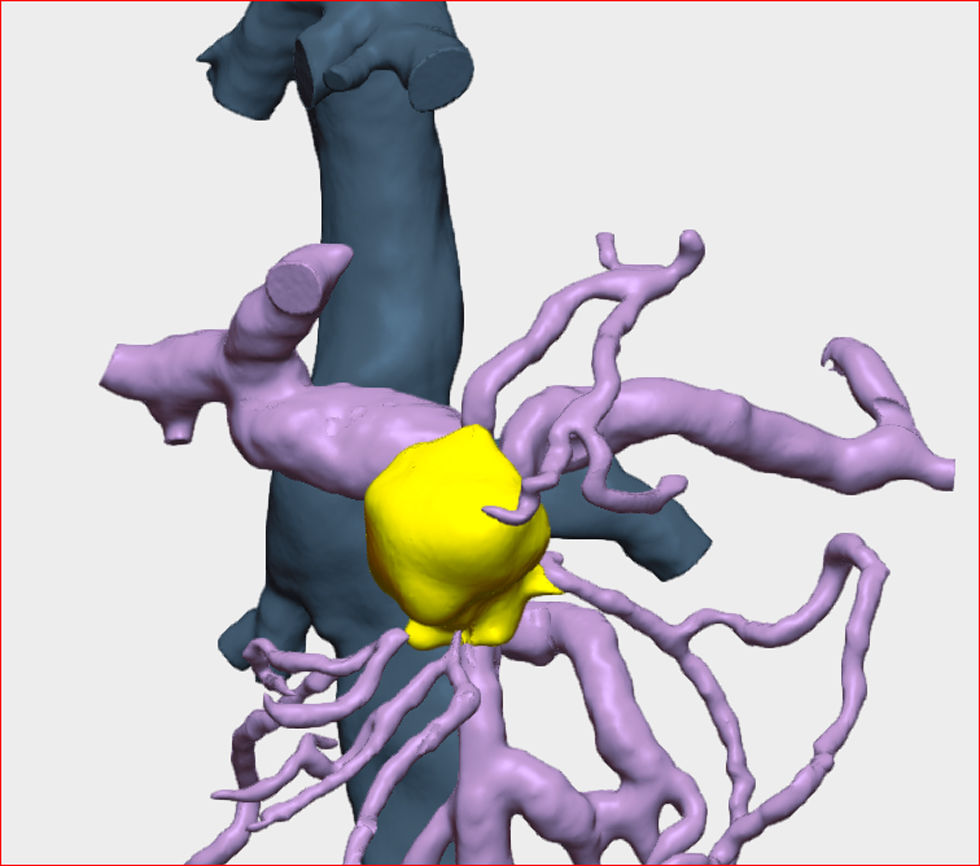
The use of temporary ileo-caval shunt was indicated in a 45-year-old patient with locally advanced pancreatic adenocarcinoma and severe venous collaterality with BRCA2 mutation, after receiving 11 cycles of neoadjuvant therapy, with good tolerance, following the FOLFIRINOX scheme. At the end of this treatment, a thoraco-abdominal CT study, PETCT, and MRI were performed, ruling out distant involvement. After presenting the case to a multidisciplinary committee, the intervention was planned with the aid of a 3D study (Figs. 1–4) (https://www.cellams.com). The preoperative study showed a pancreatic lesion with involvement of the EMP venous confluence with extension to the confluence of two ileal veins (ILV1 and ILV2) and jejunal vein (JJV), and contact with the superior mesenteric artery (SMA) The involvement of the entire extension of the superior mesenteric vein (SMV) meant that safe anastomosis was not an option.

  • A

    Initial and dissection phase

  • B

    Start. The surgery began with exploratory laparoscopy that ruled out distant disease. A midline supra-infraumbilical laparotomy was then performed.

  • C

    Transmesenteric approach. A horizontal incision was made in the mesentery.13,14 Given the caudal extension of the tumour towards the mesentery, the JJV, ILV1 and ILV2 veins, as well as the SMA, were exposed and surrounded.

  • D

    Kocher's manoeuvre and interaortocaval lymphadenectomy. A wide Kocher manoeuvre was performed up to the left margin of the aorta, spanning from the root of the inferior mesenteric artery to the celiac trunk. The insertion of the superior mesenteric artery was dissected and surrounded, and an interaortocaval and periarterial lymphadenectomy was performed in triangle.15 At this point in the dissection, the beginning of the "artery first approach"16,17 was suggested, in the craniocaudal direction.

  • E

    Hepatic hilum dissection. The hepatic hilum was dissected, with cholecystectomy, bile duct section, and identification and section of the gastroduodenal artery. The portal vein was dissected in the cranial portion of the pancreatic head.

  • F

    Caudocranial dissection of the pancreatic head. The pancreatic head was dissected by visualising the ileal vein and superior mesenteric artery until the density of the pancreatic tumour was palpated.

  • G

    Planning phase and venous bypass

  • H

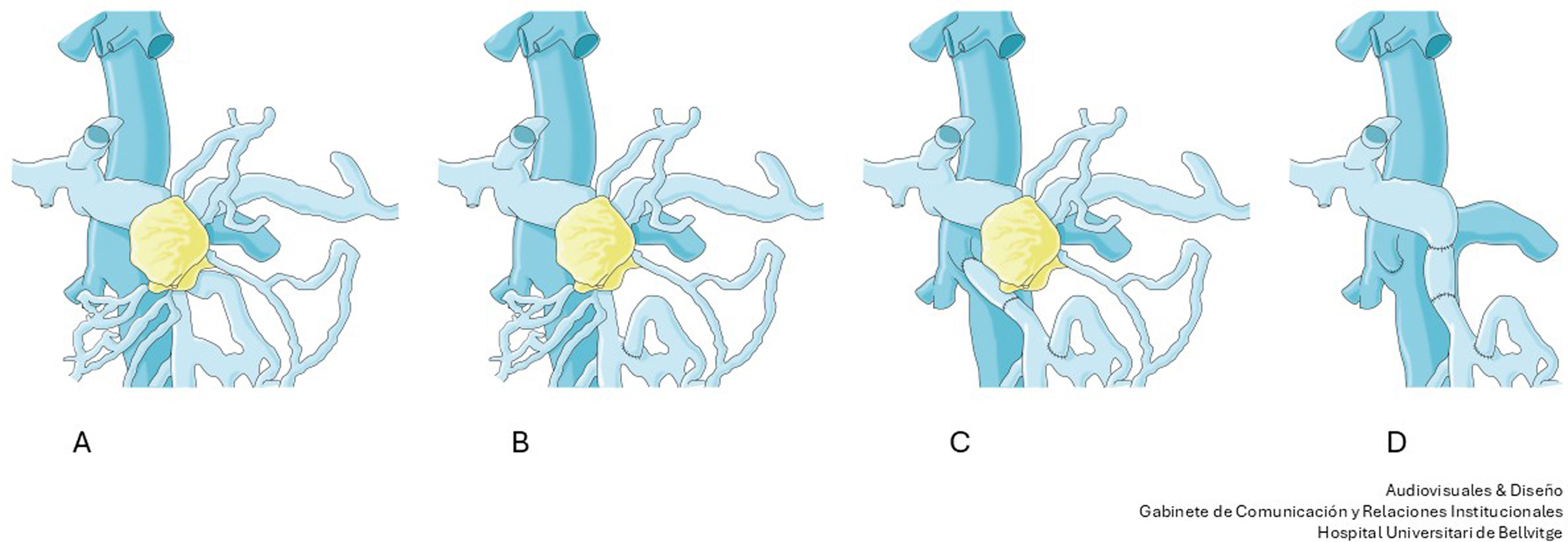
    Planning venous resection: crossing the Rubicon. At this point in the dissection, the need for long-length venous resection with involvement of the EMP confluence and total splenopancreatectomy became evident in order to completely excise the disease. Given the complexity of the resection, with evident hypertrophied venous territory, it was decided to perform a temporary ileo-caval veno-venous shunt by cadaver graft. At this point, 30 mg of sodium heparin was administered (Fig. 5).

    Fig. 5.

    Diagram of venous involvement by the tumour (A) and planning of the reconstruction undertaken: anastomosis jejunal vein to ileal vein 2 (B), ileo-caval shunt (C), and final view with interposed cadaver graft and ileograft and graft-portal sutures (D). Production: Audiovisuals and Design, Communication and Institutional Relations Office. Bellvitge University Hospital.

  • I

    First anastomosis: jejunal vein to ileal vein. First, the JJV was sectioned at its source, on the right side of the VMS, and uncrossed behind the SMA. Then, in order to preserve this venous supply, anastomosis was performed between the jejunal veins and the ileal vein 2 (Fig. 5B).

  • J

    Second anastomosis: cadaver graft to inferior vena cava. At the retropancreatic level, lateral clamping of the vena cava was performed, followed by end-to-side anastomosis. Next, the length of the graft was adapted to the caudal ileal vein at the head of the pancreas. The ileal vein, caudal to the superior mesenteric vein, was clamped, and the confluence of the main ileal vein was sectioned.

  • K

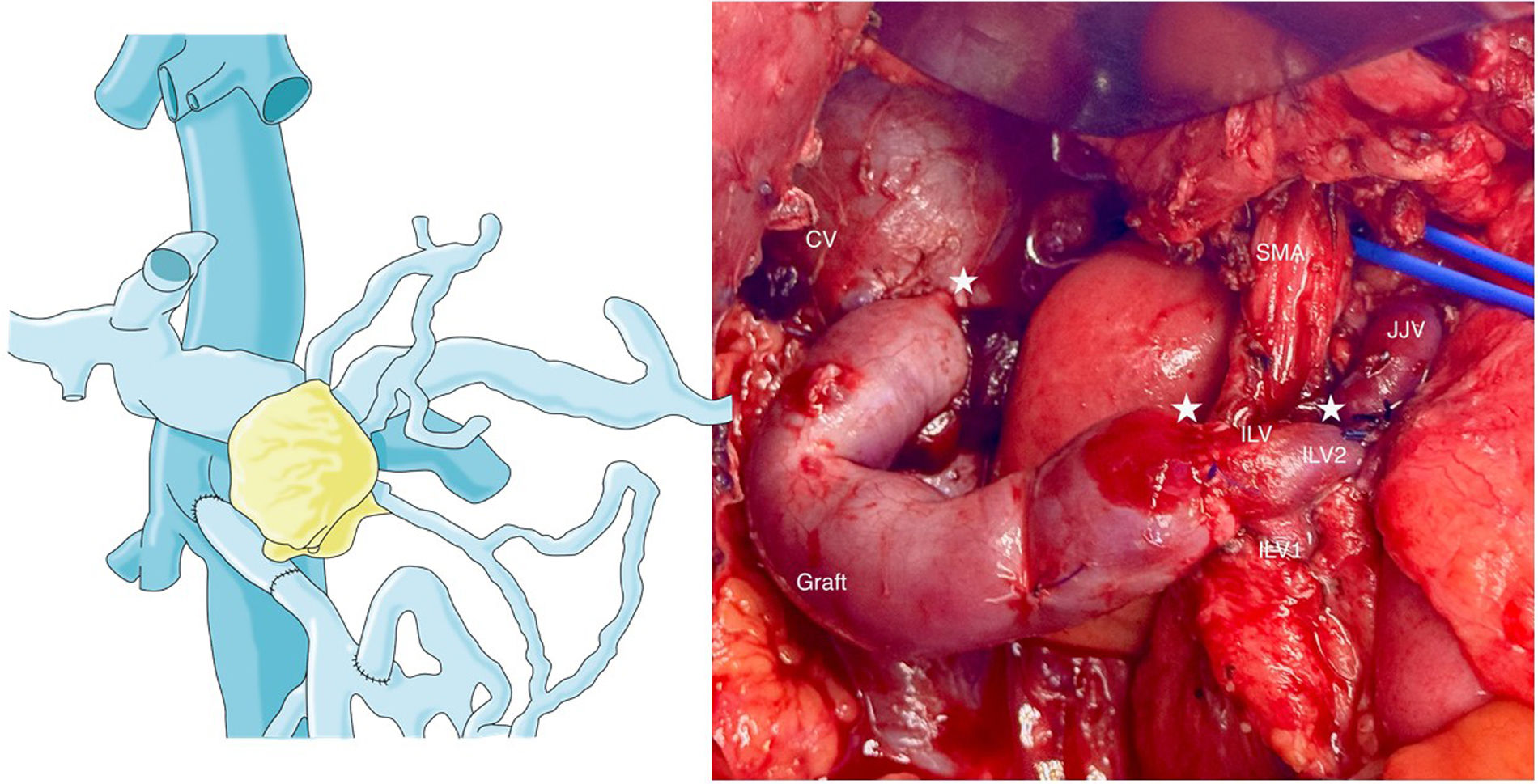
    Mesenteric venous clamping and third anastomosis from ileal vein to cadaver graft. Mesenteric venous drainage remained clamped for 15 min, before end-to-end anastomosis from ileal vein to cadaver graft, after which the ileo-caval shunt was opened (Figs. 5C and 6).

    Fig. 6.

    Diagram of the intraoperative ileo-caval shunt and intraoperative photograph of the ileo-caval shunt. SMA, superior mesenteric artery; CHA, common hepatic artery; HAP, hepatic artery proper; GDA, gastroduodenal artery; SA, splenic artery; PV, portal vein; SV, splenic vein; ILV, ileal vein; ILV1, ileal vein 1; ILV2, ileal vein 2; JJV, jejunal vein; IMV, inferior mesenteric vein; MSC, mesocolon. Asterisks indicate venous sutures, from jejunal vein to ileal vein 2; from ileal vein to venous graft; and venous graft to the vena cava.

  • L

    Completion of pancreatic excision with functioning venous shunt

  • M

    Progression in total duodenopancreatectomy with splenectomy. The splenic artery was ligated, progressing to pancreatic body-tail dissection and ligation of the gastrosplenic short vessels. The pancreatic body and tail were mobilised and dislocated to the patient's right side.

  • N

    Superior mesenteric artery dissection (divestment) The creation of the shunt displaces the venous confluence, enabling safe dissection of the anterior aspect of the superior mesenteric artery. The excision was completed by leaving the surgical specimen depending on the portal vein only. Finally, the portal vein was sectioned and the resected piece was extracted.

  • O

    Closure of the ileo-caval shunt. Closure of the venous shunt was by mechanical suturing (TA) at the entrance of the shunt into the vena cava. Next, the length of the venous graft was adjusted by rectifying its path to the portal vein.

  • P

    Venous flow reconstruction and digestive tract reconstruction

  • Q

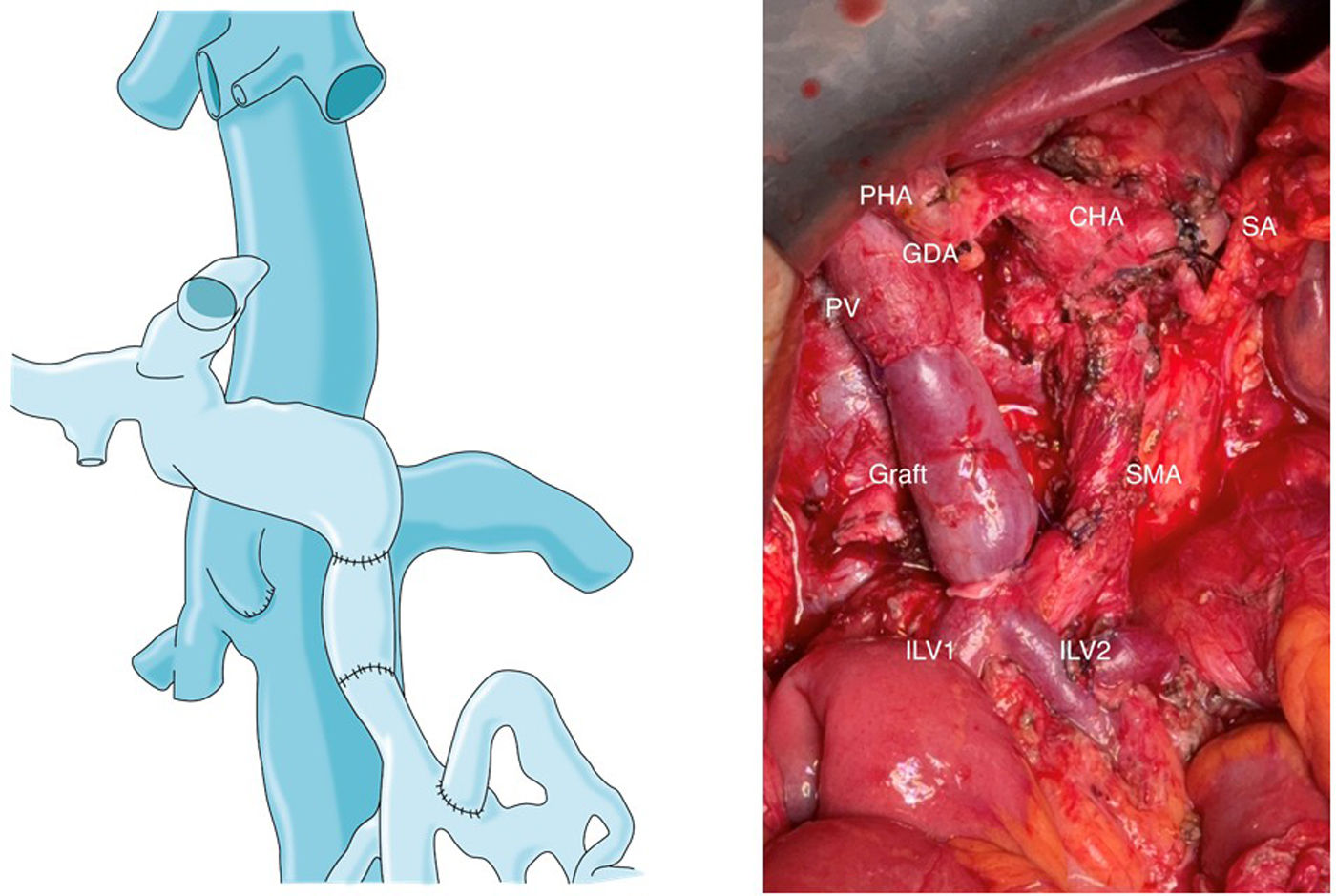
    Fourth anastomosis: from cadaver graft to portal vein. We completed this phase by anastomosis of the graft to the portal vein (Figs. 5D and 7). The unclamping was undertaken without incident. The ilio-caval shunt was in operation for 94 min, with no haemodynamic changes and the surgical field remained bloodless with the intestine appearing healthy.

    Fig. 7.

    Diagram of the venous configuration after venous shunt closure and completion of venous reconstruction, and intraoperative photograph after venous shunt closure and completion of venous reconstruction. The venous graft was adapted to the length of the portal vein to avoid kinking. SMA, superior mesenteric artery; CHA, common hepatic artery; PHA, hepatic artery proper; GDA, gastroduodenal artery; SA, splenic artery; PV, portal vein; SV, splenic vein; ILV, ileal vein; ILV1, ileal vein 1; ILV2, ileal vein 2.

  • R

    The surgery was completed by hepaticojejunal sutures and gastro-enteroanastomosis. Two suction drains were left. The surgery lasted 660 min, and no transfusion was performed.

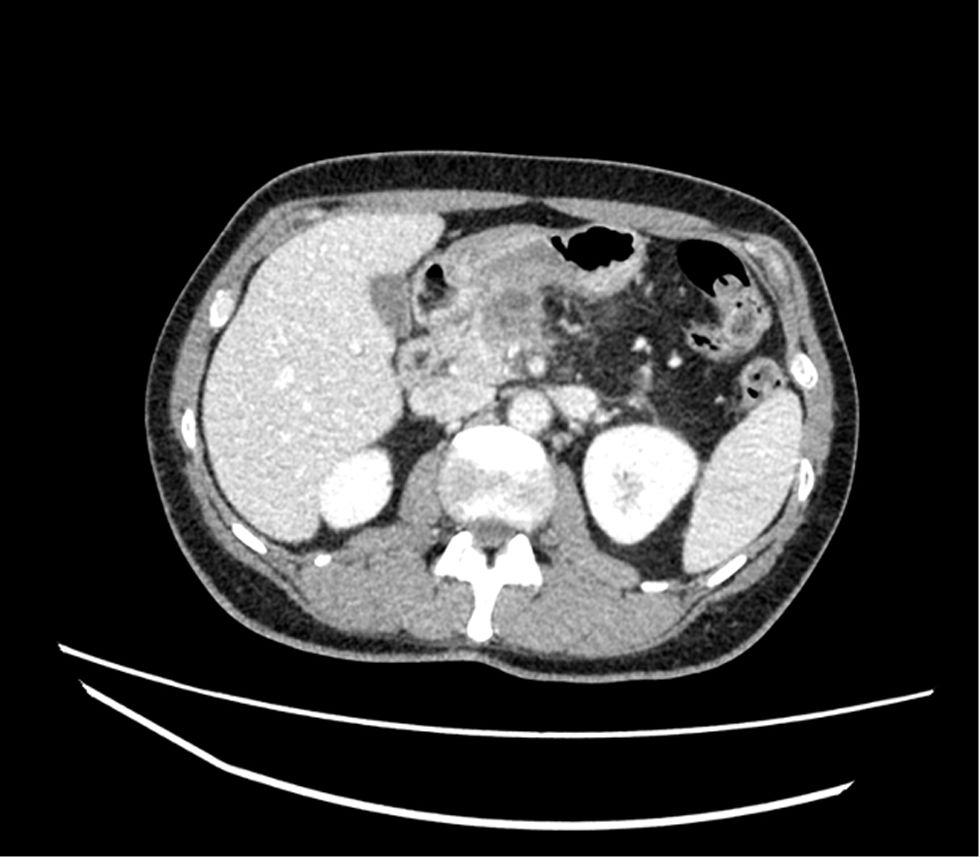
Fig. 1.

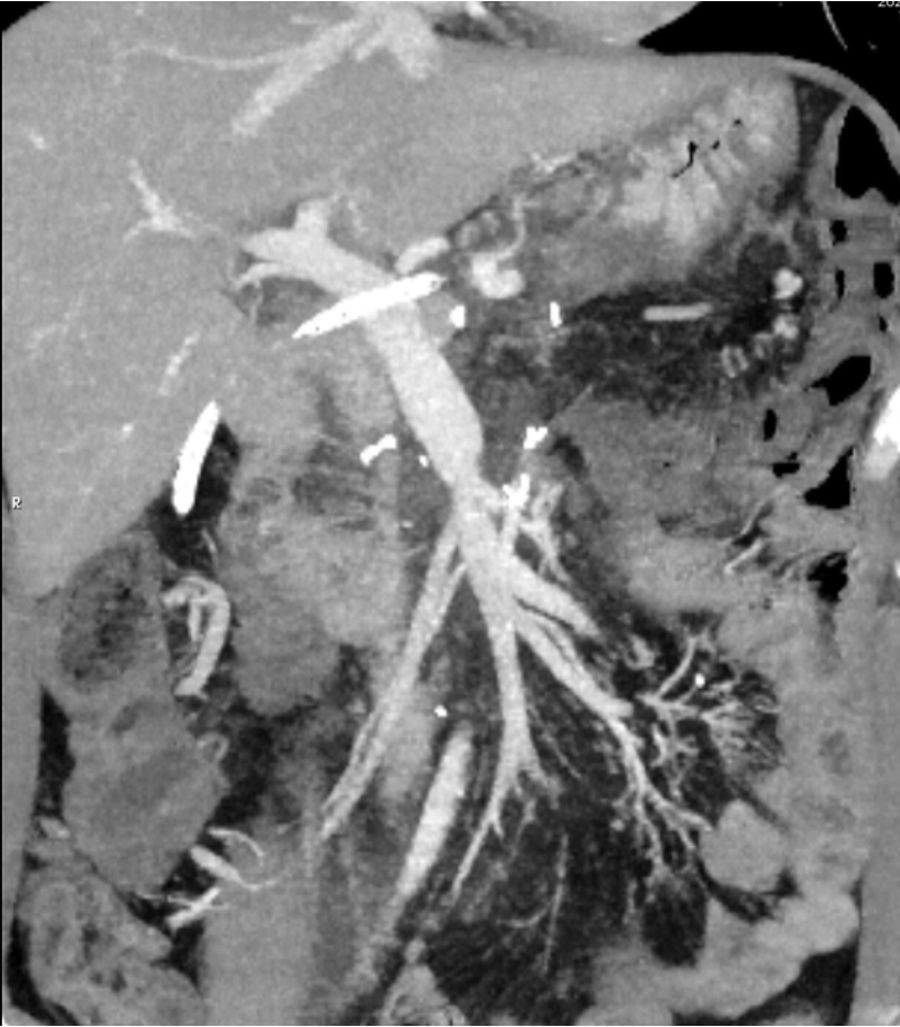
Preoperative MDCT study, axial imaging. Occlusion of the superior mesenteric vein and abutment of the superior mesenteric artery can be clearly seen.

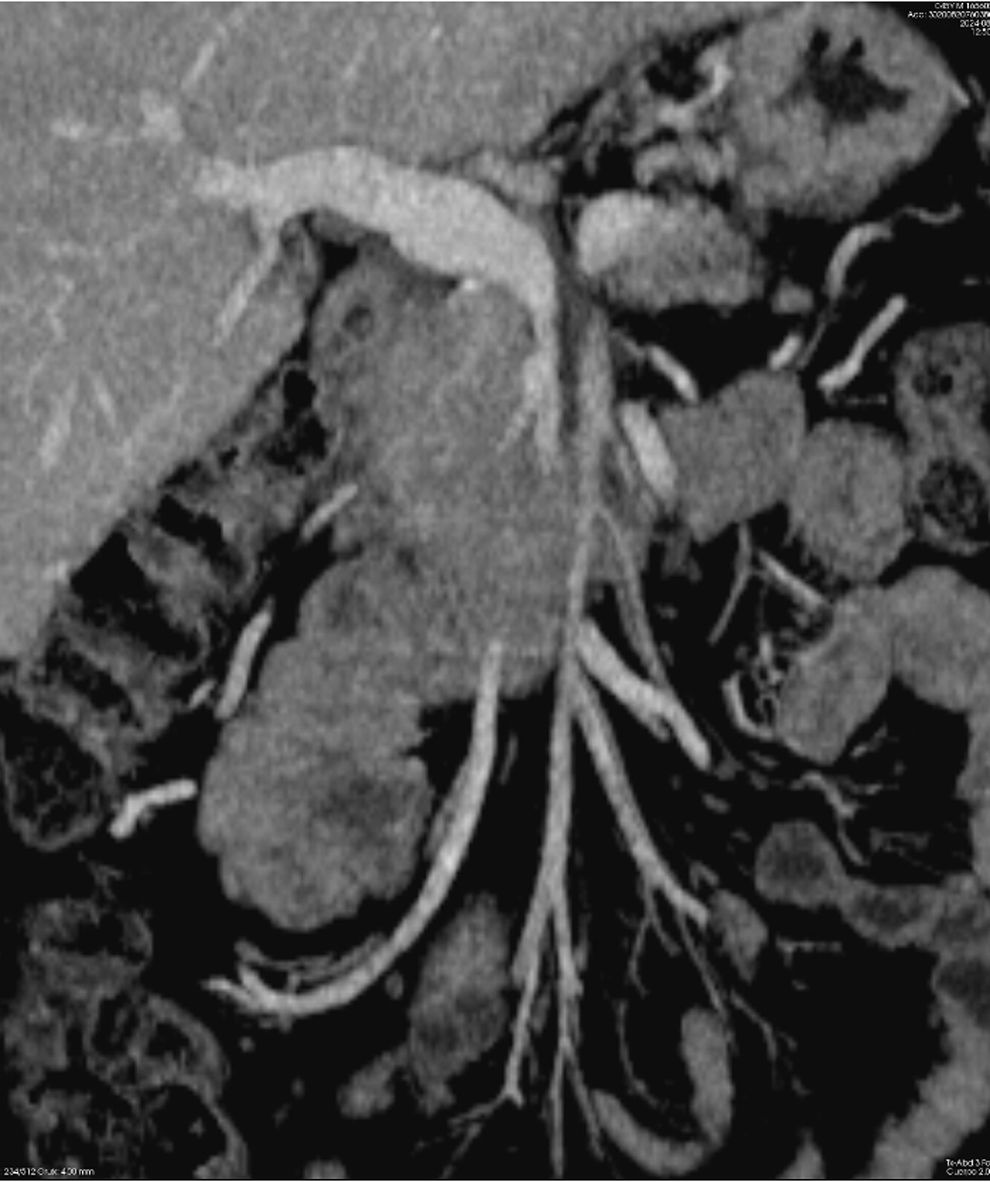
Fig. 2.

Preoperative MDCT study: sagittal imaging. Occlusion of the superior mesenteric vein and abutment of the superior mesenteric artery are evident.

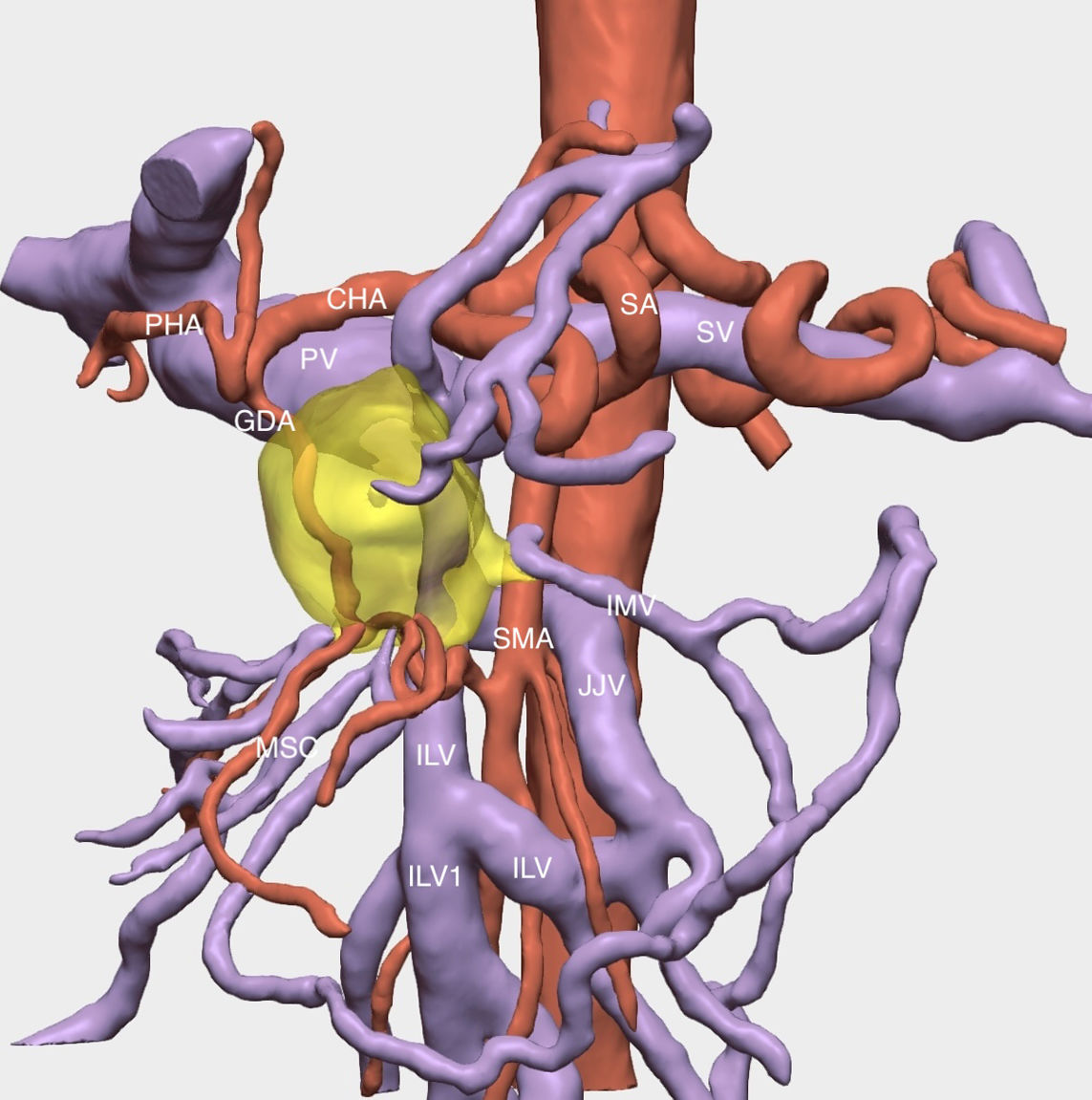
Fig. 3.

Preoperative 3D study. https://www.cellams.com. Occlusion of the splenoportomesenteric axis and abutment of the superior mesenteric artery by the tumour can be seen. SMA, superior mesenteric artery; CHA, common hepatic artery; HAP, hepatic artery proper; GDA, gastroduodenal artery; SA, splenic artery; PV, portal vein; SV, splenic vein; ILV, ileal vein; ILV1, ileal tributary vein 1; ILV2, ileal tributary vein 2; JJV jejunal vein; IMV, inferior mesenteric vein; MSC, mesocolon. The pancreatic tumour is indicated in yellow. (For interpretation of the references to colour in this figure legend, the reader is referred to the web version of this article).

Fig. 4.

Detail of the venous vascularisation in the 3D study. https://www.cellams.com.

Immediate postoperative and pathological analysis. The postoperative period was uneventful; a follow-up abdominal CT scan was run at 5 days (Fig. 8), and the patient was discharged on the 7th postoperative day without any complications. The anatomopathological analysis showed a pancreatic adenocarcinoma of 2.5 cm in diameter, vascular invasion of a small vessel and invasion of the adventitious layer of the SMV, with free venous and surgical margins; no perineural infiltration, 0 affected nodes out of 30 analysed, ypT1ypN0 R0 (UICC8ªEd), GRT 2 regression grade (partial response), Evans GIIa regression grade.

Fig. 8.

Postoperative MDCT study, sagittal imaging. Final portal mesenteric venous reconstruction is evident.

Discussion

In 2016, the 20th Congress of the International Association of Pancreatology (IAP) was held in Sendai, Japan. In this study, the bases of consensus were laid down for the definition of resectable, borderline, and locally advanced pancreatic adenocarcinoma.3 The occlusion of non-reconstructable SMV is the criterion for definition of locally advanced, since a short occlusion or >180º reconstructable involvement would be resectable borderline. The treatment of choice for these patients is surgical resection after chemotherapy, as this offers an improvement in survival.1–3 Several recent technical advances in pancreatic surgery, accompanied by good long-term results with neoadjuvant chemotherapy regimens, have implied a qualitative leap in long-term survival after the removal of this tumour.1 Among the technical advances are the mesenteric approach described by Nakao,13,14 Triangle lymphadenectomy15: the finding that dissecting the SMA first, known as the ‘artery first approach,’ provides benefits,16,17 and ‘divestment’ or denuding the SMA.18

Since the 1990s, Nakao, Kuroda and Suzuki4,5,19,20 have defended the use of venous bypass as a useful tool in the excision of pancreatic cancer with the help of a heparinised catheter or centrifuge pump. In 2013, Christians and the Wisconsin group published on the use of the mesocava and splenorenal shunt in pancreatic resection.6,7 A year later, Bachellier published on the usefulness of temporary mesoportal shunts to achieve successful resection using vascular prostheses.8 In the same year, Suzuki expanded the experience of the Kobe group and demonstrated the usefulness of using a centrifuge pump between the SMV and the umbilical vein.18 In his study, Suzuki demonstrated the benefit of preventing hepatic ischemia and intestinal venous congestion during pancreatic surgery with or without venous resection. In 2020, in a high-quality review, Kinny-Köster of Johns Hopkins presented the various technical options later commented on by Christians in an excellent letter.21,22

In most vein resections during pancreatic surgery, the use of venous shunts does not appear necessary, since excision can be successfully carried out without them.23–26 Thus, in our centre we have performed 99 vascular resections between 2010–2024 in pancreatic surgery, and in 17 of these the ileal vein or jejunal vein was resected. In none of the patients recorded was the use of venous bypass necessary, since it was considered that clamping and dissection would make it unnecessary. However, the combination of caudal involvement, and involvement of the EMP axis of the patient mentioned, entailed greater complexity in this case.

Extensive venous involvement can lead to a variety of problems. First, the presence of large venous collaterals can lead to severe intraoperative bleeding. Secondly, in cases with involvement of the EMP axis up to the confluence of the jejunal and ileal veins, subsequent dissection and reconstruction may require venous clamping of more than 60 min; may jeopardize hepatic flow; or lead to intestinal congestion.8 The preservation of hepatic flow appears to be key to avoiding hepatic ischemia in a liver that has undergone the changes resulting from neoadjuvant chemotherapy. Finally, in locally advanced pancreatic cancer, SMA involvement is frequently associated and a long dissection time will be necessary. These arguments are what justify the use of intraoperative venous shunts.21,22 Among the variants of shunts defined so far, we find the pre-resection or post-resection mesoportal shunt; the temporary or definitive mesocaval shunt; or the splenorenal distal shunt; with its different indications proposed.4–12,19–22,27,28 The materials used are usually biological, by autologous grafting or synthetic material.6,8 In our centre, we have been using cadaver grafts for years in the case of performing a large venous resection.

Regarding the case presented, firstly, the 3-dimensional study was essential to plan the surgery. Once the involvement of the EPM confluence, the jejunal and ileal veins, and contact with the AMS had been confirmed, we planned a total splenopancreatectomy with long-length venous resection. Against this scenario, we chose to dissect the cranial surgical field, caudally to the tumour, identifying the affected vessels. An important detail was to preserve the jejunal vein, given its diameter, anastomosing it to the ileal vein, despite this being a fragile vein. Sometimes it is advisable to sacrifice it to avoid problems with its reconstruction.22 We decided to perform an intraoperative shunt that would enable progress in the dissection of the SMA, the SMV, and the pancreatic body-tail. Once the ileo-caval shunt had been declamped, the surgical field remained bloodless, and hepatic flow was maintained through the hepatic artery and the splenic vein and portal confluence. Finally, the pathological study showed an R0 resection.

In conclusion, the use of temporary intraoperative ileo-caval shunt in pancreatic adenocarcinoma surgery after neoadjuvant treatment, as well as the preservation of jejunal vein flow, is an option to achieve a successful resection. The appearance of intraoperative venous shunts opens the door to the resection of pancreatic tumours with "ultra-low" involvement, i.e., those that require resection of the entire superior mesenteric vein and anastomosis of the jejunal and ileal veins with simultaneous involvement of the portal splenomesenteric axis, or those with simultaneous involvement of the wall of the superior mesenteric artery.

Funding

This study received support from the Bellvitge Biomedical Research Institute (IDIBELL Foundation).

Acknowledgements

The authors would like to thank the IDIBELL Foundation and the CERCA Programme / Generalitat de Catalunya for their institutional support.

Appendix A
Supplementary data

The following is Supplementary data to this article:

(48.44MB)

References
[1]
N.A. Chatzizacharias, S. Tsai, M. Griffin, et al.
Locally advanced pancreas cancer: staging and goals of therapy.
Surgery., 163 (2018), pp. 1053-1062
[2]
U. Boggi, E. Kauffmann, N. Napoli, REDISCOVER Multidisciplinary Advisory Board, et al.
REDISCOVER International Guidelines on the perioperative care of surgical patients with borderline-resectable and locally advanced pancreatic cancer.
Ann Surg., 280 (2024), pp. 56-65
[3]
S. Isaji, S. Mizuno, J.A. Windsor, et al.
International consensus on definition and criteria of borderline resectable pancreatic ductal adenocarcinoma 2017.
Pancreatology, 18 (2018), pp. 2-11
[4]
A. Nakao, T. Nonami, A. Harada, T. Kasuga, H. Takagi.
Portal vein resection with a new antithrombogenic catheter.
Surgery., 108 (1990), pp. 913-918
[5]
A. Nakao, A. Harada, T. Nonami, T. Kaneko, H. Takagi.
Regional vascular resection using catheter bypass procedure for pancreatic cancer.
Hepatogastroenterology., 42 (1995), pp. 734-739
[6]
K.K. Christians, K. Riggle, R. Keim, et al.
Distal splenorenal and temporary mesocaval shunting at the time of pancreatectomy for cancer: initial experience from the medical college of wisconsin.
Surgery, 154 (2013), pp. 123-131
[7]
C.H.C. Pilgrim, S. Tsai, D.B. Evans, K.K. Christians.
Mesocaval shunting: a novel technique to facilitate venous resection and reconstruction and enhance exposure of the superior mesenteric and celiac arteries during pancreaticoduodenectomy.
J Am Coll Surg, 217 (2013), pp. e17-e20
[8]
P. Bachellier, E. Rosso, P. Fuchshuber, et al.
Use of a temporary intraoperative mesentericoportal shunt for pancreatic resection for locally advanced pancreatic cancer with portal vein occlusion and portal hypertension.
Surgery, 155 (2014), pp. 449-456
[9]
M.I. Chavez, S. Tsai, C.N. Clarke, et al.
Distal splenorenal and mesocaval shunting at the time of pancreatectomy.
Surgery, 165 (2019), pp. 298-306
[10]
F. Oehme, M. Distler, B. Müssle, C. Kahlert, J. Weitz, T. Welsch.
Results of portosystemic shunts during extended pancreatic resections.
Langenbecks Arch Surg., 404 (2019), pp. 959-966
[11]
P. Addeo, P. De Mathelin, G. Averous, et al.
The left splenorenal venous shunt decreases clinical signs of sinistral portal hypertension associated with splenic vein ligation during pancreaticoduodenectomy with venous resection.
Surgery, 168 (2020), pp. 267-273
[12]
M. Al-Saeedi, L. Frank-Moldzio, P. Contin, et al.
Splenorenal shunt for reconstruction of the gastric and splenic venous drainage during pancreatoduodenectomy with resection of the portal venous confluence.
Langenbecks Arch Surg., 406 (2021), pp. 2535-2543
[13]
A. Nakao.
Isolated pancreatectomy using mesenteric approach.
J Hepatobiliary Pancreat Sci., 29 (2022), pp. 293-300
[14]
A. Nakao.
The mesenteric approach in pancreatoduodenectomy.
Dig Surg., 33 (2016), pp. 308-313
[15]
T. Hackert, O. Strobel, C.W. Michalski, et al.
The TRIANGLE operation - radical surgery after neoadjuvant treatment for advanced pancreatic cancer: a single arm observational study.
HPB (Oxford)., 19 (2017), pp. 1001-1007
[16]
P. Pessaux, D. Varma, J.P. Arnaud.
Pancreaticoduodenectomy: superior mesenteric artery first approach.
J Gastrointest Surg, 10 (2006), pp. 607-611
[17]
L. Sabater, E. Cugat, A. Serrablo, et al.
Does the artery-first approach improve the rate of R0 resection in pancreatoduodenectomy?: a multicenter, randomized, controlled trial.
Ann Surg., 270 (2019), pp. 738-746
[18]
Y. Miao, B. Cai, Z. Lu.
Technical options in surgery for artery-involving pancreatic cancer: invasion depth matters.
Surg Open Sci., 12 (2023), pp. 55-61
[19]
Y. Kuroda, Y. Tanioka, Y. Ku, et al.
Centrifugal pump-assisted venous bypass between the superior mesenteric vein and the umbilical vein during portal vein resection.
Surg Today., 26 (1996), pp. 762-764
[20]
Y. Suzuki, I. Yoshida, Y. Ku, et al.
Safety of portal vein resection using centrifugal pump-assisted venous bypass between the superior mesenteric vein and the umbilical vein.
Hepatogastroenterology, 51 (2004), pp. 1183-1186
[21]
B. Kinny-Köster, F. van Oosten, J.R. Habib, et al.
Mesoportal bypass, interposition graft, and mesocaval shunt: surgical strategies to overcome superior mesenteric vein involvement in pancreatic cancer.
Surgery., 168 (2020), pp. 1048-1055
[22]
K.K. Christians.
Commentary: venous resection and reconstruction at the time of pancreatectomy for cancer.
Surgery., 168 (2020), pp. 1058-1059
[23]
J.B. Conneely, R.L. Smoot, P.D. Greig, I.D. McGilvray.
Mesocaval shunting.
J Am Coll Surg., 218 (2014), pp. 306-307
[24]
D.A. Raptis, P. Sánchez-Velázquez, N. Machairas, et al.
Defining benchmark outcomes for pancreatoduodenectomy with portomesenteric venous resection.
Ann Surg., 272 (2020), pp. 731-737
[25]
E.F. Kauffmann, N. Napoli, M. Ginesini, et al.
Tips and tricks for robotic pancreatoduodenectomy with superior mesenteric/portal vein resection and reconstruction.
Surg Endosc., 37 (2023), pp. 3233-3245
[26]
G. Gemenetzis, A.B. Blair, M. Nagai, et al.
Anatomic criteria determine resectability in locally advanced pancreatic cancer.
Ann Surg Oncol., 29 (2022), pp. 401-414
[27]
Jennifer A. Yonkus, Roberto Alva-Ruiz, Jill J. Colglazier, et al.
Outcomes of visceral arterial interposition graft reconstruction for locally advanced pancreatic cancer.
[28]
A. Libia, T. Marchese, S. D’Ugo, et al.
Use of vascular shunt at the time of pancreatectomy with venous resection: a systematic review.
Cancers (Basel)., 16 (2024 Jun 27),
Download PDF