


metricas
Cirugía Española (English Edition) Post-traumatic pseudoaneurysm of the aortic arch due to esophageal perforation b...
Journal Information
Vol. 103. Issue 1.
Pages 53 (January 2025)
Image of the month
Full text access

Post-traumatic pseudoaneurysm of the aortic arch due to esophageal perforation by a fishbone

Pseudoaneurisma postraumático de arco aórtico por perforación esofágica a causa de espina de pescado
Visits
276
Benjamin Thorpe Plazaa,
Corresponding author
, Lucía Lesquereuxb, Ana Berta Bermudez Naveirac, Purificación Paradad
a Residente del servicio de cirugía general y del aparato digestivo del Hospital Clinico Universitario de Santiago de Compostela, Santiago de Compostela, Spain
b Cirujana adjunta del servicio de cirugía general y del aparato digestivo del Hospital Clinico Universitario de Santiago de Compostela, Santiago de Compostela, Spain
c Adjunta del servicio de radiología del Hospital Clínico Universitario de Santiago de Compostela, Santiago de Compostela, Spain
d Cirujana adjunta del servicio de cirugía general y del aparato digestivo del Hospital Clinico Universitario de Santiago de Compostela, Jefa de Sección de Unidad de esofago-gástrica, Santiago de Compostela, Spain
This item has received
Article information
Full Text
Download PDF
Statistics
Figures (2)
fig0005
fig0010
Full Text

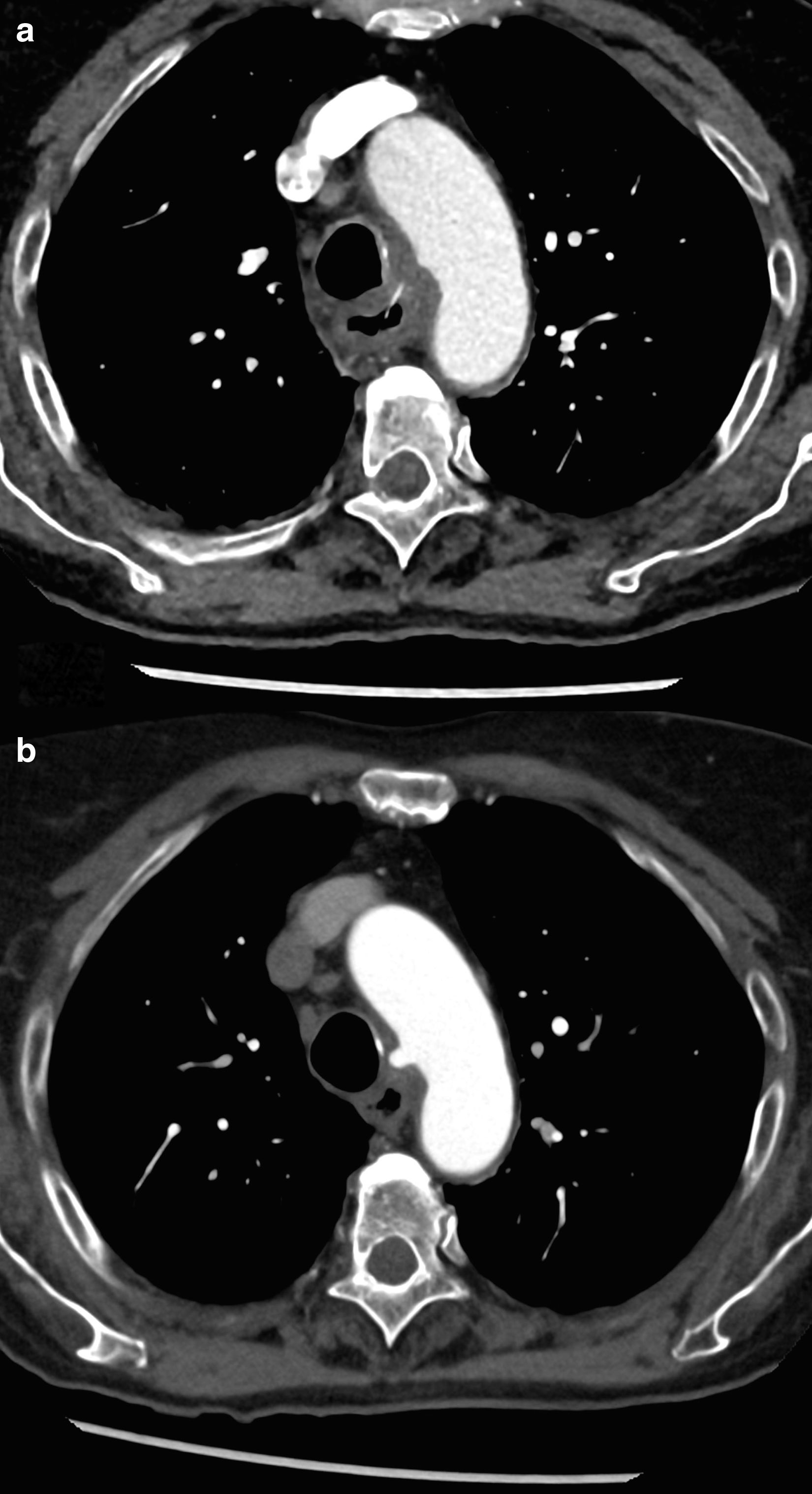
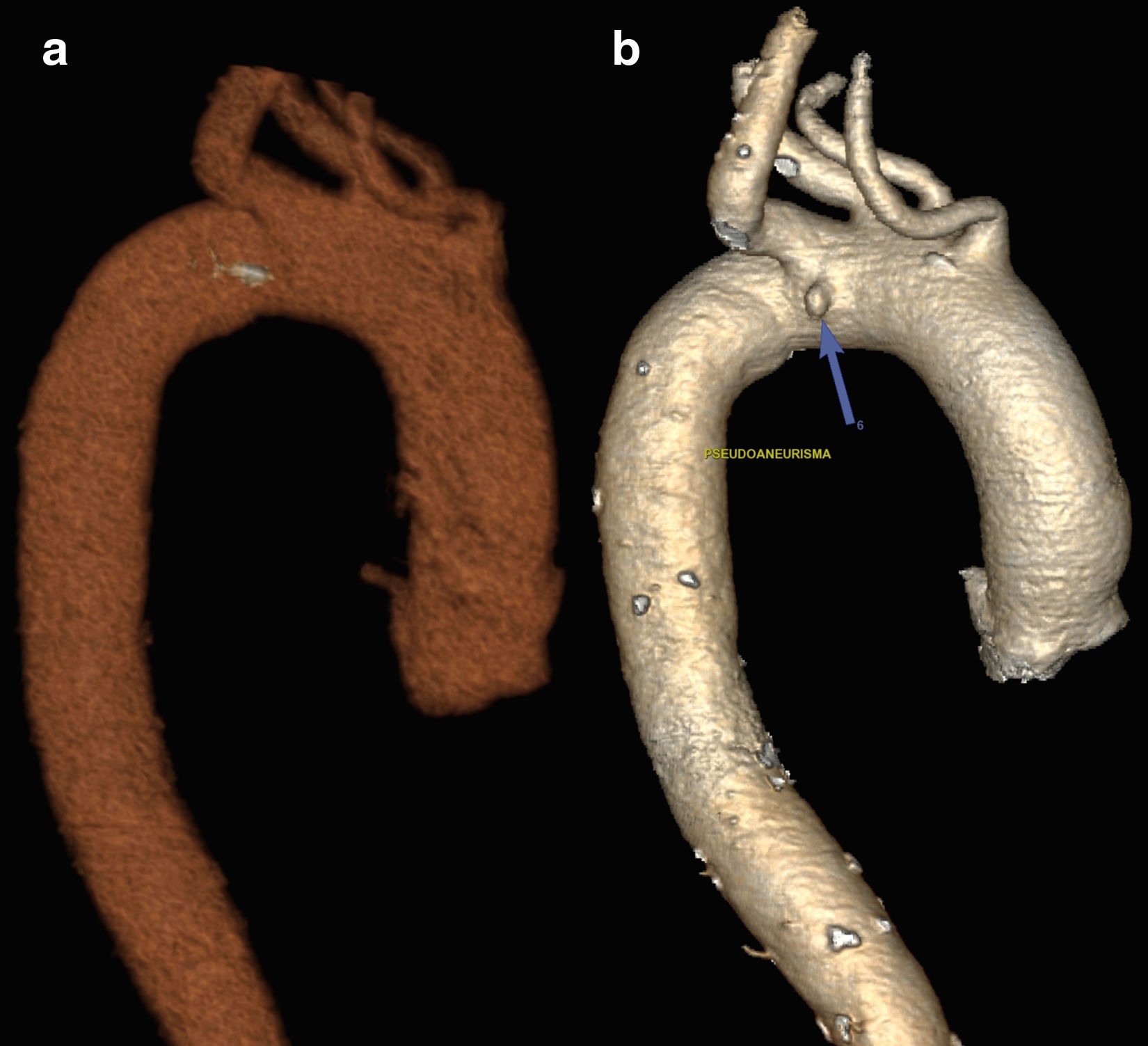
An 86-year-old woman with no medical history came to the emergency room due to dysphagia and shivering for 4 days after eating fish. Lab work-up: leukocytosis with left shift. Thoracic CT scan: esophageal circumferential thickening due to a foreign body associated with a small mediastinal hematoma, fatty reticulation and loss of fatty plane with the aortic arch (Fig. 1a); fishbone observed pointing towards the aortic arch (Fig. 2a). Diagnosis: esophageal perforation and suspected mediastinitis. Treatment: endoscopic extraction and conservative treatment. Follow-up CT scan: additional image in the aortic arch along the tract of the foreign body from previous CT scan (Fig. 1b). Diagnosis: aortic arch pseudoaneurysm (Fig. 2b). PET/CT scan: mediastinitis not ruled out. Treatment: antibiotic therapy for 2 weeks. Two-stage surgery: creation of space for non-fenestrated endovascular prosthesis, through right carotid subclavian transposition and aberrant right subclavian artery ligation; stent placement to exclude the pseudoaneurysm. No immediate postoperative complications were observed.

Fig. 1
Fig. 2
Funding

Instituto de Investigación Sanitaria de Santiago de Compostela.

