



metricas
Cirugía Española (English Edition) National survey on data governance and digital surgery: Challenges and opportuni...
Journal Information
Visits
735
Vol. 103. Issue 3.
Pages 125-178 (March 2025)
Original article
Full text access

National survey on data governance and digital surgery: Challenges and opportunities for surgeons in the era of artificial intelligence

Encuesta nacional sobre la gobernanza de datos y cirugía digital: desafíos y oportunidades de los cirujanos en la era de la inteligencia artificial
Visits
735
María Asunción Acosta-Méridaa, Luis Sánchez-Guillénb,c,
Corresponding author
drsanchezguillen@gmail.com

Corresponding author.
, Mario Álvarez Gallegod, Xavier Barbere, Juan Antonio Bellido Luquef, Ana Sánchez Ramosg, en nombre de la Sección de Cirugía Mínimamente Invasiva e Innovación Tecnológica de la AEC
a Servicio de Cirugía General y Aparato Digestivo, Hospital Universitario de Gran Canaria Dr. Negrín, Las Palmas de Gran Canaria, Las Palmas, Spain
b Servicio de Cirugía General y Aparato Digestivo, Hospital General Universitario de Elche, Elche, Alicante, Spain
c Departamento de Patología y Cirugía, Universidad Miguel Hernández de Elche, Elche, Alicante, Spain
d Servicio de Cirugía General y Aparato Digestivo, Hospital Universitario La Paz, Madrid, Spain
e Centro de Investigación Operativa, Universidad Miguel Hernández de Elche, Elche, Alicante, Spain
f Servicio de Cirugía General y Aparato Digestivo, Hospital Universitario Virgen Macarena, Seville, Spain
g Servicio de Cirugía General y Aparato Digestivo, Hospital Universitario Puerta de Hierro-Majadahonda, Majadahonda, Madrid, Spain
This item has received
Article information
Abstract
Full Text
Bibliography
Download PDF
Statistics
Figures (5)
fig0005
fig0010
fig0015
fig0020
fig0025
Tables (3)
Table 1. Structure and content of the national survey on digital surgery.
Tables
Table 2. Knowledge regarding digital surgery terms and performance of robotic surgery.
Tables
Table 3. Logistic regression to identify the variables that are most closely related to this interest.
Tables
Additional material (1)
Abstract
Introduction

This study evaluates the knowledge of Spanish surgeons regarding data governance and Digital Surgery, their usage, errors, and training deficiencies, as well as differences in knowledge between those who perform robotic surgery and those who do not.

Methods

A descriptive study was conducted using a closed survey promoted by the Minimally Invasive Surgery and Technological Innovation Section of the Spanish Association of Surgeons, directed at its members between February and March 2024.

Results

Out of 1086 surgeons contacted, 396 responded (36.46%). While 98.3% use electronic medical records, 45.4% lack organized data recording systems. Although 55.9% have access to robotic technology, 70.6% do not use it directly. Surgeons who perform robotic surgery show a higher general knowledge of Digital Surgery terms (7.2 vs 6.619; P = .215) and specifically of “Artificial Intelligence” (57.14% compared to less than 25% for other terms), although these differences are not significant. However, there are significant differences in interest in digital technology between those who perform robotic surgery and those who do not (P = .023). Additionally, surgeons who support training in digital technology during residency are nearly twice as likely to research Digital Surgery.

Conclusion

Surgeons are crucial for the digital transformation in surgery, but many are poorly prepared and insufficiently involved. Those who practice robotic surgery have more knowledge and interest in digital technology, highlighting the need for improved training and governance frameworks to better integrate surgeons into the digital era.

Keywords:
Digital surgery
Data governance
Surgical training
Big data
Electronic medical record
Robotic surgery
Digital technology
Spain
Resumen
Introducción

Este estudio evalúa el conocimiento de los cirujanos españoles sobre la gobernanza de datos y la Cirugía Digital, su uso, errores y carencias formativas, así como las diferencias en conocimiento entre quienes realizan cirugía robótica y quienes no.

Métodos

Estudio descriptivo mediante una encuesta cerrada, promovida por la Sección de Cirugía Mínimamente Invasiva e Innovación Tecnológica de la Asociación Española de Cirujanos, dirigida a sus miembros entre febrero y marzo de 2024.

Resultados

De los 1086 cirujanos contactados, 396 respondieron (36.46%). Aunque el 98.3% utiliza historias clínicas electrónicas, el 45.4% carece de sistemas organizados de registro de datos. El 55.9% tiene tecnología robótica, pero el 70.6% no tiene acceso directo a ella. Los cirujanos que realizan cirugía robótica muestran mayor conocimiento general sobre términos de Cirugía Digital (7.2 vs 6.619; P = .215) y específicamente sobre «inteligencia artificial» (57.14% frente a menos del 25% para otros términos), aunque las diferencias no son significativas. Sin embargo, sí hay diferencias significativas en el interés por la tecnología digital entre quienes realizan cirugía robótica y quienes no (P = .023). Además, los cirujanos que apoyan la formación en tecnología digital durante la residencia tienen casi el doble de probabilidades de investigar sobre Cirugía Digital.

Conclusión

Los cirujanos son clave para la transformación digital en cirugía, pero muchos están mal preparados y poco involucrados. Quienes practican cirugía robótica tienen más conocimiento e interés en la tecnología digital, destacando la necesidad de mejorar la formación y establecer marcos de gobernanza para integrar mejor a los cirujanos en la era digital.


Palabras clave:
Cirugía digital
Gobernanza del dato
Formación quirúrgica
Big data
Historia clínica electrónica
Cirugía robótica
Tecnología digital
España
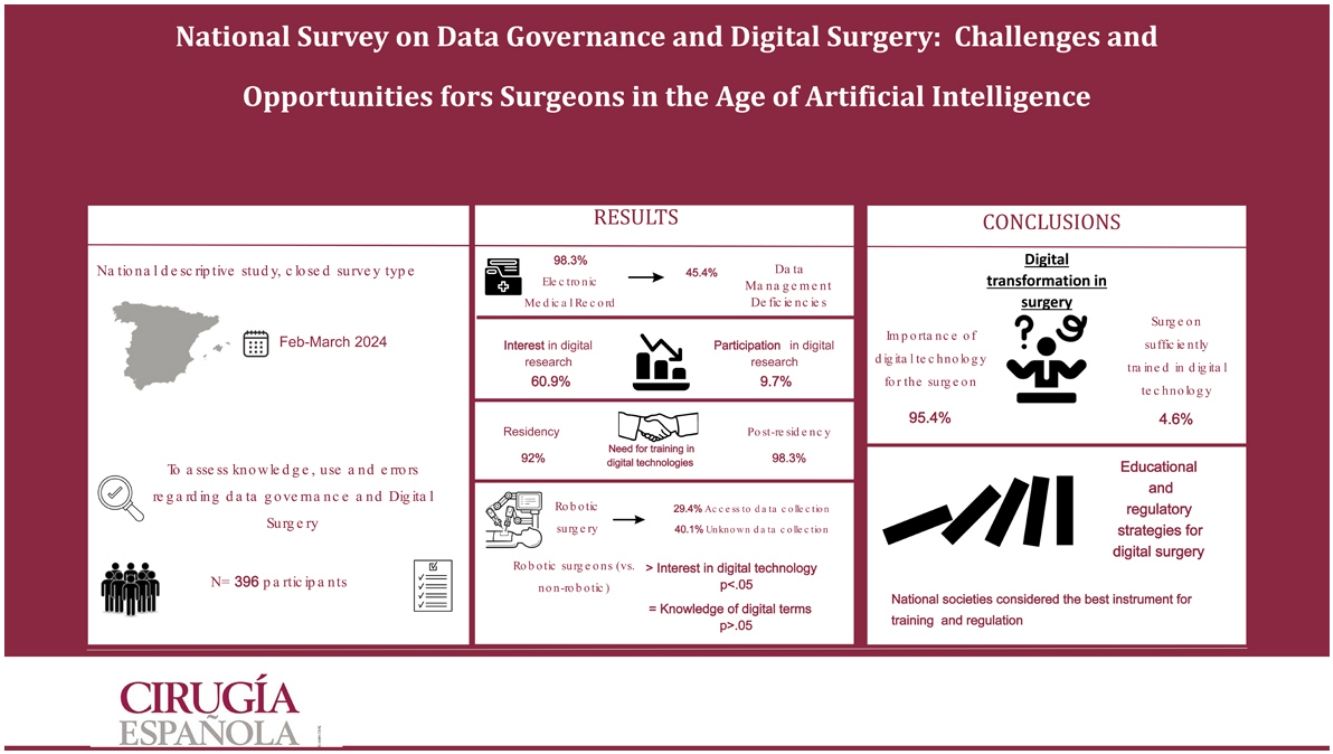
Graphical abstract
Full Text
Introduction

Surgery has entered a new era, driven by the unstoppable1 IT evolution, which is affecting all areas of our environment and has been classified as “Digital Surgery or Surgery 4.0”.2 Information and data are key elements in this new era, the use of which in the surgical process is linked to issues of ownership, consent and confidentiality, which mark a legal responsibility and unresolved ethical connotations.3 Currently there are big data platforms that automatically integrate an enormous amount and variety of information from multiple sources (radiological images, intraoperative monitoring variables, videos of interventions, movements of the surgeon on the robotic platform, times in surgery).4,5 Digital technology enables the processing and transfer of all this data for multiple purposes, not always in accordance with well-defined objectives in the healthcare or training context, and may disappear into other uncontrolled uses. This creates mistrust and reluctance among surgeons, impacting the speed of technological assimilation.6 Added to this is the regulatory controversy surrounding data governance in health which, on the one hand, guarantees the principle of confidentiality, privacy and autonomy of patients, and on the other hand promotes the “open data”7 policy required by European Directive 7 2019/1024 for access to and dissemination of information.

Today's surgeons are exposed to new challenges linked to innovation, data governance and digital surgery, as well as the implementation of robotic surgery with some areas of uncertainty prevailing.3 However, we due to a lack of awareness regarding the degree of knowledge of today's surgeons in these areas and their training needs in this regard, evaluation was required and surgeons need to be fully and responsibly involved as the main players in this era of technological and paradigm change.

The objective of this study was to evaluate the knowledge and use of digital technology applied to surgery by Spanish surgeons, as well as to identify the profile of the surgeons most involved in technological innovation and the training deficiencies and main errors in this matter.

MethodsStudy design

A descriptive study was designed in the form of a closed survey within the Working Group on data and digital transformation of surgery of the Section of Minimally Invasive Surgery and Technological Innovation (CMI-IT for its initials in Spanish) (supplementary material) of the Spanish Association of Surgeons (AEC for its initials in Spanish). The survey was sent by email to all specialist surgeons and residents of General Surgery and the Digestive System, who were included in the AEC member database with a subscription to the updates of the CMI-IT Section, between the months of February and March 2024.

Since this study was for voluntary professional participation, it did not require the approval from a local Ethics Committee for its completion. It was explicitly stated that the subjects who answered the survey gave their consent for the archiving, analysis and publication of the data resulting from their responses.

To prepare the survey, an online form was used through the website https://www.survio.com/survey/d/M7I/encuesta-nacional-cirugia.

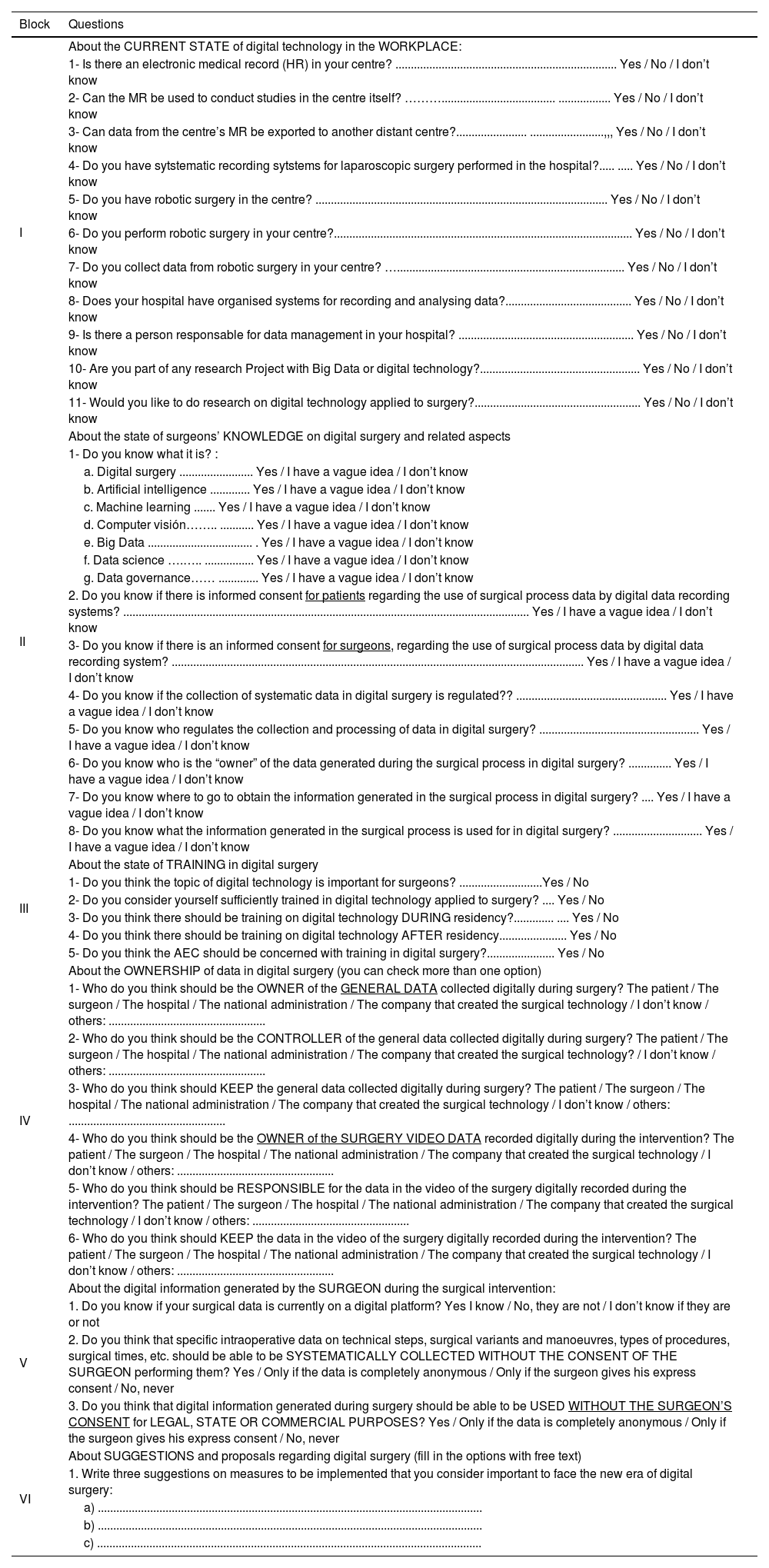
Table 1 details the structure and content of the survey. It asked 39 closed questions with mandatory answers grouped into five blocks relating to technology in the work environment; knowledge of concepts related to digital surgery; training in this area, and ownership and governance of data in surgery.

Table 1.

Structure and content of the national survey on digital surgery.

Block  Questions 
IAbout the CURRENT STATE of digital technology in the WORKPLACE: 
1- Is there an electronic medical record (HR) in your centre? ........................................................................ Yes / No / I don’t know 
2- Can the MR be used to conduct studies in the centre itself? ………..................................... ................. Yes / No / I don’t know 
3- Can data from the centre’s MR be exported to another distant centre?....................... ........................,,, Yes / No / I don’t know 
4- Do you have sytstematic recording sytstems for laparoscopic surgery performed in the hospital?..... ..... Yes / No / I don’t know 
5- Do you have robotic surgery in the centre? ............................................................................................... Yes / No / I don’t know 
6- Do you perform robotic surgery in your centre?................................................................................................. Yes / No / I don’t know 
7- Do you collect data from robotic surgery in your centre? ….......................................................................... Yes / No / I don’t know 
8- Does your hospital have organised systems for recording and analysing data?......................................... Yes / No / I don’t know 
9- Is there a person responsable for data management in your hospital? ......................................................... Yes / No / I don’t know 
10- Are you part of any research Project with Big Data or digital technology?.................................................... Yes / No / I don’t know 
11- Would you like to do research on digital technology applied to surgery?...................................................... Yes / No / I don’t know 
IIAbout the state of surgeons’ KNOWLEDGE on digital surgery and related aspects 
1- Do you know what it is? : 
a. Digital surgery ........................ Yes / I have a vague idea / I don’t know 
b. Artificial intelligence ............. Yes / I have a vague idea / I don’t know 
c. Machine learning ....... Yes / I have a vague idea / I don’t know 
d. Computer visión…….. ........... Yes / I have a vague idea / I don’t know 
e. Big Data .................................. . Yes / I have a vague idea / I don’t know 
f. Data science ….….. ................ Yes / I have a vague idea / I don’t know 
g. Data governance…… ............. Yes / I have a vague idea / I don’t know 
2. Do you know if there is informed consent for patients regarding the use of surgical process data by digital data recording systems? .................................................................................................................................... Yes / I have a vague idea / I don’t know 
3- Do you know if there is an informed consent for surgeons, regarding the use of surgical process data by digital data recording system? ...................................................................................................................................... Yes / I have a vague idea / I don’t know 
4- Do you know if the collection of systematic data in digital surgery is regulated?? ................................................. Yes / I have a vague idea / I don’t know 
5- Do you know who regulates the collection and processing of data in digital surgery? .................................................... Yes / I have a vague idea / I don’t know 
6- Do you know who is the “owner” of the data generated during the surgical process in digital surgery? .............. Yes / I have a vague idea / I don’t know 
7- Do you know where to go to obtain the information generated in the surgical process in digital surgery? .... Yes / I have a vague idea / I don’t know 
8- Do you know what the information generated in the surgical process is used for in digital surgery? ............................. Yes / I have a vague idea / I don’t know 
IIIAbout the state of TRAINING in digital surgery 
1- Do you think the topic of digital technology is important for surgeons? ...........................Yes / No 
2- Do you consider yourself sufficiently trained in digital technology applied to surgery? .... Yes / No 
3- Do you think there should be training on digital technology DURING residency?............. .... Yes / No 
4- Do you think there should be training on digital technology AFTER residency...................... Yes / No 
5- Do you think the AEC should be concerned with training in digital surgery?...................... Yes / No 
IVAbout the OWNERSHIP of data in digital surgery (you can check more than one option) 
1- Who do you think should be the OWNER of the GENERAL DATA collected digitally during surgery? The patient / The surgeon / The hospital / The national administration / The company that created the surgical technology / I don’t know / others: ................................................... 
2- Who do you think should be the CONTROLLER of the general data collected digitally during surgery? The patient / The surgeon / The hospital / The national administration / The company that created the surgical technology? / I don’t know / others: ................................................... 
3- Who do you think should KEEP the general data collected digitally during surgery? The patient / The surgeon / The hospital / The national administration / The company that created the surgical technology / I don’t know / others: ................................................... 
4- Who do you think should be the OWNER of the SURGERY VIDEO DATA recorded digitally during the intervention? The patient / The surgeon / The hospital / The national administration / The company that created the surgical technology / I don’t know / others: ................................................... 
5- Who do you think should be RESPONSIBLE for the data in the video of the surgery digitally recorded during the intervention? The patient / The surgeon / The hospital / The national administration / The company that created the surgical technology / I don’t know / others: ................................................... 
6- Who do you think should KEEP the data in the video of the surgery digitally recorded during the intervention? The patient / The surgeon / The hospital / The national administration / The company that created the surgical technology / I don’t know / others: ................................................... 
VAbout the digital information generated by the SURGEON during the surgical intervention: 
1. Do you know if your surgical data is currently on a digital platform? Yes I know / No, they are not / I don’t know if they are or not 
2. Do you think that specific intraoperative data on technical steps, surgical variants and manoeuvres, types of procedures, surgical times, etc. should be able to be SYSTEMATICALLY COLLECTED WITHOUT THE CONSENT OF THE SURGEON performing them? Yes / Only if the data is completely anonymous / Only if the surgeon gives his express consent / No, never 
3. Do you think that digital information generated during surgery should be able to be USED WITHOUT THE SURGEON’S CONSENT for LEGAL, STATE OR COMMERCIAL PURPOSES? Yes / Only if the data is completely anonymous / Only if the surgeon gives his express consent / No, never 
VIAbout SUGGESTIONS and proposals regarding digital surgery (fill in the options with free text) 
1. Write three suggestions on measures to be implemented that you consider important to face the new era of digital surgery: 
a) ............................................................................................................................. 
b) ............................................................................................................................. 
c) ............................................................................................................................. 
Statistical analysis

Differences in responses were assessed using the 2-sided Fisher exact test for categorical variables and a t-test to compare means, using SPSS version 22.0 (SPSS, Inc., Chicago, IL, USA).

Results

Two phases of emailing were conducted to the 1086 members of the CMI-IT section, inviting them to complete the survey, which was active from February 7 to March 19, 2024. A total of 396 surveys (36.46%) were received. Incomplete or partially incomplete responses were eliminated.

The following responses were obtained in each block:

Block I. Regarding the CURRENT STATE of digital technology in the WORKPLACE: (238 responses), 234 (98.3%) respondents have electronic medical records in their centre; 69.3% (165 participants) can only use the data in their own centre to conduct studies and 28.6% can export it to another distant centre (most of them to other hospitals in the same community). 45.4% do not have organised systems for recording and analysing data, with a data management manager in 40.3% of the centres.

Half of the respondents (49.2%) do not have systematic recording systems for laparoscopic interventions carried out in the hospital. Robotic technology is present in 55.9% of the centres of the participants, although 40.1% of those that have it report that data from these interventions are not collected or do not know if they are collected. 70.6% of participants do not have access to it.

Nine point seven per cent are part of a research project with big data or digital technology, although 60.9% say they would like to research digital technology applied to surgery.

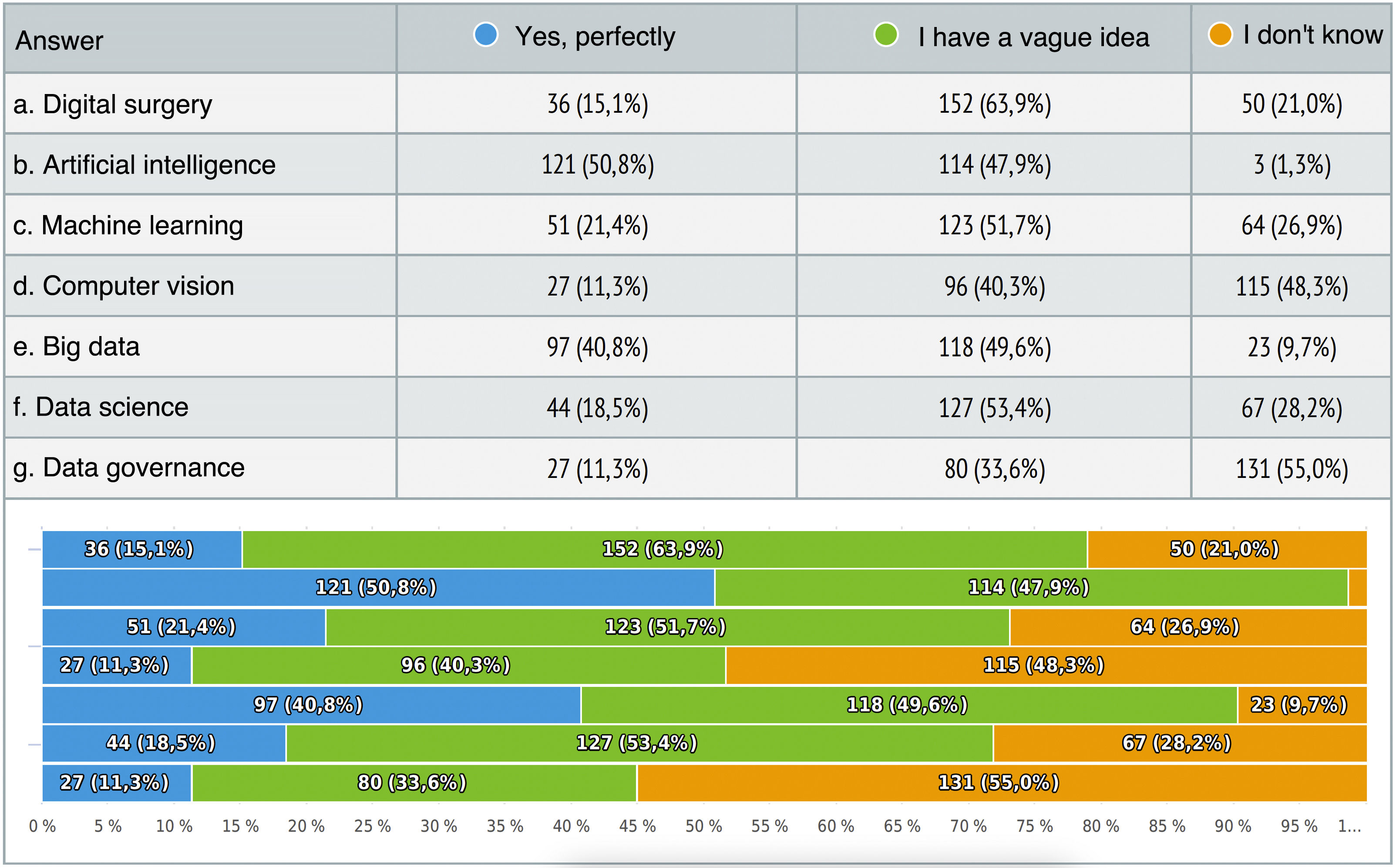
Block II. Regarding the state of the surgeon's KNOWLEDGE in digital surgery and related aspects: (238 responses). Knowledge about certain terms is expressed in Fig. 1.

Fig. 1.

Responses to Block I of the survey on knowledge of terms in Digital Surgery.

Regarding the data generated during the surgical process, the majority are unaware of the existence of informed consent for both patient data and surgeon data (55.5% and 73.9% respectively), as well as the regulation of systematic data collection in digital surgery (76.1%) and who regulates the collection and processing of data in digital surgery (88.2%).

Seventy-one point eight per cent do not know who owns the data from the surgical process in digital surgery, or where to go to obtain the information generated in the process (75.2%). Only 13.0% of respondents know what the information generated is for. The rest have a vague idea or do not know.

Block III. Regarding the state of TRAINING in digital surgery: (238 responses)

For 95.4% of respondents, the topic of digital technology is important for surgeons and 95.4% consider that they are not sufficiently trained in this technology. 92.0% believe that there should be training on digital technology during residency and 98.3% after residency, with 98.3% indicating that they would like the AEC to provide training on the subject.

Block IV. Regarding the OWNERSHIP of data in digital surgery: (238 responses)

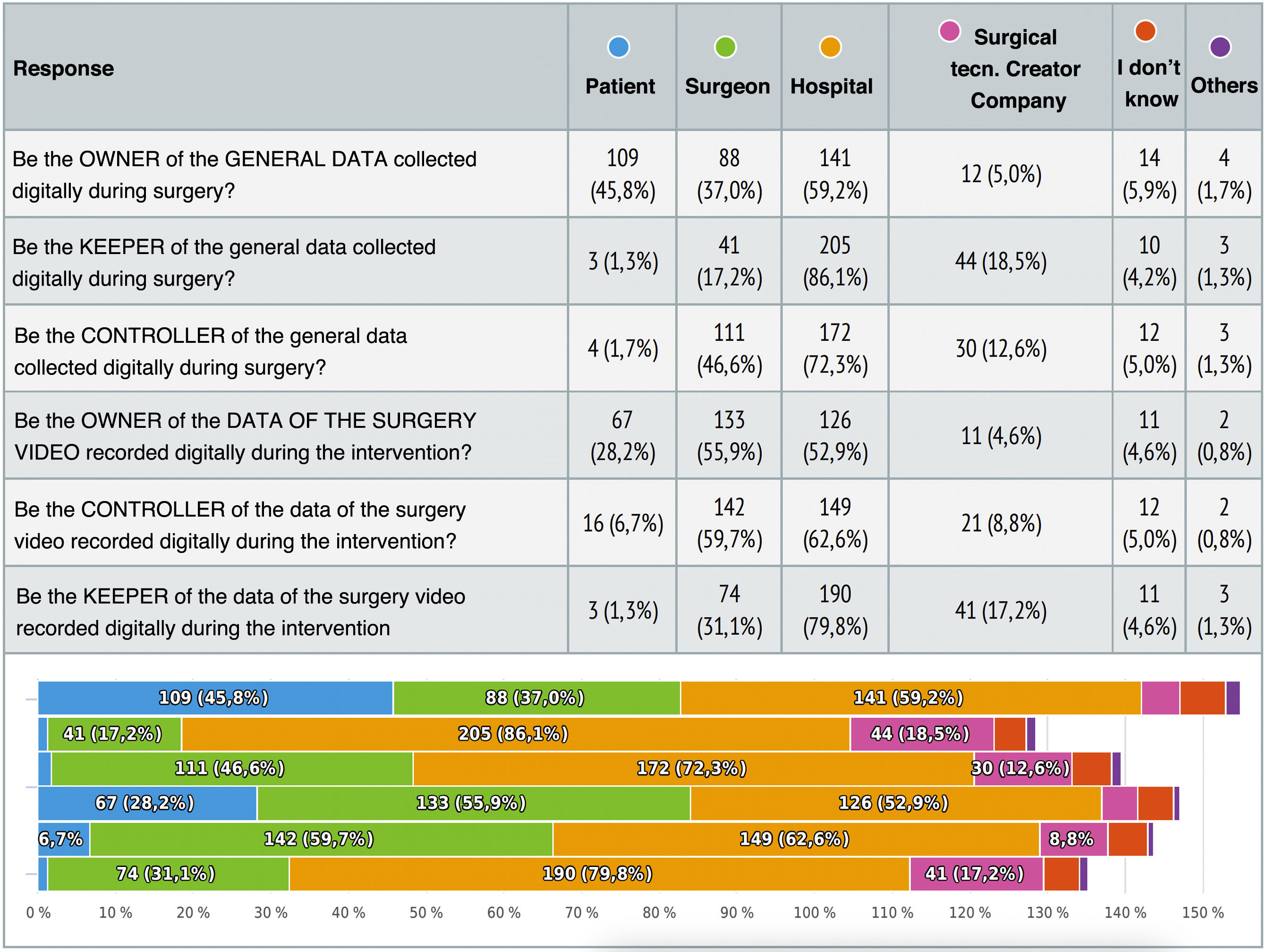
Most of the responses regarding ownership, custody and responsibility for general data and video of the surgery, indicate the hospital as the main recipient of this work and responsibility.

The data are presented below (Fig. 2).

Fig. 2.

Responses to Block IV of the survey on data ownership in Digital Surgery.

Block V. Regarding DIGITAL INFORMATION GENERATED by the surgeon during the surgical intervention: (238 responses)

15.1% of the surgeons surveyed report being aware of having their surgical data stored on a digital platform, 47.9% report that their data is not stored and 37.0% do not know.

Forty-seven point one per cent of the surgeons believe that express consent should be obtained from the surgeon to collect specific intraoperative data on technical steps, surgical variants and manoeuvres, types of procedures, surgical times. Twenty-four point four per cent think that they should only be systematically collected if they are anonymised.

Forty-three point three per cent consider the express consent of the surgeon necessary for the collection of these data during surgery, when pursuing legal, state or commercial statistics purposes.

Block VI. SUGGESTIONS and proposals regarding digital surgery:

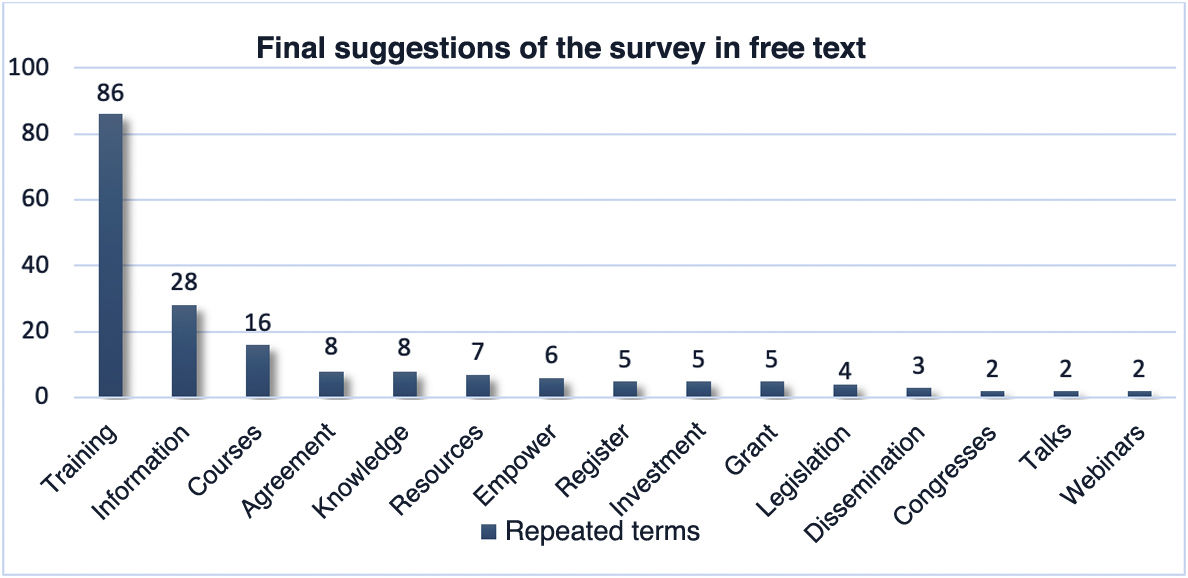
163 respondents added suggestions in free text, summarised in Fig. 3. The most repeated word was “training” 86 (52.7%), followed by “information” 28 (17.2%).

Fig. 3.

Responses to Block VI on suggestions and proposals regarding Digital Surgery.

In the log-linear model, the relationship between interest in digital technology and variables related to knowledge of terms such as Big Data, AI, etc. in the columns was evaluated. None of the independent variables obtained a coefficient with a P value <.05, which suggests that knowledge about these terms (Big Data, AI, etc.) does not have a statistically significant relationship with interest in research on digital technology. There was also no significance when evaluating those who have no interest in digital technology. The correspondence analysis showed a positive association between more advanced knowledge of technological terms (“Yes, perfectly” and “I have a vague idea”) and training in digital surgery. People who indicate “I don’t know” in terms of technological knowledge tend to associate themselves with categories that imply low or no training in digital surgery. There is a clear relationship between the level of technological knowledge and research interest: high knowledge is linked to a strong interest in research and low knowledge is associated with a lack of interest in research. The analysis suggests that promoting technological knowledge could increase interest in researching digital technology. There is also a clear association between interest in robotic surgery and the practice of performing surgeries: people who have an interest also perform surgeries, while people who do not perform surgeries tend not to show interest.

Profile of surgeons with knowledge of digital surgery

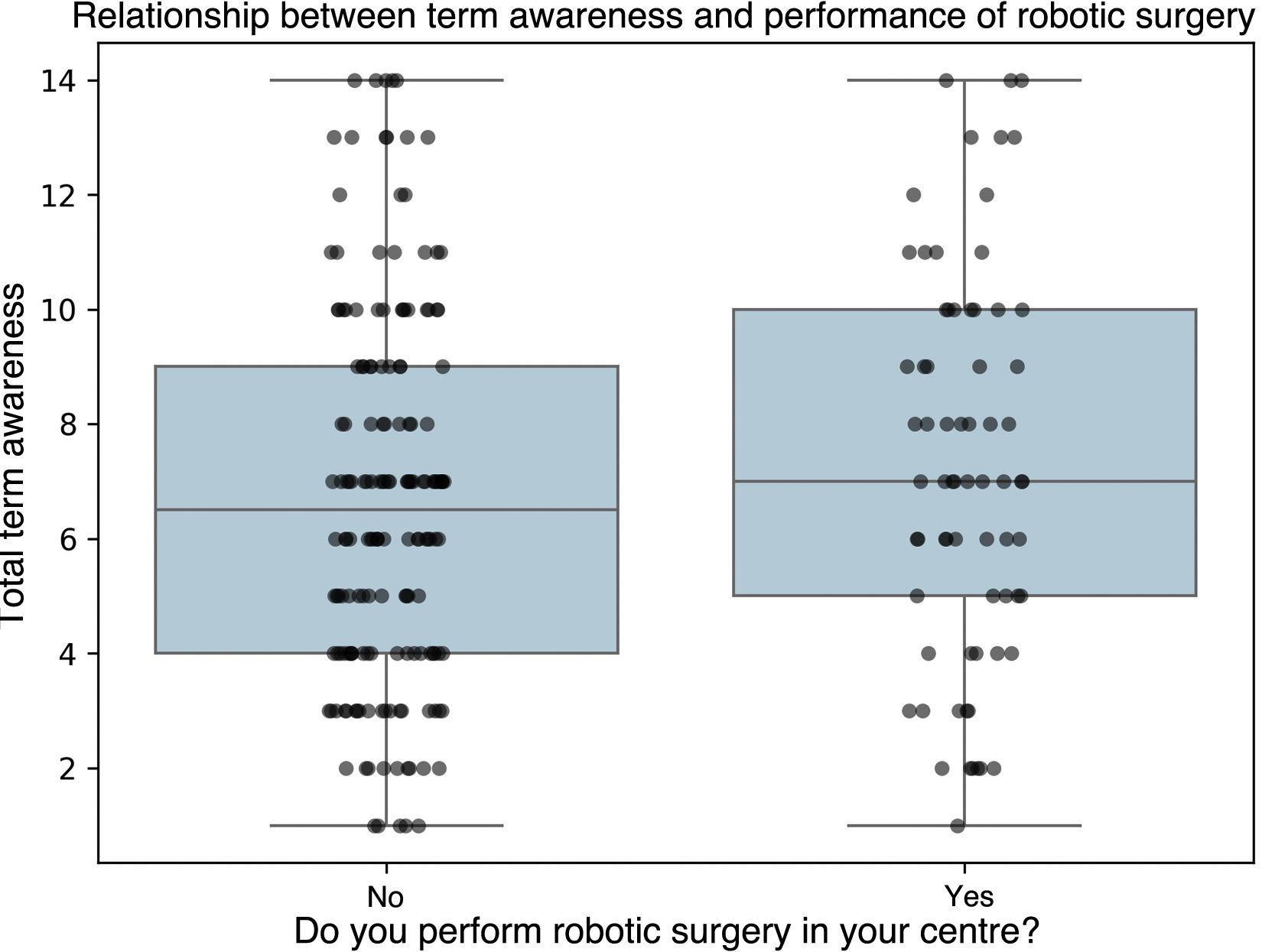
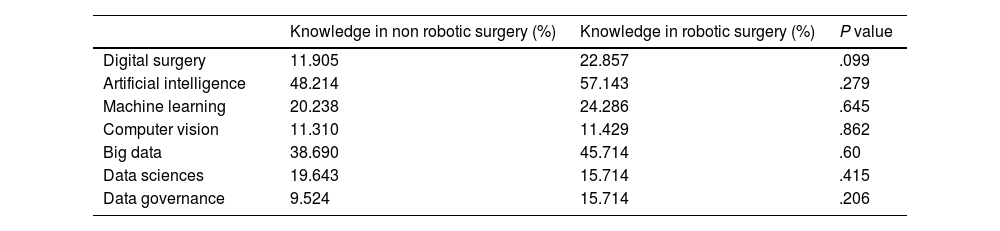
The differences in digital surgery knowledge among surgeons were evaluated. Those who perform robotic surgery have a greater knowledge of the terms both globally (7.2 vs 6619 (P = .215)) (Fig. 4) and evaluating the terms independently, although without significant differences (P > .05) (Table 2) (Fig. 4). Fifty-seven point fourteen per cent of surgeons who perform robotic surgery know the term/the meaning of “Artificial Intelligence”. However, the rest of the terms are known by less than 25% of them. Comparing the answers to the questions about interest in digital technology (Block I, question 11 and Block III, question 1 (Table 2), there are significant differences between surgeons who perform robotic surgery and those who do not (P = .023).

Fig. 4.

Relationship between knowledge of terms and interest in Digital Surgery and the performance of robotic surgery.

Table 2.

Knowledge regarding digital surgery terms and performance of robotic surgery.

  Knowledge in non robotic surgery (%)  Knowledge in robotic surgery (%)  P value 
Digital surgery  11.905  22.857  .099 
Artificial intelligence  48.214  57.143  .279 
Machine learning  20.238  24.286  .645 
Computer vision  11.310  11.429  .862 
Big data  38.690  45.714  .60 
Data sciences  19.643  15.714  .415 
Data governance  9.524  15.714  .206 

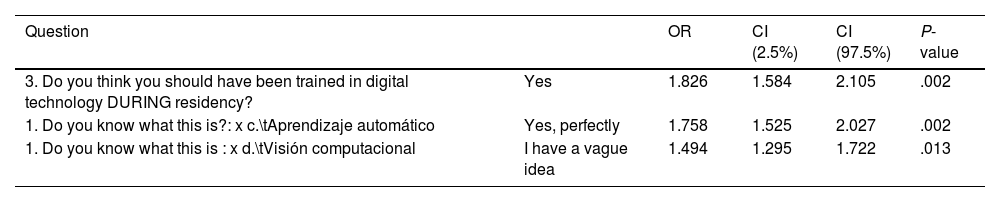
To evaluate the profile of those interested in researching digital technology, a logistic regression was performed to identify the variables that are most closely related to it. This analysis identified that those surgeons who believe that there should be training on digital technology during residency and who are familiar with the terms machine learning and computer vision are almost twice as likely to research digital surgery than those who are not (Table 3).

Table 3.

Logistic regression to identify the variables that are most closely related to this interest.

Question    OR  CI (2.5%)  CI (97.5%)  P-value 
3. Do you think you should have been trained in digital technology DURING residency?  Yes  1.826  1.584  2.105  .002 
1. Do you know what this is?: x c.\tAprendizaje automático  Yes, perfectly  1.758  1.525  2.027  .002 
1. Do you know what this is : x d.\tVisión computacional  I have a vague idea  1.494  1.295  1.722  .013 

Precision: 65.8%; Sensitivity: 62.2%; Specificity: 70.9%.

Discussion

This study highlights major areas of lack of knowledge on digital surgery among Spanish surgeons, together with training deficiencies and the need to implement initiatives in this regard, as well as identifying the profile of interested surgeons. This is the first evaluation carried out in Spain on this subject.

In the midst of this authentic digital technological revolution linked to surgery, in which the surgeon is irremediably involved, it is surprising to see how their role seems to be relegated on many occasions to that of a “mere spectator” of the technological process.

In this study, similar results were found to those of other countries, as occurred in a survey conducted on members of the German Society of Surgery, with 296 participants, regarding the digitalisation process in surgery. This revealed the need to improve the current state of knowledge both in general aspects of digitalisation and in relevant surgical issues.8 Subsequently, another national survey of German surgeons from different specialties (55.27% general surgeons), on artificial intelligence (AI), showed that although more than half were familiar with AI applications, the majority rated their personal knowledge as mediocre (41.6%) or rudimentary (37.3%).9 This same study emphasised the need for education and training in AI.9

Robotic surgery has increased exponentially in our healthcare system in just a few years, going from 7% in 2020, according to the AEC national survey on technological implementation,10 to 56% in the present survey, which represents an eight-fold increase in just 4 years. However, less than a third of the surgeons surveyed have access to its use, which suggests ​​the irregular implementation of this technology.

There is no provision for training in the new skills derived from the introduction of information technology into the specialty nor a training plan for surgeons in the technological field, adapted to their role in the process, which would enable them to do their job with full knowledge and autonomy. This seems paradoxical if we consider that the volume and complexity of this field is of such magnitude that it has led to the birth of a new science, “Data Science”.11 This study shows that only a minority of surgeons are familiar with key terms such as “digital surgery”, “machine learning” or “data governance”. Furthermore, less than 10% of surgeons are part of any research project with big data or digital technology, despite the fact that more than 60% say they would like to research digital technology applied to surgery. At a time when the state of research on AI-enabled decision support in surgery is surrounded by limitations that undermine its scientific quality,12 systematic and educated involvement of surgeons in the digital process is required as a contribution to the advancement of digital technology.

The transformation of surgery is obliging surgeons to transform. The future digital surgeon must become familiar with the basic concepts of AI13 and understand the technology they use, as well as become aware of the legal, ethical and data governance issues related to its use.3

Informed consent or the usefulness of information generated in the context of digital surgery are unknown to most surgeons today. There is even a lack of knowledge regarding the obligation of express consent to specify procedures performed by robotic surgery, which is relevant, especially given the majority of patients’ lack of knowledge regarding the principles of this technology.14 Although consent for data collection by both the patient and the surgeon is a topic of current controversy, with ethical and legal implications still unresolved,15 the risks of using data to promote commercial interests unrelated to care, teaching or research16 must be noted.

State support initiatives such as “Understanding Patient Data” in the United Kingdom17 support the importance of education for all agents involved in the technological process. This programme allows patients to be educated about what data is collected and how it is used in digital surgery applications, in the belief that only through education and engagement can they provide properly informed consent about whether they wish to share their data.

Pai et al.14 probed into the under-explored legal implications of robotic surgery and identified three medical-legal issues: 1) the lack of standardised training and accreditation for robotic surgery poses potential risks to patient safety and surgeon competence; 2) informed consent processes require additional considerations to ensure that patients are fully aware of the capabilities of the technology and potential risks; 3) the issue of legal liability becomes complex due to the involvement of multiple stakeholders in the operation of robotic systems. A recent study on the potential value of Digital Surgery, based on Delphi methodology and international consensus by a panel of experts, showed that one of the main current concerns is the use of data in digital surgery, as well as its use in surgical training.18

The implementation of AI in surgery presents challenges related to the protection of patient and surgeon data, the ethical limits of innovation, as well as the real impact of AI on patient and surgical team outcomes.15

In the study by Pecqueux et al., German surgeons expressed concern about ethical and legal issues regarding liability, as the main obstacle to the clinical dissemination of AI.9

At present, the legislation applicable to the use of data in digital surgery is not very specific. In Europe, the General Data Protection Regulation (GDPR) of the UK and EU governs health data regardless of the format or the way in which it is collected, with no mention of AI or associated technologies.

The lack of standardisation of AI-related terminology in law and regulation of digital clinical data, intellectual property or responsibility for data integrity, coupled with legislative discrepancies between different countries, leads to a significant regulatory gap regarding data in Digital Surgery still existing today.3 The UK NHS AI Lab has published documents for the safe adoption of AI systems in healthcare NHS X19 and the WHO a guide on ethics and AI in healthcare.20 This provides a general framework for AI in healthcare, but does not address specific issues of AI ethics in surgery.

The creation of data governance regulations for the surgical process would require the collaboration of a multidisciplinary team of experts, involving surgeons, patients, industry, administration, researchers, computer engineers and ethics specialists.15

In this context of irregular implementation and lack of training, research has been carried out to determine whether robotic surgeons have the necessary knowledge and a higher level of knowledge than surgeons who do not perform robotics, since the use of robotic surgery often implies the use of some of these resources. It is surprising to see that, although there is a higher level of interest, there are no major differences in knowledge, which may be a warning about the profiles trained for robotic surgery and the necessary training of these. In addition, the evident association between interest in robotic surgery and the practice of performing surgeries, where it shows that people who do not perform surgery tend not to show interest in it, may be a warning for unit coordinators, indicating the apathy and disinterest that the uneven implementation of robotic surgery can generate in groups.

More than 90% of the surgeons surveyed consider this topic to be important and acknowledge that they are not sufficiently trained in it, which is why they demand training both during residency and throughout their professional development as specialists. Of note here was the concern for learning shown by the majority of those surveyed, who were aware of the relevance of the topic. Furthermore, in the present study it is possible to identify that those surgeons who know more about the topic are those with more interest in researching it, which is in line with the published literature that emphasises the need to become familiar with the basic concepts of artificial intelligence and technological implementation to better incorporate this new field into surgical practice, putting it on a par with more “traditional” fields of study such as molecular biology, genetics and immunology.13 The participants point to the AEC as a reference institution where these training initiatives in this area can be implemented. The correlation analysis also points out the importance of learning. Surgeons who have been trained in digital surgery have a high level of knowledge, while those who have not received training have a low level of knowledge, which, given the importance of digital surgery, is essential to increase. Furthermore, the correlation between knowledge and interest in research emphasises the importance of continuing to train surgeons in this field in order to continue increasing research on the subject.

Within this backdrop of accelerated speed, the surgeon is faced with a “technological invasion” in which they are an essential agent, but at the same time unaware of many of the foundations and algorithms used. They do not know who directs and is responsible for the management of the data they use and generate in their professional performance, and they are unaware of the consequences derived from both the acceptance of surgical digitalisation and its discrepancy with the results provided by artificial intelligence during its interaction with a specific patient.3 We must ensure that technological advances stop moving independently from their users, preventing the surgeon from remaining “blind” to the aspects of innovation that directly or indirectly concern them, in addition to making them a necessary collaborator in its progress, providing them with the leading role that must be theirs in the digital transformation of surgery.

Training in emerging technologies and their governance should be promoted from residency onwards, in the context of a standardised perspective and under the direction of national surgical societies,16 such as the AEC in Spain. A broad strategy could include the creation of specific courses for residents and the organisation of webinars through the different sections of the AEC, such as the Section of Minimally Invasive Surgery and Technological Innovation (CMI-IT), the Quality Section and the Training Section. Additionally, pre-congress courses and workshops could be offered at the AEC Annual Congresses, with the aim of updating professionals at all stages on new technologies and their implications. This structured and continuous training approach would allow a gradual adaptation of professionals to technological advances, thus promoting safer and more efficient practice. The ideal would be to establish a training itinerary that includes knowledge and skills related to Digital Surgery, which would be officially incorporated into the national programme of the specialty and integrated with the learning of the rest of the skills currently required of the general surgeon. This approach would also improve the current problems of inequality of access, with the inclusion of courses and/or training stays in those centers with greater capacity and teaching resources in these technological advances.

Training experiences have been reported, mainly associated with robotic surgery, both for comprehensive training in general surgery during residency,21 and in specific areas of the specialty.22–24

Current accreditation practices in robotic surgery and new technologies are inadequate or not standardised.25 Although a universal training pathway for robotic surgery residents has not been defined, following the definition of “competency-based assessment” in 2022 by the ABS “American Board of Surgery”, a working group has been established in the USA to develop a universal curricular pathway and take advantage of digital tools to support the training of residents.26 In this line, the protocol to achieve a pan-European consensus in the development of a comprehensive training programme for gastrointestinal robotic surgery has just been published.27

The main limitations of this study are that it only represents a sample of Spanish surgeons, which means that there is a selection bias that only indicates a significant lack of knowledge, even among the most interested surgeons, which would include the participants in the study. Other possible selection biases have been that it has not distinguished between younger surgeons or residents and specialists or according to the volume of the centres, although training on the subject in most centres and over time has not changed. This is a survey not validated in other studies due to the novelty of the subject addressed. Another limitation of our study is that the groups of surgeons (residents, junior and senior assistants) have not been analysed separately, nor has the volume of patients treated in the different centres, factors that could influence the knowledge and use of the technologies. However, due to the initial extension and scope of this study, we have focused on obtaining an overview. In future research further probing into these subgroups would be useful to better adapt the training programmes to the specific needs of each profile.

To conclude, there is a significant lack of knowledge regarding digital surgery in Spain, and areas for improvement have been identified as a starting point for training projects that provide surgeons with the knowledge and skills required by the new surgical era. Despite the increase in robotic surgery and the digitalisation of the surgical process in Spain, efforts must be made to bring to the attention of the surgical community and our Society the importance of the incursion of digital technology in surgery and its connotations regarding the governance of data derived from the surgical process. We believe the AEC is the best instrument for the articulation of these tools, which would enable today’s surgeons to accept their leading role in this innovation and digital transformation.

Funding

This research did not receive specific support from agencies in the public sector, commercial sector or non-profit entities.

Conflict of interest

The authors declare that they have no conflicts of interest.

Acknowledgements

The authors would like to thank the members of the Section of Minimally Invasive Surgery and Technological Innovation and the board of directors of the Spanish Association of Surgeons for thei rsupport in this initiative, as well as all the surgeons who participated in this survey.

Appendix A
Supplementary data

The following is Supplementary data to this article:

Icono mmc1.pdf

References
[1]
G.E. Moore.
Cramming more components onto integrated circuits.
Electronics., 38 (1965), pp. 114-117
[3]
M.A. Acosta-Mérida.
Data governance in digital surgery.
Cir Esp (Engl Ed)., 102 (2024), pp. S8-15
[4]
E.M. Targarona, A. Balla, G. Batista.
Big data and surgery: The digital revolution continues.
Cir Esp (Engl Ed)., 96 (2018), pp. 247-249
[5]
M. Chen, S. Mao, Y. Liu.
Big data: a survey.
[6]
K. Lam, M.D. Abràmoff, J.M. Balibrea, S.M. Bishop, R.R. Brady, R.A. Callcut, et al.
A Delphi consensus statement for digital surgery.
NPJ Digit Med., 5 (2022), pp. 100
[8]
D. Wilhelm, M. Kranzfelder, D. Ostler, A. Stier, H.J. Meyer, H. Feussner.
Digitalization in surgery: What surgeons currently think and know about it-results of an online survey [Article in German].
Chirurg., 91 (2020), pp. 51-59
[9]
M. Pecqueux, C. Riediger, M. Distler, F. Oehme, U. Bork, F.R. Kolbinger, et al.
The use and future perspective of Artificial Intelligence-A survey among German surgeons.
Front Public Health., 10 (2022),
[10]
J.D. Sánchez López, M.A. Acosta Mérida, M. Toledano Trincado, J.J. Segura Sampedro, J. Trébol López, A. Aranzana Gómez, et al.
Technological implementation in General Surgery services in Spain. National survey and results.
Cir Esp (Engl Ed)., 99 (2021), pp. 707-715
[11]
J.W. Tukey.
The future of data analysis.
Ann Math Stat., 33 (1962), pp. 1-67
[12]
T.J. Loftus, M.S. Altieri, J.A. Balch, K.L. Abbott, J. Choi, J.S. Marwaha, et al.
Artificial intelligence-enabled decision support in surgery: state-of-the-art and future directions.
Ann Surg., 278 (2023), pp. 51-58
[13]
A.A. Gumbs, I. Frigerio, G. Spolverato, R. Croner, A. Illanes, E. Chouillard, et al.
Artificial intelligence surgery: how do we get to autonomous actions in surgery?.
Sensors (Basel)., 21 (2021), pp. 5526
[14]
S.N. Pai, M. Jeyaraman, N. Jeyaraman, A. Nallakumarasamy, S. Yadav.
In the hands of a robot, from the operating room to the courtroom: the medicolegal considerations of robotic surgery.
[15]
J.W. Collins, H.J. Marcus, A. Ghazi, A. Sridhar, D. Hashimoto, G. Hager, et al.
Ethical implications of AI in robotic surgical training: a Delphi consensus statement.
Eur Urol Focus., 8 (2022), pp. 613-622
[16]
N.P. Hardy, R.A. Cahill.
Digital surgery for gastroenterological diseases.
World J Gastroenterol., 27 (2021), pp. 7240-7246
[17]
Understanding Patient Data, 2024. Available from: https://understandingpatientdata.org.uk/.
[18]
J. Erskine, P. Abrishami, J.C. Bernhard, R. Charter, R. Culbertson, J.C. Hiatt, et al.
An international consensus panel on the potential value of Digital Surgery.
[19]
Artificial Intelligence: how to get it right. Putting policy into practice for safe data-driven innovation in health and care, 2019. Available from: https://www.nhsx.nhs.uk/media/documents/NHSX_AI_report.pdf.
[20]
World Health Organisation. Ethics and governance of artificial intelligence for health, 2021. Available from: https://www.who.int/publications/i/item/9789240029200.
[21]
H. Moit, A. Dwyer, M. De Sutter, S. Heinzel, D. Crawford.
A standardized robotic training curriculum in a general surgery program.
[22]
D. Miskovic, J. Ahmed, R. Bissett-Amess, M. Gómez Ruiz, F. Luca, D. Jayne, et al.
European Academy for Robotic Colorectal Surgery (EARCS). European consensus on the standardization of robotic total mesorectal excision for rectal cancer.
Colorectal Dis., 21 (2019), pp. 270-276
[23]
Y. Fong, J.F. Buell, J. Collins, J. Martinie, C. Bruns, A. Tsung, et al.
Applying the Delphi process for development of a hepatopancreaticobiliary robotic surgery training curriculum.
Surg Endosc., 34 (2020), pp. 4233-4244
[24]
S. Tou, S. Au, C. Clancy, S. Clarke, D. Collins, F. Dixon, et al.
European Society of Coloproctology guideline on training in robotic colorectal surgery (2024).
Colorectal Dis., 26 (2024), pp. 776-801
[25]
E.M. Huffman, S.A. Rosen, J.S. Levy, M.A. Martino, D. Stefanidis.
Are current credentialing requirements for robotic surgery adequate to ensure surgeon proficiency?.
Surg Endosc., 35 (2021), pp. 2104-2109
[26]
J.R. Porterfield Jr, D. Podolsky, C. Ballecer, A.M. Coker, O.Y. Kudsi, A.J. Duffy, et al.
Structured resident training in robotic surgery: recommendations of the Robotic Surgery Education Working Group.
J Surg Educ., 81 (2024), pp. 9-16
[27]
M.G. Fadel, J. Walshaw, F. Pecchini, M. Elhadi, M. Yiasemidou, M. Boal, et al.
European Robotic Surgery Consensus (ERSC) study group. European Robotic Surgery Consensus (ERSC): protocol for the development of a consensus in robotic training for gastrointestinal surgery trainees.
Article options
Tools
Supplemental materials
