


Candy cane syndrome (CCS) is a rare complication of laparoscopic Roux-en-Y gastric bypass (LRYGB). It occurs due to redundancy in the blind loop at the gastro-jejunal anastomosis.
ObjectiveTo evaluate the type of symptoms, anatomic and functional findings, and outcome after treatment.
Material and methodsA prospective case series study was conducted between 2010 and 2022, including symptomatic patients with CCS after LRYGB. Symptoms were correlated with anatomic and functional findings. Big gastric pouch was defined if its size was >5 cm, and a long candy cane loop was diagnosed if its length was >5 cm. Due to failure of medical treatment, revision surgery (RS) was indicated for resection of the elongated blind jejunal loop, resizing the redundant gastric pouch and repairing the hiatal hernia repair (HH) when necessary.
ResultsThe study included 23 patients, with a mean age of 49 ± 11 years. Twenty-one patients underwent primary LRYGB, and 2 were converted to this technique after sleeve gastrectomy (SG). The mean time from LRYGB to symptom onset was 7.6 ± 4.3 years. Pain and reflux symptoms were the most frequent, with no differences between patients with or without HH (P < .05). CCS coexisted with a large gastric pouch in 56.5% and HH in 52.2% of cases. A defective lower esophageal sphincter, abnormal esophageal motility, and pathological acid reflux test were observed. After surgery, improvement was observed in 86.9%.
ConclusionCCS can lead to gastrointestinal symptoms following LRYGB, regardless of the presence of HH. Complete examinations are crucial for diagnosis and to determine the surgical intervention, which is the best option for treatment.
El síndrome del bastón de caramelo (CCS) es una complicación poco común del bypass gástrico laparoscópico en Y de Roux (LRYGB). Ocurre debido a asa ciega redundante en la anastomosis gastroyeyunal.
ObjetivoEvaluar el tipo de síntomas, hallazgos anatómicos, funcionales y evolución post tratamiento.
Material y métodosEstudio prospectivo de serie de casos realizado entre 2010 y 2022, que incluyó pacientes sintomáticos con CCS tras LRYGB. Los síntomas se correlacionaron con los hallazgos anatómicos y funcionales. Se definió bolsa gástrica grande si su tamaño era >5 cm y se diagnosticó CCS si su longitud era >5 cm. Debido al fracaso del tratamiento médico, se indicó cirugía de revisión (RS) para resección del asa yeyunal ciega elongada, eventualmente redimensionamiento de la bolsa gástrica redundante y reparación de la hernia de hiato si corresponde.
ResultadosSe incluyeron 23 pacientes, edad media de 49 ± 11 años. Veintiún pacientes se sometieron a LRYGB primario y dos se convirtieron a esta técnica después de una gastrectomía en manga (SG). El tiempo medio desde LRYGB hasta la aparición de los síntomas fue de 7,6 ± 4,3 años. Los síntomas de dolor y reflujo fueron los más frecuentes, sin diferencias entre pacientes con o sin HH (p < 0,05). El CCS en concomitancia con bolsa gástrica grande ocurrió en el 56,5% y la HH en el 52,2% de los casos. Se observó un esfínter esofágico inferior hipotensivo, motilidad esofágica inefectiva y reflujo ácido patológico. Después de la cirugía se observó mejoría en el 86,9%.
ConclusiónEl CC puede provocar síntomas gastrointestinales después de LRYGB independiente de la existencia o no de HH. Los exámenes completos son cruciales para diagnosticar y seleccionar las intervenciones quirúrgicas, la mejor opción de tratamiento.
A rare late complication after LRYGB is candy cane syndrome (CCS), caused by redundancy of the blind loop at the gastro-jejunal anastomosis.1,2
The etiology of CCS formation has not been established. Among the possible causes, progressive dilation of the blind end of the feeding loop or the creation of an excessively long blind jejunal end during the construction of the gastrojejunostomy have been suggested.3,4
Most publications are of case series with a limited number of patients4,5 that do not mention the coexistence of CCS and hiatal hernia (HH) as a cause of gastroesophageal symptoms after gastric bypass. The presence of both conditions could imply an exacerbation of symptoms.
The objectives of this study are to analyze the symptoms of patients with CCS and to compare their evolution after medical treatment and revision surgery (RS). Additionally, the endoscopic and radiological findings before and after RS are described, as is the correlation between the development of symptoms in CCS patients and the concomitant presence of hiatal hernia, gastric pouch size, and blind jejunal loop size.
Material and methodsThis is a prospective case series study of patients with esophagogastric symptoms presenting endoscopic and radiological images compatible with CCS, attributed to the long blind jejunal end loop in the gastro-jejunal anastomosis after an LRYGB. All patients had been treated at a single medical center between 2010 and 2022, and CCS was detected during postoperative follow-up.
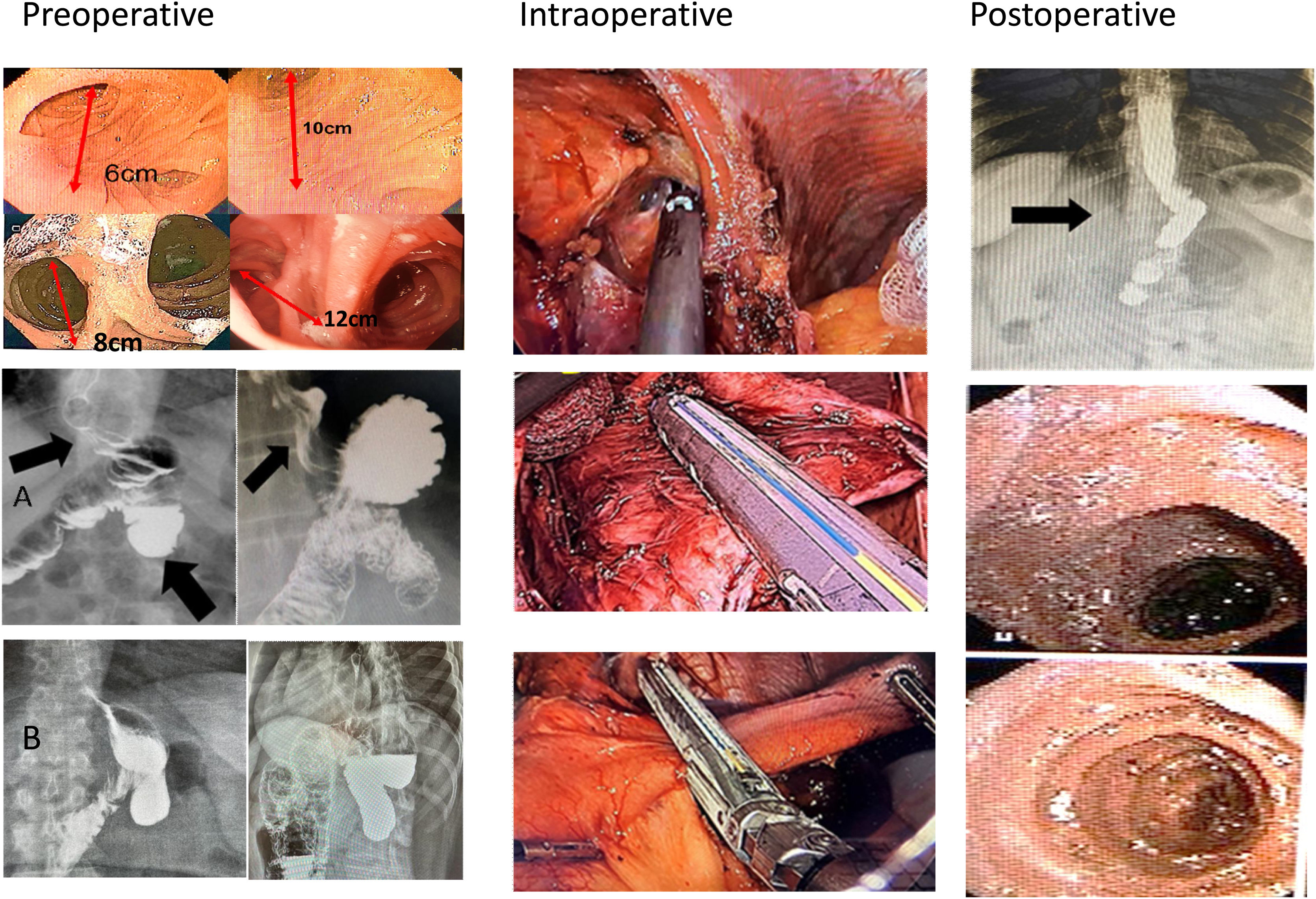
Data were registered in the electronic clinical record system (Ticares®). The candy cane image was observed after primary LRYGB (21 patients) or post-conversion after previous sleeve gastrectomy (SG) (2 cases). Body mass index (BMI, kg/m2) was determined before and after LRYGB, and also after RS. The clinical questionnaire, radiologic and endoscopic assessment to confirm CCS, presence of concomitant HH, size of the gastric pouch, and the length of the blind jejunal end loop were assessed before and after RS (Fig. 1).
A) The endoscopic and radiological assessment determining the length of the blind loop by measuring the distance from the bottom of the blind loop to the intestinal edge of the gastrojejunostomy. B) Intraoperative images demonstrating hiatal hernia, gastric pouch downsizing and long blind loop resection. C) Postoperative radiological and endoscopic images demonstrating no hiatal hernia, small gastric pouch and no candy cane image.
Clinical questionnaire: Time of onset after LYRGB and symptoms were recorded, including retrosternal pain, regurgitation heartburn, dysphagia and vomiting. Two patients underwent gastric bypass after a previous SG.
Radiologic evaluation: Patients underwent a barium swallow and computed tomography (CT) to evaluate the presence of HH, size of gastric pouches, and candy cane length.
Upper endoscopic ultrasound (EUS): This procedure was performed to determine the presence of macroscopic esophagitis, Barrett’s esophagus, and hiatal hernia (HH). The size of the hiatal hernia, gastric pouch, and the length of the blind jejunal loop were precisely measured by determining the distance from the incisor to the esophagogastric junction, level of the hiatus ring, distance to the gastrojejunal anastomosis, and distance to the bottom of the blind jejunal loop, respectively.
The long blind jejunal loop was defined as >5 cm in length, and a large gastric pouch was defined as >5 cm in size, measured during upper gastrointestinal endoscopy and barium swallow.
Manometric and 24-h pH monitoring studies were performed in only 13 patients because others rejected being submitted to the examination. These studies were performed in accordance with the method published elsewhere.8,9
Despite the anatomical/mechanical defect compatible with CCS with or without HH or a large gastric pouch, all patients were initially treated with dietary modifications, proton pump inhibitors (PPI) and prokinetics, after which the therapeutic response was determined. In patients with persistent symptoms who did not show clinical improvement after 6 months of treatment, RS was indicated to perform resection of the elongated blind jejunal loop, re-sizing the redundant gastric pouch when necessary, and conducting hiatal hernia repair depending on the anatomical defect confirmed during laparoscopic exploration.
The surgery was completed laparoscopically in all cases. The resection of the elongated blind jejunal loop was performed with a linear stapler using a bougie passing to the distal efferent jejunal loop as a guide. In the case of concomitant HH, hiatal hernioplasty was performed according to the usual technique, using 2–3 stitches of nonabsorbable material (silk 0) by both posterior and anterior approaches. No mesh was used. In cases with a large gastric pouch, gastric downsizing (GDS) was performed.
All patients had immediate postoperative control and a complete follow-up (18–24 months). EUS and barium x-ray were performed to evaluate the effectiveness of the indicated surgical treatment.
Data analysis was performed using IBM SPSS version 18.0 (IBM Co, Armonk, NY, USA). Fisher’s and chi2 tests were applied, and a P-value <.05 was considered statistically significant.
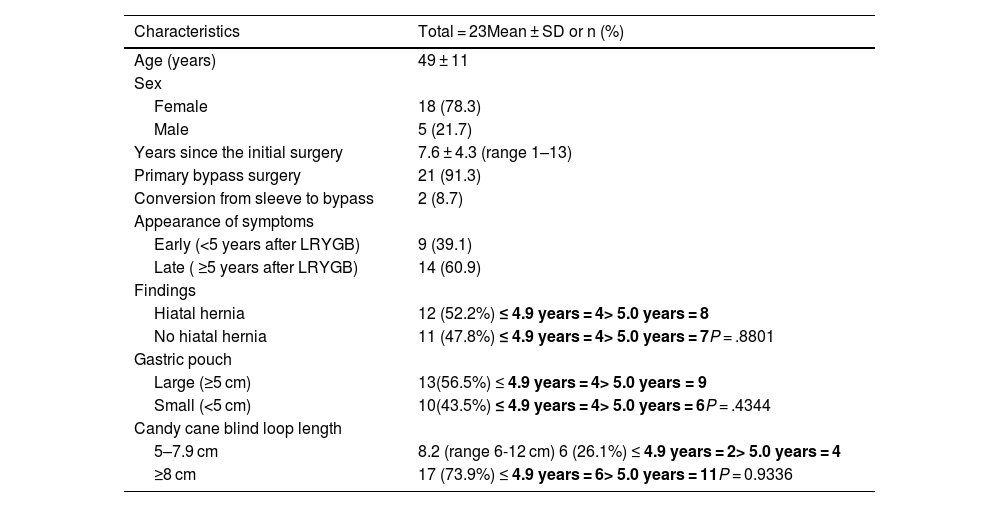
ResultsThe sample included 23 patients diagnosed with CCS, with a mean age of 49 ± 11 years (range 36–77) and a predominance of females (n = 18; 78.3%). The mean time until symptom presentation was 7.6 ± 4.3 years (range 3–12) after LRYGB. Eight patients had <5 years between the LRYGB and the RS, and 15 > 5 years. Table 1 shows the baseline characteristics of patients. CC length ≥8 cm was found in 17 patients (73.9%). Concomitance with a large gastric pouch occurred in 56.5% and HH in 52.2% of cases. No significant differences were found regarding the presence of hiatal hernia, large proximal gastric pouch size, or length of blind loop in terms of the time after the initial procedure.
Patient characteristics at baseline and over time after the initial operation (n = 23).
| Characteristics | Total = 23Mean ± SD or n (%) |
|---|---|
| Age (years) | 49 ± 11 |
| Sex | |
| Female | 18 (78.3) |
| Male | 5 (21.7) |
| Years since the initial surgery | 7.6 ± 4.3 (range 1–13) |
| Primary bypass surgery | 21 (91.3) |
| Conversion from sleeve to bypass | 2 (8.7) |
| Appearance of symptoms | |
| Early (<5 years after LRYGB) | 9 (39.1) |
| Late ( ≥5 years after LRYGB) | 14 (60.9) |
| Findings | |
| Hiatal hernia | 12 (52.2%) ≤ 4.9 years = 4> 5.0 years = 8 |
| No hiatal hernia | 11 (47.8%) ≤ 4.9 years = 4> 5.0 years = 7P = .8801 |
| Gastric pouch | |
| Large (≥5 cm) | 13(56.5%) ≤ 4.9 years = 4> 5.0 years = 9 |
| Small (<5 cm) | 10(43.5%) ≤ 4.9 years = 4> 5.0 years = 6P = .4344 |
| Candy cane blind loop length | |
| 5–7.9 cm | 8.2 (range 6-12 cm) 6 (26.1%) ≤ 4.9 years = 2> 5.0 years = 4 |
| ≥8 cm | 17 (73.9%) ≤ 4.9 years = 6> 5.0 years = 11P = 0.9336 |
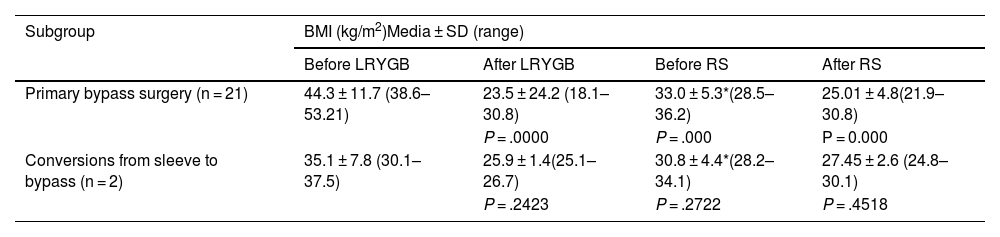
BMI changes are shown in Table 2. Patients in the gastric bypass group had a BMI > 40 kg/m², which returned to normal values after the procedure in all of them (P = .000). However, the weight was regained during follow-up, to later return to normal BMI after RS (close to 25 kg/m2), with a significant difference (P = .000)
BMI evolution before and after LRYGB, and before and after RS (n = 23).
| Subgroup | BMI (kg/m2)Media ± SD (range) | |||
|---|---|---|---|---|
| Before LRYGB | After LRYGB | Before RS | After RS | |
| Primary bypass surgery (n = 21) | 44.3 ± 11.7 (38.6–53.21) | 23.5 ± 24.2 (18.1–30.8) | 33.0 ± 5.3*(28.5–36.2) | 25.01 ± 4.8(21.9–30.8) |
| P = .0000 | P = .000 | P = 0.000 | ||
| Conversions from sleeve to bypass (n = 2) | 35.1 ± 7.8 (30.1–37.5) | 25.9 ± 1.4(25.1–26.7) | 30.8 ± 4.4*(28.2–34.1) | 27.45 ± 2.6 (24.8–30.1) |
| P = .2423 | P = .2722 | P = .4518 | ||
BMI: body mass index (kg/m2). RS: revision surgery. SD: standard deviation. Laparoscopic Roux-en-Y gastric bypass (LRYGB).
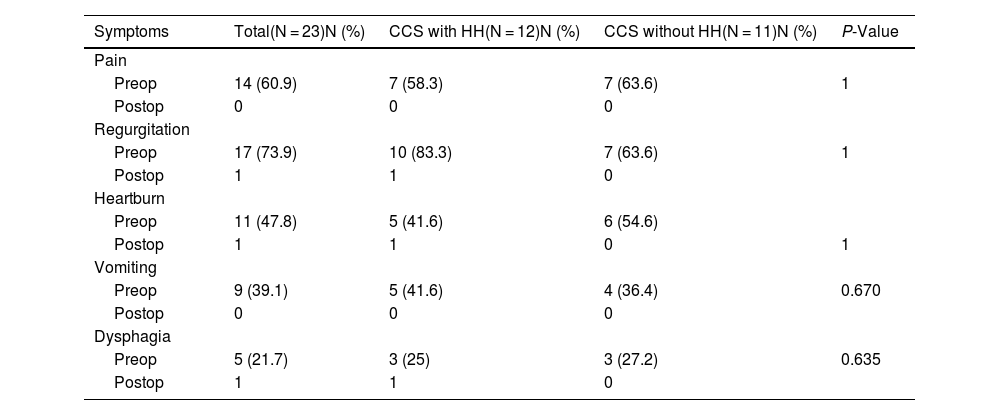
Regarding the correlation of symptoms and the length of the blind loop, gastric pouch size, or presence of hiatal hernia, regardless of these anatomic findings and time after the initial operation, pain, reflux symptoms (regurgitation and heartburn), and vomiting were the most frequent symptomatic triad. After RS, only one patient with a large gastric pouch and concomitant HH presented reflux symptoms and dysphagia. Symptoms associated with the presence or absence of concomitant HH are shown in Table 3. Additionally, 85.7% (n = 18) of the patients presented 2 or more symptoms at diagnosis.
Initial symptoms in patients presenting candy cane syndrome with or without concomitant hiatal hernia.
| Symptoms | Total(N = 23)N (%) | CCS with HH(N = 12)N (%) | CCS without HH(N = 11)N (%) | P-Value |
|---|---|---|---|---|
| Pain | ||||
| Preop | 14 (60.9) | 7 (58.3) | 7 (63.6) | 1 |
| Postop | 0 | 0 | 0 | |
| Regurgitation | ||||
| Preop | 17 (73.9) | 10 (83.3) | 7 (63.6) | 1 |
| Postop | 1 | 1 | 0 | |
| Heartburn | ||||
| Preop | 11 (47.8) | 5 (41.6) | 6 (54.6) | |
| Postop | 1 | 1 | 0 | 1 |
| Vomiting | ||||
| Preop | 9 (39.1) | 5 (41.6) | 4 (36.4) | 0.670 |
| Postop | 0 | 0 | 0 | |
| Dysphagia | ||||
| Preop | 5 (21.7) | 3 (25) | 3 (27.2) | 0.635 |
| Postop | 1 | 1 | 0 |
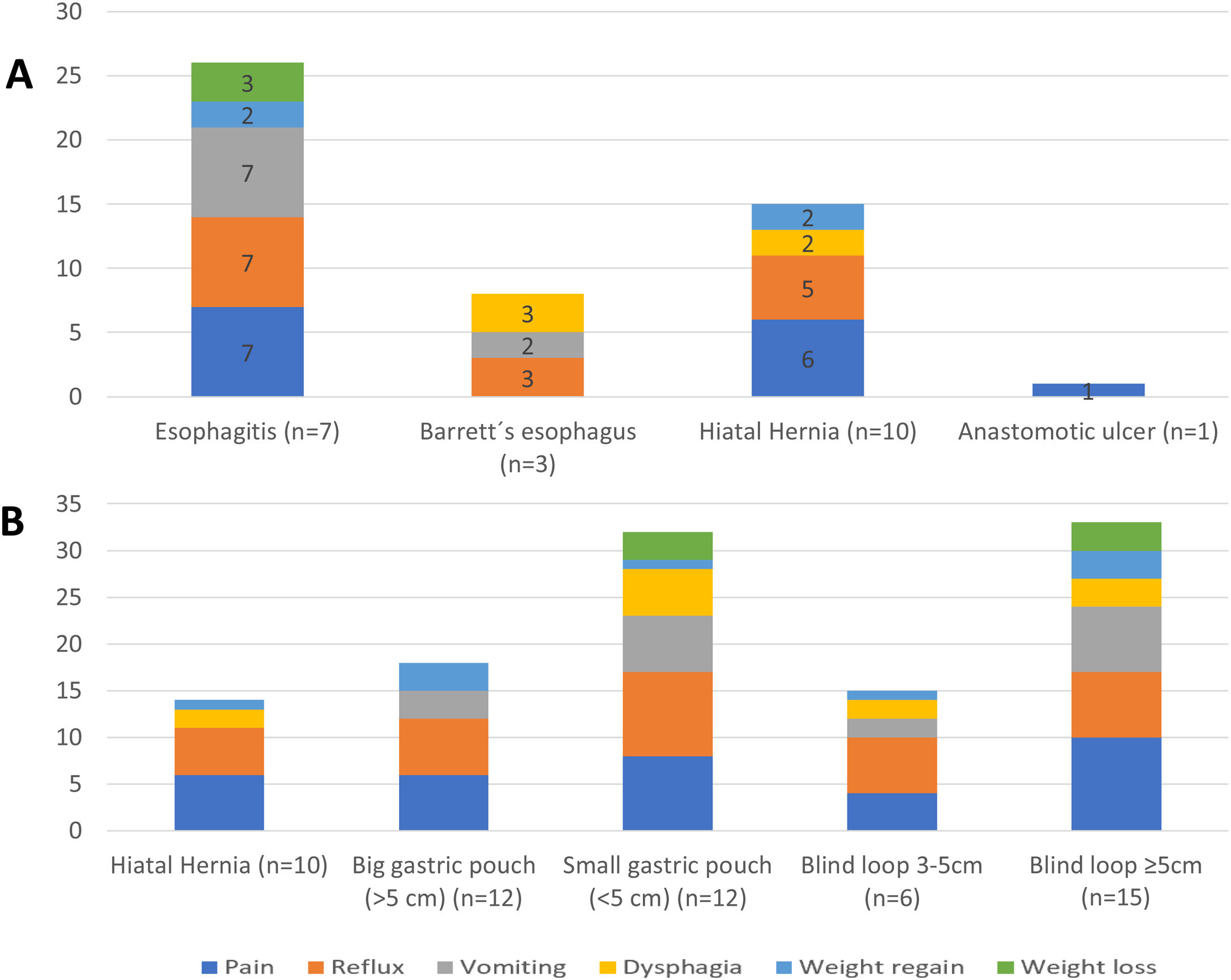
Patients with hiatal hernia, large gastric pouch, or long blind jejunal loop were the most symptomatic. One patient had persistent dysphagia due to König’s syndrome.6 No relationship was found between gastric pouch size and the presence of pain (P = .696), heartburn (P = .705), reflux (P = .489), or vomiting (P = .4). Fig. 2 shows the distribution of symptoms according to the findings detected during endoscopic or radiological studies. Symptoms were almost equally associated with presence of esophagitis, Barrett’s esophagus, hiatal hernia (A), gastric pouch and length of blind loop (B).
A manometric and 24-h pH monitoring study performed in 13 patients, demonstrated hypotensive LES in 9 of them. The resting pressure of the LES was 7.05 ± 4.5 mmHg, and the length of the LES was 3.05 ± 0.6 cm. Hypomotility of the esophageal body with abnormal peristalsis was observed in 3 of these patients. After RS, manometry and 24 h pH monitoring assessed in 6 patients, LES length and LES pressure remained almost invariable, 3.21 ± 0.8 cm and 8.24 ± 5.4 mmHg (p = 0.62 and p = 0.63 respectively).
Pathological acid was present in 5 (41.6%). DeMeester’s score before RS was 26.7, and the %time pH < 3.4 was 26.7, suggesting the presence of a big gastric pouch with acid release. After jejunal blind loop resection and gastric resized, %time pH < 3.4 and DeMeester score decreased significantly to 1.1% and 0.1 respectively (p = 0.02). These findings might explain the development of reflux symptoms and esophagitis. Despite the small number of patients evaluated, these findings support the indication for revisional surgery.
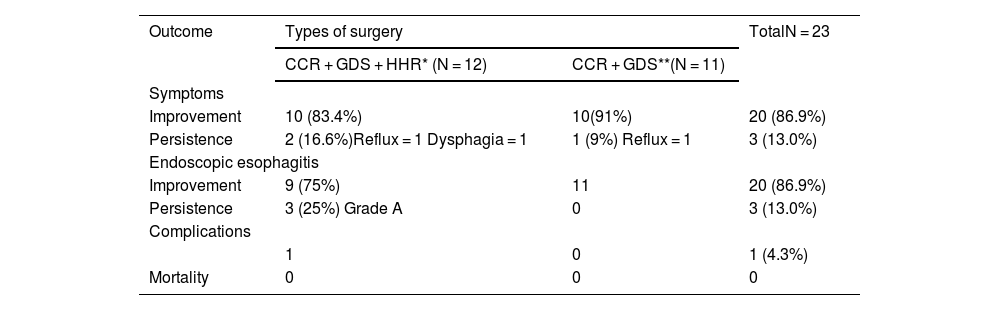
Medical treatment failed to control symptoms in all patients, resulting in early recurrence and dependence on continuous treatment with PPI, with no regression of esophagitis. Therefore, it was necessary to indicate RS, performing candy cane resection (CCR), hiatal hernia Repair (HHR) + GDS in 12 patients, and CCR + GDS alone in 11 patients. Fig. 1 shows preoperative images of candy cane syndrome with and without hiatal hernia, intraoperative images of the surgical procedure, and postoperative follow-up. Among patients who underwent surgery, 86.9% (20/23) presented improvement in symptoms, while three patients (13.1%) experienced postoperative symptoms, including occasional dysphagia and reflux symptoms. Similar findings were observed regarding endoscopic esophagitis (Table 4). Postoperative complication occurred in one patient, suffering from peri gastric collection (Clavien Dindo III), treated with antibiotics and percutaneous drainage. A complete resolution was reached on the 15th postoperative day.
Outcome of symptoms, endoscopic findings and postoperative morbidity/mortality.
| Outcome | Types of surgery | TotalN = 23 | |
|---|---|---|---|
| CCR + GDS + HHR* (N = 12) | CCR + GDS**(N = 11) | ||
| Symptoms | |||
| Improvement | 10 (83.4%) | 10(91%) | 20 (86.9%) |
| Persistence | 2 (16.6%)Reflux = 1 Dysphagia = 1 | 1 (9%) Reflux = 1 | 3 (13.0%) |
| Endoscopic esophagitis | |||
| Improvement | 9 (75%) | 11 | 20 (86.9%) |
| Persistence | 3 (25%) Grade A | 0 | 3 (13.0%) |
| Complications | |||
| 1 | 0 | 1 (4.3%) | |
| Mortality | 0 | 0 | 0 |
Late complications related to LRYGB may share a similar symptomatic presentation. The most frequent symptoms are pain, nausea and/or vomiting. Pain is reported in up to 54% of patients undergoing LRYGB.4,6–9 Symptoms can appear very early or late after the initial operation (ranging from 0.6 to 13 years).4,5,7–11 These data are consistent with our findings.
In patients with early manifestations of CCS (i.e., within 3 years of LRYGB), it is possible that the surgical technique may have initially been performed incorrectly, leaving a long blind jejunal loop. Inadequate exploration of the hiatus may also result in an untreated hiatal hernia as the cause of symptoms, as the postoperative period is too short for the appearance of symptoms. Symptoms frequently appear 5 or more years after the first operation, which occurred in most of our patients (n = 15 patients) with enlargement of the gastric pouch and elongation of the blind jejunal loop. In those with later-onset symptoms, we considered the cause to be progressive loop lengthening over time. A recent systematic review of the topic indicates that CCS does not typically occur when the CC is <4 cm.12
When we analyzed the causes of postoperative symptoms after LRYGB, the most common etiologies were internal hernia, marginal ulcer, stricture, biliary disease (e.g., cholelithiasis and choledocholithiasis) and jejunojejunal anastomotic issues. Dysphagia due to König’s mechanism was confirmed in one patient, but CCS and HH were not mentioned.
Early identification of the etiology of symptoms is essential because urgent intervention is sometimes required.8 The main diagnostic imaging methods for suspected CCS include computed tomography, EUS and barium swallow. The pathophysiology of the clinical picture presented by these patients is multifactorial and includes dynamic factors, such as the route of the alimentary bolus through the bypass. That is why the diagnostic method postulated as the most sensitive in diagnosing CCS is the esophagogram,4,6 as it allows us to observe the distension of the intestinal remnant and its behavior during oral ingestion.
A direct view of the digestive mucosa with EUS allows us to diagnose other potential problems (gastritis, esophagitis, Barrett’s esophagus, HH), while also being able to view and measure the size of the intestinal remnant. Redundant loop size >5 cm has been related to the presence of pain4; however, in our sample, no clear association was observed between redundant loop size and the presence of symptoms. Manometry and pHmetry are important to determine esophageal repercussions.
The treatment of this condition is based on minimizing redundancy and shortening the excessive length of the blind loop.11 Most publications have treated patients with open surgery, although endoscopic management has also been described as a therapeutic alternative.13 Unfortunately, most previous publications did not consider the presence of concomitant hiatal hernia, which may aggravate symptoms. In our opinion, the presence of hiatal hernia must always be determined to indicate the appropriate procedure with hiatal hernioplasty performed in the same intervention. The simultaneous management of CC and HH could have contributed to the high success of the intervention.13–15
The limitation of this study is the small number of patients. However, the strengths are that it is a prospective study in which all patients have objective, well-documented information and appropriate, objective postoperative follow-up.
In conclusion, the combination of CC and HH have similar clinical presentation, a large gastric pouch participates as a cause of symptoms, and studies are essential for correct diagnosis and to choose surgical treatment, which is the best option to treat these patients.
Financial disclosuresThe authors of this article have no financial disclosures to declare.


