





To evaluate the safety and efficacy profile of the fluocinolone acetonide implant (FAI) in patients with non-infectious posterior segment uveitis over a 60-month follow-up period.
MethodsWe retrospective conducted a study with a mean follow-up of 47 months (minimum, 18; maximum, 60). The study included 11 eyes (9 patients), with a male-to-female ratio of 8:1. The etiology of uveitis was heterogeneous. Efficacy parameters included visual acuity (VA) and Central macular thickness (CMT), and the ones who needed adjuvant therapy or re-injection. Safety parameters focused on the development of cataracts and intraocular hypertension.
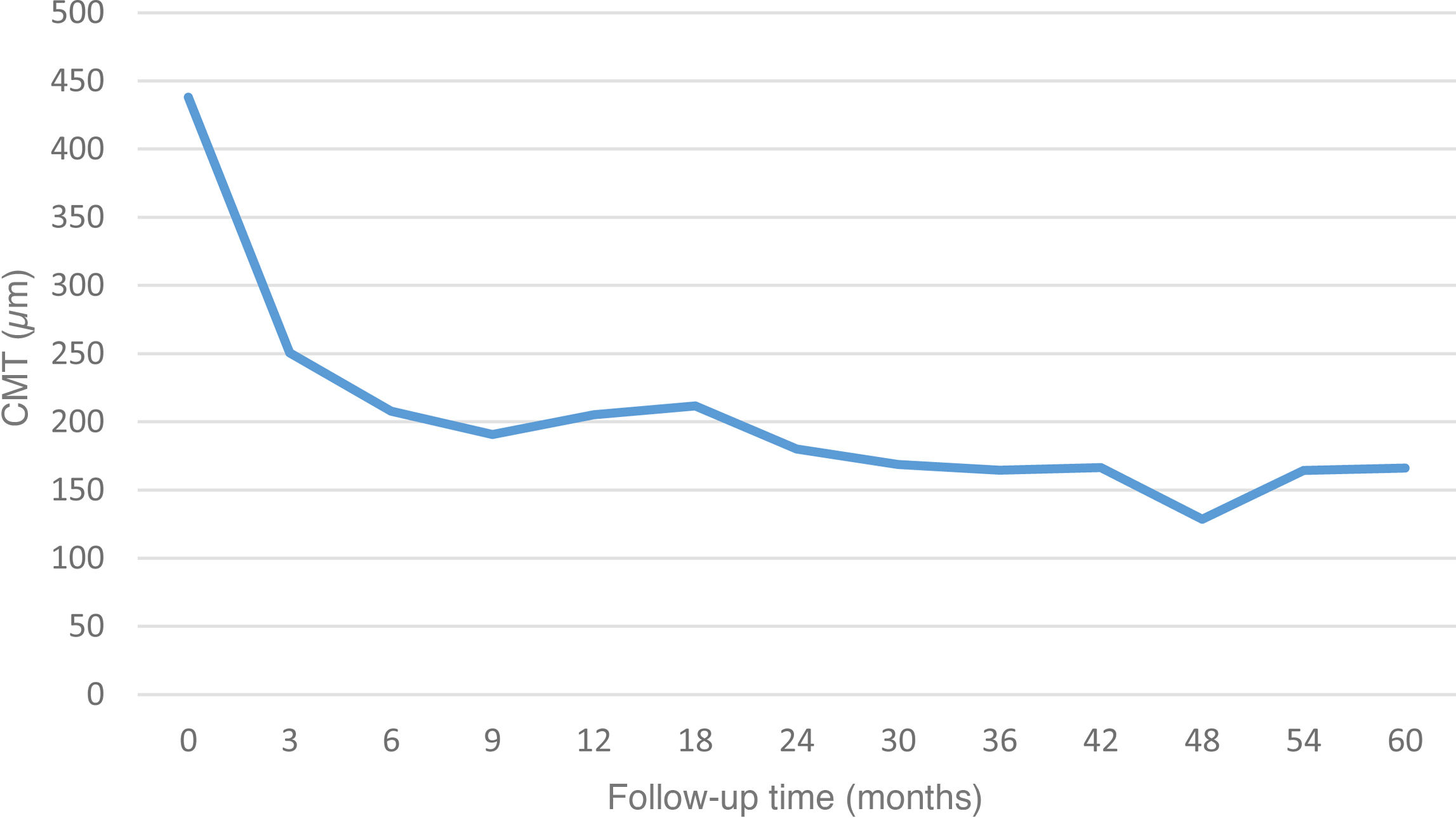
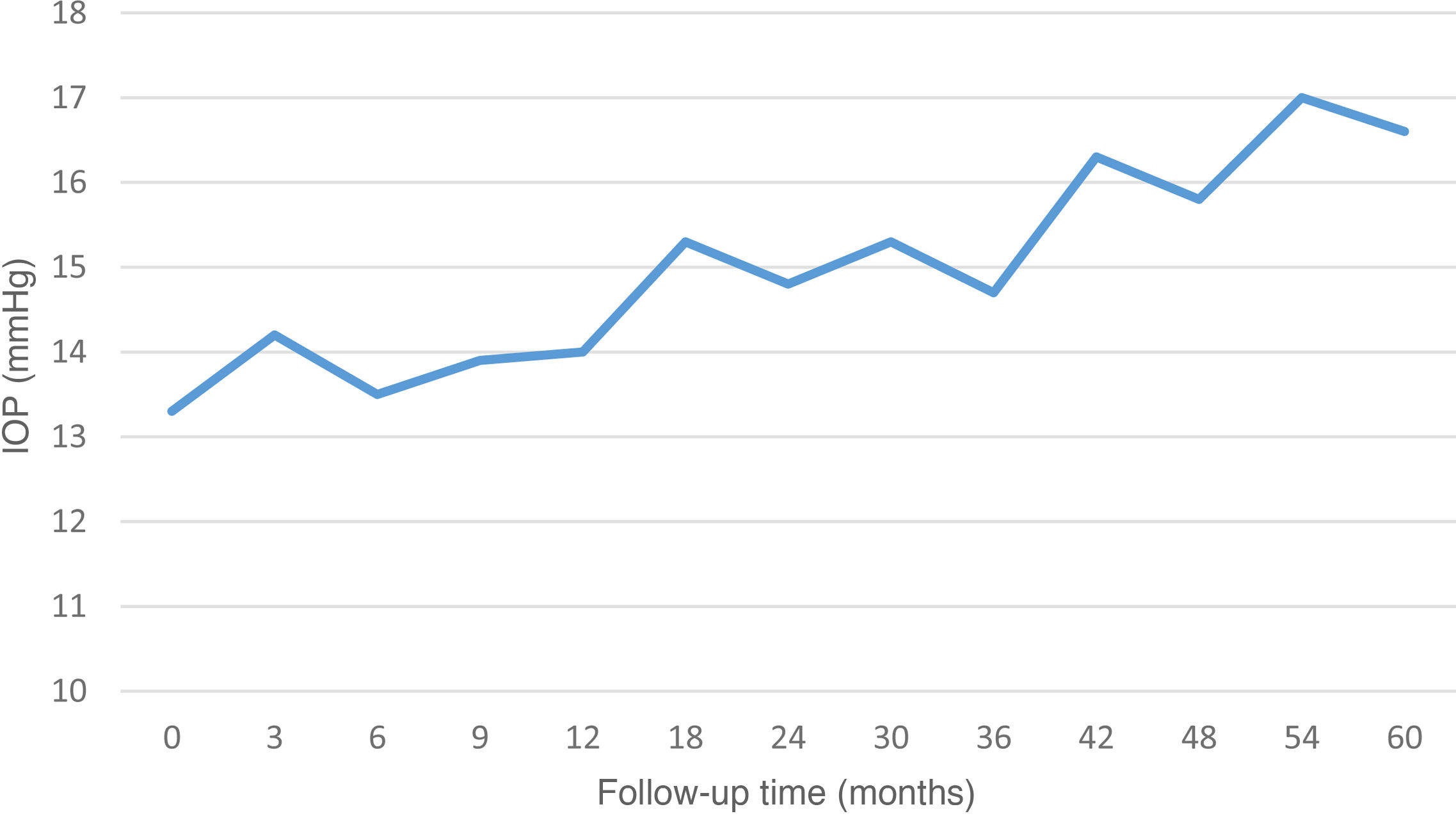
ResultsReal-world outcomes were assessed. Both VA recovery and CMT reduction were achieved between 3 to 6 months after FAI implantation and remained stable at the follow-up. All patients but one were pseudophakic prior to implantation. The phakic patient developed early cataract formation, requiring surgery 9 months post-implantation. All cases had previously received intravitreal dexamethasone. Five eyes (45.4%) required topical hypotensive therapy, and none glaucoma surgery. No patient required periodic adjuvant therapy or additional FAI injections, even among those with the longest follow-up periods. Two cases (18.1%) exhibited mild inflammatory activity in the macular area at months 33 and 35 post-implantation. These episodes were successfully resolved with sub-Tenon triamcinolone injections, maintaining clinical stability thereafter.
ConclusionsThe fluocinolone acetonide implant (FAI), in our series of cases, turned out to be an effective and safe therapy for non-infectious uveitic macular edema, providing sustained and long-lasting effects, in some cases up to 60 months post-implantation. Sub-Tenon triamcinolone proves to be a valuable adjunctive therapy.
Valorar la eficacia y seguridad del implante de acetónido de fluocinolona (iAF) en pacientes con uveítis posterior no infecciosa durante un periodo de seguimiento de hasta 60 meses.
MétodoEstudio retrospectivo, seguimiento medio 47 meses (mín 18 y máx 60). 11 ojos (9 pacientes), 8:1 (M:V). La etiología es heterogénea. Los parámetros de eficacia son agudeza visual (AV) y grosor macular central (GMC), así como si precisan tratamiento adyuvante o reinyección. Los parámetros de seguridad son el desarrollo de catarata e hipertensión ocular.
ResultadosResultados de vida real. Tanto la recuperación de AV como la reducción del GMC se alcanza entre los 3-6 meses tras iAF y se mantienen estables a lo largo del seguimiento. Todos los casos salvo uno eran pseudofáquicos en el momento del implante. El paciente fáquico desarrolló catarata precoz, se intervino 9 meses tras el implante. Todos los casos habían llevado previamente dexametasona intravítrea. 5(45,4%) requieren tratamiento hipotensor tópico y ninguno precisó cirugía de glaucoma. Ninguno los casos precisó tratamiento adyuvante periódico ni tampoco una reinyección iAF, incluidos los pacientes con mayor periodo de seguimiento. Dos de los casos (18,1%) presentaron una discreta actividad inflamatoria en área macular en los meses 33 y 35 tras iAF y se resolvió con una inyección de triamcinolona subtenoniana, manteniéndose la estabilidad clínica.
ConclusionesEl iAF ha resultado ser un tratamiento eficaz y seguro en nuestra serie en edema macular uveítico no infeccioso con un efecto mantenido y prolongado en el tiempo, en algunos casos hasta 60 meses tras el implante. La triamcinolona subtenoniana es útil como tratamiento adyuvante.

