




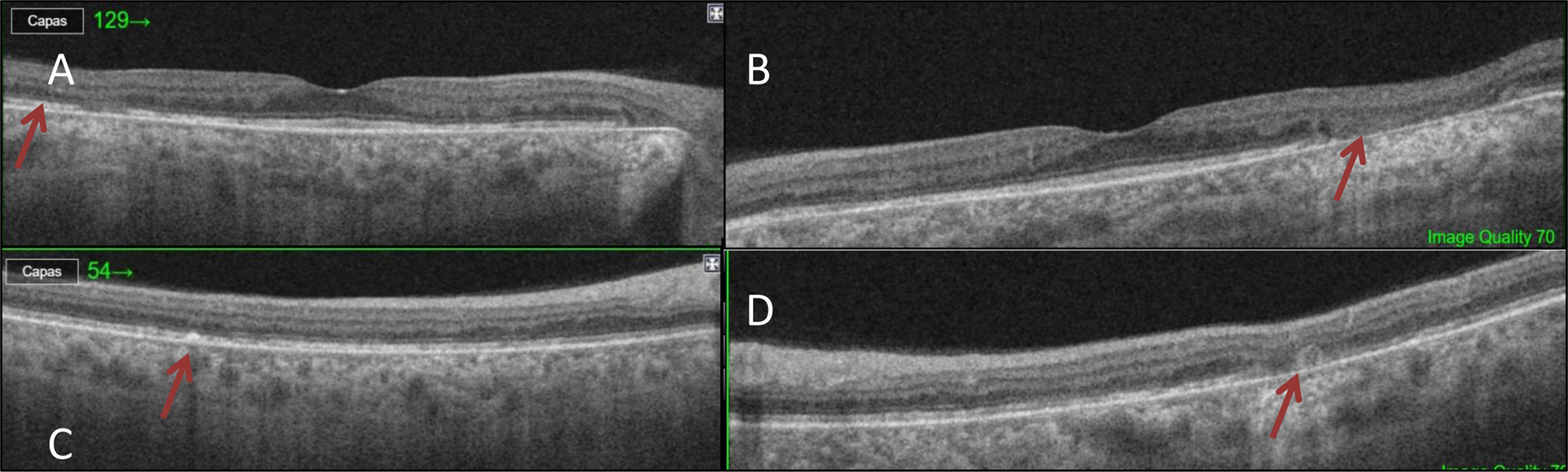
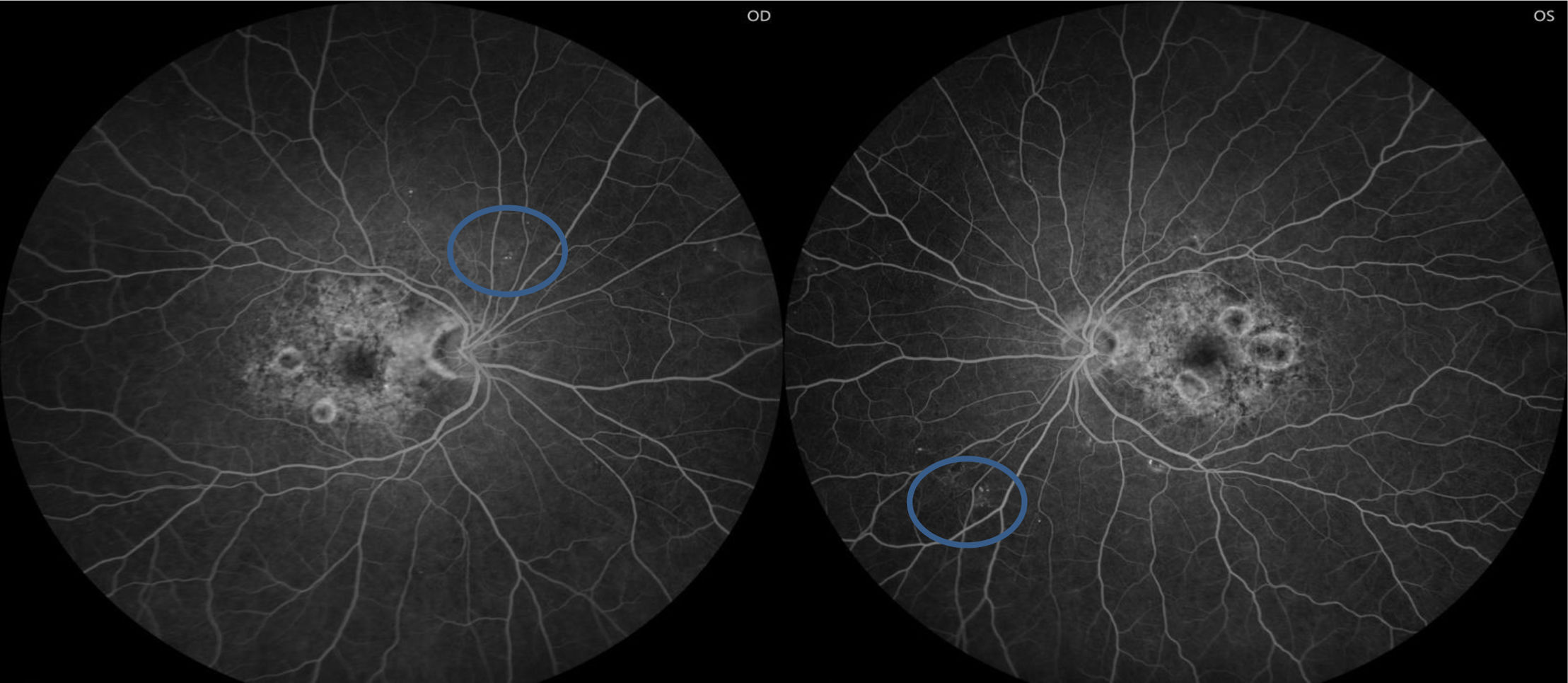
MELAS syndrome (mitochondrial encephalopathy, lactic acidosis, and stroke-like episodes) is an inherited disease frequently caused by a mutation in the mitochondrial DNA variant m.3243A>G in the MT-TL1 gene. The most frequent ophthalmologic finding present in 86-87% of patients with this mutation is mitochondrial retinopathy, where the clinical picture may vary from a macular and peripapillary salt-and-pepper granular pattern to chorioretinal atrophy. We present the case of a 47-year-old woman with type 1 diabetes mellitus, epilepsy, leukoencephalopathy, and deafness who was suspected of having mitochondrial disease after fundus examination. We would like to emphasize the importance of suspecting a mitochondrial disease in progressive multisystem disorders associated with neuro-ophthalmological manifestations, since early diagnosis allows for better monitoring of systemic manifestations, reducing morbidity and mortality.
El síndrome de MELAS (encefalopatía mitocondrial, acidosis láctica y episodios similares a accidentes cerebrovasculares) es una enfermedad hereditaria causada frecuentemente por una mutación en el ADN mitocondrial variante m.3243A>G en el gen MT-TL1. El hallazgo oftalmológico más frecuente presente en el 86-87% de los pacientes con esta mutación es la retinopatía mitocondrial donde la clínica puede variar desde un patrón granular macular y peripapilar en sal y pimienta, hasta la atrofia coriorretiniana. Presentamos el caso de una mujer de 47 años de edad afecta de diabetes mellitus tipo 1, epilepsia, leucoencefalopatia y sordera en la que se sospechó de enfermedad mitocondrial tras la exploración del fondo de ojo.
Queremos recalcar la importancia de sospechar una enfermedad mitocondrial en trastornos multisistémicos progresivos asociados a manifestaciones neurooftalmológicas, ya que el diagnóstico temprano permite un mejor seguimiento de las manifestaciones sistémicas disminuyendo la morbimortalidad.

