Abstracts of the 2025 Annual Meeting of the ALEH
More infoType 2 diabetes (T2D) is an important risk factor for metabolic dysfunction–associated steatohepatitis (MASH) and its complications.
Explore long-term impact economic burden of MASH among adults by T2D status.
Patients and MethodsMarkov model simulated the natural history of patients with MASH in Brazil over a 20-year horizon (2021–2040). Transition probabilities were calibrated to align with Brazil’s national data for cirrhosis, hepatocellular carcinoma (HCC), liver transplantation (LT), obesity, and T2D. The model incorporated competing mortality risks (liver-related, cardiovascular, and other causes). Baseline estimates of direct medical costs (outpatient care, diagnostics, hospitalizations, procedures, medications) were estimated by disease stage using national sources, including the Fiocruz Observatory database and Brazil’s health system profile. Costs are reported in 2020 USD, adjusted using IMF inflation projections.
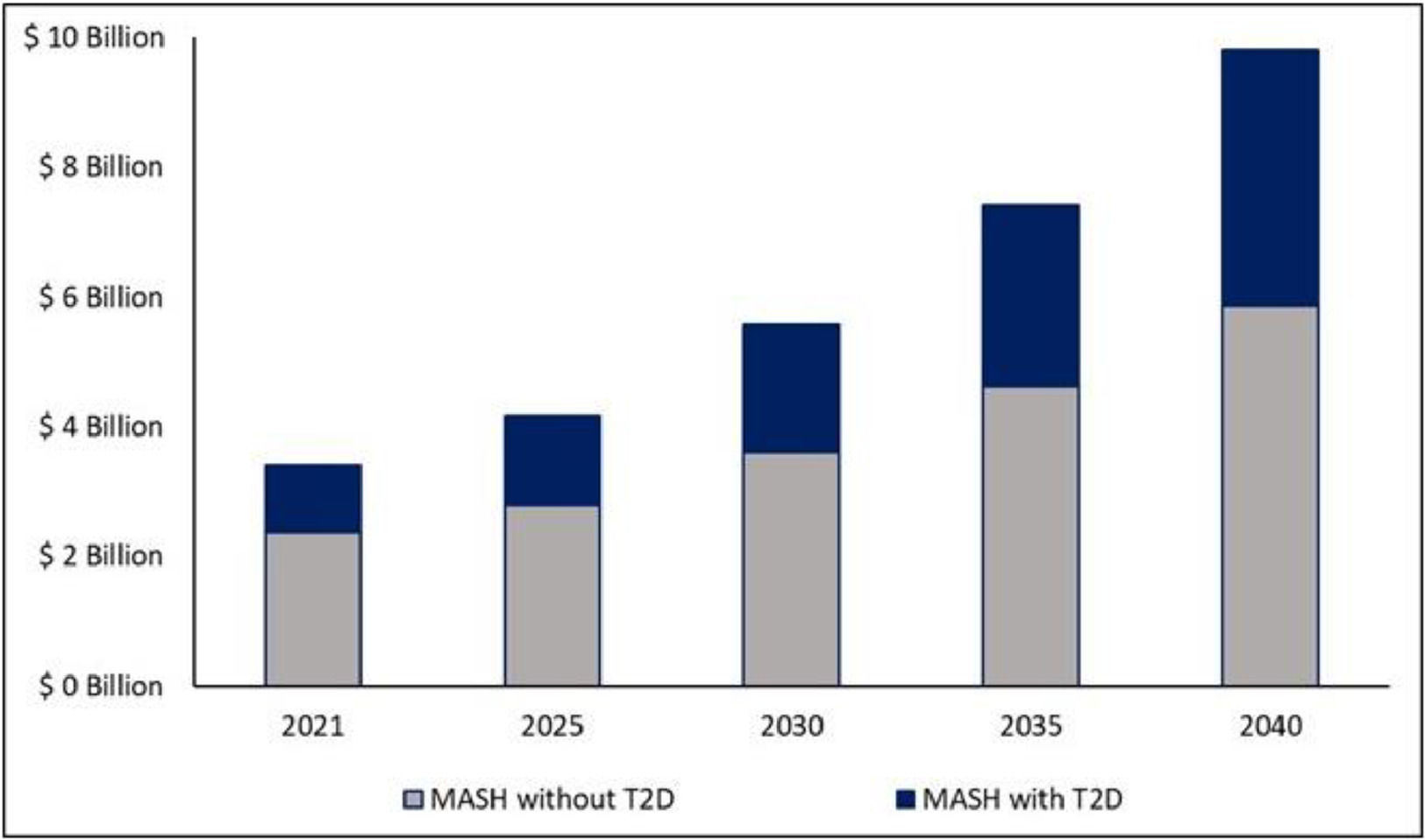
ResultsFrom 2021 to 2040, MASH prevalence among adults in Brazil is projected to rise from 7.19% to 7.52%. In the general population, the prevalence of MASH-related cirrhosis will increase from 0.63% to 0.99%, while MASH-related HCC, -LT and -liver deaths will increase from 0.50 to 1.02, 0.17 to 0.38 and 10.08 to 13.46 per 100,000. The proportion of MASH cases with T2D will increase from 25.3% to 30.8%. Among MASH-cirrhosis patients, this proportion will increase from 23.9% to 27.8%. Annual MASH-related direct medical costs will rise from $3.41 billion in 2021 to $9.81 billion by 2040, with the proportion attributable to T2D increasing from 30.7% to 40.1% (Figure).
ConclusionsClinical and economic burden of MASH in Brazil is expected to rise with increasing share attributable to T2D.