



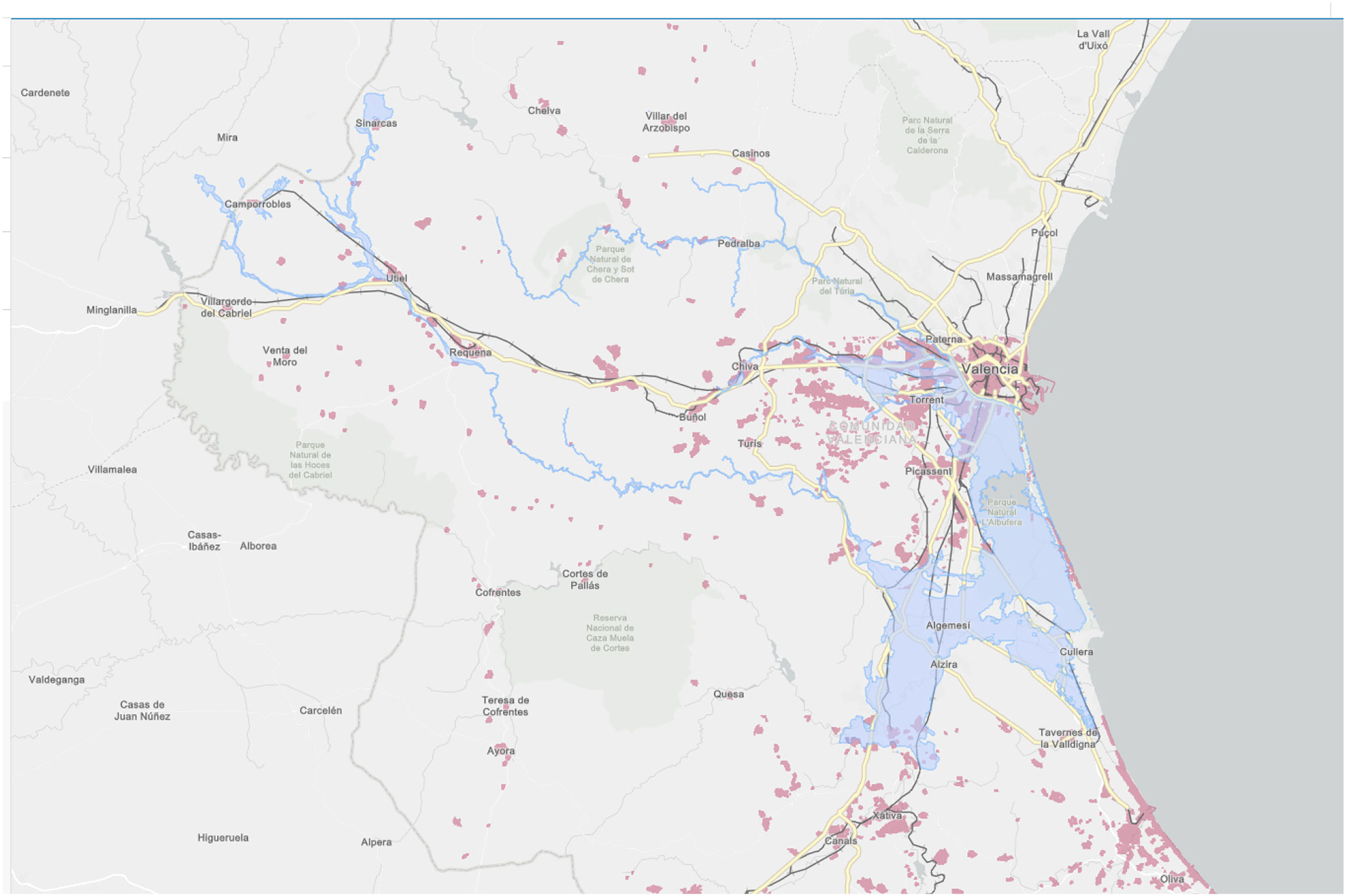
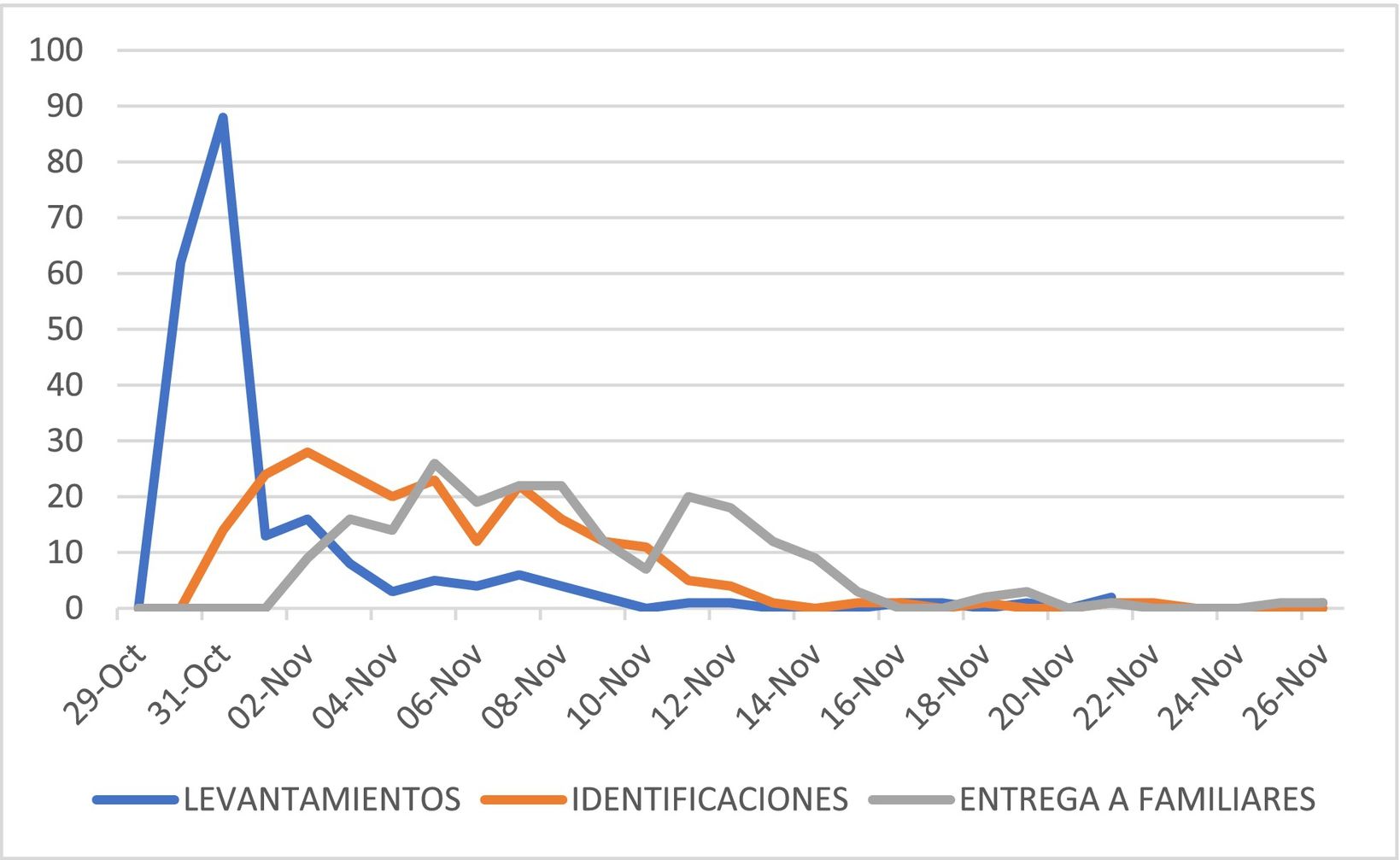
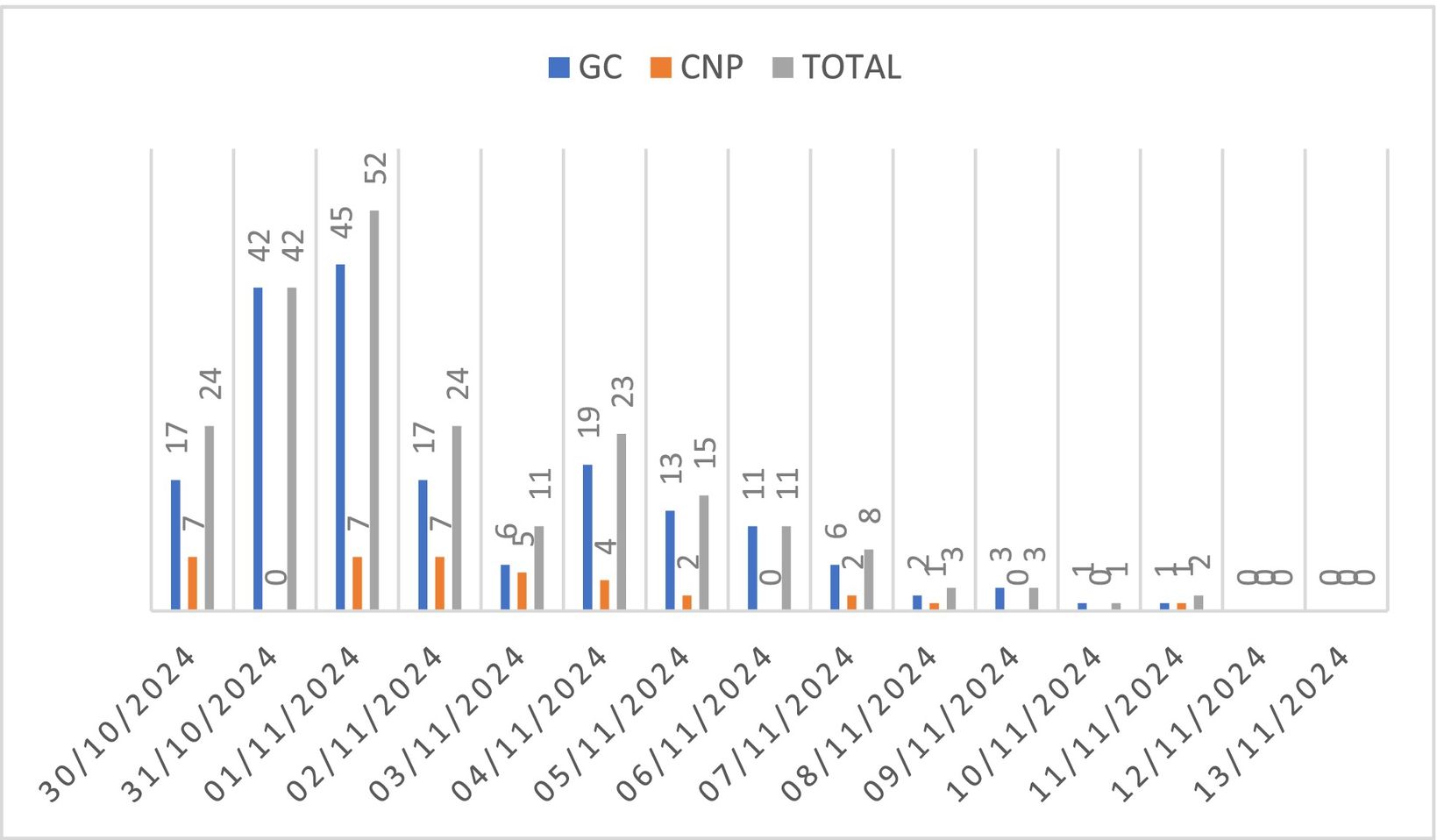
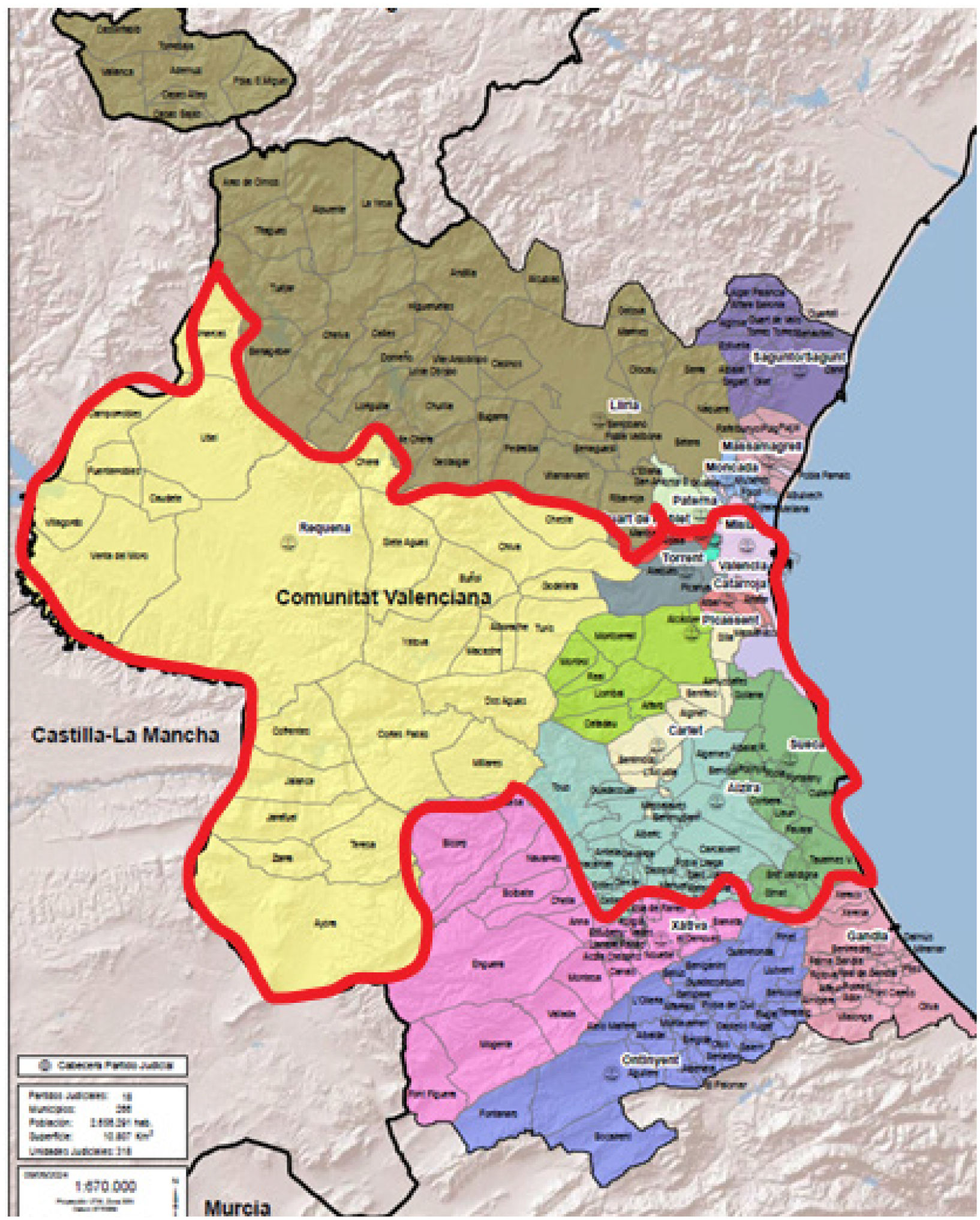
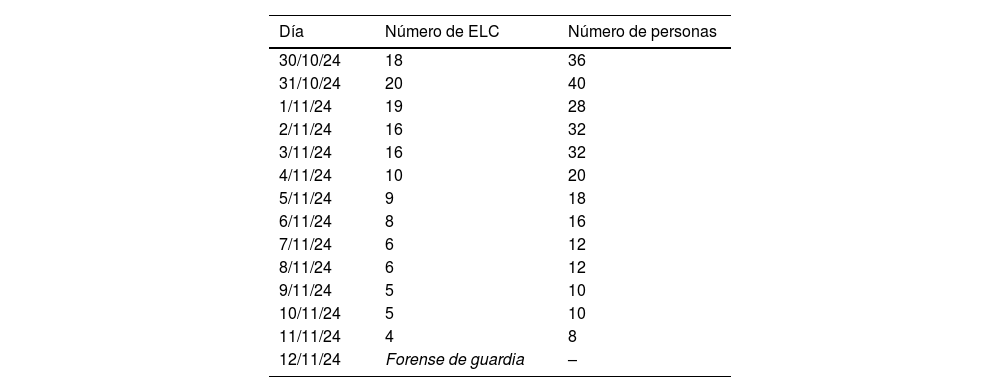

La riada sufrida en Valencia (España) ha ocasionado, hasta el momento, 224 víctimas mortales, siendo el evento catastrófico con mayor número de fallecidos en la historia reciente de España. Al tratarse de una catástrofe con un elevado número de víctimas, gran extensión geográfica y destrucción de infraestructuras, la actuación médico forense supuso un reto mayor. Este artículo expone el trabajo realizado durante una catástrofe abierta, tras la adhesión del Instituto de Medicina Legal y Ciencias Forenses (IMLCF) de Valencia a la aplicación del Real Decreto 32/2009 por el que se aprueba el Protocolo nacional de actuación médico-forense y de policía científica en sucesos con víctimas múltiples en España. Gracias a la excelente actuación de los integrantes del IMLCF de Valencia y del resto de IMLCF de España, junto a los especialistas de la Guardia Civil y del Cuerpo Nacional de Policía, pudo realizarse de forma rápida y eficaz la localización, traslado, autopsia, identificación y entrega a los familiares de todas las víctimas. Asimismo, se proponen algunas recomendaciones de actuación, fruto de la experiencia adquirida, para afrontar futuros sucesos de características similares.
The flood in Valencia (Spain) has so far caused 224 casualties, making it the catastrophic event with the highest number of fatalities in Spain's recent history. This catastrophe involving a high number of victims, a large geographical extension and the destruction of infrastructures posed a major challenge to the forensic response. This article presents the work carried out during an open disaster, following the adhesion of the Institute of Legal Medicine and Forensic Science of Valencia to the application of ‘Real Decreto 32/2009 approving the National Protocol for Forensic and Scientific Police intervention in multiple casualties events’ in Spain. The excellent performance of the members of the Institute of Legal Medicine and Forensic Science of Valencia and the rest of Institutes of Legal Medicine and Forensic Science of Spain, together with the specialists of the Civil Guard and National Police corps, allowed the fast and efficient location, transfer, autopsy, identification and delivery of all the victims to their relatives. Likewise, some recommendations for action are suggested as a result of the experience acquired to face future events of similar characteristics.
