





Intravenous elastomeric pumps have been shown to be effective in managing postoperative pain in major outpatient surgeries, improving patient satisfaction and reducing the need for hospitalization. However, there is little research on their use in adolescents. This work seeks to evaluate the safety and efficacy of these pumps in adolescents.
Materials and methodsA prospective, single-center observational study was conducted in 40 adolescents to evaluate the efficacy and satisfaction with the use of intravenous elastomeric pumps in the management of postoperative pain. Pain was measured using a visual analogic scale (VAS) and satisfaction was assessed with a survey. Data was analyzed descriptively, calculating measures of central tendency and dispersion for quantitative variables and frequencies for qualitative variables.
ResultsThe study included 40 children (42.5% girls, 57.5% boys), showing positive results in pain control with intravenous elastomeric pumps. Eighty-five percent of patients reported pain less than 5 on the VAS scale at 24h, increasing to 94.8% at 72h, indicating a progressive decrease in pain. Regarding satisfaction, 90% of parents and 100% of children recommended this treatment.
ConclusionsThe results of this study support the inclusion of intravenous elastomeric pumps in the postoperative pain management protocol in children from 11 years of age in outpatient surgical centers due to their efficacy, safety, tolerability and prompt recovery.
Las bombas elastoméricas intravenosas han demostrado ser efectivas en el manejo del dolor postoperatorio en cirugías mayores ambulatorias, mejorando la satisfacción del paciente y reduciendo la necesidad de hospitalización. Sin embargo, hay poca investigación sobre su uso en adolescentes. Este trabajo busca evaluar la seguridad y la eficacia de estas bombas en los adolescentes.
Materiales y métodosSe realizó un estudio observacional prospectivo unicéntrico en 40 adolescentes para evaluar la eficacia y la satisfacción con el uso de bombas elastoméricas intravenosas en el manejo del dolor postoperatorio. Se midió el dolor mediante la escala visual analógica (EVA) y la satisfacción se evaluó con una encuesta. Los datos fueron analizados descriptivamente, calculando medidas de tendencia central y dispersión para las variables cuantitativas y frecuencias para las cualitativas.
ResultadosEl estudio incluyó a 40niños (42,5% niñas, 57,5% niños), mostrando resultados positivos en el control del dolor con las bombas elastoméricas intravenosas. El 85% de los pacientes reportaron un dolor menor a 5 en la escala EVA a las 24h, aumentando al 94,8% a las 72h, indicando una disminución progresiva del dolor. En cuanto a la satisfacción, el 90% de los padres y el 100% de los niños recomendaron este tratamiento.
ConclusionesLos resultados de este estudio respaldan la inclusión de las bombas elastoméricas intravenosas en el protocolo de manejo del dolor postoperatorio en niños a partir de los 11años de edad en centros quirúrgicos ambulatorios por su eficacia, seguridad, tolerabilidad y pronta recuperación.
Intravenous elastomeric pumps have recently emerged as a prominent option for postoperative pain management in major outpatient surgeries at our centre. The results obtained to date have been consistently positive, both in terms of pain control efficacy and overall patient satisfaction.1,2
The use of these pumps not only eliminates the need for hospital admission for postoperative pain management but also has a considerably favourable economic impact. Furthermore, a low incidence of significant side effects has been observed, contributing to an overall satisfactory experience for both patients and their families.3
Despite these achievements, it is important to highlight a gap in existing research: the lack of studies dedicated to postoperative pain management in the 11- to 18-year-old age group using intravenous elastomeric pumps. Although numerous studies have evaluated various analgesia techniques in children, few focus specifically on this age group.4–7 This lack of specific scientific evidence presents an opportunity to explore and better understand how this technology can be adapted to benefit adolescents in the context of outpatient surgery.
This study aimed to address this gap in scientific knowledge by evaluating the efficacy and safety of intravenous elastomeric pumps in children and adolescents aged 11–18 years undergoing major outpatient surgery. Our research aspired to fill this gap, providing relevant data that would contribute to improving the care and treatment of postoperative pain in this particularly vulnerable population, which is often overlooked in the current scientific literature.8
Patient satisfaction plays a fundamental role in contemporary healthcare and, specifically, in the area of postoperative pain management. Beyond the mere management of symptoms, patient satisfaction reflects the overall quality of care received, including aspects such as the effectiveness of the treatment, the comfort experienced during the recovery process and the perception of control over their well-being.9,10
In the context of major outpatient surgery, where the patient's transition from the surgical environment to home occurs rapidly, satisfaction takes on even greater importance. The ability to provide effective and satisfactory pain relief in this setting not only improves the patient experience but also contributes to a faster and more successful recovery.
Intravenous elastomeric pumps represent an attractive therapeutic option in this regard, as they offer continuous pain control without requiring prolonged hospitalisation. This treatment modality not only minimises disruptions to the daily lives of the patient and their family but also provides them with a sense of autonomy and participation in their own recovery process.
Patient satisfaction with postoperative pain management can also have broader implications for their adherence to treatment and their overall perception of the care received. Patients who experience effective pain relief and feel well cared for are more likely to follow postoperative medical recommendations and maintain a positive attitude toward the healthcare system in general.
Therefore, when evaluating the effectiveness of intravenous elastomeric pumps in adolescents undergoing major outpatient surgery, it is crucial to consider not only objective clinical outcomes but also the subjective satisfaction of the patient and their family. This dimension of healthcare can significantly influence the overall perception of treatment and, ultimately, the patient's long-term outcomes.
Materials and methodsA prospective, single-centre observational study was conducted in a hospital setting and submitted to and approved by the Ethics Committee for Medicinal Products Studies of the Parc Taulí Health Corporation in Sabadell (application number 2017570). The primary objective was to evaluate the efficacy and patient satisfaction with the use of intravenous elastomeric pumps for postoperative pain management in adolescents.
The following inclusion criteria were established:
- –
Patients aged 12–18 years.
- –
Patients seen in the paediatric traumatology and orthopaedics clinics of our centre and scheduled for surgery for one of the following conditions:
- –
Genu valgum (knock-knees).
- –
Flat feet.
- –
Hallux valgus.
- –
Patients who understood the treatment with a home elastomeric pump and were able to use it.
And the following exclusion criteria:
- –
Relevant personal medical history or mental illness.
- –
Patients residing outside the hospital's catchment area.
- –
Known allergies to any of the study drugs.
- –
Contraindication to the use of non-steroidal anti-inflammatory drugs (NSAIDs).
- –
Refusal by the patient/guardian or uncooperative patient.
The sample size was set at 40 children, as our centre sees approximately 10 patients per year with these characteristics who met the inclusion/exclusion criteria defined for this study and who underwent specific surgical procedures. This allowed us to draw conclusions with a minimally acceptable number of patients.
Tables 1–3 show the demographic characteristics of the patients who participated in the study. Table 1 shows the percentage of patients who participated in the study by sex. Table 2 shows the percentage of patients according to the type of intervention. And Table 3 shows the percentage of patients according to age range.
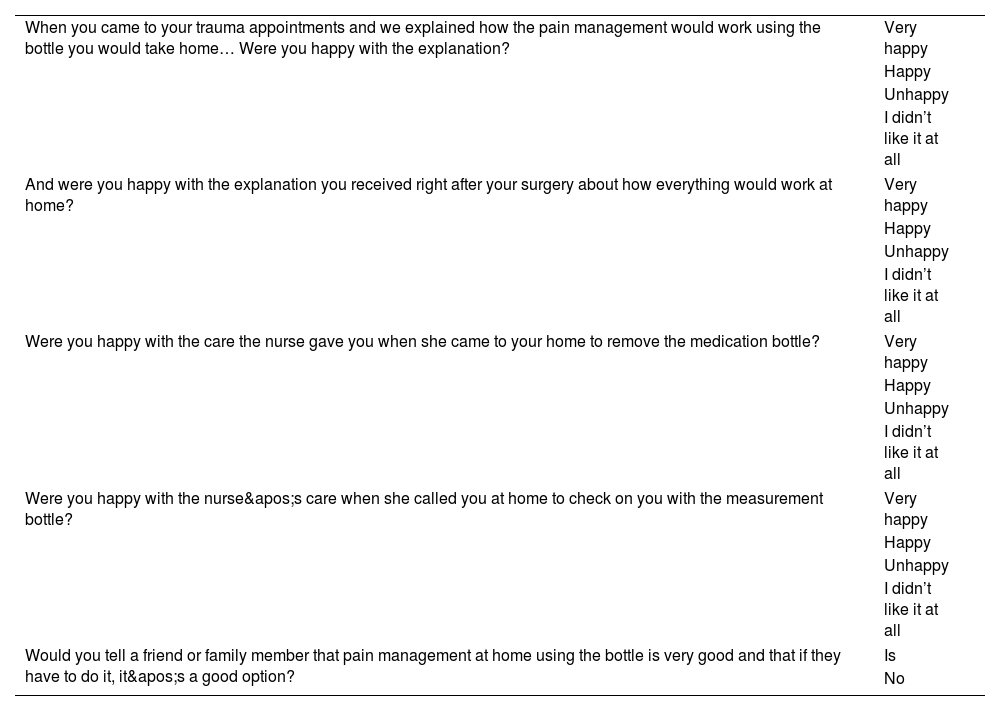
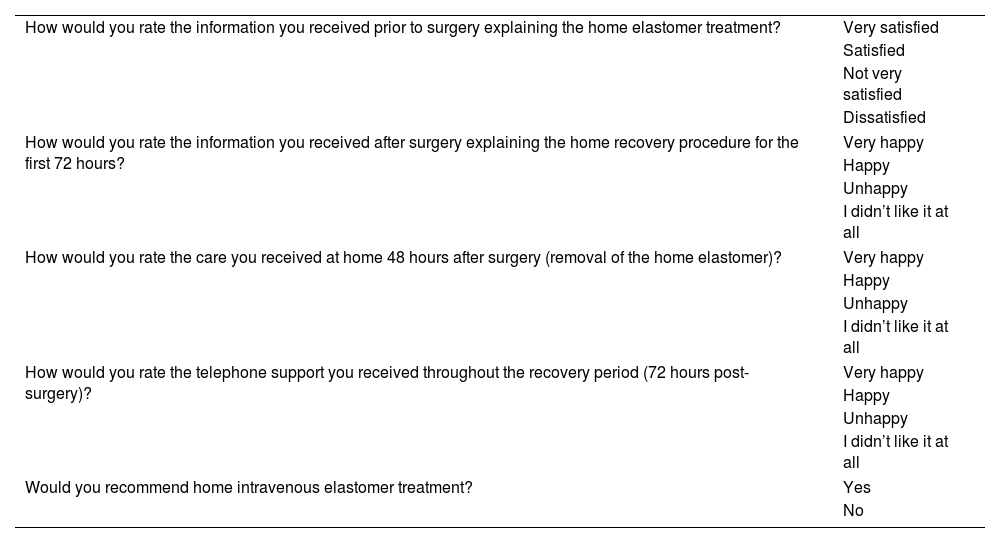
The main variable of interest was pain assessment, measured using the visual analogue scale (VAS), at three different time points: 24, 48, and 72h after the surgical intervention. The degree of satisfaction of the patient and their legal guardian was considered as a secondary variable, as shown in Tables 4 and 5. This was assessed using a survey specifically designed for this study, consisting of 5 questions, which was administered approximately one month after the intervention.
Children's satisfaction survey.
| When you came to your trauma appointments and we explained how the pain management would work using the bottle you would take home… Were you happy with the explanation? | Very happy |
| Happy | |
| Unhappy | |
| I didn’t like it at all | |
| And were you happy with the explanation you received right after your surgery about how everything would work at home? | Very happy |
| Happy | |
| Unhappy | |
| I didn’t like it at all | |
| Were you happy with the care the nurse gave you when she came to your home to remove the medication bottle? | Very happy |
| Happy | |
| Unhappy | |
| I didn’t like it at all | |
| Were you happy with the nurse's care when she called you at home to check on you with the measurement bottle? | Very happy |
| Happy | |
| Unhappy | |
| I didn’t like it at all | |
| Would you tell a friend or family member that pain management at home using the bottle is very good and that if they have to do it, it's a good option? | Is |
| No | |
Tutors’ satisfaction survey.
| How would you rate the information you received prior to surgery explaining the home elastomer treatment? | Very satisfied |
| Satisfied | |
| Not very satisfied | |
| Dissatisfied | |
| How would you rate the information you received after surgery explaining the home recovery procedure for the first 72 hours? | Very happy |
| Happy | |
| Unhappy | |
| I didn’t like it at all | |
| How would you rate the care you received at home 48 hours after surgery (removal of the home elastomer)? | Very happy |
| Happy | |
| Unhappy | |
| I didn’t like it at all | |
| How would you rate the telephone support you received throughout the recovery period (72 hours post-surgery)? | Very happy |
| Happy | |
| Unhappy | |
| I didn’t like it at all | |
| Would you recommend home intravenous elastomer treatment? | Yes |
| No | |
All variables were evaluated quantitatively. A descriptive study of the variables was conducted to analyse the collected data. Measures of central tendency, such as the mean, and measures of dispersion, such as the standard deviation, were calculated for the quantitative variables. Furthermore, absolute and relative frequencies were determined for the qualitative variables to provide a detailed and comprehensive description of the sample and the results obtained.
This methodological approach allowed for a complete and rigorous evaluation of the efficacy and patient satisfaction with the use of intravenous elastomeric pumps in the management of postoperative pain in adolescents, providing objective and relevant data for clinical decision-making and the continuous improvement of healthcare.
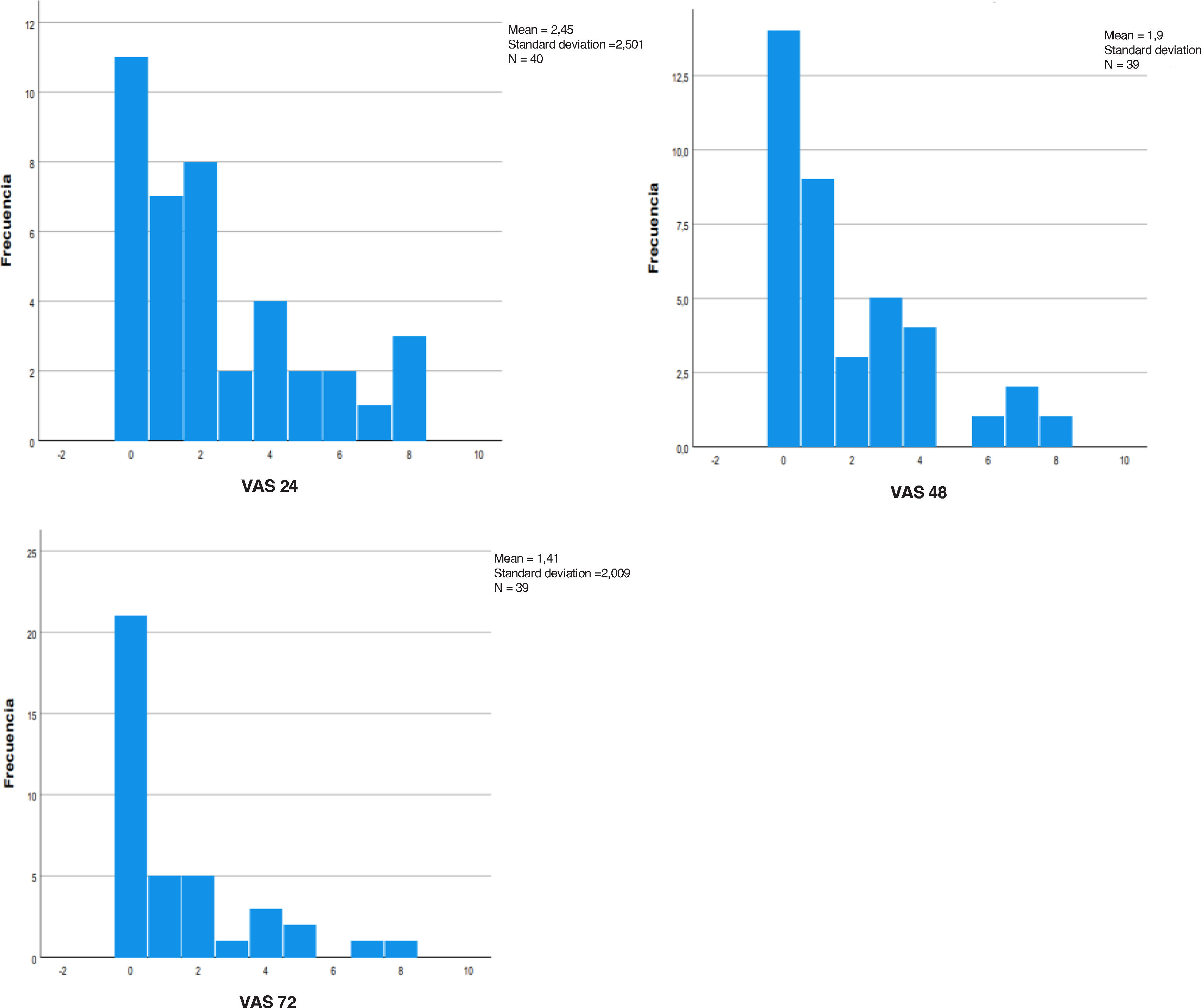
ResultsThe study included a total sample of 40 children (42.5% girls and 57.5% boys). Regarding pain assessment, encouraging results were observed: the VAS score at 24h post-surgery was less than 5 in 85% of cases. At 48h, this percentage increased to 89.8%; and at 72h, it reached 94.8%, as shown in Fig. 1. These findings suggest a consistent trend toward a progressive decrease in pain during the postoperative period.

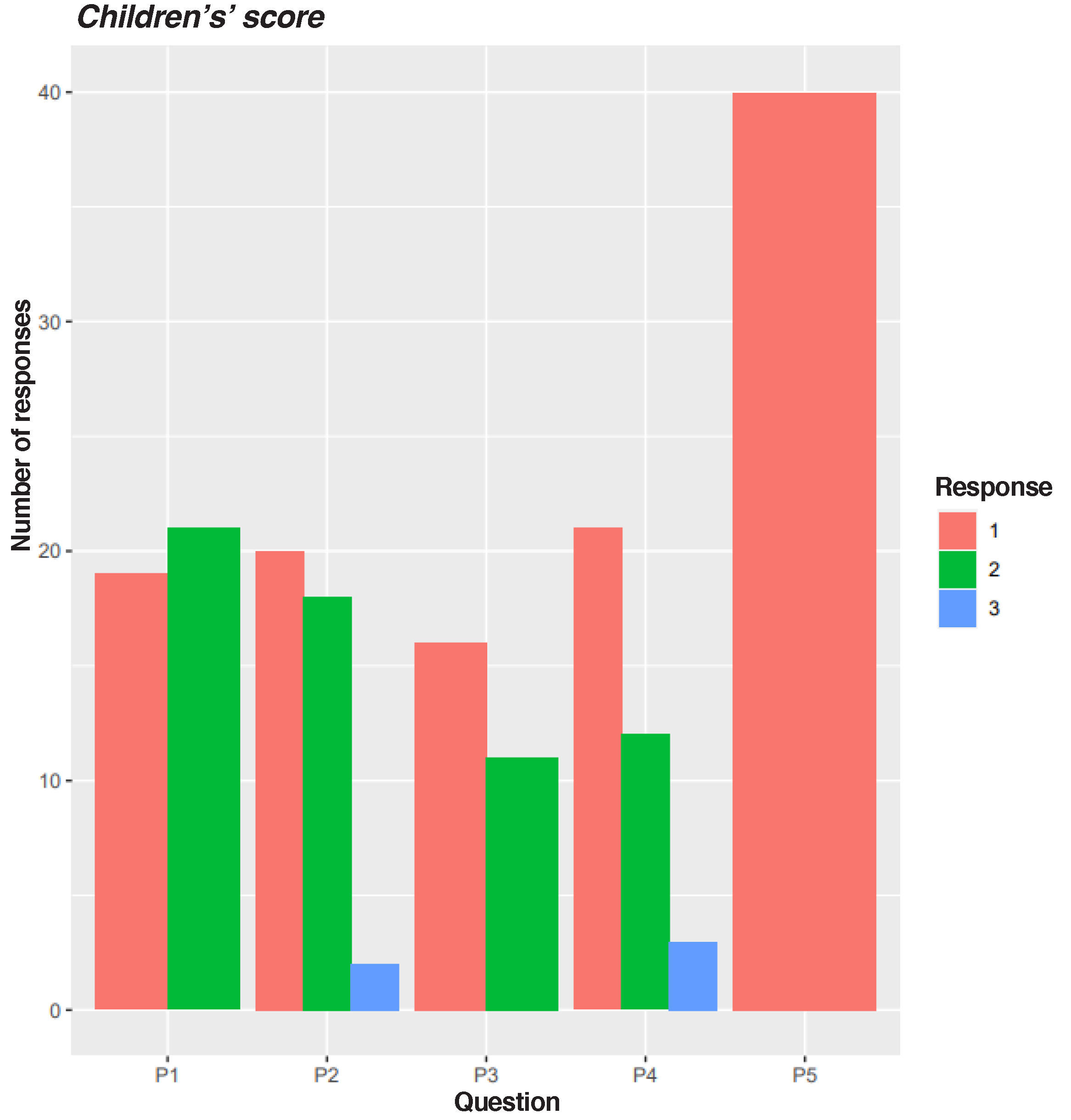
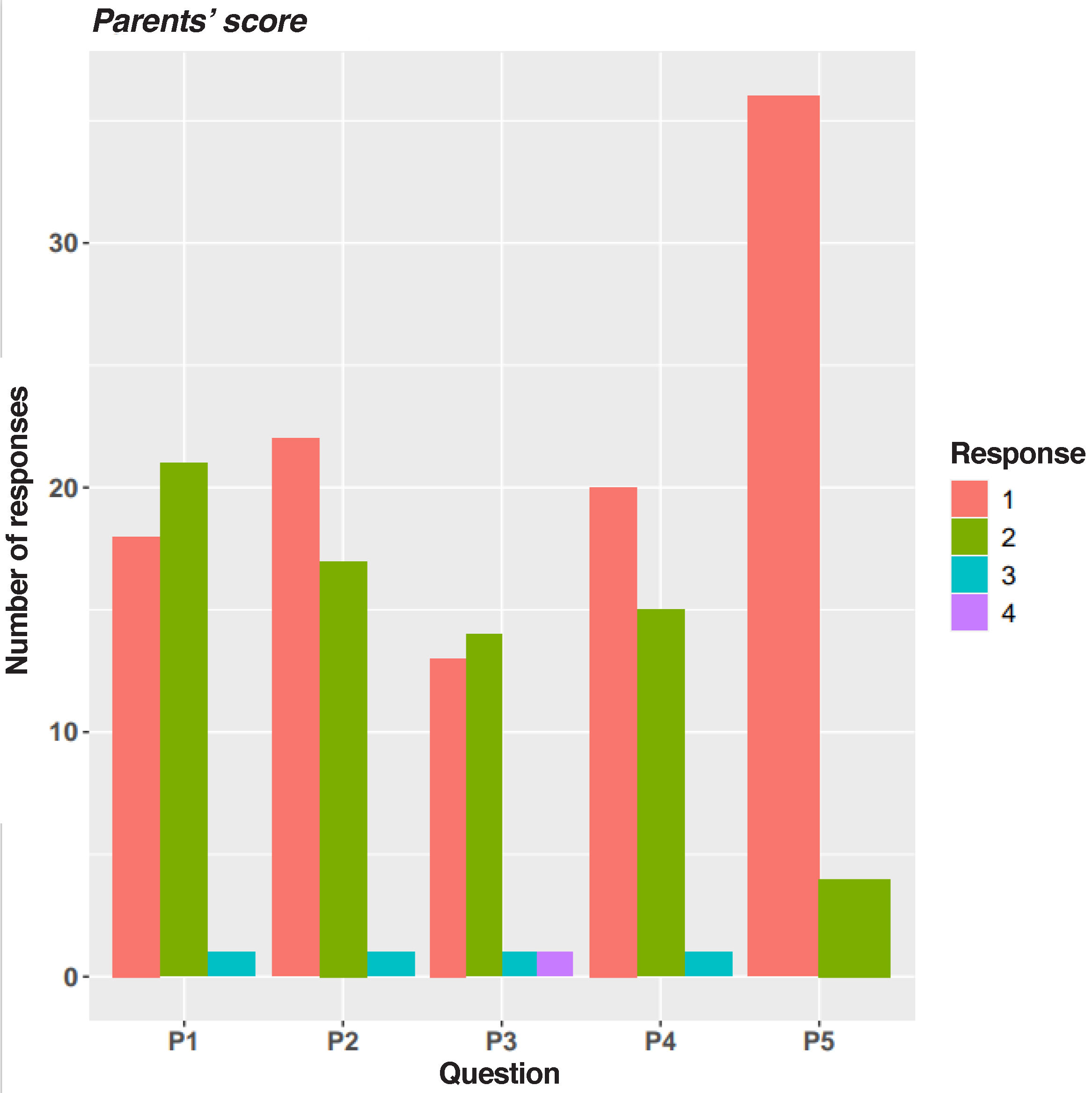
Regarding the level of satisfaction, both on the part of the children and their families, noteworthy results were obtained. A high level of satisfaction was observed in all five questions of the follow-up survey conducted approximately one month after the surgery. Specifically, when asked if they would recommend the use of intravenous elastomeric pumps for postoperative pain management, 90% of parents and 100% of children responded affirmatively, as shown in Figs. 2 and 3.


These results reflect a positive perception and high acceptance of intravenous elastomeric pump technology among both paediatric patients and their families. Furthermore, they suggest that this treatment modality is not only effective in pain control but also significantly contributes to a satisfactory overall experience for patients and greater peace of mind for their families during the postoperative recovery process.
DiscussionThe results obtained in this study suggest that the use of intravenous elastomeric pumps for postoperative pain management in children and adolescents aged 11 years and older is highly effective and is associated with a high degree of overall satisfaction among patients and their families. These findings support the feasibility and usefulness of this treatment modality in the context of outpatient surgical centers for paediatric patients.
Serra et al.2 demonstrated in their study that home elastomeric pump therapy is feasible and appropriate in a wide range of patients and for many surgical procedures. It is a safe and easy-to-apply procedure that is highly effective in postoperative pain management, with a low rate of adverse effects and complications.
The high satisfaction rate observed in our study reflects the importance of providing effective pain relief and a positive experience for paediatric patients and their caregivers. The ability to manage pain effectively without prolonged hospitalisation not only improves patients’ quality of life but can also have a positive impact on healthcare costs and efficiency.
These results are consistent with previous research in adults that has demonstrated the efficacy and safety of intravenous elastomeric pumps in managing severe postoperative pain, as confirmed in the work of authors such as Rawal11 and Watt-Watson et al.12 However, it is important to consider the limitations of this study, such as its observational design and small sample size. Further studies with larger samples and more robust research designs are needed to confirm these findings and explore additional factors that may influence the efficacy and patient satisfaction with this therapeutic approach.
ConclusionsIn conclusion, the results of this study support the inclusion of intravenous elastomeric pumps in the postoperative pain management protocol for children 11 years of age and older in outpatient surgical centres. These devices offer an effective, safe, and well-tolerated therapeutic option that can significantly improve the overall patient experience and contribute to a faster and more satisfactory recovery after surgery.
Level of evidenceLevel of evidence II.
Ethical considerationsThe authors declare that the study was evaluated by the Clinical Research Ethics Committee of the Corporació Sanitària Parc Taulí de Sabadell (Barcelona) with registration number 2017570.
FundingNo funding was received.
Conflict of interestsThe authors have no conflict of interests to declare.

