



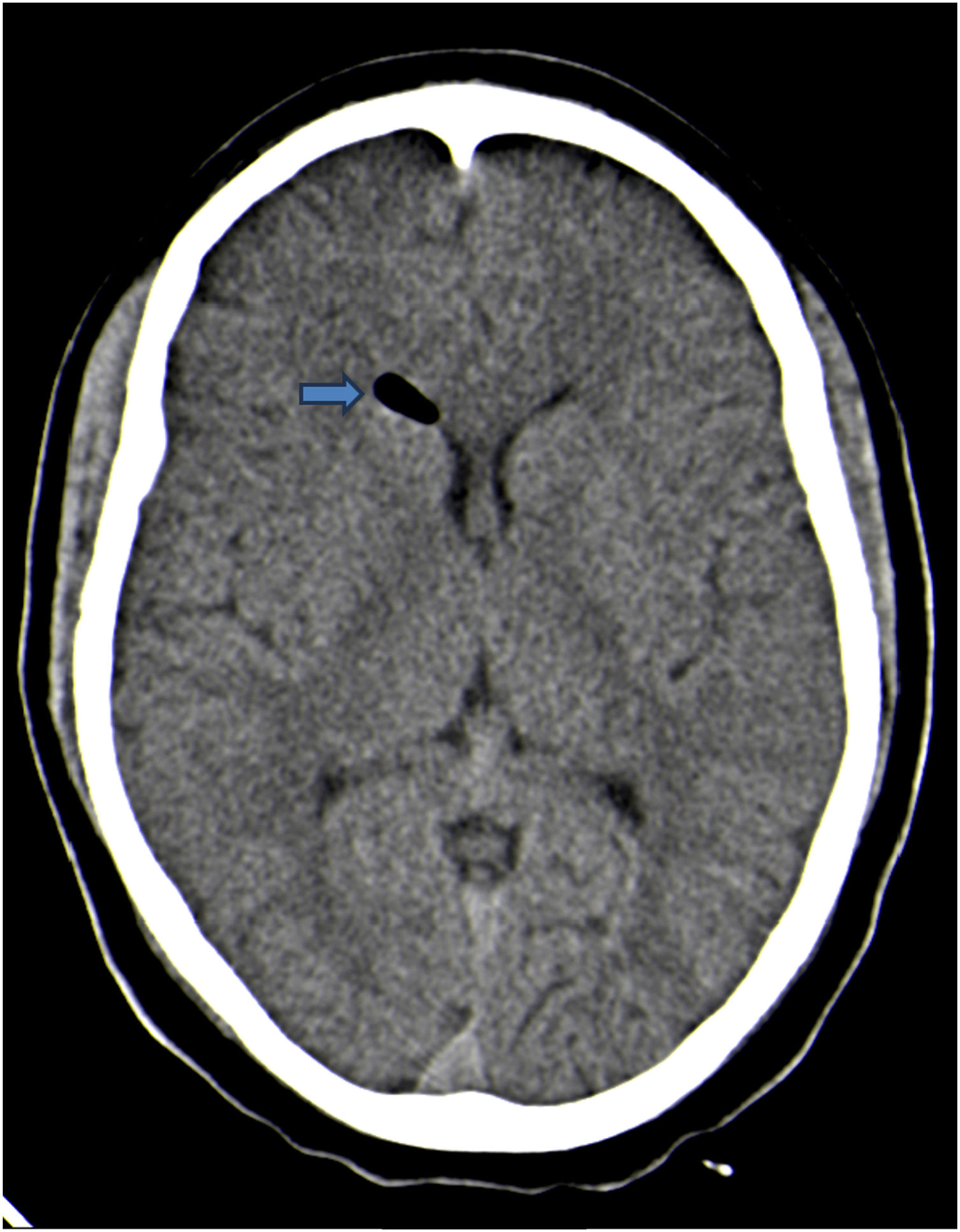
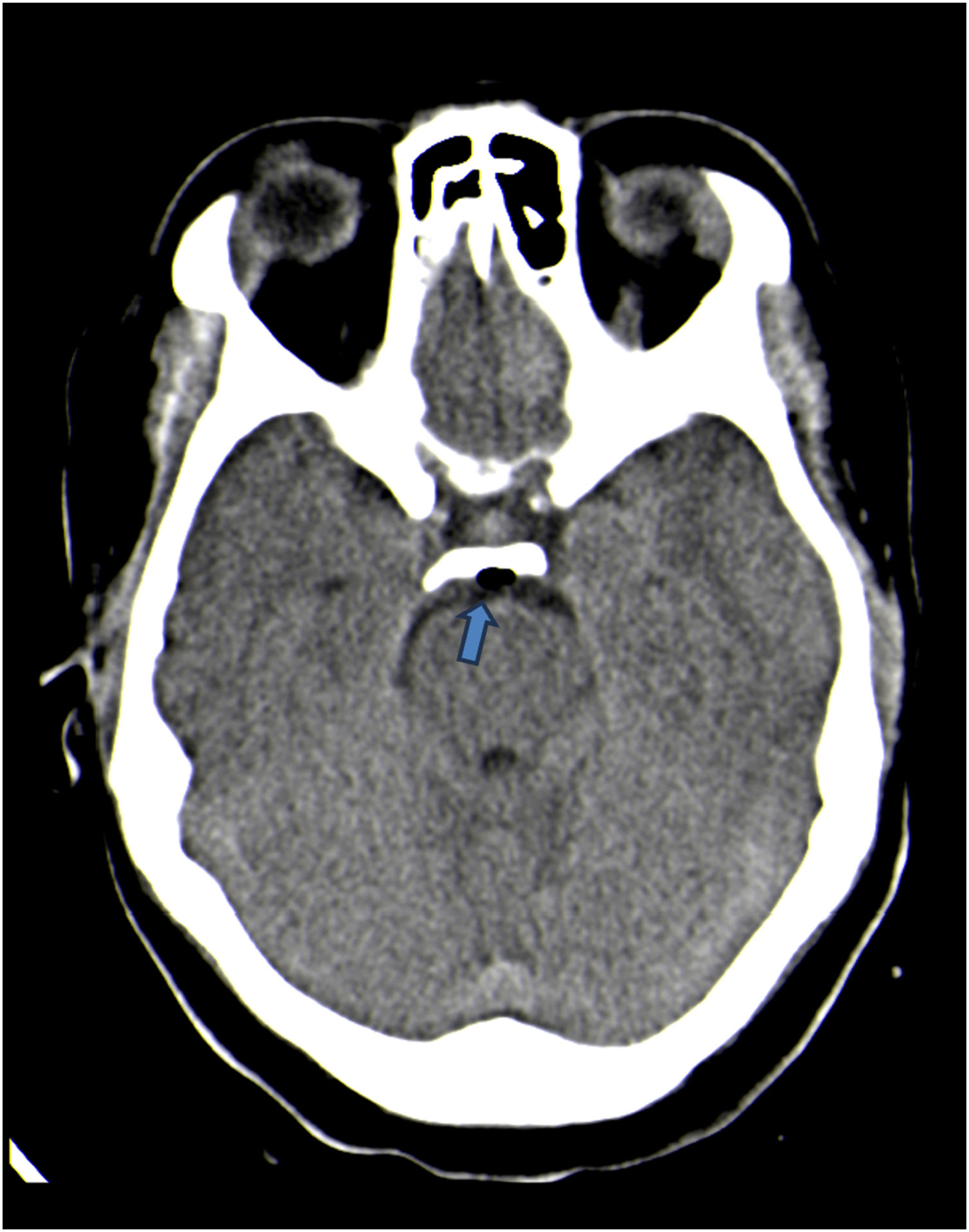
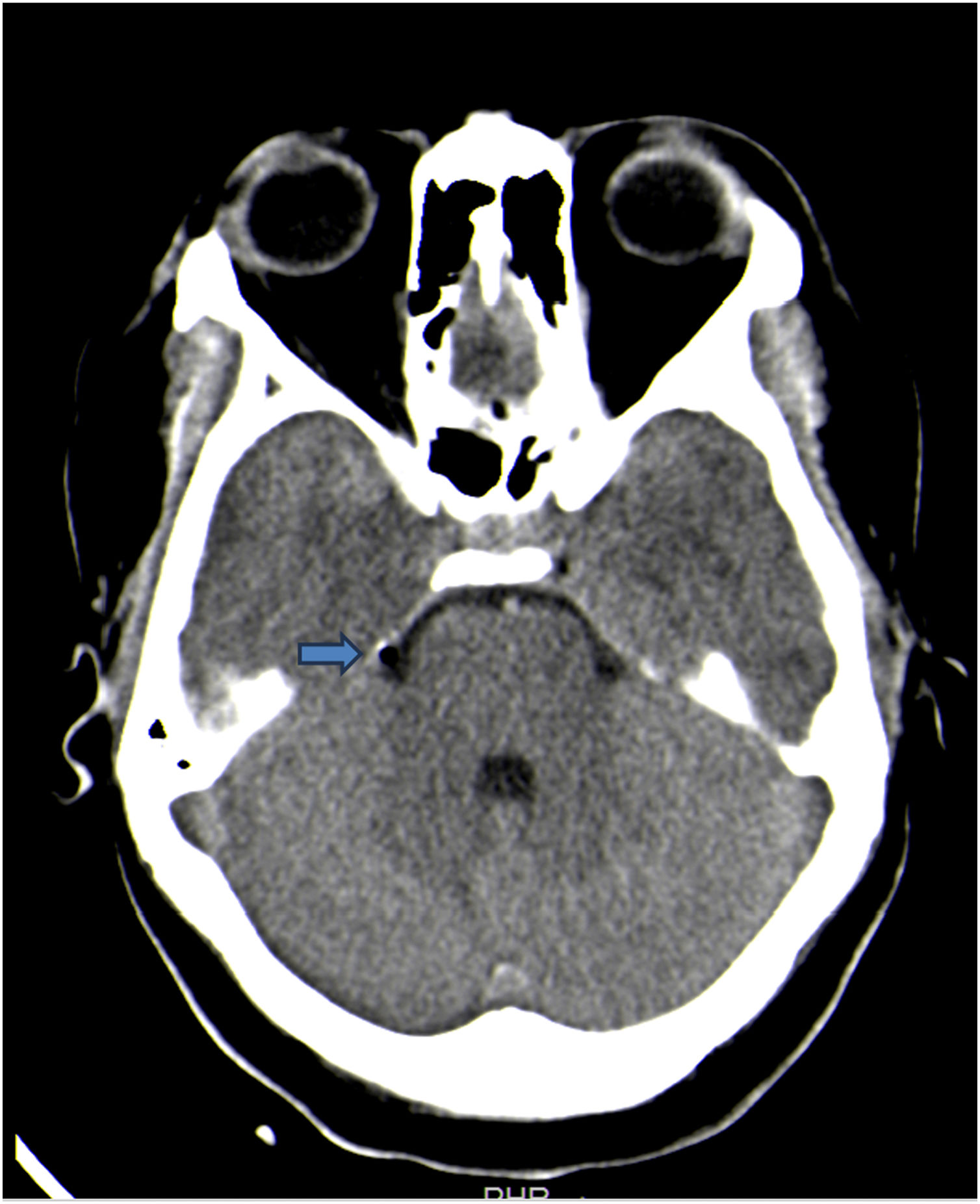
Pneumocephalus refers to the presence of air within the intracranial cavity, and albeit its occurrence following neuraxial techniques is rare, it is commonly associated with a loss of resistance to air technique.
This case report describes a parturient who underwent neuraxial analgesia for pain management during labour. Epidural space identification with loss of resistance to saline technique was used and she went on to develop a symptomatic pneumocephalus.
The pneumocephalus had an atypical presentation without immediate headache but with a sudden change in consciousness, likely due to an increase in intracranial pressure following migration of air into the intracranial cavity through the ventricular system.
Although in most cases it is benign, asymptomatic, and self-limiting, early diagnosis is helpful as treatment with supplemental oxygen can speed recovery. In this case, due to its atypical and sudden presentation, supportive treatment was essential for the prognosis of both mother and baby.
El neumoencéfalo es la presencia de aire dentro de la cavidad intracraneal. Se trata de una complicación rara de las técnicas neuroaxiales, asociándose más a menudo a la pérdida de resistencia con técnica de aire.
Este informe caso describe el caso de una paciente embarazada que recibió analgesia neuroaxial para el manejo del dolor del parto. Se identificó el espacio epidural utilizando la técnica de pérdida de resistencia con solución salina, y la paciente desarrolló neumoencéfalo sintomático.
El neumoencéfalo tuvo una presentación atípica, sin cefalea inmediata, pero cambio súbito de la consciencia, debido probablemente al incremento de la presión intracraneal tras la migración de aire a la cavidad intracraneal a través del sistema ventricular.
Aunque el neumoencéfalo es normalmente benigno, el diagnóstico temprano asintomático y autolimitante es útil, dado que el tratamiento con oxígeno suplementario puede agilizar la recuperación. En este caso, debido a su presentación repentina y atípica, el tratamiento de soporte fue esencial para el pronóstico de la madre y el bebé.

