



La salud mental es un constructo que se configura a partir de dimensiones socioculturales. En este contexto, el presente artículo busca visibilizar y entender las percepciones sobre salud mental en 2 territorios diferenciados: uno mayoritariamente indígena (Leticia, Mitú) y otro andino (Bogotá, Tunja). Además, se enfoca en identificar los facilitadores y las barreras para la implementación de servicios de salud mental en la atención primaria en estos contextos específicos.
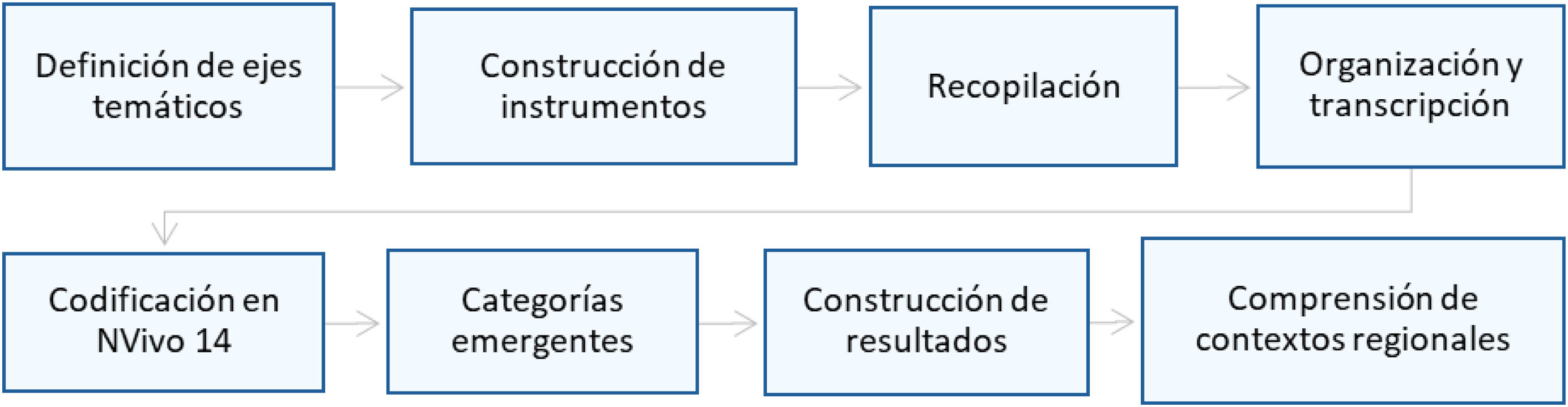
MétodosSe utilizó una metodología cualitativa, mediante entrevistas semiestructuradas, grupos focales y observaciones sistemáticas; los instrumentos se hicieron con 3 actores clave: pacientes, personal de salud y personal administrativo, de 4 centros médicos en Bogotá, Leticia, Mitú y Tunja. Toda la participación de los diferentes actores fue voluntaria con un muestreo por conveniencia.
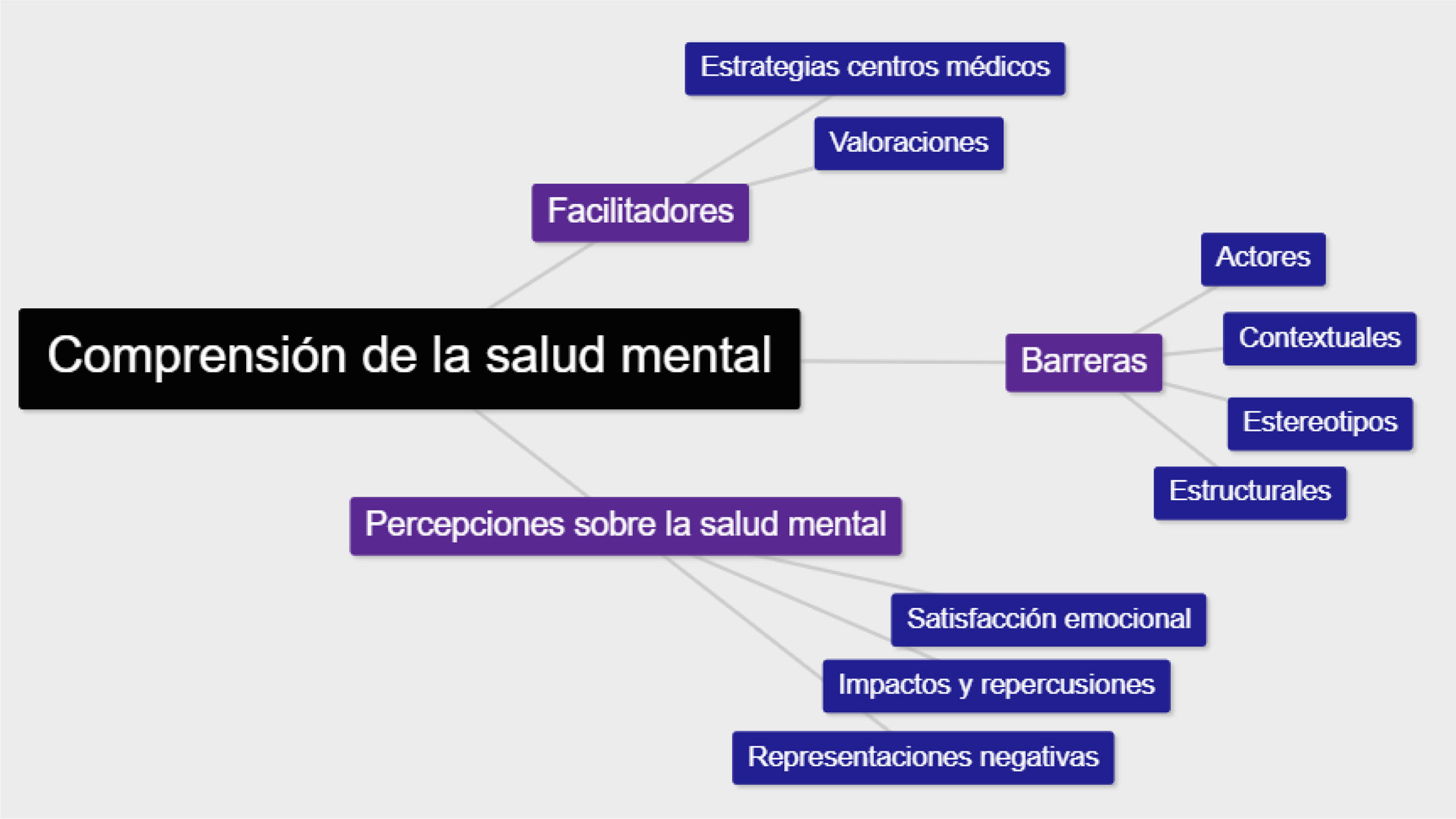
ResultadosSe identificaron diversas percepciones que tenían los actores convocados sobre salud mental. Se presentan diferencias por actores y regiones que posibilitan la comprensión y el acceso al servicio en salud mental, evidenciando barreras y facilitadores para implementar intervenciones acordes a los contextos.
DiscusiónLa comprensión del constructo de salud mental y factores que permiten su promoción, permiten adaptar las estrategias de implementación a los contextos específicos y a las experiencias individuales, mejorando así la pertinencia y la sostenibilidad de los programas de salud mental.
Mental health is a construct shaped by sociocultural factors. In this context, the present article aims to highlight and understand perceptions of mental health in two distinct territories: one predominantly Indigenous (Leticia, Mitú) and the other Andean (Bogotá, Tunja). Additionally, it focuses on identifying the facilitators and barriers to implementing mental health services in primary care within these specific contexts.
MethodsA qualitative methodology was employed, involving semi-structured interviews, focus groups, and systematic observations. The instruments were designed with three key stakeholders: patients, healthcare personnel, and administrative staff, from four medical centers in Bogotá, Leticia, Mitú, and Tunja. Participation from these stakeholders was voluntary, with a convenience sampling approach.
ResultsPerceptions of mental health among the participants were identified. Differences across stakeholders and regions were noted, which impact the understanding and access to mental health services, revealing barriers and facilitators for implementing context-appropriate interventions.
DiscussionUnderstanding the construct of mental health and the factors that support its promotion allows for the adaptation of implementation strategies to specific contexts and individual experiences, thereby enhancing the relevance and sustainability of mental health programs.


