



Headache is a very common neurological symptom. It is the first reason for consultation in neurology. About hospitalized patients, we do not have epidemiological data on the global prevalence of headaches in hospitalized patients.
ObjectiveTo describe the prevalence of headaches in hospitalized patients, their triggers, and the level of compliance with nursing records.
MethodologyThis is a descriptive, observational, and cross-sectional study at the Vall d'Hebron University Hospital (HUVH). The data collected were sociodemographic, related to the reason for admission and pain during admission. Statistical analysis was performed with R v4.1.1.
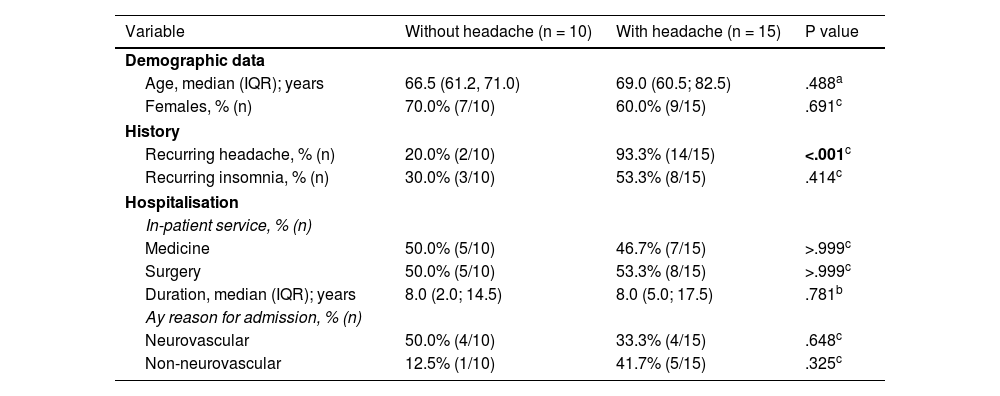
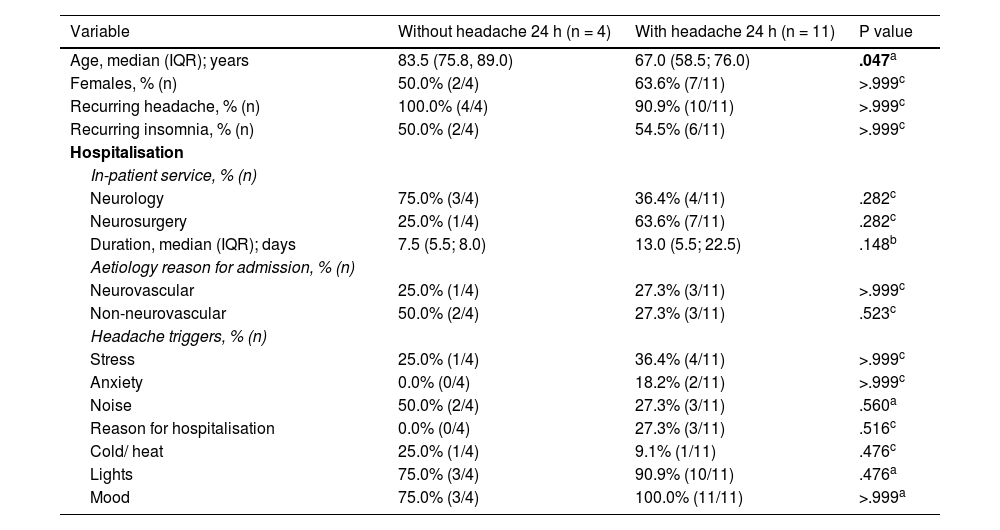
ResultsOf the 45 admitted patients, 55% (25/45) participated, 55% (25/45) participated, 64% (16/25) were women. 60% (15/25) had presented headaches during admission, of which 73.3% (11/15) occurred in the last 24 hours. The 33.3% (5/15) recognized stress as the most frequent trigger, noise (5/15), and income derivatives (3/15). During the daily follow-up by the nurse, 100% (25/25) of the patients answered that they had been asked about pain in general and 32% (8/25) specifically about headaches. No records were obtained due to the computer program's non-existence of nursing clinical variables.
ConclussionHeadache is a symptom that occurs prevalently in hospitalized patients. Stress and noise seem to be triggers of this situation. Certain behaviors on the part of health centers and professionals could help improve the care of these patients.
La cefalea es un síntoma neurológico muy común. En referencia a los pacientes hospitalizados, no disponemos de datos epidemiológicos de prevalencia global de cefalea en el paciente hospitalizado.
ObjetivoDescribir la prevalencia de la cefalea en pacientes hospitalizados, sus desencadenantes y nivel de cumplimiento de los registros de enfermería.
MetodologíaSe trata de un estudio descriptivo, observacional y transversal realizado en el área de neurociencias del Hospital Universitario Vall d’Hebron. Los datos recogidos fueron sociodemográficos, relacionados con el motivo de ingreso y el dolor durante el ingreso. El análisis estadístico se realizó con R v4.1.1.
ResultadosDe los 45 pacientes ingresados, participó el 55% (25/45), el 64% (16/25) eran mujeres. El 60% (15/25) había presentado cefalea durante el ingreso, de los cuales el 73,3% (11/15) fue en las últimas 24 h. Reconocían como posibles desencadenantes más frecuentes el estrés 33,3% (5/15), el ruido (5/15) y derivados por el ingreso (3/15). En cuanto al seguimiento diario por la enfermera, el 100% (25/25) de los pacientes respondieron que se les había preguntado por el dolor en general, y en un 32% (8/25) específicamente por la cefalea. No se había realizado ningún registro de cefalea en el programa informático de registro.
ConclusiónLa cefalea es síntoma que se presenta de manera frecuente en los pacientes hospitalizados. El estrés y el ruido parecen ser desencadenantes de esta situación. Es importante la implementación de registros y estrategias específicas para minimizar el impacto de la cefalea durante el ingreso.
Article
Diríjase al área privada de socios de la web de la SEDENE, (https://sedene.com/revista-de-sedene/ ) y autentifíquese.
