


The biological control of agricultural pests by using different entomopathogenic microorganisms has been significantly increased in the last years, due to the need of reducing the amount of chemical insecticides in agricultural ecosystems.3
Nomuraea rileyi (Farlow)2 is one of the most important natural enemies of the velvet bean caterpillar, Anticarsia gemmatalis (Hübner), which is the most damaging foliage-feeding pest of soybean crops in Argentina and the United States.1
Here we report the isolation of an aggressive strain of N. rileyi during natural epizootics of A. gemmatalis larvae soybean field in Esperanza, province of Santa Fe (Argentina). This finding occurred fortuitously during an expedition aimed at collecting soil and larva samples.
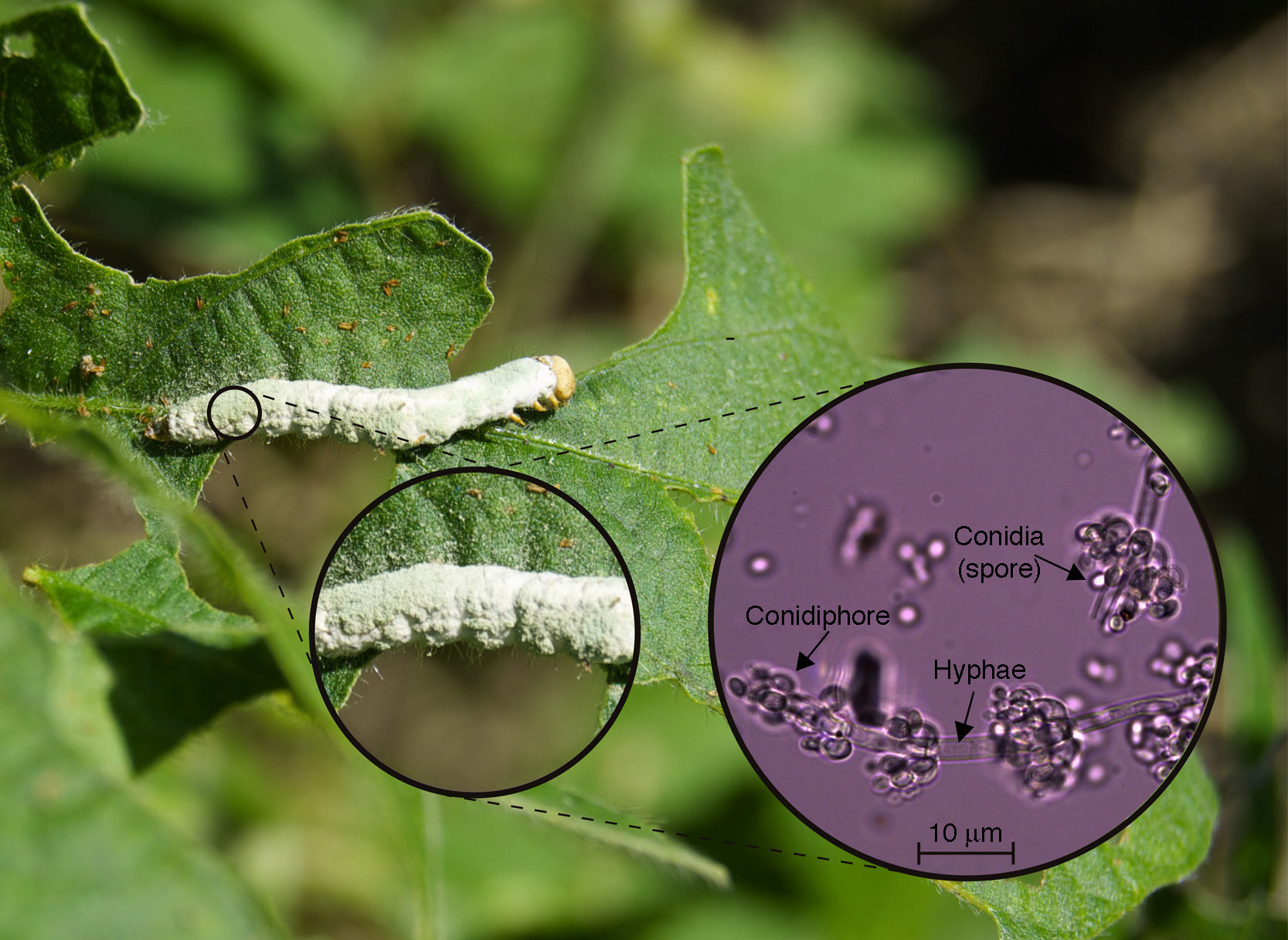
Affected dead larvae were completely covered by white mycelia, which turned green after sporulation (Fig. 1). A bioassay was conducted in the laboratory by adding a drop (10μl) of an aqueous spore suspension directly over the cuticle of healthy A. gemmatalis larvae. The microscopic examination of mycelia obtained in the bioassay exhibited the typical ramification of conidiophores produced by this fungus (Fig. 1).
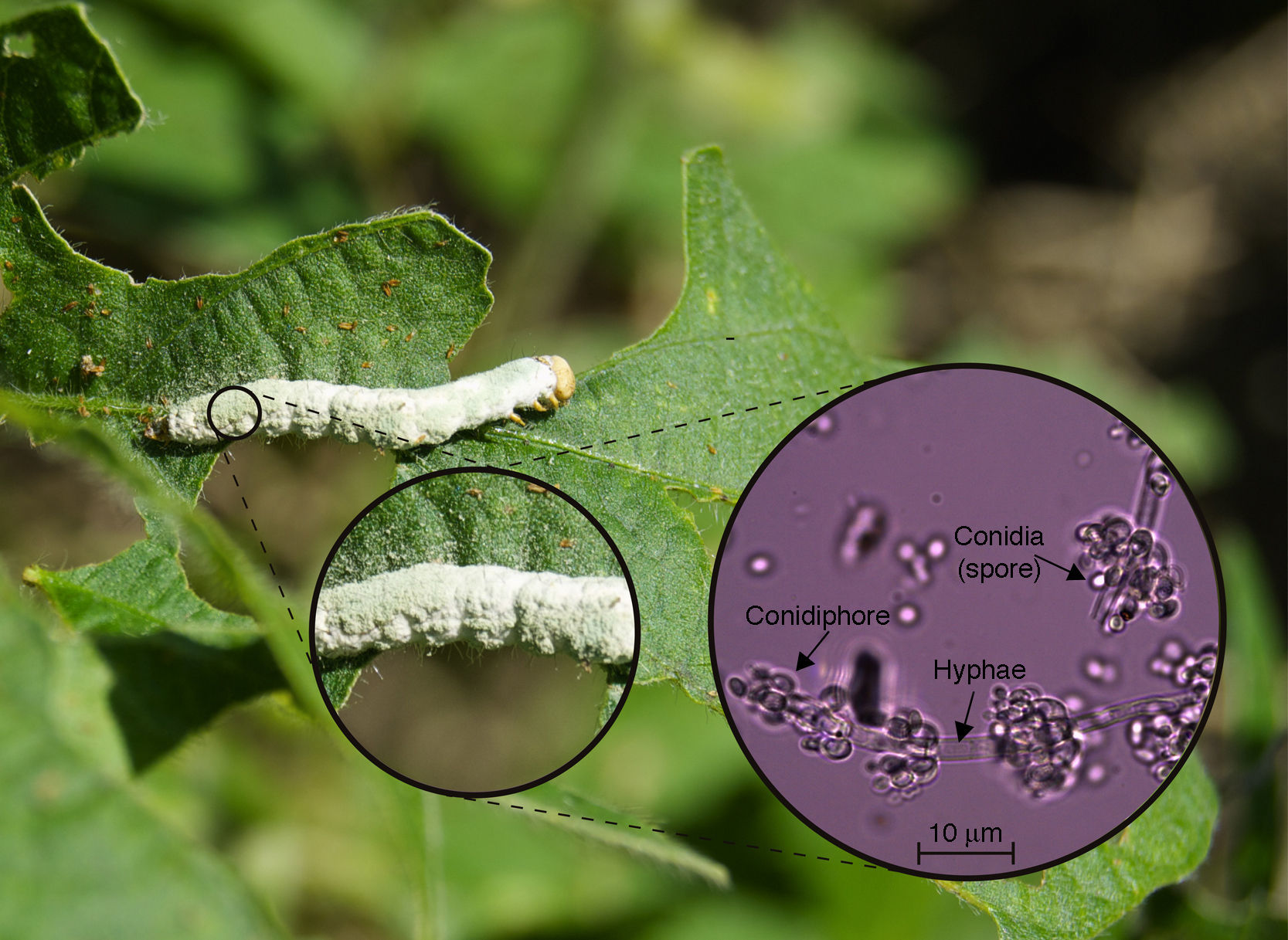
Dead larvae of A. gemmatalis affected by N. rileyi in a soybean plant (Glycine max). Detail of the sporulated mycelia and the typical conidiophore structures found under microscopic analysis (1000×). The image of dead A. gemmatalis larvae was obtained using a Nikon D3000 digital SLR camera whereas the microphotograph was obtained in our laboratories, using a Leica DM750 microscope and its incorporated ICC50 digital microscope camera (Leica Microsystems).
The authors declare that the procedures followed were in accordance with the regulations of the relevant clinical research ethics committee and with those of the Code of Ethics of the World Medical Association (Declaration of Helsinki).
Confidentiality of dataThe authors declare that no patient data appear in this article.
Right to privacy and informed consentThe authors declare that no patient data appear in this article.
Conflicts of interestThe authors declare that they have no conflicts of interest.
This study was supported by the programme Curso de Acción para la Investigación y el Desarrollo, CAI+D, of Universidad Nacional del Litoral. We thank Dr. Colin Berry for his kind revision of the manuscript.
The following are the supplementary data to this article:

