


metricas
covid
Medicina Clínica (English Edition) The refeeding syndrome. Importance of phosphorus
Journal Information
Vol. 150. Issue 12.
Pages 472-478 (June 2018)
Visits
5
Vol. 150. Issue 12.
Pages 472-478 (June 2018)
Review
The refeeding syndrome. Importance of phosphorus
El síndrome de realimentación. Importancia del fósforo
Visits
5
Marta Araujo Castroa,
Corresponding author
martaazul.2a@hotmail.com

Corresponding author.
, Clotilde Vázquez Martínezb
a Servicio de Endocrinología y Nutrición, Hospital Universitario Rey Juan Carlos, Madrid, Spain
b Servicio de Endocrinología y Nutrición, Hospital Universitario Fundación Jiménez Díaz, Madrid, Spain
This item has received
Article information
Abstract
Full Text
Bibliography
Download PDF
Statistics
Tables (4)
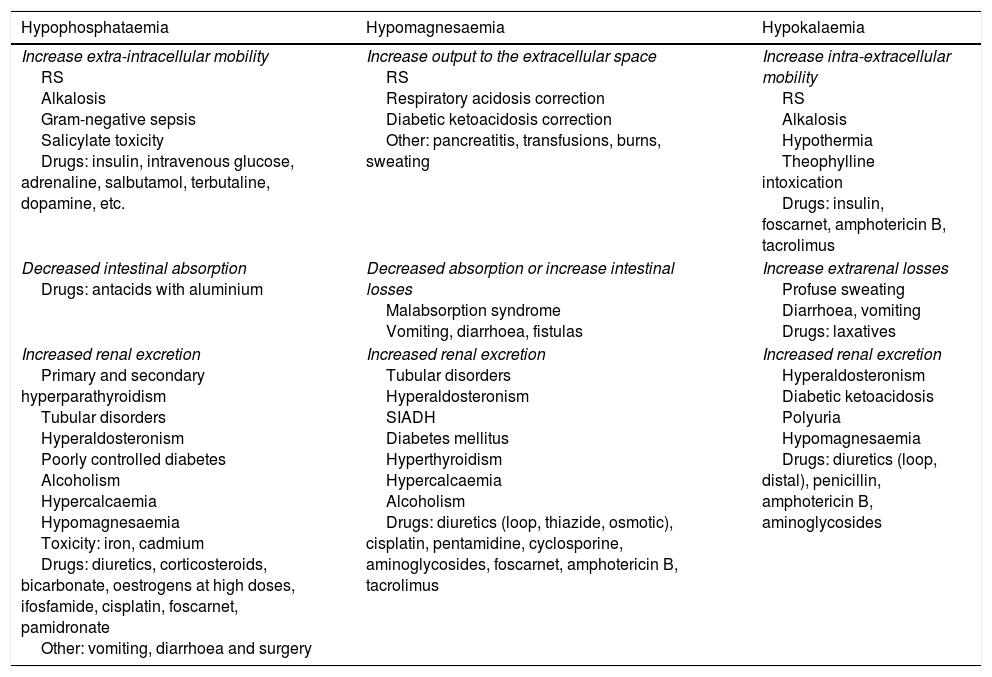
Table 1. Causes of hypophosphataemia, hypokalaemia and hypomagnesaemia.
Tables
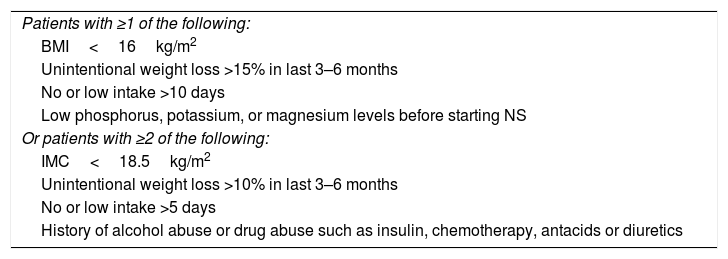
Table 2. Criteria of the NICE Guidelines to identify patients at risk of refeeding syndrome (Recommendation Level D).
Tables
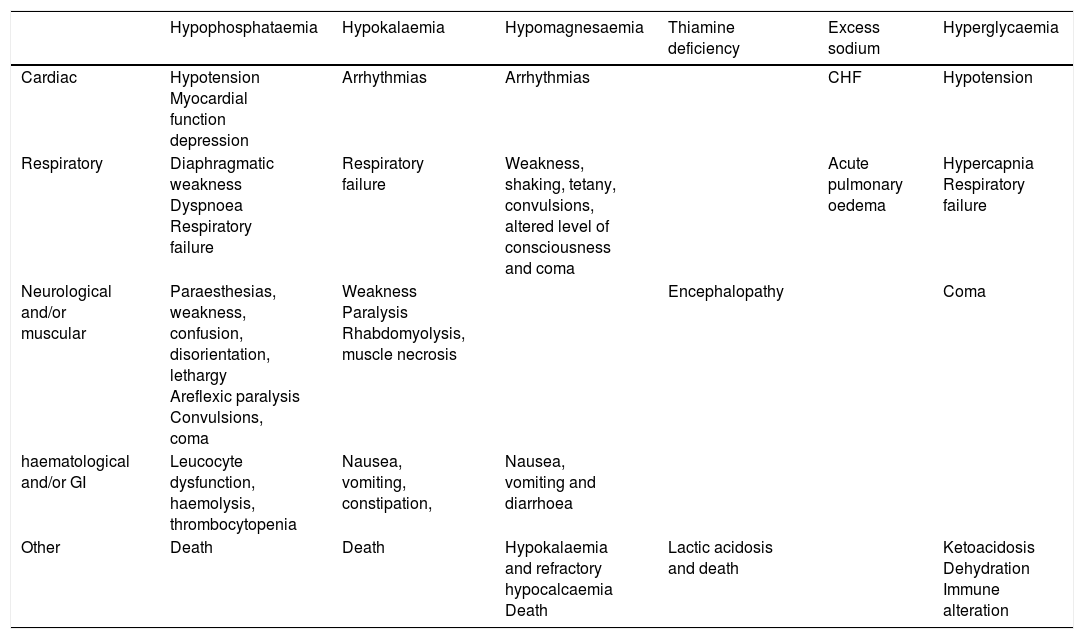
Table 3. Biochemical abnormalities and clinical manifestations of RS.
Tables
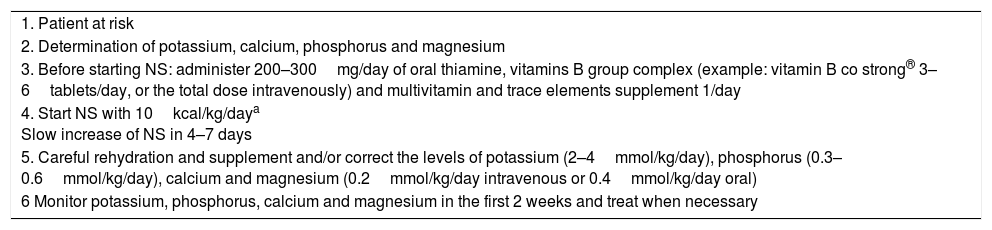
Table 4. Preventive measures in refeeding syndrome. 2006 NICE Guidelines.
Tables
Show moreShow less
Abstract

Refeeding syndrome (RS) is a complex disease that occurs when nutritional support is initiated after a period of starvation. The hallmark feature is the hypophosphataemia, however other biochemical abnormalities like hypokalaemia, hypomagnesaemia, thiamine deficiency and disorder of sodium and fluid balance are common.

The incidence of RS is unknown as no universally accepted definition exists, but it is frequently underdiagnosed.

RS is a potentially fatal, but preventable, disorder. The identification of patients at risk is crucial to improve their management.

If RS is diagnosed, there is one guideline (NICE 2006) in place to help its treatment (but it is based on low quality of evidence).

The aims of this review are: highlight the importance of this problem in malnourished patients, discuss the pathophysiology and clinical characteristics, with a final series of recommendations to reduce the risk of the syndrome and facilitate the treatment.

Keywords:
Refeeding syndrome
Hypophosphataemia
Starvation
Hypokalaemia
Hypomagnesaemia
Prevention
Resumen

El síndrome de realimentación es una enfermedad compleja que ocurre cuando se inicia el soporte nutricional después de un periodo de ayuno. La característica principal es la hipofosfatemia, sin embargo, también son comunes otras alteraciones bioquímicas como la hipomagnesemia, el déficit de tiamina y las alteraciones hídrico-electrolíticas.

Su incidencia es desconocida, ya que no existe una definición universalmente aceptada, pero con frecuencia está infradiagnosticado.

El síndrome de realimentación es un trastorno potencialmente fatal pero prevenible. Identificar a los pacientes en riesgo es crucial para mejorar su manejo.

Si se diagnostica existen unas guías (NICE 2006) para orientar su tratamiento (pero basadas en un bajo grado de evidencia).

Los objetivos de esta revisión son: destacar la importancia de este problema en pacientes desnutridos, discutir su fisiopatología y características clínicas y dar una serie de recomendaciones finales para disminuir el riesgo de desarrollarlo y facilitar su tratamiento.


Palabras clave:
Síndrome de realimentación
Hipofosfatemia
Ayuno
Hipopotasemia
Hipomagnesemia
Prevención

Article

These are the options to access the full texts of the publication Medicina Clínica (English Edition)
Subscriber
Subscriber

If you already have your login data, please click here .

If you have forgotten your password you can you can recover it by clicking here and selecting the option “I have forgotten my password”
Subscribe
Subscribe to

Medicina Clínica (English Edition)

Purchase
Purchase article

Purchasing article the PDF version will be downloaded

Purchase now
Contact
Phone for subscriptions and reporting of errors
From Monday to Friday from 9 a.m. to 6 p.m. (GMT + 1) except for the months of July and August which will be from 9 a.m. to 3 p.m.
Calls from Spain
932 415 960
Calls from outside Spain
+34 932 415 960
E-mail
Article options
Tools