


metricas
covid
Medicina Clínica (English Edition) Restless legs syndrome. Pathophysiology, diagnosis and treatment
Journal Information
Vol. 164. Issue 2.
Pages 84-90 (January 2025)
Visits
1
Vol. 164. Issue 2.
Pages 84-90 (January 2025)
Review
Restless legs syndrome. Pathophysiology, diagnosis and treatment
Síndrome de piernas inquietas. Fisiopatología, diagnóstico y tratamiento
Visits
1
Federico Castillo-Álvarez&#¿;
Corresponding author
fcastilloa@riojasalud.es

Corresponding author.
, María Eugenia Marzo-Sola
Servicio de Neurología, Hospital Universitario San Pedro, Logroño, La Rioja, Spain
This item has received
Article information
Abstract
Full Text
Bibliography
Download PDF
Statistics
Figures (1)
Tables (5)
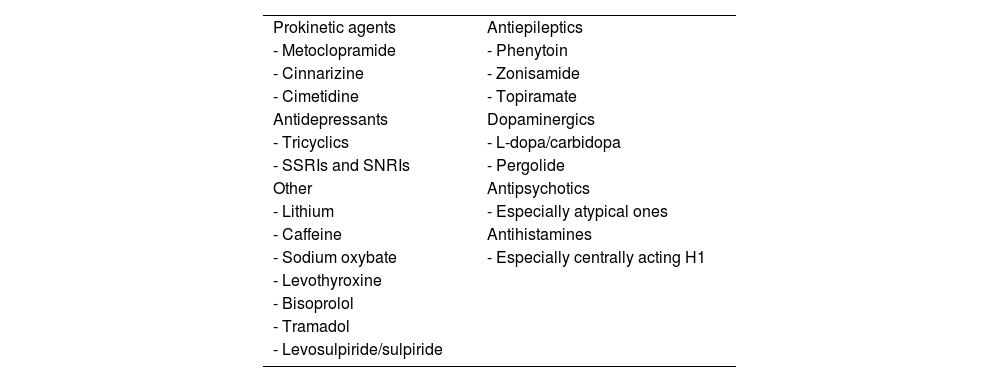
Table 1. Drugs that may contribute to the development/exacerbation of restless legs syndrome
Tables
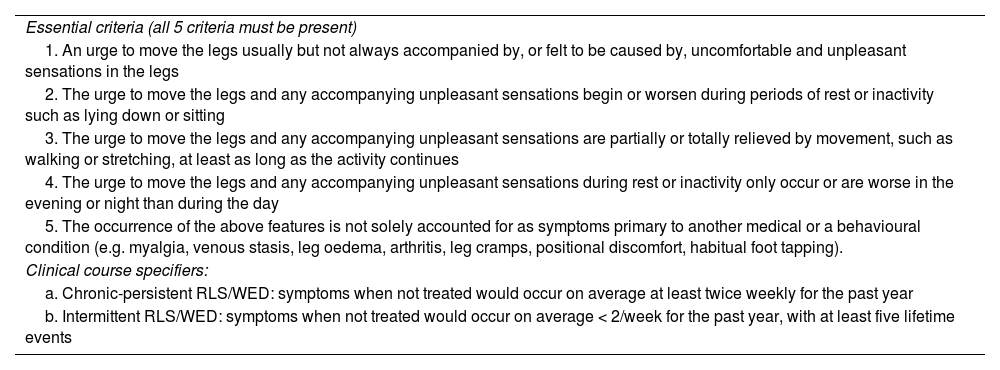
Table 2. Diagnostic criteria for Restless Legs Syndrome from the International Restless Legs Syndrome Study Group
Tables
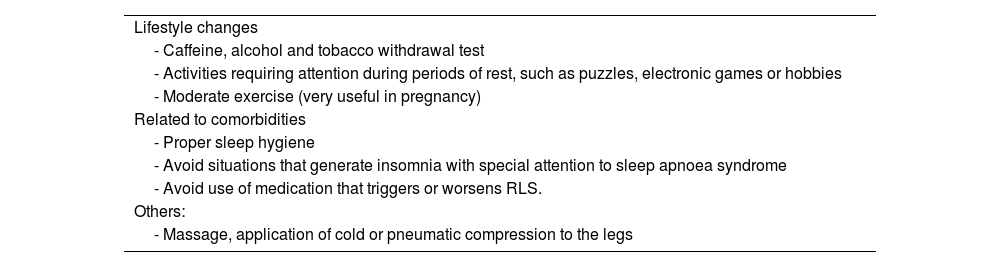
Table 3. Non-drug treatment of restless legs syndrome
Tables
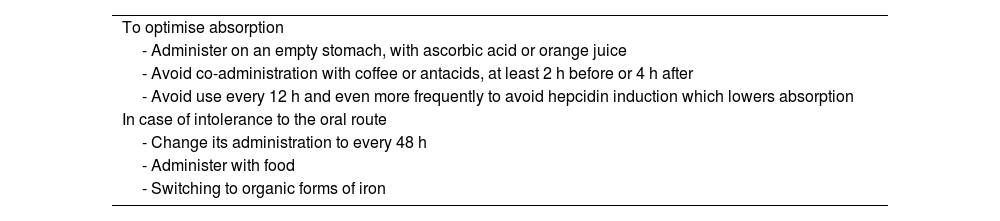
Table 4. Recommendations for oral iron intake
Tables
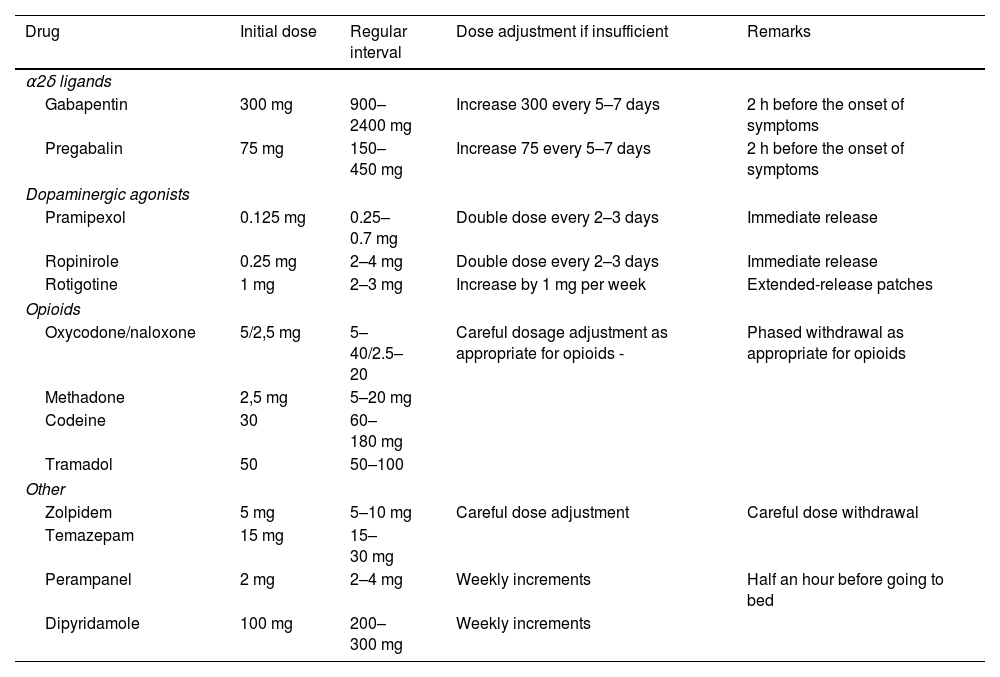
Table 5. Standard recommended doses in the treatment of restless legs syndrome
Tables
Show moreShow less
Abstract

Restless Legs Syndrome is the most prevalent sleep-related movement disorder, affecting 5%–10% of the population, characterized by an urge to move that appears during rest or is exacerbated by rest, primarily in the lower extremities, that occurs in the evening or night and that disappears during movement or is improved by movement. Restless Legs Syndrome significantly impacts sleep, mood, and quality of life.

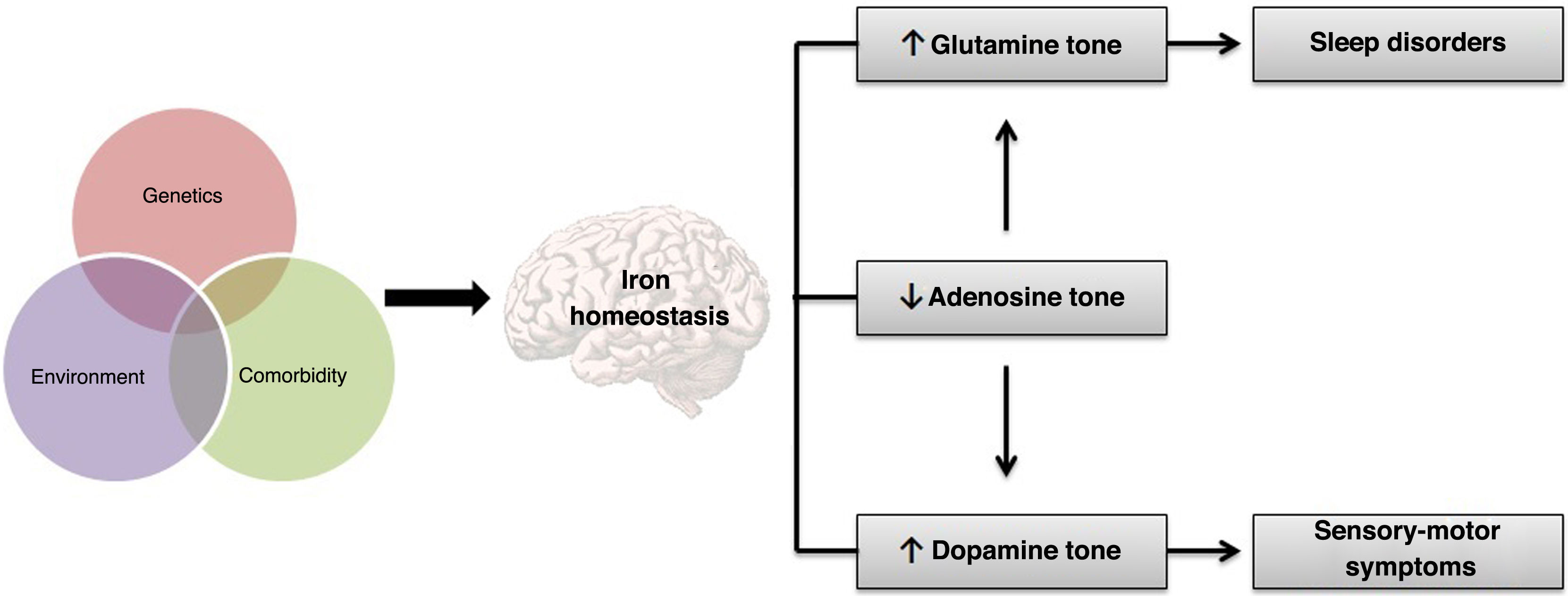
Its pathophysiology involves a complex interplay of genetic and environmental factors, as well as comorbidities, leading to alterations in brain iron resulting in dysfunction in dopaminergic, adenosine, and glutamatergic pathways.

Treatment typically includes iron supplementation and symptomatic therapy, traditionally utilizing dopamine agonists. However, their long-term use may exacerbate symptoms, relegating them to second-line treatment after α2δ ligands of calcium channels.

Keywords:
Restless legs syndrome
Dopamine
Dopamine agonist
Augmentation
Gabapentin
Pregabalin
Resumen

El síndrome de piernas inquietas es el trastorno del movimiento durante el sueño más prevalente, afectando al 5%–10% de la población. Se caracteriza por una necesidad imperiosa de moverse que aparece o se exacerba durante el reposo, principalmente en extremidades inferiores, que se presenta por la tarde o noche y desaparece o mejora con el movimiento. Genera un gran impacto sobre la calidad del sueño, estado de ánimo, y finalmente a la calidad de vida.

Su fisiopatología implica la confluencia de factores genéticos, ambientales y comorbilidades que generan alteraciones del hierro cerebral que condiciona una disfunción del tono dopaminérgico, así como del glutamato y adenosina.

Su tratamiento se basa en la suplementación con hierro y tratamiento sintomático, clásicamente basado en fármacos dopaminérgicos, cuyo uso a largo plazo puede producir un agravamiento de los síntomas que lo ha relegado a una segunda línea tras los α2δ-ligandos de canales de calcio.


Palabras clave:
Síndrome de piernas inquietas
Agonista dopaminérgico
Dopamina
Aumento
Gabapentina
Pregabalina

Article

These are the options to access the full texts of the publication Medicina Clínica (English Edition)
Subscriber
Subscriber

If you already have your login data, please click here .

If you have forgotten your password you can you can recover it by clicking here and selecting the option “I have forgotten my password”
Subscribe
Subscribe to

Medicina Clínica (English Edition)

Purchase
Purchase article

Purchasing article the PDF version will be downloaded

Purchase now
Contact
Phone for subscriptions and reporting of errors
From Monday to Friday from 9 a.m. to 6 p.m. (GMT + 1) except for the months of July and August which will be from 9 a.m. to 3 p.m.
Calls from Spain
932 415 960
Calls from outside Spain
+34 932 415 960
E-mail
Article options
Tools