


metricas
covid
Medicina Clínica (English Edition) Eosinophilic granulomatosis with polyangiitis
Journal Information
Vol. 160. Issue 7.
Pages 310-317 (April 2023)
Vol. 160. Issue 7.
Pages 310-317 (April 2023)
Review
Eosinophilic granulomatosis with polyangiitis
Granulomatosis eosinofílica con poliangeítis
Carlos Romero Gómez
Corresponding author
carlosrg1968@gmail.com

Corresponding author.
, Halbert Hernández Negrín, María del Mar Ayala Gutiérrez
Internal Medicine Department, Regional University Hospital of Málaga, Biomedical Research Institute of Málaga (IBIMA), University of Málaga (UMA), Málaga, Spain
Article information
Abstract
Full Text
Bibliography
Download PDF
Statistics
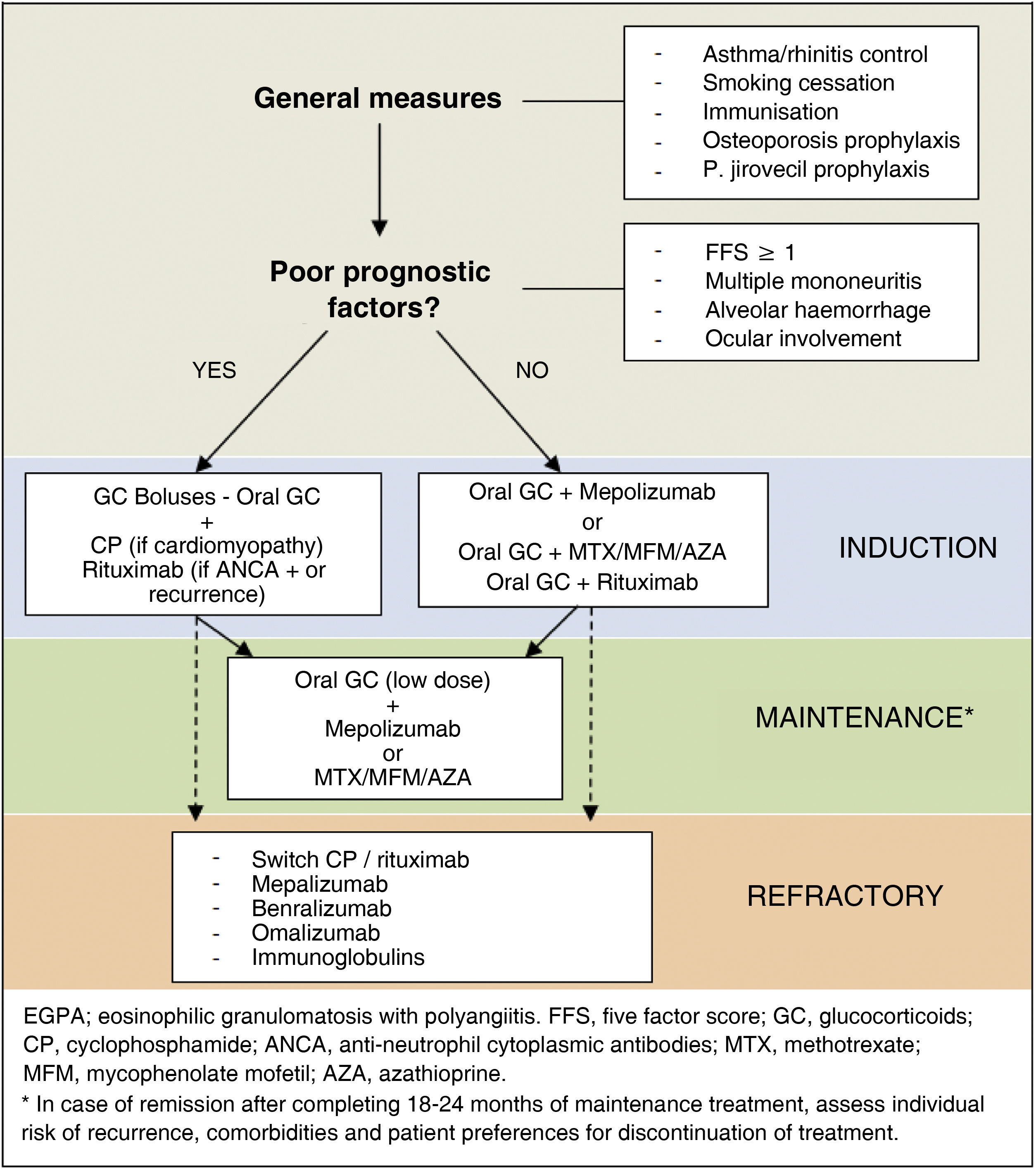
Figures (1)
Tables (5)
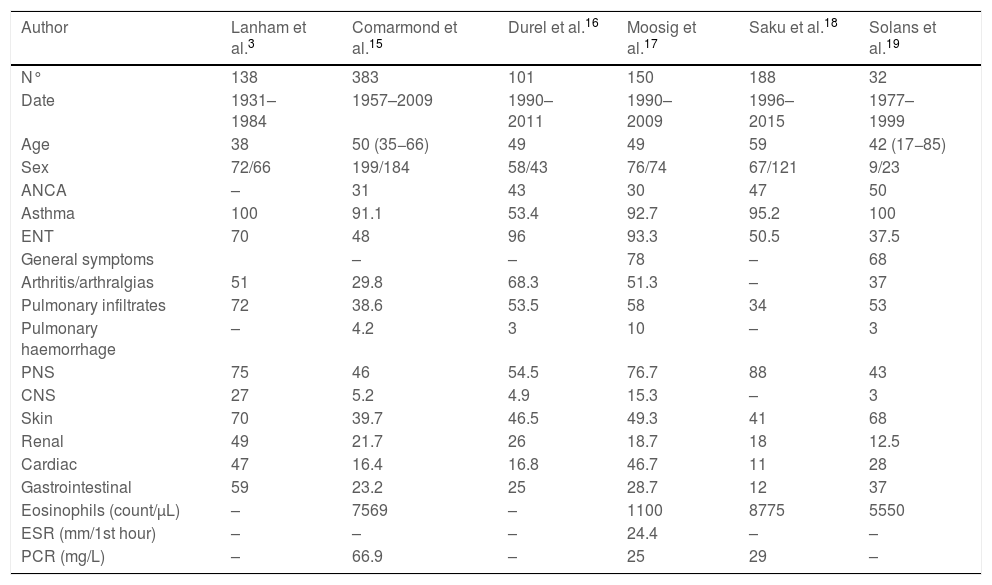
Table 1. Clinical characteristics in the main EGPA studies.
Tables
Table 2. Clinical-genetic phenotypes of EGPA.
Tables
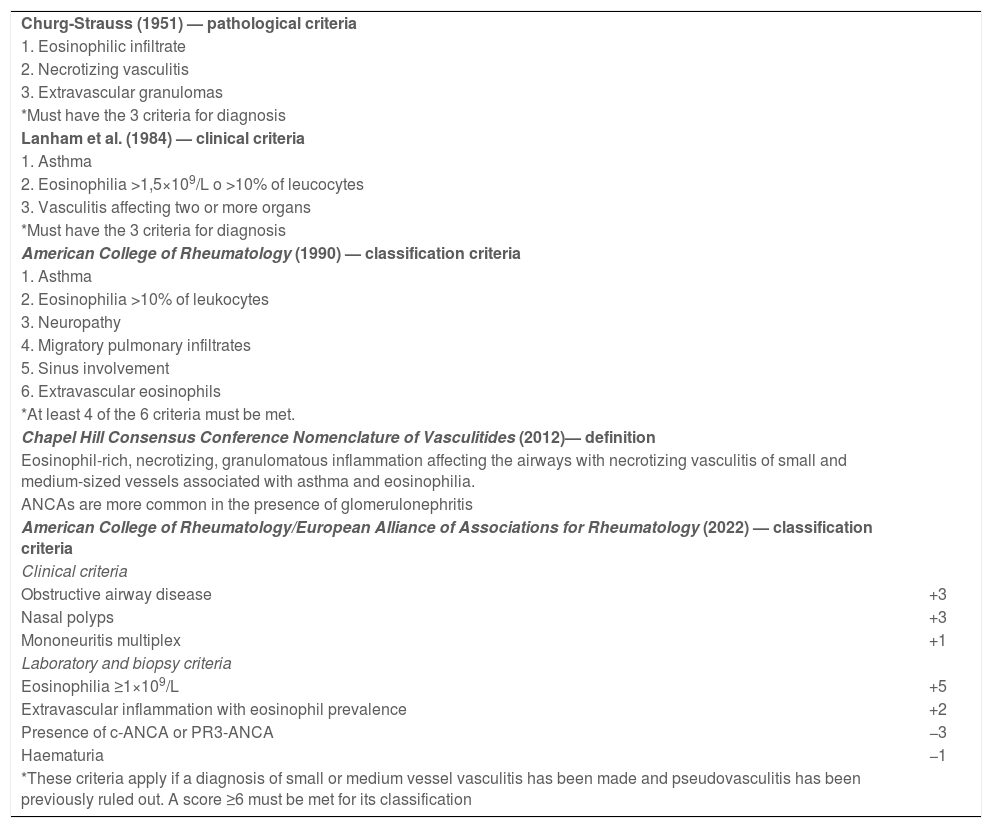
Table 3. Criteria used in the diagnosis, classification and definition of eosinophilic granulomatosis with polyangiitis.
Tables
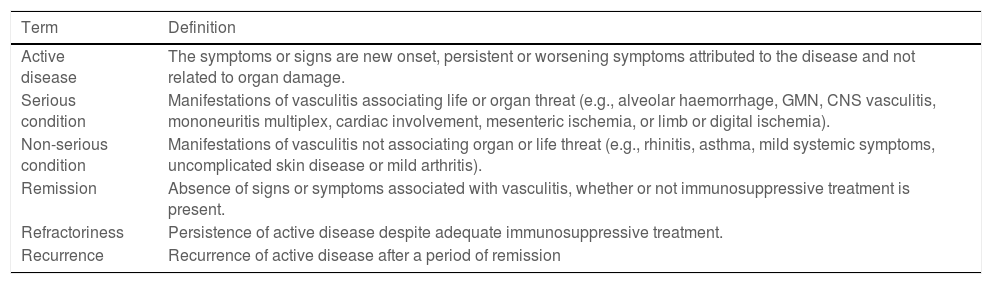
Table 4. Definition of terms used in the management of anti-neutrophil cytoplasmic antibody-associated vasculitis.
Tables
Table 5. Prognostic factor scores in EGPA.
Tables
Show moreShow less
Abstract

Eosinophilic granulomatosis with polyangiitis (EGPA) is a systemic vasculitis characterized by the presence of asthma associated with eosinophilia, eosinophilic infiltration of different organs, and vasculitis of small and medium-sized vessels. Although classified as anti-neutrophil cytoplasmic antibody (ANCA)-associated vasculitis, it occurs in less than half of the patients. The disease is infrequent, typically appearing in patients with asthma and affecting multiple organs such as lung, skin and peripheral nervous system. Treatment has been based on the use of glucocorticoids and immunosuppressants. In recent years, progress has been made in the knowledge of the pathophysiology, in treatment with the inclusion of biologic agents, the classification criteria have been revised and new therapeutic recommendations have been published.

Keywords:
Eosinophilic granulomatosis with polyangiitis
Eosinophilia
Systemic vasculitis
Resumen

La granulomatosis eosinofílica con poliangeítis (GEPA) es una vasculitis sistémica que se caracteriza por la presencia de asma asociado a eosinofilia, infiltración eosinofílica en diferentes órganos y vasculitis de vasos de pequeño y mediano calibre. Aunque clasificada como vasculitis asociadas a anticuerpos anticitoplasma de neutrófilos (ANCA), estos se presentan en menos de la mitad de los pacientes. Es una enfermedad infrecuente, que aparece típicamente en pacientes con asma y afectando a múltiples órganos como pulmón, piel y sistema nervioso periférico. Su tratamiento se ha basado en el uso de glucocorticoides e inmunosupresores. En los últimos años, se ha avanzado en el conocimiento de la fisiopatología, en el tratamiento con la inclusión de fármacos biológicos, se han revisado los criterios de clasificación y se han publicado nuevas recomendaciones terapéuticas.


Palabras clave:
Granulomatosis eosinofilica con poliangeítis
Eosinofilia
Vasculitis sistémica

Article

These are the options to access the full texts of the publication Medicina Clínica (English Edition)
Subscriber
Subscriber

If you already have your login data, please click here .

If you have forgotten your password you can you can recover it by clicking here and selecting the option “I have forgotten my password”
Subscribe
Subscribe to

Medicina Clínica (English Edition)

Purchase
Purchase article

Purchasing article the PDF version will be downloaded

Purchase now
Contact
Phone for subscriptions and reporting of errors
From Monday to Friday from 9 a.m. to 6 p.m. (GMT + 1) except for the months of July and August which will be from 9 a.m. to 3 p.m.
Calls from Spain
932 415 960
Calls from outside Spain
+34 932 415 960
E-mail
Article options
Tools