











Entrepreneurial leadership has emerged as a key driver of innovation, yet the underlying mechanisms remain less understood. The current study, grounded in social cognitive theory and social learning theory, examines the role of entrepreneurial leadership in fostering innovative behavior among employees in autonomous work settings, with a particular focus on employee antifragility. It theorizes that employee antifragility mediates the relationship between entrepreneurial leadership and employees' innovative behavior and that the level of job autonomy moderates this association. To examine these dynamics, a two-wave survey was conducted with 358 full-time employees from various U.S. industries, employing Smart PLS-SEM, importance-performance map analysis, and necessary condition analysis for data analysis. The findings demonstrate a significant impact of entrepreneurial leadership on employees' innovative behavior, with employee antifragility acting as a key mediator. Furthermore, job autonomy was found to enhance the influence of entrepreneurial leadership on employee antifragility. The research offers practical insights for organizations aiming to boost innovation, suggesting that developing entrepreneurial leadership, nurturing employee antifragility, and supporting job autonomy are essential. The holistic perspective on the interplay of entrepreneurial leadership, employee antifragility, and job autonomy provides a new understanding of innovation in organizational settings.
Innovation has become a cornerstone of organizational success and sustainability in today's rapidly evolving business landscape. As organizations strive to adapt to ever-changing market conditions and technological advancements, fostering a culture of innovation has emerged as a critical imperative (Ali & Park, 2016). Within this dynamic context, the role of leadership in driving and facilitating innovation has gained prominence, mainly through the lens of entrepreneurial leadership (Malibari & Bajaba, 2022). This intersection of entrepreneurial leadership and employee innovation is not a unidimensional process. Instead, it is a multifaceted phenomenon influenced by various individual and contextual factors. The present research explores the nuanced mechanism and a boundary condition through which entrepreneurial leadership stimulates employees' innovative behavior.
Entrepreneurial leadership is characterized by the ability to craft visionary scenarios that inspire and unite a dedicated group of individuals, driving them toward identifying and pursuing strategic value creation (Gupta et al., 2004). While there is a growing body of literature emphasizing the positive impact of entrepreneurial leadership on employee innovation (e.g., Akbari et al., 2021; Bagheri et al., 2022; Lee et al., 2020; Zhang & Yang, 2020), the precise mechanisms through which the relationship operates remain relatively unexplored. This idea is further supported by Arshi and Burns (2018) and Hughes et al. (2018), who have emphasized the need for researchers to investigate mediating elements to gain a more thorough and nuanced comprehension of the impact of leaders on employees’ innovative behavior. Therefore, this research aims to bridge this gap by introducing the new concept of employee antifragility as a potential mediator. Bajaba et al. (2024) define antifragility as a psychological capacity that enables individuals to benefit more than they suffer from disorders. Disorder refers to any stress-inducing factor an individual might face, such as uncertainty, variability, imperfection, incomplete knowledge, randomness, stressors, dispersion of outcomes, chance, and chaos (Taleb, 2012). An antifragile individual is characterized by two factors: the optionality to gain (the ability to recognize and choose opportunities of not only minimum losses but also maximum gains) and disorder embracement (one's positive attitude toward disorder and its forms, exemplified by excitement, thrill, and enjoyment; Bajaba et al., 2024). Antifragility goes beyond resilience because it does not merely involve returning to a previous state after experiencing disorders. Instead, individuals with antifragility actively benefit from disorders, viewing them as an opportunity for growth and adaptation (Bajaba et al., 2024). Examining the mechanisms through which entrepreneurial leadership fosters employee antifragility and, in turn, influences innovative behavior constitutes a novel contribution to the field. Prior research has primarily focused on external factors or organizational strategies to drive innovation, often overlooking the critical role of individual differences such as antifragility (Platje, 2015). This is further supported by the recent need to explore the concept of antifragility as a psychological capacity that goes beyond resilience and robustness by examining its impact in an organizational context (Hillson, 2023; Munoz et al., 2022). Therefore, the current study addresses this gap by emphasizing the significance of employees’ change-related psychological capacities, such as antifragility, in shaping their innovative behavior within the framework of entrepreneurial leadership.
In addition to the personal resources of employees, the job resources provided by entrepreneurial leaders play a significant role in influencing change in their employees, and one such resource is job autonomy. Job autonomy refers to employees' degree of independence and control over their work tasks, decision-making, and the organization and execution of job responsibilities (Breaugh, 1985). It represents individuals' freedom and discretion in carrying out their work without excessive interference or micromanagement from supervisors or superiors. Job autonomy can manifest in various forms, including making decisions, setting priorities, choosing work methods, and managing one's time. Within the scope of the present research, it is essential to investigate how job autonomy moderates the relationship between entrepreneurial leadership and employee antifragility and, ultimately, innovative behavior. While the importance of job autonomy in driving employee performance and creativity has been acknowledged (Aven, 2015; Muecke & Iseke, 2019; Saragih, 2011), its specific role in the context of entrepreneurial leadership and innovation has received limited attention. This research addresses the gap by exploring how job autonomy may amplify or dampen the influence of entrepreneurial leadership on innovative behavior. Finally, entrepreneurial leadership has been recognized for its significance in fostering innovation, but prior research often focuses on its direct impact (Anderson et al., 2019; Li et al., 2020; Pidduck et al., 2023). Thus, the current study provides a more comprehensive perspective by considering both the direct and mediated effects, thereby offering a holistic view of how entrepreneurial leadership shapes innovative behavior through employee antifragility and job autonomy.
In summary, utilizing social cognitive theory (Bandura, 1986) and social learning theory (Bandura, 1988), the present research aims to address the existing gaps in understanding how employee antifragility acts as a critical mediator in the relationship between entrepreneurial leadership and employees' innovative behavior. It hypothesizes that antifragility influences how employees respond to uncertainty and challenges due to their optionality to gain and disorder embracement and enhance their innovative capacities under leadership styles such as entrepreneurial leadership. Furthermore, the research delves into the role of job autonomy, specifically its potential to amplify the impact of entrepreneurial leadership on employee innovative behavior. It is pivotal to comprehend how varying degrees of decision-making freedom granted to employees can impact this dynamism. The research also seeks to contribute significantly to the ongoing discourse on leadership, innovation, and organizational adaptability by exploring these aspects. It comprehensively explores how organizations can effectively navigate and prosper amid continual disruptions and changes. Further, the research provides insights that organizations can apply to foster innovation through leadership development by encouraging practices that build employee antifragility, especially in contexts where autonomy is high. The central research question encapsulates this exploration, focusing on the nuanced interplay between entrepreneurial leadership, employee antifragility, and job autonomy and their collective impact on fostering innovative behavior in the workplace.
The current study is structured into four main sections. First, a comprehensive literature review explores key theories and concepts that underpin the proposed model. Next, the research methodology covers sample selection and measurement scales. The penultimate section presents the research findings, including the model's goodness of fit and hypothesis testing results. Finally, the concluding section discusses the study's implications, limitations, and directions for future research.
Theoretical background and hypothesis developmentTo answer the research question, we developed a research model through the lenses of social cognitive theory and social learning theory (Bandura, 1986, 1988). social cognitive theory posits that a consistent, reciprocal interaction occurs between three factors: environmental influences (social models, feedback, rewards, etc.), behavioral influences (activities, effort, persistence, etc.), and personal influences (values, attributions, traits, etc.; Bandura, 1986; Schunk & DiBenedetto, 2020). Earlier views of social cognitive theory were labeled social learning theory, emphasizing observational learning, or how individuals learn from observing their environment and other individuals (Bandura, 1988). Social cognitive theory expanded on social learning theory by emphasizing the reciprocal triad and the role of personal agency through concepts such as self-efficacy (Schunk & DiBenedetto, 2020). To elaborate, those theories suggest that both behaviors and cognition shape and are shaped by the environment in which people interact. Therefore, integrating social cognitive theory and social learning theory into the research framework enables a holistic understanding of how entrepreneurial leadership influences employees' innovative behavior. These theories examine how observational learning, self-efficacy, outcome expectations, role modeling, and reinforcement mechanisms operate within the organization (Bandura, 2001). Additionally, they help illuminate how environmental factors such as entrepreneurial leadership and job autonomy interact with the personal factor of antifragility to facilitate innovative behavior. By incorporating these theories, the research seeks to unravel contemporary organizations' complex leadership, learning, and innovation dynamics.
Numerous scholarly investigations have previously investigated the influence of Entrepreneurial leadership on employees' outcomes by employing the social cognitive theory as a framework. These studies have empirically examined various outcomes, including innovative work behavior, as evidenced by the works of Cai et al. (2019), Li et al. (2020), Newman et al. (2020), Bagheri et al. (2022), and Iqbal et al. (2022). This study expands upon existing literature by suggesting that entrepreneurial leadership has a functional role as an external factor in facilitating workplace innovation. Furthermore, the study findings indicate that this link is mediated by employee antifragility and moderated by job autonomy. In sum, the theoretical background of the research leverages social cognitive theory and social learning theory to offer a robust foundation for exploring the dynamic and complex relationships at the intersection of leadership, learning, antifragility, autonomy, and innovation within contemporary organizations (Bandura, 2014).
Entrepreneurial leadership and employee antifragility at workThe relationship between entrepreneurial leadership and employee antifragility at work is critical to organizational dynamics. While direct research on the relationship between entrepreneurial leadership and employee antifragility at work is limited, the literature suggests a robust theoretical connection. Through their practices and behaviors, entrepreneurial leaders can influence employees' antifragility by fostering a culture of resilience, adaptability, and continuous learning within the organization (Nguyen et al., 2016). In addition, antifragility is not an inherent trait but a psychological capacity or resource that can be developed and nurtured over time (Taleb et al., 2023). Entrepreneurial leaders can play a role in facilitating employees' personal growth by creating an environment that encourages learning from failures and setbacks, which is at the core of antifragility (Hillson, 2023).
A study by Wang et al. (2013) examined the impact of transformational leadership on a construct that is similar yet distinct from employee antifragility: employee resilience (see Bajaba et al., 2024, Hillson, 2023, and Munoz et al., 2022 for a detailed discussion on the differences). Transformational leadership, which shares qualities with entrepreneurial leadership, was found to influence employee resilience positively (Ravet-Brown et al., 2024), which is a necessary step to potentially achieving antifragility. Leaders who inspire and motivate employees to embrace challenges and view them as opportunities for growth can contribute to their antifragility. In addition, Muthuveloo et al. (2014) and Nguyen et al. (2016) explored the relationship between leadership and employee adaptability. While not specific to entrepreneurial leadership, the study found that leadership practices that encourage employee adaptability, such as providing support and feedback, positively impact employees' adaptability to change and uncertainty (Alarifi et al., 2024). Moreover, Sawaean and Ali (2020) investigated the influence of leadership on employees' learning orientation. Learning orientation is considered an antecedent to antifragility as it reflects a willingness to learn from failures and setbacks, which sets the stage for antifragility to develop (Bajaba et al., 2024). The research highlighted that leadership practices supporting learning and development contribute to employees' positive orientation. Furthermore, a study by Dartey-Baah (2015) and Giustiniano et al. (2020) investigated resilient leadership, including characteristics like entrepreneurial leadership. Resilient leaders were found to influence employee well-being and resilience positively. Drawing insight from social learning theory (Bandura, 1988), employees who perceive their leaders to be more resilient are argued to be more inclined to develop antifragility, as such employees are more likely to be influenced by the perceived success such leaders might experience due to such resilience.
These studies collectively suggest that leadership practices, particularly those associated with transformational and entrepreneurial leadership, can influence employee antifragility at work. Leadership behaviors that promote a culture of learning from failures, adaptability, and psychological safety are likely to contribute to employees' development of antifragility, given that such learning is what allows antifragile employees to develop the capacity to gain more than lose from the disorder as they gain the tools to do so in the form of optionality to gain that is nurtured by their disorder embracement (Bajaba et al., 2024). While further research directly linking entrepreneurial leadership and employee antifragility is needed, these findings offer a foundation for understanding the potential impact of leadership on employees' ability to thrive in uncertain and challenging work environments.
Theoretically, social cognitive and learning theories provide theoretical underpinnings for understanding how entrepreneurial leadership influences employee antifragility. These theories propose that leaders influence employees' beliefs, behaviors, and responses to adversity through their actions, communication, and the learning environments they cultivate. For example, self-regulation and goal-setting are key components of social cognitive theory (Bandura, 2014). Accordingly, entrepreneurial leaders can incentivize employees to set goals that nurture the development of adaptability, resilience, and, ultimately, antifragility. By emphasizing the importance of continuous learning and personal growth, leaders can encourage employees to self-regulate their behavior and strive for antifragility (Franken et al., 2022; Fuller et al., 2022). Based on that, we propose the following hypothesis:
H1 Entrepreneurial leadership will be positively related to employee antifragility at work.
The relationship between employee antifragility at work and employees' innovative behavior is a critical area of interest within organizational psychology and innovation research. Although research on the direct relationship between employee antifragility and innovative behavior is still emerging, it is reasonable to suggest that antifragile employees are more likely to engage in innovation than those who are fragile or resistant to change (Bajaba et al., 2024). Antifragile employees perceive challenges as opportunities for growth, embrace learning from failures, and take creative risks—key factors that foster a culture of innovation within organizations. In other words, given that antifragile employees tend to have learned numerous tools or means through which they can not only resist but also gain from challenges and setbacks, they tend to be more willing to experiment with new approaches and more open to taking calculated risks, which further generates additional opportunities for growth and exploration of ideas and experiences, all of which are conducive to innovative behavior (Bajaba et al., 2024).
In addition, research by Dweck (2008) on growth mindset suggests that individuals with a growth mindset, akin to antifragility, are more inclined to embrace challenges and persist in the face of failures, which can foster innovative behavior. Tugade and Fredrickson (2004) indicate that individuals who exhibit resilience in response to adversity are better equipped to engage in innovative problem-solving, which is further built on by a study by Fletcher and Sarkar (2013) that found a positive association between resilience and creativity. Given that resilience is considered to be one of the building blocks of antifragility (Bajaba et al., 2024), it can be postulated that antifragile individuals, who are even more equipped to handle setbacks and challenges, are also more likely to display creative problem-solving skills. Based on the above arguments, it is reasonable to hypothesize:
H2 Employee antifragility at work will be positively related to employees' innovative behavior.
While entrepreneurial leadership can stimulate innovation, the mechanisms underlying the relationship remain relatively unexplored. One promising avenue is the concept of employee antifragility, which refers to an employee's ability to withstand adversity and thrive and grow stronger when faced with challenges (Taleb, 2012).
The concept of employee antifragility introduces a unique and increasingly relevant perspective in the context of organizational behavior and leadership. Employee antifragility equips individuals with the ability to weather these storms and emerge from them more robust and innovative than before (Aven, 2015; Bajaba et al., 2024). Taleb (2012) argues that systems or individuals can be categorized into three states: fragile (break under stress), robust (remain unchanged under stress), and antifragile (improve under stress). When this framework is applied to the workplace, antifragility suggests that certain individuals or organizations can withstand disruptions and become stronger through them.
The link between antifragility and innovation lies in the ability to learn from failures and setbacks, enabling individuals to view them as opportunities for gain rather than loss (Bajaba et al., 2024). Research on organizational resilience, such as the work of Corvello et al. (2022), highlights how organizations can bounce back from crises and leverage these experiences to drive innovation. In psychology, the concept of psychological resilience shares similarities with antifragility. Researchers like Angela Duckworth (2016) have explored the notion of grit, which involves perseverance and passion for long-term goals. Gritty individuals may bounce back from failures and use them as stepping stones for future success, a characteristic closely aligned with innovation.
Additionally, antifragile individuals are driven by a strong desire for personal growth and development. They actively seek challenges and embrace opportunities to learn and improve. In an organizational context, antifragility in the workplace, as a form of psychological capacity, fosters a motivated workforce to innovate, refine their skills, and expand their knowledge continuously. While limited research directly links employee antifragility to innovation, Leroy et al. (2015) propose that individuals with antifragile characteristics may be more inclined to embrace adversity as an opportunity for growth, potentially fostering a conducive environment for innovation. The previous line of thinking suggests that employee antifragility may mediate between entrepreneurial leadership and innovative behavior. Recent research has explored the idea that antifragile individuals are more likely to embrace uncertainty and seek opportunities for innovation. Empirical studies by scholars like Sonenshein (2014) and Wu and Parker (2017) suggest that employees with higher levels of antifragility tend to exhibit greater innovative behavior. The prior research implies that employee antifragility may serve as a critical mediator between entrepreneurial leadership and employees' innovative behavior.
Theoretically, both social cognitive theory and social learning theory provide theoretical foundations for understanding how individuals can learn from their social environments and adapt to challenges and how psychological resources influence one's behavior (Bandura, 2014). Social cognitive theory's emphasis on self-efficacy is relevant to understanding antifragility, as antifragile individuals are more likely to exhibit a strong sense of self-efficacy and view challenges as opportunities for growth. To elaborate, entrepreneurial leaders can foster such self-efficacy in employees by providing them autonomy, support, and resources, enhancing their ability to thrive in uncertain situations (Bandura, 2014). Therefore, entrepreneurial leaders, with their visionary thinking and adaptability, can play a pivotal role in fostering an environment where employees are encouraged to develop antifragility to challenges. In addition, drawing insight from social learning theory, when an entrepreneurial leader leads an employee, they perceive them as a leading force of change, which allows the employee to have the courage to take calculated risks and explore more, thus contributing to employees' development of antifragility and their subsequent engagement in innovative behavior within organizations (Bajaba et al., 2024). This effect arises because entrepreneurial leaders cultivate a culture of exploration and learning from failures and act as role models of such a culture. Based on the above arguments, it is reasonable to hypothesize:
H3 Employee antifragility at work mediates the relationship between entrepreneurial leadership and employees' innovative behavior.
The relationship between job autonomy, entrepreneurial leadership, and employee antifragility is a complex and multifaceted one. Job autonomy can enhance the impact of entrepreneurial leadership by fostering a culture of flexibility that employees can tailor to tackle their setbacks and challenges in ways that they might find personally most effective to their own situation, thereby facilitating the development of their antifragility. According to social cognitive theory, employees with a strong sense of self-regulation are more likely to effectively set goals, monitor progress, and make decisions aligned with the organizational objectives (Bandura, 2014). With that in mind, entrepreneurial leaders can promote self-regulation in their employees by providing them with job autonomy, which is considered a job resource (Bakker & Demerouti, 2017) that is complemented by the characteristics of entrepreneurial leadership that emphasize setting clear expectations and fostering a sense of ownership among employees. Based on these arguments, we propose the following hypothesis:
H4 Job autonomy moderates the relationship between entrepreneurial leadership and employee antifragility at work, such that the relationship is stronger when job autonomy is high (vs. low).
Considering the previous discussion and hypotheses, we suggest a moderated mediation model linking entrepreneurial leadership and employees’ innovative behavior. Specifically, the moderated mediation model proposes that job autonomy significantly influences the mediating role of employee antifragility, shaping the strength and direction of the indirect path from entrepreneurial leadership to innovative behavior. When employees have job autonomy, they may be particularly primed to respond to entrepreneurial leadership by developing antifragility and synergistically exhibiting innovative behavior (Munoz et al., 2022). The moderating effect may lead to a stronger positive indirect relationship under conditions of high autonomy. Organizations seeking to enhance innovative behavior can foster a culture that promotes job autonomy, strengthening entrepreneurial leadership's influence on employee antifragility and, in turn, drives innovation.
As discussed in the previous sections, social cognitive theory and social learning theory principles support the theoretical link between entrepreneurial leadership, employee antifragility, job autonomy, and innovative behavior. These theories highlight the importance of self-efficacy, observational learning, modeling, behavior, and the moderating effects of autonomy in shaping how employees respond to challenges and engage in innovative behavior within organizations (Bandura, 2014). Tierney and Farmer (2002) further support the previous discussion, who argue that when employees have the autonomy to make decisions and take ownership of their work, they are more likely to engage in innovative behaviors, such as idea generation and experimentation. Taken together with all of the arguments, we propose the following hypothesis:
H5 Job autonomy moderates the positive indirect relationship of entrepreneurial leadership with employees’ innovative behavior via employee antifragility at work, such that the positive indirect relationship is stronger when job autonomy is high (vs. low).
Entrepreneurial leadership plays a significant role in influencing innovative behavior among employees (Bagheri, 2017; Bagheri & Akbari, 2018). The existing literature provides valuable insights into this relationship, highlighting the mechanisms through which entrepreneurial leadership fosters a culture of innovation within organizations. Research by Newman et al. (2018) emphasizes that such leaders encourage employees to look beyond the status quo, instilling a sense of purpose and motivation that fuels innovative behavior. In addition, entrepreneurial leadership often entails a willingness to take calculated risks. Leaders who exhibit such characteristics tend to create an organizational culture that is more open to experimentation and innovation, as employees are encouraged to take calculated risks, knowing that failure is not stigmatized but viewed as a learning opportunity (Gupta et al., 2004; Zhang & Bartol, 2010). Moreover, entrepreneurial leaders embed innovation as a core value within the organization, ensuring it is seamlessly integrated into the company's mission and objectives. By doing so, they make innovation not just an option but a defining element of the organization's identity (Miao et al., 2019). Entrepreneurial leaders also often employ an adaptive leadership style. They are responsive to changing circumstances and encourage employees to be similarly adaptive. This flexibility is crucial in navigating the uncertainties often accompanying innovative efforts (Renko et al., 2015).
Empirical studies have provided substantial evidence of the positive impact of entrepreneurial leadership on innovation within organizations. Numerous studies have found a strong positive relationship between entrepreneurial leadership and innovation performance. For example, a study by Yukl (2013) examined the impact of entrepreneurial leadership on firm innovation and found a significant and positive association. Firms led by entrepreneurial leaders tend to exhibit higher levels of innovation in product development, process improvement, and market innovation. In addition, entrepreneurial leadership influences not only organizational innovation but also the innovative behavior of individual employees. Research by Khaola and Coldwell (2019a, 2019b) showed that employees working under entrepreneurial leaders were likelier to engage in innovative behaviors such as suggesting new ideas, seeking creative solutions to problems, and taking calculated risks in their work. Moreover, Cai et al. (2019) demonstrated that entrepreneurial leaders excel in navigating turbulent environments and adapting their organizations to external disruptions, essential for innovation in dynamic markets. Ahmed and Harrison (2021) have shown that employees working under entrepreneurial leaders tend to be more engaged. This heightened engagement often translates into greater commitment to innovative projects and a willingness to go the extra mile to contribute to innovation.
In the context of entrepreneurial leadership, social learning theory (Bandura, 1988) suggests that employees learn from observing their leaders' entrepreneurial behaviors and attitudes. For instance, leaders who take calculated risks, demonstrate creativity, and exhibit a growth mindset can be role models for employees, inspiring them to adopt similar entrepreneurial qualities (Subramaniam & Shankar, 2020). In addition, by utilizing social cognitive theory (Bandura, 2014), it can be argued that leaders can provide feedback and rewards to employees who exhibit entrepreneurial behaviors, which acts as an environmental influence on the employees to facilitate the adoption of innovative behavior. This reinforcement can encourage employees to further develop their entrepreneurial skills and behaviors, contributing to a culture of innovation. Based on these theoretical foundations, we propose the following hypothesis:
H6 Entrepreneurial leadership is positively related to employees’ innovative behavior.
The research adopts a quantitative approach to investigate the relationships between variables related to entrepreneurial leadership. We recruited a non-probability convenience sample of 406 full-time employees in various industries (e.g., sales, finance, and technology) and occupations in the U.S. to participate in the two-wave survey. The survey was conducted on Prolific, a reliable online platform for data collection that has been used in many studies (Harari et al., 2022; Munguia Gomez and Levine, 2022; Man Tang et al., 2022; Martin & Harrison, 2022; Wu et al., 2018; Watkins, 2021), by paying £1.50 per wave to each participant as compensation for participating in our survey. The compensation amount of £1.50 per wave was determined based on industry standards and guidelines provided by Prolific to ensure fair compensation and maintain participant engagement. Each of the two waves was separated by two weeks. At Time 1 (T1), participants completed measures of entrepreneurial leadership and job autonomy and reported their demographic information. At Time (T2), participants completed a measure of antifragility at work and employees’ innovative behavior. While Prolific provides access to a diverse pool of participants, using a non-probability convenience sample may introduce selection bias. Thus, the two-wave design, with an interceding time gap, is advantageous in mitigating potential biases arising from using exclusively self-reported data or relying on a single source for data collection (Moore et al., 2021; Podsakoff et al., 2012). Finally, we matched participants’ answers across the two waves of this survey by the unique identification codes (i.e., the Prolific IDs) collected from the participants in each wave.
As noted by Lovett et al. (2018) and Newman et al. (2021), we ensured that the survey was adequately designed and formatted to avoid receiving poor data when using the digital platform. We required that respondents be full-time, U.S.-based employees at least 18 years of age with a minimum of six months of experience with their current leader. We wanted to ensure the employees had sufficient time with their current leader to assess their leadership style. To improve the data quality, we added one question to examine the data with insufficient-attention checks: please answer strongly disagree with this question. By incorporating this attention check, Prolific eliminated every participant who failed to select the correct response. However, we took precautions by implementing several procedures to control data quality (DeSimone et al., 2015; Lu et al., 2022; Peer et al., 2021).
Due to the utilization of a high-reliability source (Prolific), the occurrence of low-quality data that necessitated elimination was minimal. Following the listwise deletion method described by Hair et al. (2021), a total of 358 questionnaires were included in the analysis after eliminating data from participants who provided identical responses to consecutive questions, completed surveys at a rate four times faster than the average respondent, answered attention-check questions incorrectly, and/or did not meet the minimum requirement of 6 months of work tenure. The sample size in this study conforms to the recommended guideline of having 15 observations per independent variable and the required minimum sample size of 75 observations, as proposed by Hair et al. (2019, 2021). In the demographic analysis of the research final sample (N = 358), the gender distribution indicates that most participants identified as male, accounting for 57.3 % of the sample (with 41.1 % female participants). In comparison, non-binary individuals comprised a smaller proportion at 1.7 %.
Regarding age, the participants were distributed across various age groups, with the highest percentage falling in the 25-to-34-year-old age bracket (41.9 %). The educational qualifications of the respondents were diverse, with a significant portion holding bachelor's degrees (45.8 %). In terms of organizational tenure, the largest group had been with their organizations for over 5 years (43.3 %), and lastly, in assessing work experience with their current leader, a substantial portion of respondents had worked for >6 months but <18 months (27.9 %) and over 18 months but <3 years (25.7 %), indicating a diverse range of familiarity levels with their current leadership context. Table 1 includes the demographic profile of respondents.
Demographic profile of respondents (N = 358).
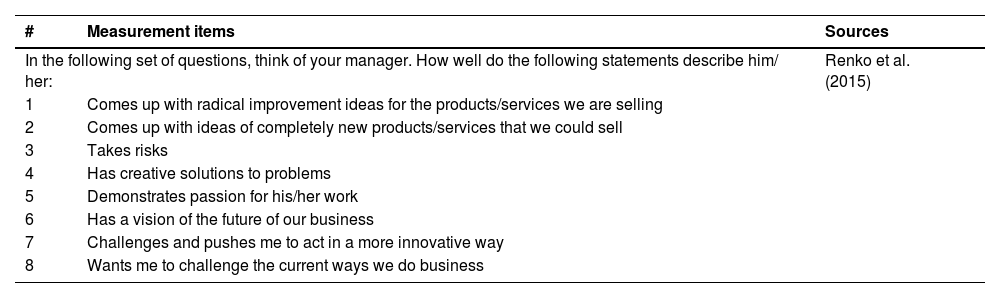
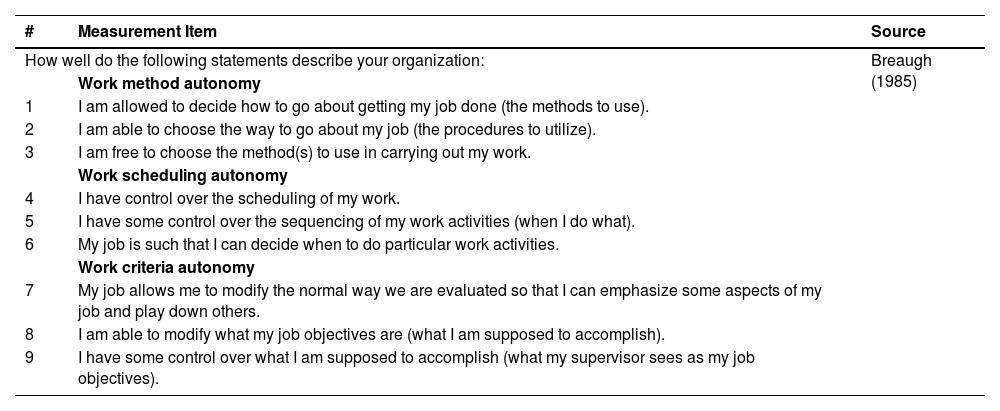
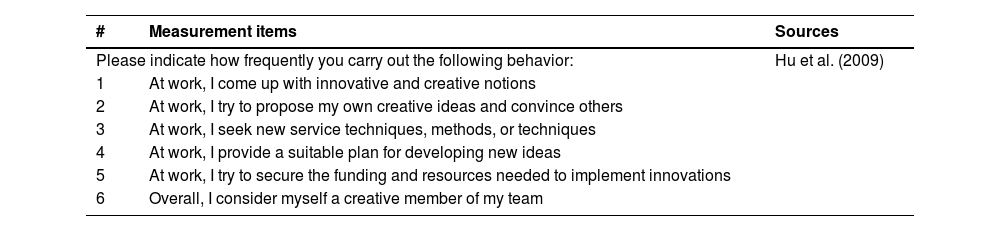
As shown in Table 2, all the measurements used in this study were derived from the literature and had high Cronbach's α values. For participant responses, a Likert scale with five points was utilized. Entrepreneurial leadership (T1) was measured using an 8-item scale developed by Renko et al. (2015). A sample item is “Comes up with radical improvement ideas for the products/services we are selling.” Entrepreneurial leadership was measured on a five-point Likert-type scale, ranging from 1 (Never) to 5 (Always). Job Autonomy (T1) was measured using a 9-item scale developed by Breaugh (1985). A sample item is “l am allowed to decide how to go about getting my job done.” Job autonomy was measured on a five-point Likert-type scale, ranging from 1 (strongly disagree) to 5 (strongly agree). Antifragility at work (T2) was measured using a 10-item scale developed by Bajaba et al. (2024). A sample item is “I can recognize alternative ways of dealing with work challenges to maximize my gains and minimize my losses.” Antifragility at work was measured on a five-point Likert-type scale, ranging from 1 (strongly disagree) to 5 (strongly agree). Employees’ innovative behavior (T2) was measured using a 6-item scale developed by Hu et al. (2009). A sample item is “At work, I come up with innovative and creative notions.” Employees’ innovative behavior was measured on a five-point Likert-type scale, ranging from 1 (Never) to 5 (Always). For more information about the constructs, see Appendix A.
The extant literature indicates that certain individual and organizational characteristics may have an impact on the association between independent and dependent variables. Consequently, it is necessary to control these factors to establish a relationship between observed variables that are not confounded (Delery & Doty, 1996; Liu & Almor, 2016; Niemann et al., 2022). Thus, we controlled for demographic characteristics, including gender, age, education, organizational tenure, and work experience with the current leader, to exclude these variables' influence on the research conclusions. Gender was dummy coded (0= “male,” 1= “female” and 2= “non-binary”). Age was evaluated using five categories (1= “18 - 24 years” to 5= “55+ years”). Next, education was measured using six categories (1= “High school graduate,” 2= “Some college credit,” 3= “associate degree,” 4= “bachelor's degree,” 5= “master's degree,” 6= “Doctorate degree”). Finally, organizational tenure and work experience with the current leader were measured using four categories (1= “>6 months and <18 months,” 2= “Over 18 months and <3 years,” 3= “3 years and <5 years," and 4 = "Over 5 years”).
Data analysisUsing SmartPLS 4, confirmatory factor analysis (CFA) was performed to assess model fitness. Constructs were evaluated for composite reliability, discriminant validity, convergent validity, and average variance extracted (AVE; Anderson & Gerbing, 1988). The structural relationships in the theoretical model were estimated using partial least squares structural equation modeling (PLS-SEM; Hair et al.,2022; Manley et al., 2021). PLS-SEM was chosen over covariance-based SEM for its ability to model complex relationships with smaller sample sizes and its suitability for non-normal data distributions (Hair et al., 2021). Conditional indirect effects (moderated-mediation relationships) were tested using the PROCESS function in SmartPLS 4 with bootstrap sampling (5000 samples) and a simple slope test, following Hayes (2022).
Additionally, this study employs an integrative methodological approach, combining PLS-SEM, importance-performance map analysis (IPMA), and necessary condition analysis (NCA). Recent advancements highlight the synergies between these methods. For instance, Hauff et al. (2024) introduced combined importance-performance map analysis (cIPMA), which integrates necessity conditions into the IPMA framework, offering enhanced prioritization of managerial actions. Similarly, Arbabi et al. (2022) demonstrated the utility of combining PLS-SEM and NCA in marketing and consumer behavior contexts. These studies validate the combined use of these techniques to address research objectives comprehensively.
IPMA identifies underperforming yet critical constructs that can be targeted for improvement, providing actionable insights for managerial decision-making (Hair et al., 2017). NCA enhances this approach by determining the essential conditions, providing a nuanced perspective on the boundary constraints necessary for achieving desired outcomes (Dul, 2016; Richter et al., 2020). Integrating these methods with PLS-SEM enables a dual focus on sufficiency and necessity, advancing theoretical understanding and practical application (Sarstedt et al., 2024).
Applying this integrative framework aligns with the study's objectives, enabling a deeper exploration of the drivers and constraints affecting key outcomes. This approach enhances the robustness of the findings and offers a replicable framework for future leadership and organizational studies research.
Common method bias analysisGiven that all indicators were based on self-report measures, assessing the potential influence of common method bias and addressing its probable presence in the data is imperative. We followed established recommendations to mitigate or reduce common method bias (Podsakoff et al., 2003). In addition, within the framework of structural equation modeling utilizing the partial least squares (PLS-SEM) approach, the presence of common method bias can be attributed to the shared variance introduced by the measurement method employed rather than the interconnected relationships among variables in the model under investigation (Henseler et al., 2015, 2017; Kock, 2012). The present study employed a pragmatic methodology to detect the presence of common method bias. This was achieved by calculating variance inflation factors (VIFs) using a comprehensive collinearity test (Rahi et al. (2018). Kock (2015) provides evidence that the full collinearity test effectively detects common method bias. This is achieved through a model that satisfies the conventional convergent and discriminant validity criteria determined by CFA.
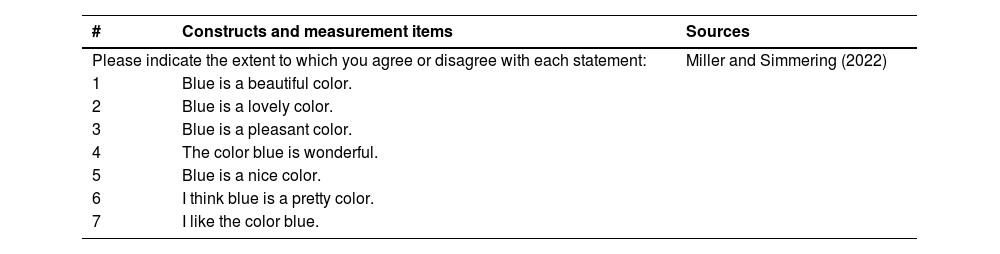
The present research employed a contemporary marker variable in social science research, particularly the attitude toward the color blue. The marker variable was assessed utilizing a 7-item scale (α = 0.94) devised by Miller and Simmering (2022). One example is the statement, "Blue is a beautiful color." The variable representing the marker was assessed using a Likert scale with five points, ranging from 1 (strongly disagree) to 5 (strongly agree). Essentially, we checked the VIFs in the inner model. Kock (2015) suggests a VIF exceeding 3.3 may indicate pathological collinearity and potential model contamination by common method bias. Results in Table 2 showed the inner VIF values of the random independent variables (attitude toward the color blue) that need to be examined. All VIF values in the inner model, as determined by a comprehensive collinearity test, are <3.3, indicating that common method bias is not an issue in this study (Hair et al., 2021). The results of this method's test indicated that the homogeneity of variability in this study was not significant and, as a result, had no bearing on the dependability of the study's conclusions.
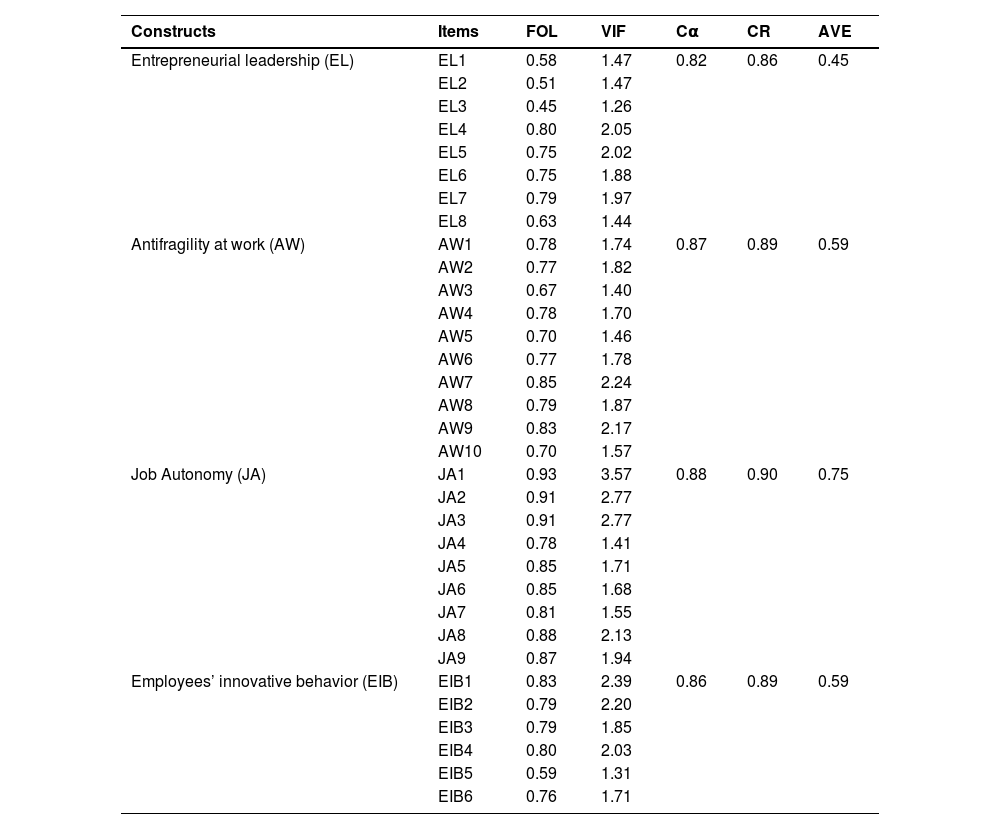
ResultsMeasurement modelThis study evaluated the measurement model (Fig. 1) by analyzing the item loadings in the CFA and the reliability and validity assessments. The measurement model was estimated and drawn on the recommendations found by Hair et al. (2021). The results in Table 3 support the validity and reliability of the constructs used in this study. The factor outer loadings for all items, representing their relationships with their respective constructs, varied from 0.51 to 0.93, which is well above the recommended threshold of 0.70 (Hair et al., 2021), indicating that the items effectively capture the essence of each construct. However, the factor loading for only one item (EL3) was below the threshold (0.45). Even so, values between 0.40 and 0.50 can be justified if acceptable values are obtained on other indices (Internal consistency reliability, AVE, and HTMT) for its construct have reached the set minimum level, then the items are retained (Hair et al., 2022; Hair & Alamer, 2022). Furthermore, the absence of significant multicollinearity concerns, as evidenced by the low VIF values (Hair et al., 2021), ensures that the measurement items within each construct are distinct and do not unduly influence each other.

Results of the measurement model.
Note, FOL = Factor Outer loadings; VIF = Variance Inflation Factor; Cα = Cronbach's alpha; CR = Composite Reliability; AVE = Average Variance Extracted; EL = Entrepreneurial leadership; AW = Employees’ antifragility at work; JA = Job autonomy; EIB = employees’ innovative behaviors.
The measures in Table 3 exhibit strong internal consistency, as reflected in Cronbach's alpha (Cα) values, which are above 0.8 and exceed the acceptable threshold of 0.70 (Nunnally, 1978) for all constructs. This underscores the reliability of the items in consistently measuring the intended constructs. Additionally, the composite reliability values further validate the internal consistency, exceeding all constructs' 0.70 thresholds (Hair et al., 2021).
ValidityThe convergent validity is determined by looking at the AVE values. The constructs exhibit a good AVE value, indicating that they explain a substantial proportion of the variance in the observed variables relative to measurement error, with AVE values above the recommended threshold of 0.50 (Fornell & Larcker, 1981a). This demonstrates that the constructs have strong convergent validity. Discriminant validity can be assessed through various analytical methods. One such method is the Fornell-Larcker criterion, which proposes that the square root of the AVE should exceed the correlation between latent variables (Hair et al., 2021). Another approach is the heterotrait-monotrait (HTMT) ratio of correlations, which suggests that the HTMT index should be below the thresholds of HTMT 0.85 or HTMT 0.90 (Henseler et al., 2015).
In PLS-SEM, discriminant validity is assessed by assessing the HTMT, as seen in Table 4; all values were <0.80 (Hair et al., 2021; Henseler et al., 2015). Franke and Sarstedt (2019) stated that the HTMT criterion is considered a more accurate estimator of attenuated (completely reliable) correlations between variables than other methods. In addition, each construct was examined using the Fornell–Larcker criteria. The findings demonstrated that the square root of the AVE scores surpassed the correlation coefficients among the variables (Fornell & Larcker, 1981a), indicating that essential discriminant validity had been attained.
Discriminant validity results from Fornell-Larcker, HTMT, and correlation estimates.
| Variables | EL | AW | JA | EIB |
|---|---|---|---|---|
| EL | 0.67 | 0.46h | 0.39h | 0.44h |
| AW | 0.40 | 0.68 | 0.36h | 0.63h |
| JA | 0.34 | 0.33 | 0.71 | 0.39h |
| EIB | 0.37 | 0.55 | 0.35 | 0.77 |
| Correlations | ||||
|---|---|---|---|---|
| EL | 1 | 0.48⁎⁎b | 0.42⁎⁎b | 0.50⁎⁎b |
| AW | 0.48⁎⁎c | 1 | 0.37⁎⁎b | 0.63⁎⁎b |
| JA | 0.42⁎⁎c | 0.37⁎⁎c | 1 | 0.38⁎⁎b |
| EIB | 0.50⁎⁎c | 0.63⁎⁎c | 0.37⁎⁎c | 1 |
| Mean | 3.03 | 3.64 | 3.54 | 3.24 |
| Standard deviation | 0.97 | 0.66 | 0.86 | 0.98 |
Note, N = 358.
*|t|≥ 1.65 at p 0.05 level.
|t|≥ 2.33 at p 0.01 level
***|t|≥ 3.09 at p 0.001 level. EL = Entrepreneurial leadership; AW = Employees’ antifragility at work; JA = Job autonomy; EIB = employees’ innovative behaviors; Below the diagonal are the values of the Fornell-Larcker. Above the diagonal are the values of the heterotrait—monotrait ratio (HTMT); c = correlations; b = Correlations controlled by the Marker Variable (attitude toward blue color).
In Table 4, the correlation analysis between the study variables shows entrepreneurial leadership was positively correlated with job autonomy, antifragility at work, and employees’ innovative behavior (r = 0.48⁎⁎, p < 0.01; r = 0.42⁎⁎, p < 0.01; r = 0.50⁎⁎, p < 0.01, respectively); Furthermore, antifragility at work was positively correlated with job autonomy and employees’ innovative behavior (r = 0.36⁎⁎, p < 0.01; r = 0.63⁎⁎, p < 0.01, respectively). Finally, job autonomy was positively correlated with employees’ innovative behavior (r = 0.37⁎⁎, p < 0.01), providing initial support for the hypotheses. Moreover, in the present study, the statistical significance of the correlations among all the constructs of interest persisted, as anticipated, even after controlling for the impact of the marker variable (Williams et al., 2010), as shown in Table 4. This suggests that the potential influence of common method bias on the results was non-significant (Lindell & Whitney, 2001).
Overall, the measurement model analysis confirms the robustness of the measurement instruments employed in this study, ensuring that they effectively measure the constructs of interest and contribute to the overall validity and reliability of the research framework.
Confirmatory factor analysisResults of the CFA indicated that the four-factor structure provided a good fit (X2 = 827.74; df = 471; X2/df = 1.76; RMSEA= 0.05; SRMR = 0.07; NFI = 0.86; TLI = 0.92; CFI = 0.93). Furthermore, we tested alternative three-factor, two-factor, and one-factor models; however, the four-factor model yielded the best fit. Table 5 reports these alternative CFA models and fit statistics.
Results of confirmatory factor analysis.
Notes.x2= Chi-square; df = Degrees of freedom; RMSEA = Root means square error of approximation; CFI = Comparative fit index, TLI = Tucker–Lewis's index. One-factor model = (EL, JA, AW & EIB combined); Two-factor model (a) = (EL&JA combined; AW & EIB combined); Two-factor model (b) = (EL, WA combined & JA, EIB combined); Three-factor model (a) = EL, JA & (AW, EIB combined); Three-factor model (b) = AW, EIB & (EL, JA combined); Four-factor model = EL, JA, AW & EIB; EL = Entrepreneurial leadership; AW = Employees’ antifragility at work; JA = Job autonomy; EIB= employees’ innovative behaviors.
The structural model was estimated using guidelines from Hair et al. (2021). The threshold values applied during the evaluation of the structural model are as follows: The VIF of each construct was examined to assess the multicollinearity of the structural model for independent variables. The maximum threshold VIF value should be <5. Values of the VIF greater than five may suggest collinearity issues (Hair et al., 2021). The VIF value in this research ranged between 1.26 and 3.68, which is acceptable based on the indications of Hair et al. (2021).
In addition, the R2 square represents the variance explained in each of the endogenous constructs, which means how much change in the dependent variable can be accounted for by one or more independent variables. It measures the model's explanatory power (Shmueli & Koppius, 2011), which is called in-sample predictive power (Rigdon, 2012). The R2 values of ≥ 0.25, ≥ 0.50, and ≥ 0.75 are regarded as weak, moderate, and substantial, respectively (Hair et al., 2021). The R2 coefficient for antifragility at work was 0.21, and employees’ innovative behavior was 0.33, which indicates that the R2 for all variables was considerably moderate (Hair et al., 2021). Furthermore, the predictive sample reuse method (Q2) may be used as a predictive relevance criterion (Chin et al., 2008). Q2 indicates the extent to which acquired data may be empirically reconstructed using the model and PLS parameters based on the blindfolding procedure. If Q2 > 0, the model's predictive validity is established (Fornell & Larcker, 1981b; Hair et al., 2021). In this research, Q2 values of 0.19 and 0.17 for antifragility at work and employees’ innovative behavior indicate that all variables had adequate predictive significance.
Hypothesis testingThe proposed hypotheses were evaluated using the statistical software SmartPLS 4.0. The statistical significance of the weights of the sub-constructs and path coefficients was determined using 5000 iterations of bootstrapping (Chin et al., 2008). Table 6 shows the results of the hypothesis testing when applying the control variables.
Structural model results.
| Variables | Antifragility at work | Employees’ innovative behaviors | ||||||
|---|---|---|---|---|---|---|---|---|
| (Q² = 0.19; R² = 0.21; F² = 0.21) | (Q² = 0.17; R² = 0.33; F² = 0.33) | |||||||
| Path coefficients | 95 % Bca confidence interval | T statistics | P value | Path coefficients | 95 % Bca confidence interval | T statistics | P value | |
| Control variables | ||||||||
| AGE | −0.02 | (−0.11, 0.07) | 0.42 | 0.34 | −0.03 | (−0.11, 0.06) | 0.47 | 0.32 |
| GEN | −0.03 | (−0.11, 0.05) | 0.64 | 0.26 | 0.01 | (−0.06, 0.09) | 0.31 | 0.38 |
| EDU | −0.05 | (−0.13, 0.03) | 1.06 | 0.15 | 0.08* | (0.003, 0.16) | 1.73 | 0.04 |
| OrgTen | −0.03 | (−0.14, 0.09) | 0.37 | 0.36 | −0.04 | (−0.14, 0.07) | 0.58 | 0.28 |
| WexpL | 0.11* | (0.01, 0.21) | 1.78 | 0.04 | 0.13* | (0.04, 0.23) | 2.26 | 0.01 |
| Direct effect | ||||||||
| EL | 0.32⁎⁎⁎ | (0.23, 0.41) | 6.08 | 0 | 0.18⁎⁎⁎ | (0.10, 0.26) | 3.79 | 0 |
| AW | 0.48⁎⁎⁎ | (0.41, 0.55) | 11.18 | 0 | ||||
| JA | 0.23⁎⁎⁎ | (0.16, 0.32) | 4.63 | 0 | ||||
| Specific indirect effect | ||||||||
| Variables | Path coefficients | 95 % Bca confidence interval | T statistics | P value | ||||
|---|---|---|---|---|---|---|---|---|
| EL → AW → EIB | 0.15⁎⁎⁎ | (0.11, 0.20) | 5.63 | 0 | ||||
| JA x EL → AW | 0.10* | (0.03, 0.18) | 2.23 | 0.01 | ||||
| JA → AW → EIB | 0.11⁎⁎⁎ | (0.07, 0.16) | 3.93 | 0 | ||||
| JA x EL → AW → EIB | 0.05* | (0.01, 0.09) | 2.14 | 0.02 |
Note.
|t|≥ 3.09 at p 0.001 level; BCa = Bias-corrected and accelerated. R2 = Determination coefficients; Q2 = Predictive relevance of endogenous; EL = Entrepreneurial leadership; AW = Employees’ antifragility at work; JA = Job autonomy; EIB= employees’ innovative behaviors; Age: age; EDU: education; GEN: gender; OrgTen: Organizational Tenure; WexpL: work experience with current leader.
As predicted by H1, the effect of entrepreneurial leadership was positive and significant on antifragility at work (β = 0.32, t = 6.08, p < 0.00, f2 = 0.21), which supported H1. Moreover, the path coefficient for antifragility at work was positive and significant on employees’ innovative behavior (β = 0.18, t = 3.79, p < 0.00, f2 = 0.33), which supported H2. Using the effect size (f2) helps evaluate the variation explained for each predictor in the structural model. The analysis of effect size (f2) shows how much a predictor (independent) construct affects a dependent construct (Hair et al., 2022). The effect size (f2) values of all variables are >0.5, which denotes large effect sizes (Chin, 2010).
In addition, Table 6 provides the results of the structural model with control variables, which provide evidence that none of the control variables (age, gender, education, work tenure, and work experience with the current leader) had a significant effect (p > 0.05) on antifragility at work or employees’ innovative behavior. These results are consistent with previous similar studies (Lee & Tang, 2018) and suggest that control variables did not affect the robustness of structural relationships.
Mediation analysisHypothesis 3 assessed the mediating role of employees’ antifragility at work on the relationship between entrepreneurial leadership and employees’ innovative behaviors. Table 6 shows a significant indirect effect of entrepreneurial leadership on employees’ innovative behaviors (effect = 0.15, 95 % CI=[0.11, 0.20]), supporting H3. Furthermore, the direct effect of entrepreneurial leadership on employees’ innovative behaviors in the presence of the mediator was also significant (effect = 0.05, 95 % CI = [0.01, 0.09]). Hence, employees’ antifragility at work partially mediated the relationship between entrepreneurial leadership and employees’ innovative behaviors.
Moderation analysisHypothesis 4 predicted that job autonomy would moderate the positive relationship of entrepreneurial leadership with employees’ antifragility at work, such that the relationship is stronger when job autonomy is high (vs. low). Table 7 shows bootstrapping procedures were used to construct a confidence interval (CI) to estimate job autonomy's moderating effect (Chin, 2010). The results revealed that the effect of entrepreneurial leadership on employees’ antifragility at work was significant when job autonomy was high (effect = 0.34, 95 % CI = [0.30, 0.52]) and when job autonomy was low (effect = 0.17, 95 % CI = [0.07, 0.33]). As a result, job autonomy moderated the relationship between entrepreneurial leadership and employees’ antifragility at work.
Bootstrap analysis result for the conditional direct effect of entrepreneurial leadership on employees’ antifragility at work via job autonomy (N = 358).
| Path coefficients | Confidence interval | T statistics | P values | ||
|---|---|---|---|---|---|
| 5.0 % | 95.0 % | ||||
| EL → AW conditional on JA at −1 SD | 0.169* | 0.07 | 0.33 | 2.48 | 0.01 |
| EL → AW conditional on JA at +1 SD | 0.344* | 0.30 | 0.52 | 5.93 | 0 |
| EL → AW conditional on JA at Mean | 0.256* | 0.22 | 0.40 | 5.40 | 0 |
Note, Note. EL = Entrepreneurial leadership; AW = Employees’ antifragility at work; JA = Job autonomy; EIB = employees’ innovative behaviors.
**p < 0.01.
In addition, Fig. 2 shows the simple slope plot for the moderation effect of job autonomy, indicating that job autonomy strengthens the positive relationship between entrepreneurial leadership and employees’ antifragility at work. The interaction effect on employees’ antifragility at work was stronger in high job autonomy (+1 SD; simple slope = 0.34, t = 5.93, p ˂ 0.05) compared with less job autonomy (−1 SD; simple slope = 0.17, t = 2.48, p ˂ 0.05). This means that strong job autonomy does affect entrepreneurial leadership impacts in higher employees’ antifragility at work levels. Thus, Hypothesis 4 is supported.
Moderated mediation analysis
Finally, we proposed that job autonomy moderates the positive indirect relationship of entrepreneurial leadership with employees’ innovative behaviors via employees’ antifragility at work, such that the positive indirect relationship is stronger when job autonomy is high as opposed to low (H5). We adopted a bootstrapping analysis (n = 5000; Hayes, 2022), with the results in Table 8 used to test this hypothesis. We found that the indirect effect of entrepreneurial leadership on employees’ innovative behaviors was significant when job autonomy was at a high level (+1 SD; effect = 0.05, 95 % CI=[0.14, 0.25]). When the moderator was low, the indirect effect became non-significant (−1 SD; effect = 0.10, 95 % CI = [0.03, 0.16]). This result is consistent with our prediction about the importance of the proposed moderator, such that the positive effect of entrepreneurial leadership on employees’ innovative behaviors via employees’ antifragility at work is observed at high levels of the compositional factor. When considering all factors together, job autonomy moderates the indirect effect of entrepreneurial leadership on employees’ innovative behaviors through their antifragility at work. The index for moderated mediation (effect = 0.05, 95 % CI = [.01, 0.09]) supports H5.
Bootstrap analysis result for the conditional indirect effect of entrepreneurial leadership on employees’ innovative behaviors via employees’ antifragility at work (N = 358).
| Path coefficients | Confidence interval | T statistics | P values | ||
|---|---|---|---|---|---|
| 5.0 % | 95.0 % | ||||
| EL → AW → EIB conditional on JA at +1 SD | 0.21* | 0.14 | 0.25 | 5.33 | 0 |
| EL → AW → EIB conditional on JA at −1 SD | 0.10* | 0.03 | 0.16 | 2.48 | 0.01 |
| EL → AW → EIB conditional on JA at Mean | 0.16* | 0.10 | 0.19 | 5.09 | 0 |
Note, Note. EL = Entrepreneurial leadership; AW = Employees’ antifragility at work; JA = Job autonomy; EIB = employees’ innovative behaviors.
**p < 0.01.
IPMA (Fig. 3) typically focuses on assessing the relative importance of latent constructs and their indicators in explaining the variance of endogenous constructs in a structural model. This analysis advances the reported PLS-SEM path coefficient estimates by incorporating an analysis dimension that considers the average values of the latent variable scores (Sarstedt et al., 2022). In particular, the IPMA verifies the total effects, representing its significance in constructing a construct, with the average scores of their latent variables signifying their performance. The analysis aims to determine the key parts that hold greater significance in the construct, hence exerting a substantial overall impact on the construct, although yielding low average scores for the latent variables (Ringle & Sarstedt, 2016).

The IPMA results in Table 9 indicate the relative significance of different variables that affect employees' innovative behaviors. Each value represents the importance score for a particular factor. The employee antifragility at work variable labeled as antifragility at work has the highest performance score (68.89) among the variables considered in the analysis, and it has the highest importance score among the variables considered in the analysis, with a value of (0.48). This suggests that employee antifragility at work plays a crucial role in explaining or influencing employees' innovative behaviors, as a one-unity increase in employee antifragility at work will increase the employees' innovative behaviors up to 0.48 unities. It is the most influential factor in the model. Job autonomy has a performance score of (66.65), which falls between employee antifragility at work and entrepreneurial leadership. This suggests that job autonomy is a moderately important factor in our model because it only has an importance score of (0.11). Finally, entrepreneurial leadership has a substantial performance score (61.09) and an important score (0.33), though slightly lower than employee antifragility at work and job autonomy. This indicates that entrepreneurial leadership significantly explains the variation in employees' innovative behaviors. Overall, the IPMA reveals that employee antifragility at work is the most critical factor, followed by job autonomy and entrepreneurial leadership regarding their importance and influence on employees' innovative behaviors.
Index values and total effects of importance-performance map analysis.
| Variables | Total effect of the variable EIB (Importance) | Index values (Performance) |
|---|---|---|
| EL | 0.33 | 61.09 |
| AW | 0.48 | 68.89 |
| JA | 0.11 | 66.65 |
Note. EL = Entrepreneurial leadership; AW = Employees’ antifragility at work; JA = Job autonomy; EIB = employees’ innovative behaviors.
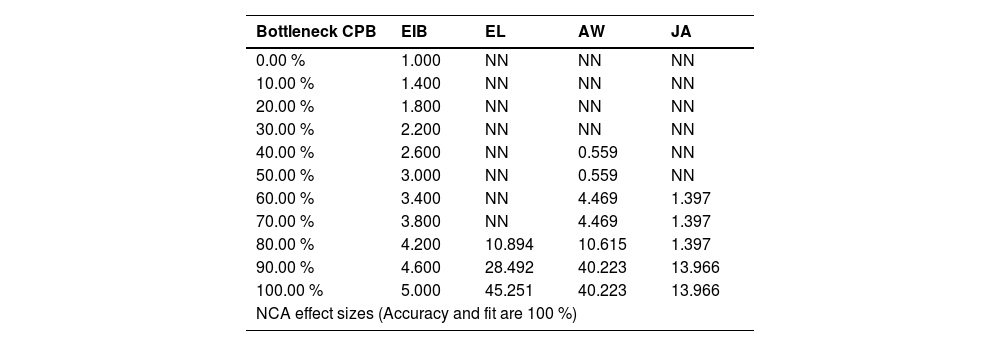
This study employed NCA in conjunction with PLS-SEM to examine the relationships among entrepreneurial leadership, employee antifragility at work, job autonomy, and employee innovative behavior. NCA, developed by Dul (2016), is a novel data analysis technique that identifies necessary conditions within data sets (Dul, 2016). Unlike traditional approaches that assess average associations between independent and dependent variables, NCA emphasizes identifying specific areas in scatter plots where necessary conditions are present (Richter et al., 2022). This research aimed to determine whether entrepreneurial leadership, antifragility at work, and job autonomy are prerequisites for employees’ innovative behavior. Figs. 4, 5, and 6 display scatter plots illustrating each relevant relationship, while Table 7 presents the effect sizes.


The findings from the NCA, shown in Table 10, reveal that entrepreneurial leadership and antifragility at work are crucial for employees’ innovative behavior, with practical significance (d ≥ 0.1) and statistical significance (p < 0.05). In contrast, job autonomy exhibits a smaller effect size than entrepreneurial leadership and antifragility at work (d = 0.060). The analysis utilizing Ceiling Envelopment-Free Disposal Hull (CR-FDH) in Table 10 demonstrated an accuracy exceeding 95 % (Richter et al., 2023).
Bottleneck table – percentiles and NCA effect sizes.
| Construct | CPB CE-FDH | Accuracy | Permutation P-Value | |
|---|---|---|---|---|
| EL | 0.086⁎⁎⁎ | 100 % | 0.000 | |
| AW | 0.237⁎⁎⁎ | 100 % | 0.000 | |
| JA | 0.060 | 100 % | 0.095 |
Note: NCA: Necessary condition analysis; EL = Entrepreneurial leadership; AW = Employees’ antifragility at work; JA = Job autonomy; EIB = employees’ innovative behaviors; NN: Not necessary.
Bottleneck tables offer a comprehensive evaluation of these necessary conditions. To achieve a 90 % level of employees’ innovative behavior, entrepreneurial leadership must be at least 28 %, antifragility at work must be at least 40 %, and job autonomy must be at least 14 %. The required minimum levels for an optimal employees’ innovative behavior score of 100 % are entrepreneurial leadership at 45 %, antifragility at work at 40 %, and job autonomy at 14 %. If entrepreneurial leadership falls below 11 %, attaining a high level of employees’ innovative behavior becomes impossible.
DiscussionThe present research explored the intricate relationships among entrepreneurial leadership, employee antifragility, job autonomy, and employees' innovative behavior. This discussion section delves into the key findings, theoretical implications, practical insights, and potential avenues for future research. Our findings support the hypothesis that employee antifragility at work mediates the relationship between entrepreneurial leadership and employees' innovative behavior. More specifically, entrepreneurial leaders create an environment conducive to developing antifragility among employees by encouraging experimentation, risk-taking, and positive responses to challenges, which, in turn, can lead to greater innovative behavior (Munoz et al., 2022). This finding aligns with the conceptualization of entrepreneurial leadership as a catalyst for cultivating employee antifragility, which, in this study, emerged as a pivotal mechanism driving innovation (Aven, 2015). Finally, our results substantiate the hypothesis that job autonomy moderates the relationship between entrepreneurial leadership and employee antifragility at work. As expected, the findings indicate that higher levels of job autonomy tend to empower employees to exercise control over their work, make decisions, and explore new solutions when faced with challenges, which amplifies the influence entrepreneurial leaders have in fostering employee antifragility, ultimately enhancing the link between entrepreneurial leadership and innovative behavior (Suhandiah et al., 2023). Thus, job autonomy emerges as an important contextual factor that augments the positive effects of entrepreneurial leadership on innovation.
In addition to the PLS-SEM findings, IPMA and NCA underscore the critical roles of entrepreneurial leadership, employee antifragility at work, and job autonomy in fostering employee innovative behavior. The IPMA using PLS-SEM revealed that all three constructs demonstrated strong performance, with entrepreneurial leadership, antifragility at work, and job autonomy scoring 61.09, 68.89, and 66.65, respectively. Antifragility at work emerged as the most influential predictor of employees’ innovative behavior, with an importance score of 0.48, indicating that employee antifragility at work significantly enhances innovative behavior. This finding aligns with the growing recognition of resilience and antifragility as essential for promoting innovative behavior, especially in environments where job autonomy is high, and innovation is encouraged. In addition to employing IPMA, the study used NCA to pinpoint the critical conditions required for fostering high levels of employee innovative behavior. The findings highlighted that entrepreneurial leadership and employee antifragility in the workplace are vital prerequisites for employees’ innovative behavior. The analysis further identified specific threshold levels for each factor that must be met to achieve the desired effectiveness in promoting innovation among employees.
Theoretical and practical implicationsThis research contributes to the literature in several ways. First, it underscores the importance of considering the mediating role of employee antifragility at work in understanding how entrepreneurial leadership influences employees' innovative behavior (Malibari & Bajaba, 2022). This mediating mechanism sheds light on how entrepreneurial leaders inspire and enable employees to exhibit innovative behavior by nurturing antifragility in them (Munoz et al., 2022). Second, this study advances our understanding of the moderating role of job autonomy. In other words, it highlights the contextual factors that enhance the influence of entrepreneurial leadership on both employee antifragility and innovation (Wang & Cheng, 2009). These findings align with social cognitive and social learning theories, emphasizing the interplay between leadership, individual characteristics, and the work environment in shaping behavior.
For organizations, these findings offer valuable insights into leadership and management practices that can foster a culture of innovation. First, organizations should develop entrepreneurial leadership to encourage employees to respond positively to challenges by building antifragility (Nguyen et al., 2021). However, fostering antifragility and job autonomy may entail challenges, such as resistance to change, hierarchical constraints, or fear of failure. A phased approach, such as piloting antifragility programs within small teams, can help organizations test their effectiveness and build stakeholder confidence before scaling them across the organization (Giustiniano et al., 2020). This iterative strategy can foster trust, adaptability, and buy-in from employees and leaders alike. Leadership development programs should integrate principles of resilient leadership, particularly managing paradoxes and ambiguity in uncertain environments (Giustiniano et al., 2020). Training sessions that combine proactive and reactive strategies—such as adaptive learning, scenario planning, and crisis simulations—can equip employees and leaders with the skills to navigate complex challenges (Aven, 2015). For example, healthcare organizations could use crisis simulations to improve decision-making under pressure, reinforcing antifragility principles.
Second, organizations should prioritize creating work environments that empower autonomy (Theurer et al., 2018). Introducing autonomy gradually through structured tasks with clear boundaries can reduce resistance and help employees transition effectively into self-directed roles (Corvello et al., 2024). Empowering employees to make incremental decisions and explore innovative solutions can unleash their creative potential and enhance entrepreneurial leadership's impact on fostering innovation (Zhang & Bartol, 2010). Practical applications, such as iterative design processes in tech firms, can be examples of how teams can safely experiment, iterate, and refine solutions in low-risk settings.
Finally, organizations can benefit from cultivating a culture of learning and growth (Ghasemzadeh et al., 2019). Encouraging employees to seek new knowledge, engage in creative problem-solving, and explore novel ideas complements efforts to foster antifragility and innovation. Tailored training programs can guide employees through processes that enhance proactivity, learning goal orientation, and core self-evaluation (Bajaba et al., 2024). Strategies such as growth mindset workshops, peer mentoring, and iterative feedback loops can help employees internalize the value of challenges and develop resilience.
Building on frameworks like the ROBUST principles and insights from Williams (2020), organizations can design structured modules that help employees embrace uncertainty and leverage it for growth. For instance, workshops on proactivity for startups (Corvello et al., 2024) or team-building exercises for collaborative risk-taking can address diverse organizational needs. Providing necessary financial, emotional, social, or cognitive resources remains critical in supporting employees in navigating change.
Organizations can meaningfully foster antifragility and autonomy in their workforce by addressing potential barriers, employing actionable strategies, and grounding recommendations in recent literature. These efforts are pivotal for thriving today's dynamic and competitive business landscape.
Limitations and future researchWhile this research has provided valuable insights into the complex relationships among entrepreneurial leadership, employee antifragility, job autonomy, and employee innovative behavior, it is important to acknowledge certain limitations. First, using a convenience sample, while practical for exploratory research, may limit the generalizability of the findings. Additionally, the study relied on self-report measures, subject to common method bias and potential response biases, although we mitigated this risk through a two-wave design and statistical controls (Podsakoff et al., 2003, 2024). Future studies could provide a more comprehensive assessment of employee antifragility and innovative behavior by incorporating multi-source data collection methods, such as supervisor ratings and objective performance metrics, to mitigate these limitations. In addition, using a single sample from one country, the United States, the study sample may not fully represent the diversity of industries, organizational sizes, and cultural contexts. Findings may be specific to certain types of organizations and should be cautiously interpreted when applied to other settings. Moreover, while the study proposed mediating and moderating relationships, it is essential to recognize the potential complexity of these relationships (Podsakoff et al., 2012). Future research could explore the nuanced conditions under which these mechanisms operate and the potential for interactions among them. Finally, given the novelty of the antifragility construct and its complexity (Aven, 2015), future research could delve into the specific impact of each of its dimensions (optionality to gain and disorder embracement) to gain a more comprehensive understanding (Bajaba et al., 2024).
Building on the insights gained from this research, several promising directions for future studies emerge. One potential direction is to explore the boundary conditions of the moderating roles of job autonomy. Investigating how contextual factors, such as organizational size, industry, and leadership styles, influence the impact of these variables on the relationship between entrepreneurial leadership, employee antifragility, and innovation can provide a nuanced understanding of their effects across different organizational settings (Wang & Cheng, 2009). Additionally, future research could delve deeper into the role of leadership development programs in fostering entrepreneurial leadership qualities and their subsequent impact on employee antifragility and innovative behavior (Derbyshire & Wright, 2014). Identifying effective training and development strategies for cultivating entrepreneurial leaders may have practical implications for organizations seeking to promote innovation. Furthermore, examining the role of individual differences, such as personality traits and cultural factors, in shaping employees' antifragility can enrich our understanding of the factors driving innovative behavior (Platje, 2015). Further studies may also consider new types of organizations, such as SMEs. Corvello et al. (2024) found that antifragility is supported by a combination of tangible and intangible resources that can help innovative start-ups thrive when other organizations succumb. Finally, longitudinal studies that track these relationships over time can shed light on the dynamic nature of these constructs and the long-term effects of entrepreneurial leadership on organizational innovation (Leitch & Volery, 2017).
ConclusionsIn conclusion, this study has contributed to understanding how entrepreneurial leadership, job autonomy, employee antifragility, and innovative behavior interact within organizational contexts. The findings emphasize the pivotal role of employee antifragility at work as a mediating mechanism through which entrepreneurial leaders inspire and enable innovative behavior among employees. Furthermore, job autonomy emerged as a crucial contextual factor that enhances the influence of entrepreneurial leadership by providing employees with the freedom to experiment and innovate. As organizations navigate an ever-changing business landscape, embracing entrepreneurial leadership qualities and empowering employees with autonomy-driven mindsets can pave the way for sustained innovation and competitiveness.
Compliance with ethical standardsEthical approvalAll procedures performed in studies involving human participants were in accordance with the ethical standards of the institutional and/or national research committee and with the 1964 Helsinki Declaration and its later amendments or comparable ethical standards.
Informed consentInformed consent was obtained from all individual participants included in the study .
Data availabilityThe datasets generated during and/or analyzed during the current study are available from the corresponding author upon reasonable request.
CRediT authorship contribution statementMashael Malibari: Writing – original draft, Visualization, Validation, Software, Methodology, Investigation, Formal analysis, Data curation, Conceptualization. Saleh Bajaba: Writing – review & editing, Writing – original draft, Visualization, Validation, Supervision, Software, Resources, Project administration, Methodology, Investigation, Funding acquisition, Formal analysis, Data curation, Conceptualization. Abdulah Bajaba: Writing – review & editing, Validation, Conceptualization. Abdulrahman Basahal: Writing – review & editing, Funding acquisition, Data curation.
The authors declared that they have no conflict of interest.
Entrepreneurial leadership
| # | Measurement items | Sources |
|---|---|---|
| In the following set of questions, think of your manager. How well do the following statements describe him/ her: | Renko et al. (2015) | |
| 1 | Comes up with radical improvement ideas for the products/services we are selling | |
| 2 | Comes up with ideas of completely new products/services that we could sell | |
| 3 | Takes risks | |
| 4 | Has creative solutions to problems | |
| 5 | Demonstrates passion for his/her work | |
| 6 | Has a vision of the future of our business | |
| 7 | Challenges and pushes me to act in a more innovative way | |
| 8 | Wants me to challenge the current ways we do business | |
Job autonomy
| # | Measurement Item | Source |
|---|---|---|
| How well do the following statements describe your organization: | Breaugh (1985) | |
| Work method autonomy | ||
| 1 | I am allowed to decide how to go about getting my job done (the methods to use). | |
| 2 | I am able to choose the way to go about my job (the procedures to utilize). | |
| 3 | I am free to choose the method(s) to use in carrying out my work. | |
| Work scheduling autonomy | ||
| 4 | I have control over the scheduling of my work. | |
| 5 | I have some control over the sequencing of my work activities (when I do what). | |
| 6 | My job is such that I can decide when to do particular work activities. | |
| Work criteria autonomy | ||
| 7 | My job allows me to modify the normal way we are evaluated so that I can emphasize some aspects of my job and play down others. | |
| 8 | I am able to modify what my job objectives are (what I am supposed to accomplish). | |
| 9 | I have some control over what I am supposed to accomplish (what my supervisor sees as my job objectives). | |
Antifragility at work
| # | Measurement items | Sources |
|---|---|---|
| How well do the following statements describe you: | Bajaba et al. (2024) | |
| Optionality to Gain | ||
| 1 | I can recognize alternative ways of dealing with work challenges to maximize my gains and minimize my losses. | |
| 2 | I am particularly good at recognizing growth opportunities within rapidly changing work roles. | |
| 3 | I am able to use my past errors to maximize my gains in future endeavors at work. | |
| 4 | At work, I am able to take advantage of challenging tasks to maximize my learning or personal growth. | |
| 5 | My past experience helps me choose opportunities for growth when dealing with work challenges. | |
| Disorder Embracement | ||
| 6 | I embrace change at work. | |
| 7 | Trying out rapidly changing roles at work is thrilling. | |
| 8 | like to experiment with new work-related tasks regardless of the outcome. | |
| 9 | I prefer to work in an environment that is dynamic and changing. | |
| 10 | It is thrilling to experience uncertainties at work. | |
Employee innovation behavior
| # | Measurement items | Sources |
|---|---|---|
| Please indicate how frequently you carry out the following behavior: | Hu et al. (2009) | |
| 1 | At work, I come up with innovative and creative notions | |
| 2 | At work, I try to propose my own creative ideas and convince others | |
| 3 | At work, I seek new service techniques, methods, or techniques | |
| 4 | At work, I provide a suitable plan for developing new ideas | |
| 5 | At work, I try to secure the funding and resources needed to implement innovations | |
| 6 | Overall, I consider myself a creative member of my team | |
Attitude toward the color blue
| # | Constructs and measurement items | Sources |
|---|---|---|
| Please indicate the extent to which you agree or disagree with each statement: | Miller and Simmering (2022) | |
| 1 | Blue is a beautiful color. | |
| 2 | Blue is a lovely color. | |
| 3 | Blue is a pleasant color. | |
| 4 | The color blue is wonderful. | |
| 5 | Blue is a nice color. | |
| 6 | I think blue is a pretty color. | |
| 7 | I like the color blue. | |
This research did not receive any specific grant from funding agencies in the public, commercial, or not-for-profit sectors.
