



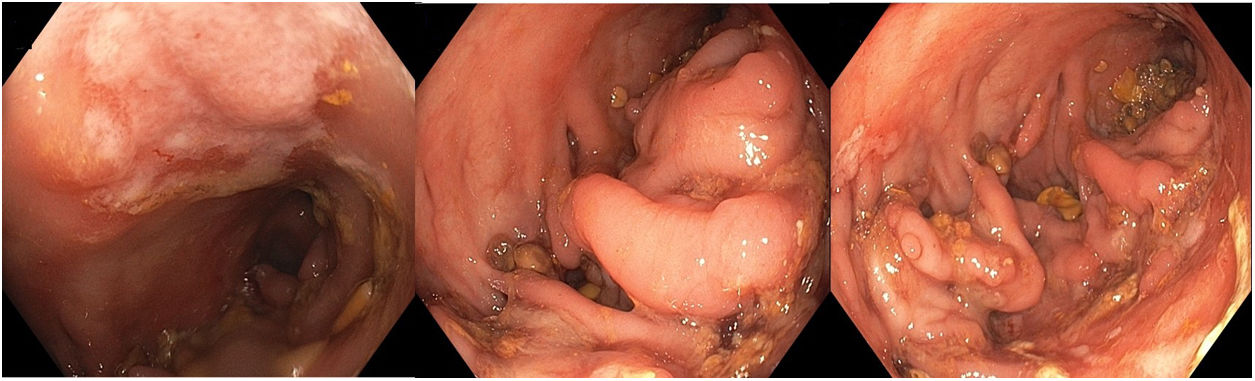
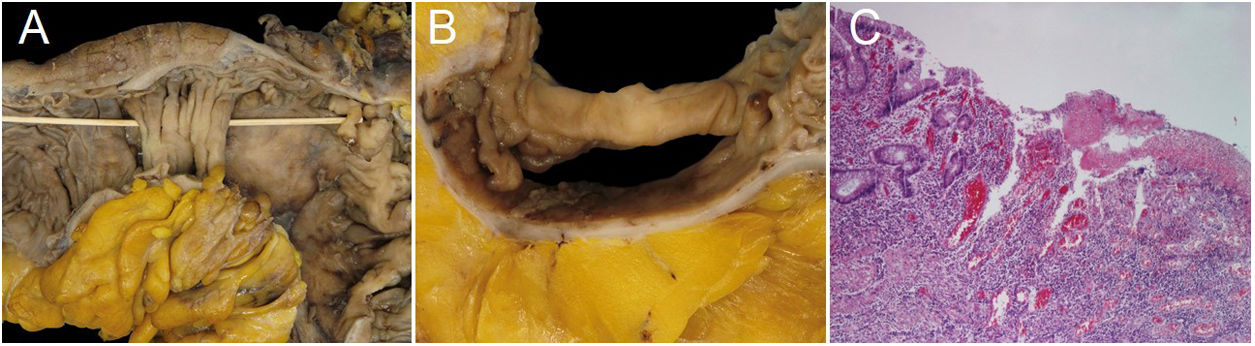
We present the case of a 73-year-old man with weight loss, abdominal pain, constipation, anaemia and rectal bleeding for months. Contrast-enhanced abdominal tomography was performed, revealing diverticula predominantly in the descending and sigmoid colon, with wall thickening and pericolonic fat stranding. A colonoscopy was performed, finding diverticula throughout the colon, and at the level of the sigmoid and descending colon, a significant stenosis of approximately 10 cm, with multiple ulcers and lesions with a vegetative appearance (Fig. 1). Biopsies taken from affected tissue only showed acute ulcerated inflammation and granulation tissue. Given the suspicion of neoplasia and obstructive symptoms, a left hemicolectomy was performed. In the macroscopic examination, multiple pseudopolypoid projections were observed (Fig. 2A and B). The histopathological report revealed extensively ulcerated and haemorrhagic segmental colitis associated with diverticulosis (Fig. 2C). Segmental colitis associated with diverticulosis (SCAD) is a chronic inflammatory process located in an area of diverticula, predominantly in the sigmoid.1,2 This presentation of SCAD is rare and can be confused with other pathologies.3 It is important to consider this diagnosis in patients with diverticular disease.


A) Longitudinal section of the colon showing the flattened mucosa with loss of folds and formation of confluent pseudopolypoid projections in multiple fields. B) Cross section in which the bridges formed by said projections can be observed. C) Haematoxylin-eosin staining demonstrates the abrupt change from the preserved mucosa to extensive transmural ulceration with the presence of multiple bacterial colonies.
The authors declare that the bioethical protocols at their work centre regarding the publication of patient data were followed. The article did not need to be submitted for evaluation by the ethics committee due to the type of publication. The authors declare that this article does not contain personal information and that the informed consent of the patient was obtained for this publication.
FundingNo funding was received for this article.
Conflicts of interestThe authors declare that they have no conflicts of interest.

