
Whipple's disease (WD) is a chronic multi-systemic bacterial infection caused by gram-positive bacterium known as Tropheryma whipplei. It affects intestinal tract (primarily small intestine), hampers absorption of nutrients, causes chronic diarrhea and weight loss. It can also affect other organs including central nervous system, joints, heart, lungs and lymphatic system. The characteristic triad of WD are diarrhea, arthralgias and fever.
Described herein is an elderly patient with WD presenting with symptoms of abdominal pain and serious weight loss who worked as a gardener and handled toxic plants, including oleanders.
Eighty-five years old male having personal medical history of allergy to beta-lactamases, arterial hypertension, and obstructive sleep apnea. He was under regular medication consisting of 5mg prednisone, proton-pump inhibitors, pro-kinetic agents, iron and vitamin D and B12. This gentleman came to our department having endured symptoms of overall unhealthiness over a period of six months, specifically complaining of post-prandial and vespertine epigastric pain and weight loss of 10kg over one year. There were no changes in intestinal rhythm nor any related extra-intestinal disorders. Alterations of analytical parameters were due to elevated acute levels (deviation of leucocytes, PCR 70mg/L, thrombocytosis), expression of malabsorption (ferropenia) and deficit of vitamins B12 and D.
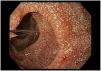
We requested an upper GI endoscopy which displayed duodenal mucosa densely dotted with whitish spots compatible with wide-spread intestinal lymphangiectasia (Fig. 1). Candidiasis in esophagus was also observed. An anatomopathological study revealed a wide-spread lesion with a high quantity of PAS positive macrophages in intestinal villus, which were reduced in height while increased in thickness. Also displayed were spotted lipid vacuoles and focal lymphangiectasia. In addition, a high concentration of neutrophils in the lamina propria with focal lesions of the epithelial surface was observed. Study was completed using Ziehl and Job-Fite techniques to detect acid-alcohol resistant bacilli, with negative results. A case of WD was suspected after an initial diagnosis and confirmed with a positive PCR test reading. We prescribed initial dose of 1g streptomycin every 24h and cotrimoxazole 800/160mg every 12h for 2 weeks. Subsequently, we continued with trimethoprim/sulfamethoxazole at same doses. After one year of treatment patient responded favorably with ponderal recovery, complete disappearance of abdominal pain and correction in blood analysis parameters.

WD predominantly affects white males (73–95%) with peak incidence rate between 40 and 50 years.1,2 Ojeda et al. reviewed 91 cases of WD and 87.5% were males. The total age range was 23–79 years with maximum incidence rate occurring between 40 and 69 years (68% of total cases). Therefore, the conclusion is that it affects middle-aged individuals.3 In other studies, an advanced age has been associated with higher risk of contracting WD. The prevalence was from 7.9 cases per 1 million individuals <65 years in comparison to 24.4 cases per 1 million individuals >65 years.4 A large scale epidemiological study associated an advanced age with higher risk for WD, where prevalence reached maximum of 39.2 cases per 1 million in age group of 80–84. Authors concluded that prevalence of WD was more common in individuals over 65 years, which contrasted with previous studies.5
As the patient we have presented was of very advanced age, he did not fall within the peak range of incidence in accordance with the typical data. These bacteria are common in soils and waste water and several cases have been reported in agricultural workers. Gardening activity of our patient is of interest as it involves the handling of the oleander shrub belonging to subfamily Apocynoideae, whose roots and leaves are rich in digitalis glycoside known as Oleandrin.
This patient with atypical manifestation of symptoms displayed only with excessive weight loss. Weight loss can reach up to 20kg with the most frequent loss being between 4 and 6kg. Therefore, we would like to draw attention to the fact that it is necessary to consider the expression of WD, even in old age, clinically limited and minimal, since an adequate diagnosis entails a specific treatment and clinical remission. When it comes to WD one should not engage in “ageism”.