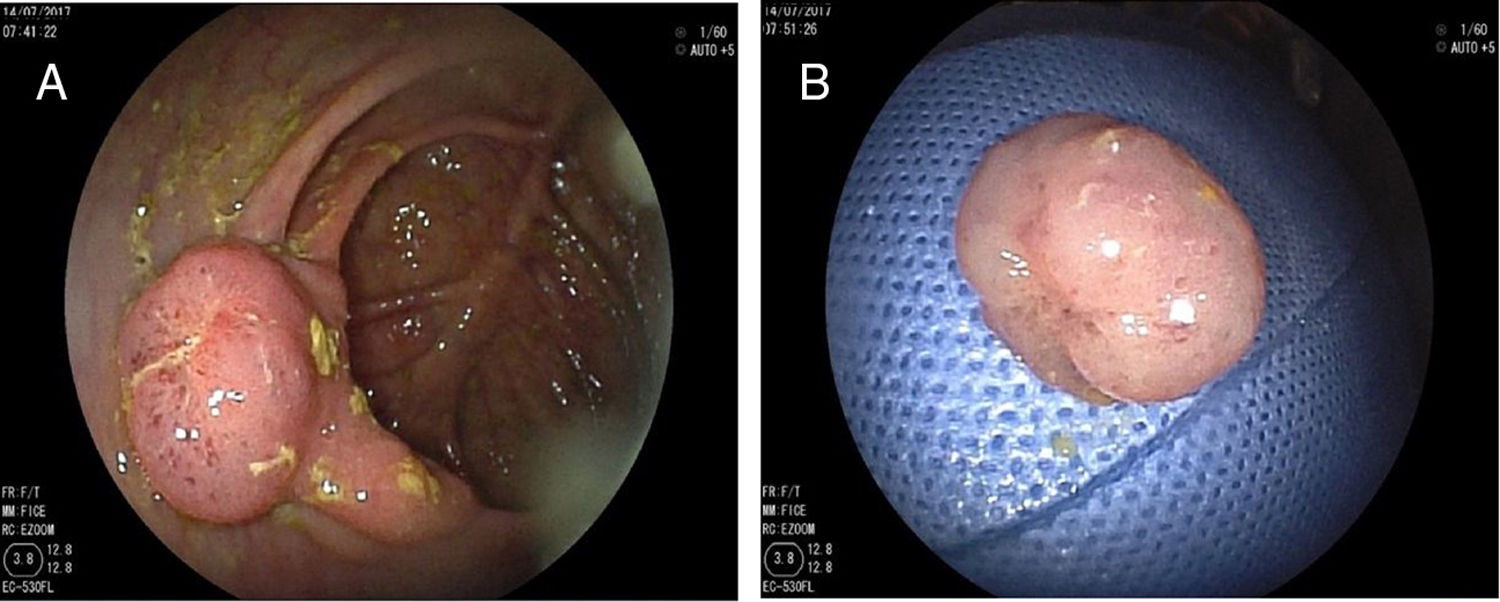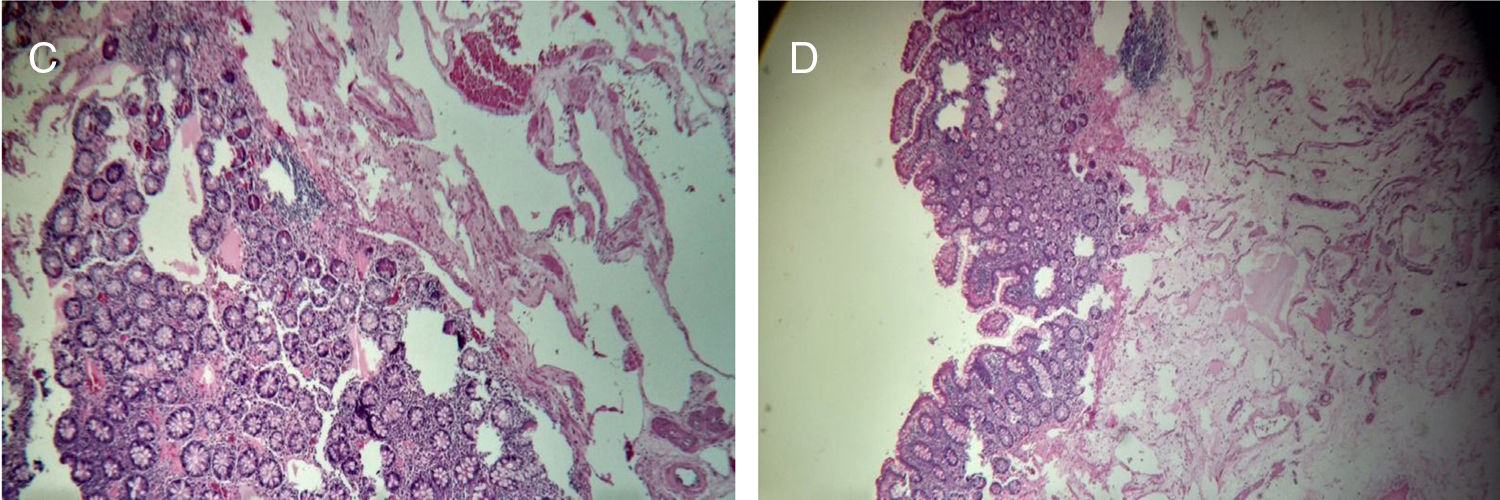

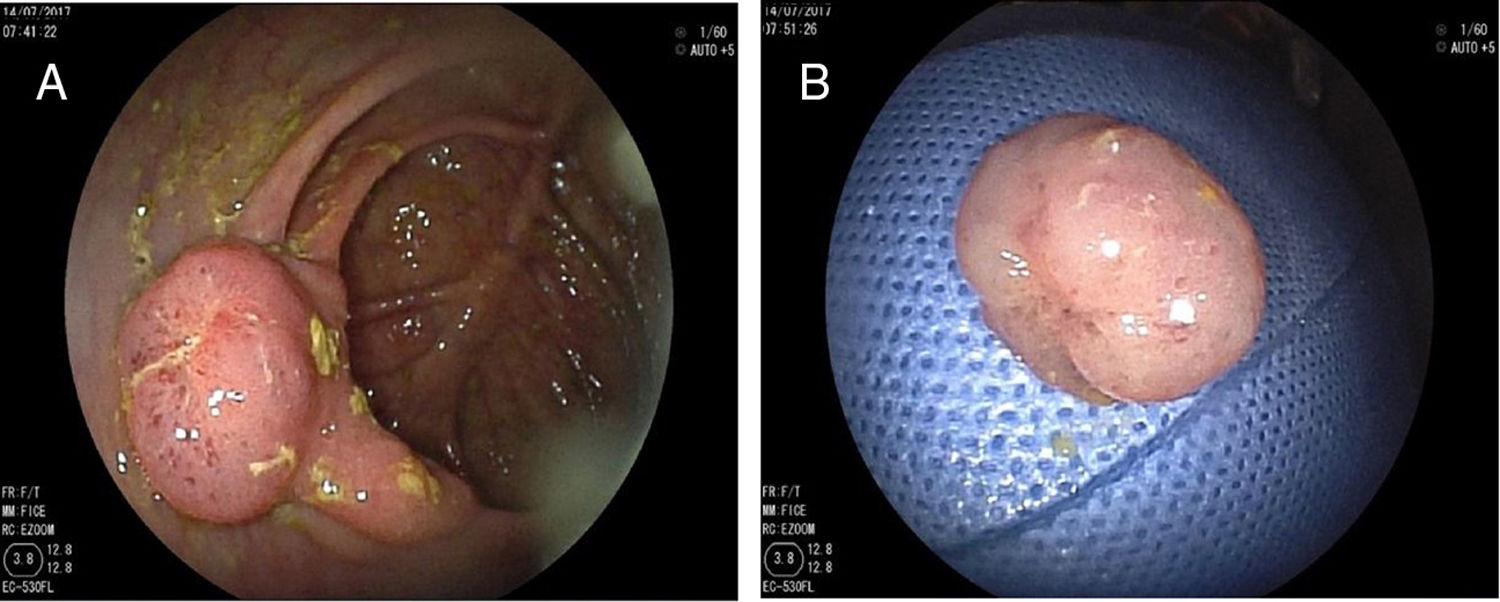
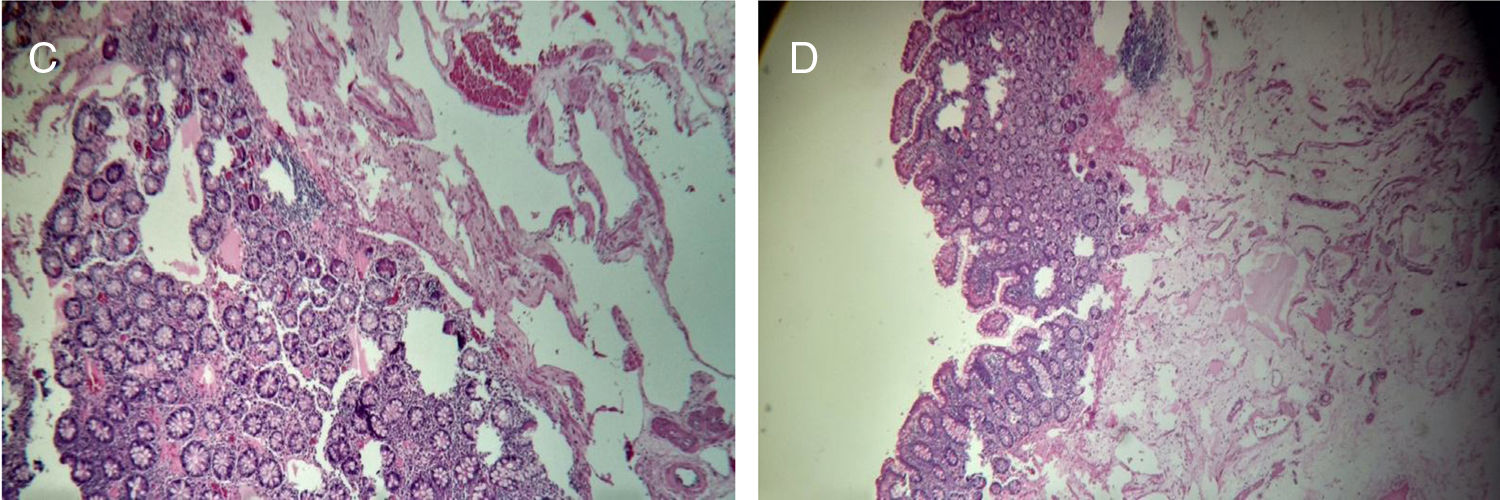
A 69-year-old male patient came to the emergency room after 22h with severe, oppressive lower abdominal pain, nausea, fever and dysuria, no vomits and hematochezia. Patient referred no important illness or risk factor. At physical examination the patient was alert, oriented in time, space and person. At the abdominal exam, the patient referred pain at the deep palpation of the right iliac region, no signs of lower gastrointestinal bleeding. Rest of the exam with no contributions. A diagnosis of abdominal pain syndrome was stated, suggesting urolithiasis or benign prostatic hyperplasia (BPH) as the possible causes. Patient received nonsteroidal anti-inflammatory drugs (NSAIDs) by intramuscular injections (IM) and NSAIDs capsules. The patient got better and left the hospital. However, one week later the patient returned to the internal medicine unit with a tomography that suggested right diverticulitis, and for that reason he was referred to the gastroenterology department for colonoscopy. The test showed a subpediculated polyp of 20mm on the ileocecal valve. (A, B) The polyp was extracted and sent to pathology which revealed a polypoid shape lesion with thin-walled vessels in the submucosa layer. Mucosa layer without atypia. The pathology conclusions were angiodysplasic lesion with polypoid shape (C, D) (Figs. 1 and 2).
El factor de impacto mide la media del número de citaciones recibidas en un año por trabajos publicados en la publicación durante los dos años anteriores.
© Clarivate Analytics, Journal Citation Reports 2025
SJR es una prestigiosa métrica basada en la idea de que todas las citaciones no son iguales. SJR usa un algoritmo similar al page rank de Google; es una medida cuantitativa y cualitativa al impacto de una publicación.
Ver másSNIP permite comparar el impacto de revistas de diferentes campos temáticos, corrigiendo las diferencias en la probabilidad de ser citado que existe entre revistas de distintas materias.
Ver más