
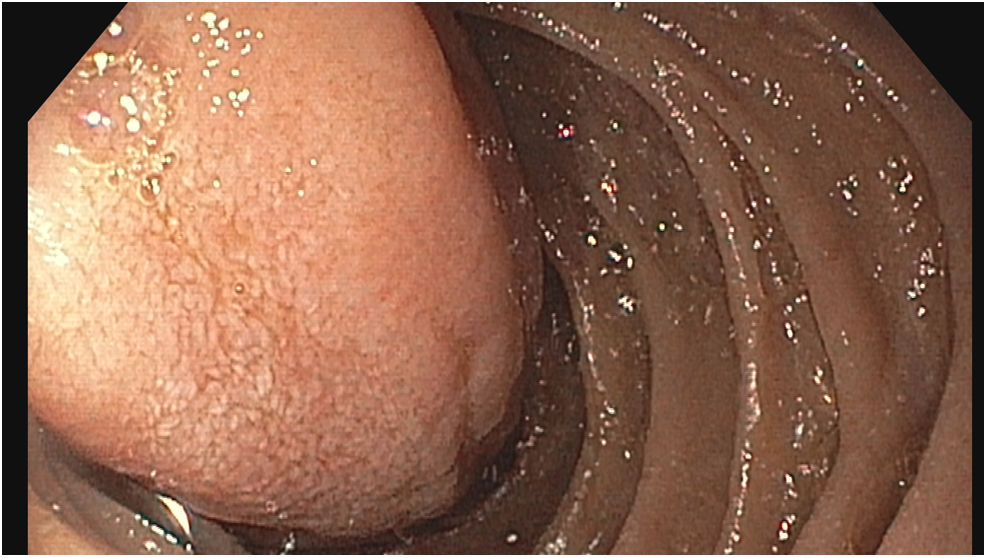
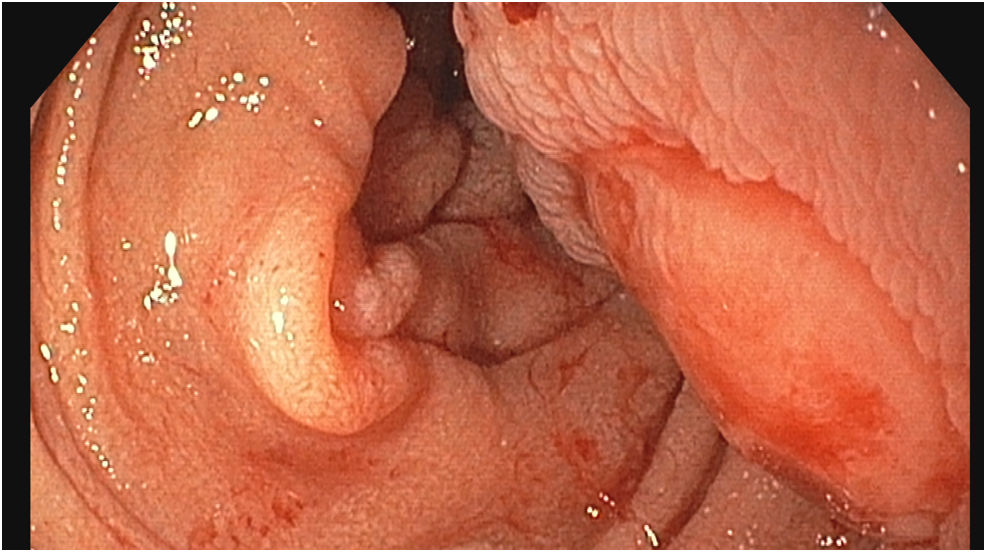
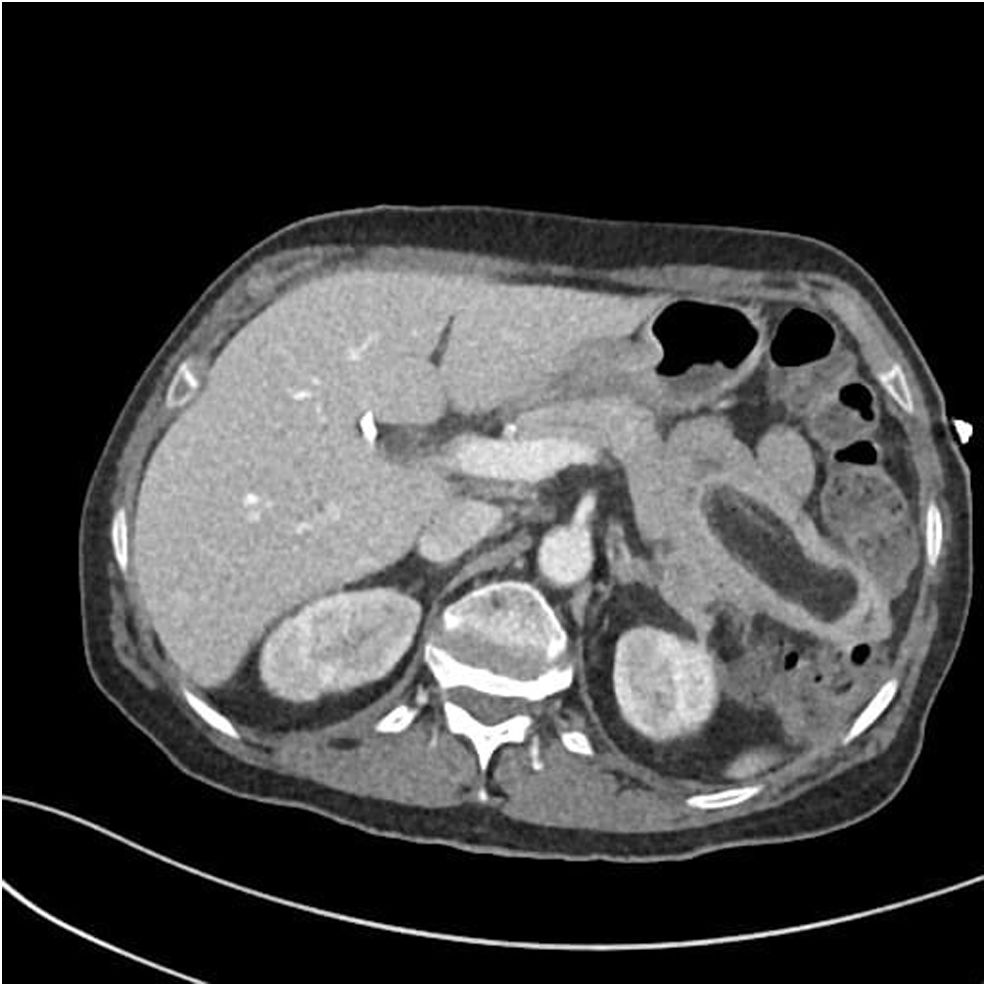
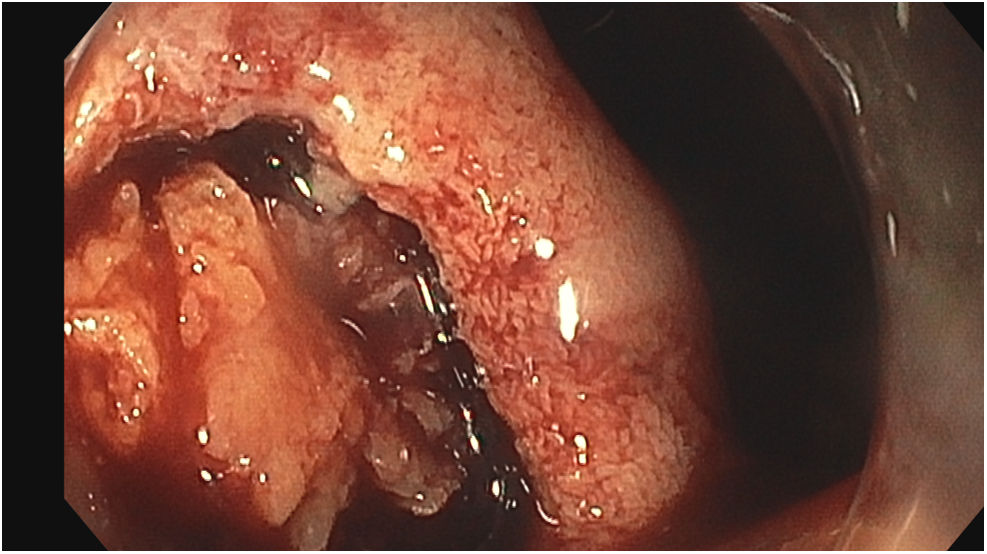
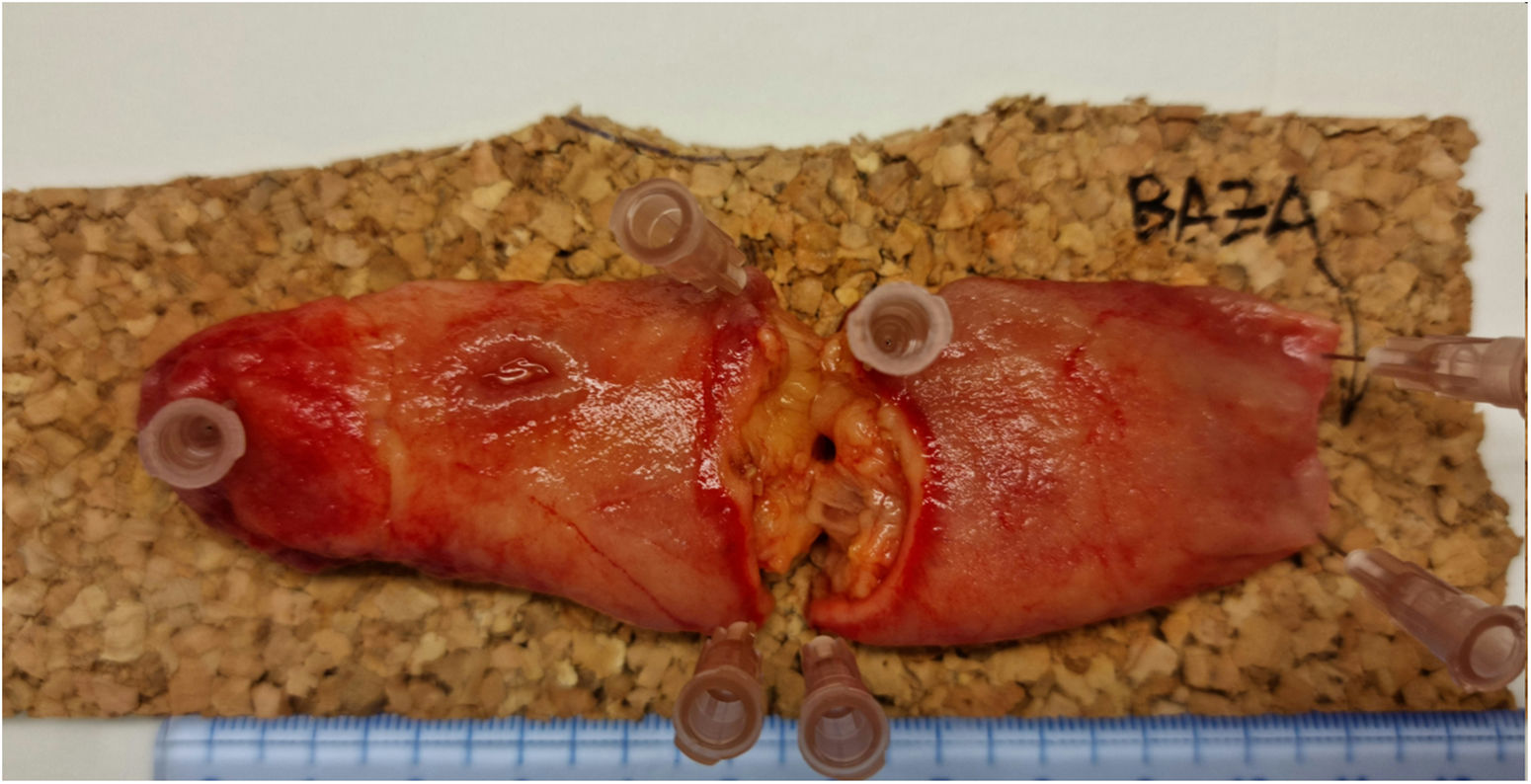
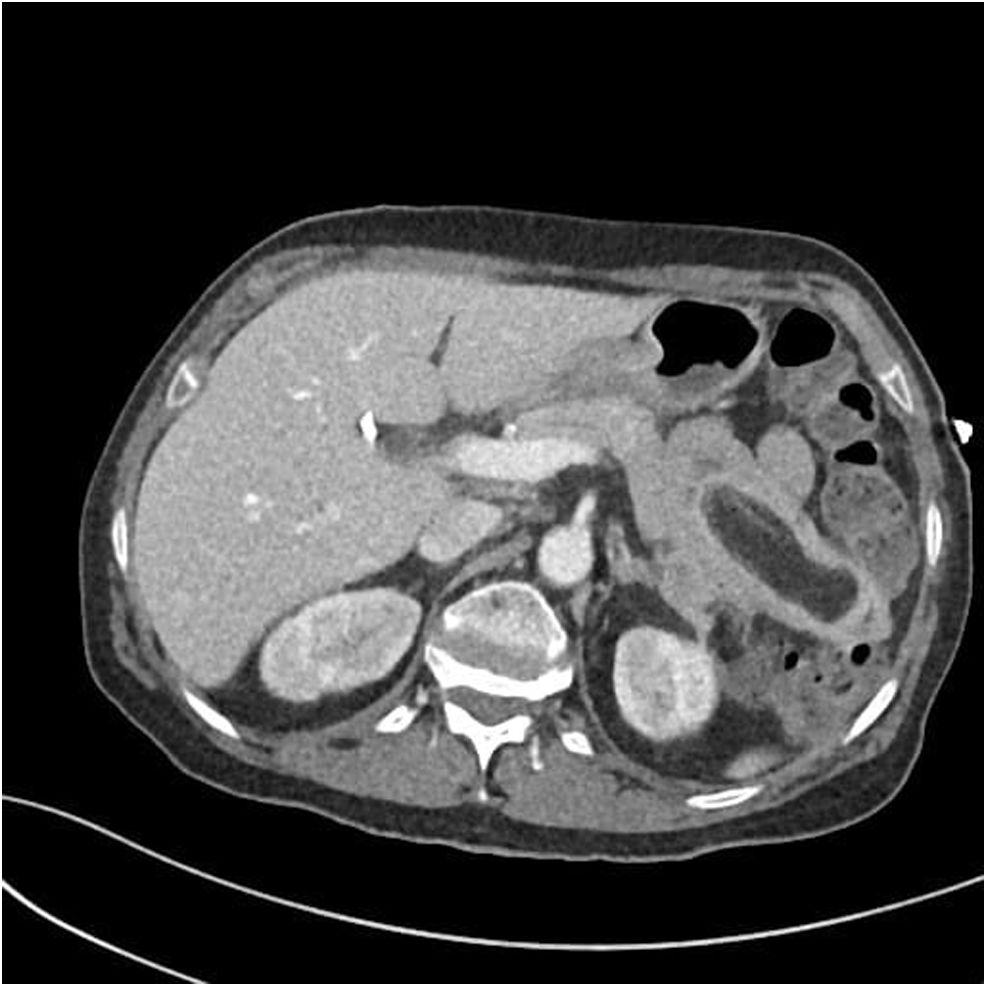
A 74-year old woman was admitted to the cardiology unit after being examined at emergency department due to general malaise and a year long history of dark stool. Laboratory results revealed microcytic anemia (hemoglobin 6.8g/dL with low ferritin levels 5μg/L; reference 20–200μg/L) and patient received two units of packed red blood cells. Significantly increased troponin levels were noted as 44,827ng/L; reference <40ng/L. Patient denied abdominal and chest pain. Emergency coronarography was performed and stenosis of LAD (left anterior descending artery) was resolved by stenting. Three days after initiation of the dual antiplatelet therapy (acetylsalicylic acid 100mg daily and clopidogrel 75mg daily) patient presented with melena and a substantial drop in hemoglobin levels (25g/dL). Emergent EGD revealed large pedunculated polyp arising in the D2 part (peduncle) of the duodenum with the head of the polyp protruding toward the distal duodenum. Overlying mucosa was normal (Fig. 1) and ulceration (Fig. 2) at the head of the polyp was a potential cause of bleeding. During the emergent EGD there were no signs of recent or active bleeding. On the subsequent abdominal CT a 70mm×22mm large duodenal polyp (Fig. 3) with the characteristics of a lipoma was described. Multidisciplinary meeting was held and an endoscopic resection attempt before surgical therapy was indicated. Clopidogrel was temporarily halted and patient was only taking acetylsalicylic acid 100mg daily. During endoscopic resection, endoloop® was placed at the polyp base. Afterwards, polyp was retrieved to the antrum and distal part was resected with the hot snare (Fig. 4). Proximal part was then resected with the use of IT knife above the endoloop®. En bloc resection failed as a snare could not be placed around the polyp due to its size. Histology revealed 93mm×33mm (Fig. 5) large duodenal lipoma. Clopidogrel was reinitiated on the same day and patient was discharged home after three days. Of all gastrointestinal tract anatomic sites, duodenal lipomas are the most rare (4%).1 The majority are asymptomatic, but large may become clinically relevant with abdominal pain, intussusception and GI bleeding being the most common symptoms. Large duodenal lipomas with symptoms warrant intervention. Surgery was traditionally the treatment of choice for large lipomas, however, endoscopic treatment such as snare polypectomy (with or without the use of endoloop®) and ESD are becoming favored.1 Nevertheless, there is no standard treatment approach for large lipomas with wide stalk (>2cm). ESD may be effective treatment for en bloc resection, but very large specimens might not be retrievable through the pyloric channel.2 To the best of our knowledge, our case represents one of the largest endoscopically resected symptomatic duodenal lipomas.1,2
Authors’ contributions



All authors contributed equally to the work presented in this paper. All authors have read and approved the paper.
Conflict of interestThe authors have no potential financial or funding conflict of interest.