






The triage system aims to determine the level of urgency of patients in order to provide appropriate care and reduce morbidity and mortality. It is essential that the system used is valid, reliable and easy to use. The TRIPED-GM system is a five-level classification system exclusively for pediatric age, which includes six steps, three of which are mandatory (PAT, guiding sign/symptom, and priority rectifiers).
ObjectiveTo determine the reproducibility of the TRIPED-GM system when used on patients evaluated consecutively by 2 nurses.
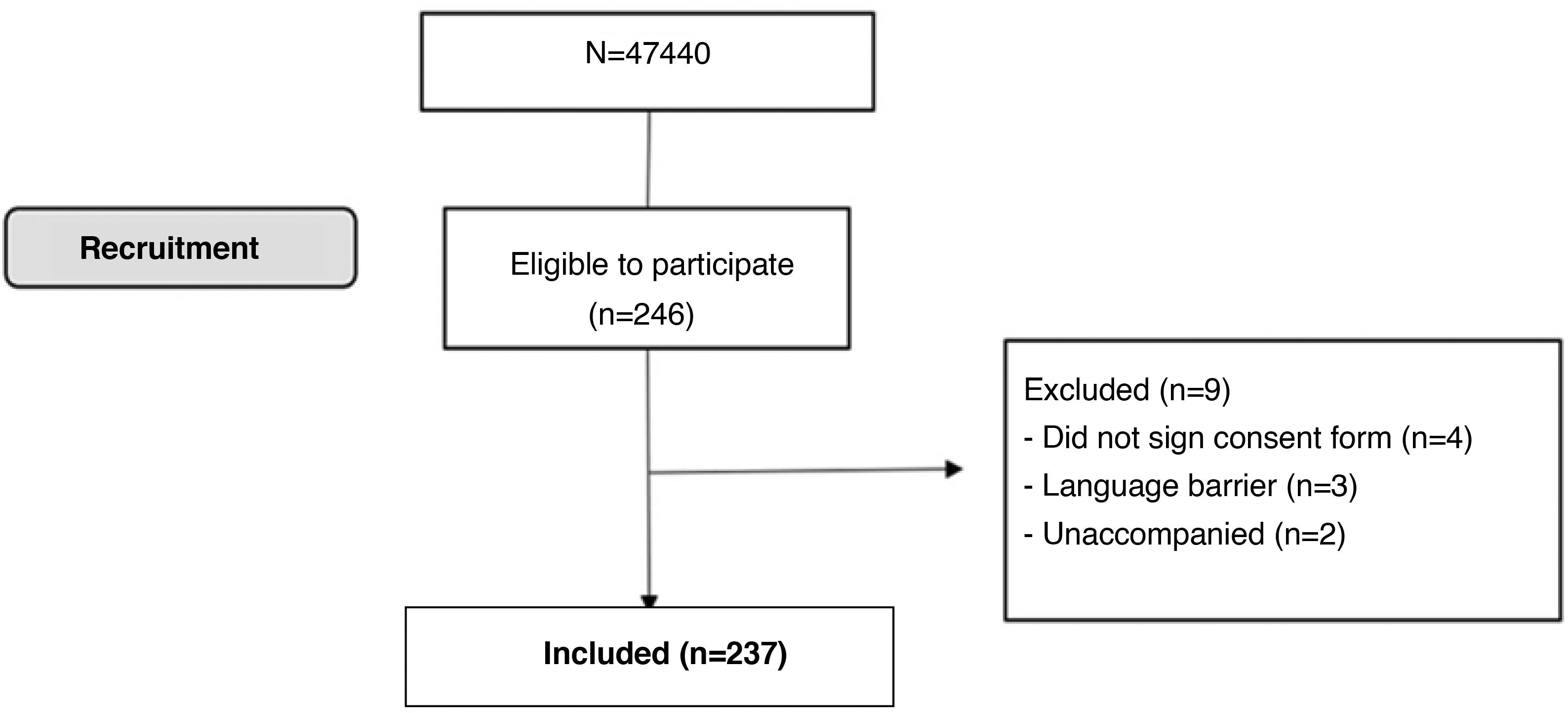
MethodObservational, descriptive, cross-sectional study involving 237 patients under 16 years of age who attended a third-level pediatric emergency service. Reliability was measured using Kappa (κ), linear Kappa (κp), and quadratic Kappa (κp2) indices, which compared the priority assigned by two research nurses and sixteen paediatric emergency nurses with over a year of experience in triage. Patients were classified consecutively and blindly.
ResultsThere was agreement in 221 (93.2%) patients. The overall concordance was: κ = 0.84 (95% CI 0.77−0.91), κp = 0.85 (95% CI 0.78−0.92), κp2 = 0.85 (95% CI 0.78−0.92). There were no differences in the assignment of more than one priority level in any patient. Concordance in the mandatory steps was: Pediatric Assessment Triangle: κ = 0.82 (95% CI 0.68−0.96), Main reason for consultation: κ = 0.76 (95% CI 0.62−0.89), Rectifiers: κ = 0.94 (95% CI 0.88−1). Concordance was higher in patients who consulted for illness compared to those for trauma/accidents: κ = 0.84 (95% CI 0.76−0.92) vs. κ = 0.79 (95% CI 0.57–1).
ConclusionThe TRIPED-GM pediatric triage system is reliable for use in emergency services with patients of similar characteristics.
El sistema de triaje tiene como objetivo determinar el nivel de urgencia de pacientes para proporcionar atención adecuada y reducir la morbimortalidad. Es esencial que el sistema usado sea válido, fiable y fácil de usar. El TRIPED-GM es un sistema de clasificación exclusivo pediátrico de 5 niveles, que incluye 6 pasos: 3 obligatorios (Triángulo de Evaluación Pediátrica, signo/síntoma guía y rectificadores de prioridad).
ObjetivoDeterminar la reproducibilidad del TRIPED-GM utilizado en pacientes valorados consecutivamente por 2 enfermeras.
MétodoEstudio observacional, descriptivo, transversal con 237 pacientes pediátricos que acudieron a un servicio de urgencias pediátricas de tercer nivel. La reproducibilidad se midió mediante los índices Kappa (κ), Kappa lineal (κp) y Kappa cuadrático (κp2) comparando la prioridad asignada por dos enfermeras de investigación y 16 enfermeras de urgencias pediátricas con más de un año de experiencia en triaje. Los pacientes se clasificaron de forma consecutiva y ciega.
ResultadosHubo acuerdo en 221 (93,2%) pacientes. La concordancia global fue: κ = 0,84 (IC 95% 0,77–0,91), κp = 0,85 (IC 95% 0,78–0,92), κp2 = 0,85 (IC 95% 0,78–0,92). No hubo diferencias de asignación de más de un nivel de prioridad en ningún paciente. La concordancia en los pasos obligatorios fue: κ = 0,82 (IC95% 0,68–0,96), κ = 0,76 (IC95% 0,62–0,89) y κ = 0,94 (IC95% 0,88–1) en el paso del Triángulo de Evaluación Pediátrica, motivo de consulta y rectificadores respectivamente. La concordancia fue mayor en pacientes que consultaron por enfermedad que por traumatismos/accidentes: κ = 0,84 (IC95% 0,76–0,92) vs. κ = 0,79 (IC95% 0,57–1).
ConclusiónEl TRIPED-GM es un sistema reproducible para su uso en servicios de urgencias con pacientes de características similares.

