






This study aimed to examine the association between HPV vaccine hesitancy and attitudes towards the early detection of cervical cancer among women of reproductive age.
MethodThis study uses a descriptive and correlational design. Data were collected between 15 May and 15 October 2023 from a sample of 1240 women of reproductive age using Google’s online snowball survey tool. Data collection tools included an Information Form, the Attitudes Towards Early Diagnosis of Cervical Cancer Scale, and the Vaccination Hesitancy and Reasons Form based on the WHO 3Cs model. Descriptive statistics (mean, standard deviation, frequency), the Mann-Whitney U test, Kruskal-Wallis test and Bonferroni post-hoc analysis were used to analyse the data. The reliability of the scale was assessed using Cronbach’s alpha. Ethical approval was obtained from the Ethics Committee of Mugla Sitki Kocman University (Protocol No: 220186/Decision No: 15), and participants gave informed consent electronically prior to participation.
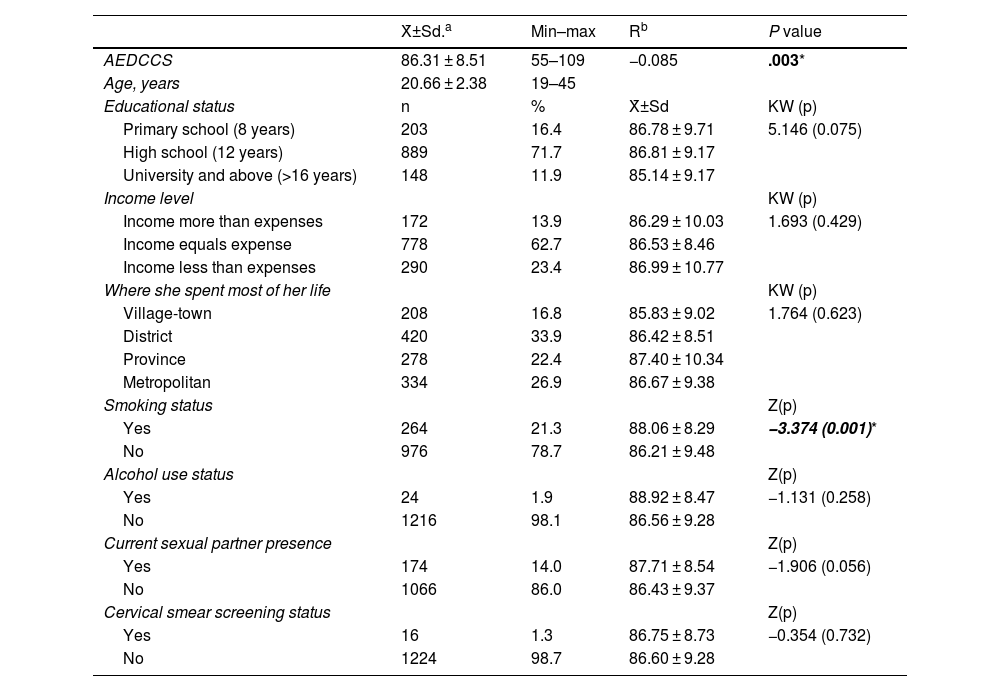
ResultsThe participants' mean age was 20.66 ± 2.38 years. Statistically significant differences were observed between variables such as educational status, income level, and primary residence, and attitudes toward HPV vaccination (P < .05). Smoking status was identified as a significant factor influencing vaccination attitudes (P = .001). Friends (38.4%) and the Internet (31.1%) were reported as the primary sources of information about HPV vaccination. Regarding barriers, 54.7% of participants stated they did not know where to obtain the vaccine, and 25% identified the requirement for multiple doses as a challenge. Concerns about vaccine safety (51.4%), fear of infertility (28.2%), and potential allergic reactions (19.7%) were also noted. Beliefs about the necessity of vaccination and its role in preventing cancer significantly influenced attitudes and hesitancy (P < .001). Overall, HPV vaccine hesitancy was closely associated with participants’ level of knowledge, beliefs, and sociodemographic characteristics.
ConclusionsTo reduce vaccine hesitancy, it is important to establish accessible and trustworthy information channels, engage healthcare professionals more actively in HPV vaccination advocacy, and conduct public health campaigns targeting young adults through popular digital platforms. In addition, addressing structural barriers — such as the cost of the vaccine, access to vaccination centres and concerns about side effects — through policy-level action could significantly improve uptake of the vaccine and encourage participation in cervical cancer screening programs.
Este estudio tuvo como objetivo examinar la asociación entre la vacilación ante la vacuna contra el virus del papiloma humano (VPH) y las actitudes hacia la detección temprana del cáncer cuello uterino (AEDCCS) en mujeres en edad reproductiva.
MétodoEste estudio utilizó un diseño descriptivo y correlacional. Los datos se recopilaron entre el 15 de mayo y el 15 de octubre de 2023 de una muestra de 1.240 mujeres en edad reproductiva mediante la herramienta de encuesta en línea de bola de nieve de Google. Los instrumentos de recopilación de datos incluyeron un Formulario de Información, la Escala de AEDCCS y el Formulario de Vacilación Vacunal y Motivos basado en el modelo de las 3C de la Organización Mundial de la Salud (OMS). Se utilizaron estadísticas descriptivas (media, desviación estándar, frecuencia), la prueba U de Mann-Whitney, la prueba de Kruskal-Wallis y el análisis post hoc de Bonferroni para analizar los datos. La confiabilidad de la escala se evaluó utilizando el alfa de Cronbach. Se obtuvo la aprobación ética del Comité de Ética de la Universidad de Mugla Sitki Kocman (Protocolo N.° 220186/Decisión N.° 15), y las participantes dieron su consentimiento informado electrónicamente antes de participar.
ResultadosLa edad media de las participantes fue de 20,66 ± 2,38 años. Se observaron diferencias estadísticamente significativas entre variables como el nivel educativo, el nivel de ingresos y la residencia principal, y las actitudes hacia la vacunación contra el VPH (P < ,05). El estado de fumadora se identificó como un factor significativo que influye en las actitudes hacia la vacunación (P = ,001). Las amigas (38,4%) e Internet (31,1%) se notificaron como las principales fuentes de información sobre la vacuna contra el VPH. En cuanto a las barreras, el 54,7% de las participantes declaró que no sabía dónde obtener la vacuna, y el 25% identificó la necesidad de múltiples dosis como un desafío. También se señalaron preocupaciones sobre la seguridad de la vacuna (51,4%), el miedo a la infertilidad (28,2%) y posibles reacciones alérgicas (19,7%). Las creencias sobre la necesidad de la vacunación y su papel en la prevención del cáncer influyeron significativamente en las actitudes y la vacilación (P < ,001). En general, la vacilación frente a la vacuna contra el VPH estuvo estrechamente relacionada con el nivel de conocimiento, las creencias y las características sociodemográficas de las participantes.
ConclusionesPara reducir la vacilación vacunal, es importante establecer canales de información accesibles y confiables, involucrar más activamente a los profesionales de la salud en la promoción de la vacuna contra el VPH y realizar campañas de salud pública dirigidas a adultos jóvenes a través de plataformas digitales populares. Además, abordar las barreras estructurales—como el costo de la vacuna, el acceso a los centros de vacunación y las preocupaciones sobre los efectos secundarios—mediante acciones a nivel de políticas públicas podría mejorar significativamente la aceptación de la vacuna y fomentar la participación en los programas de detección del cáncer de cuello uterino.

