



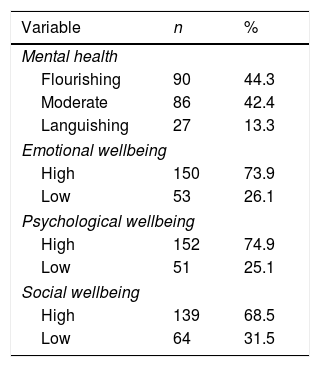
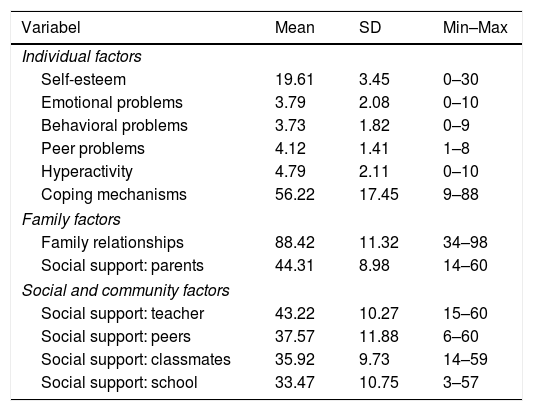
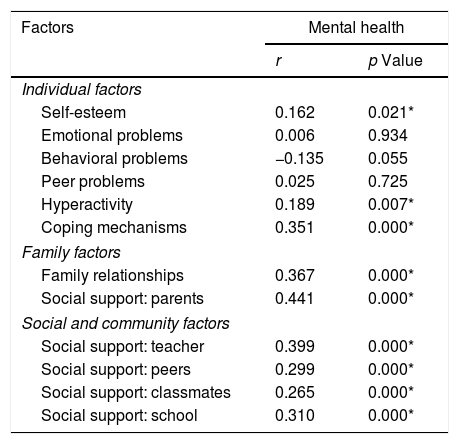
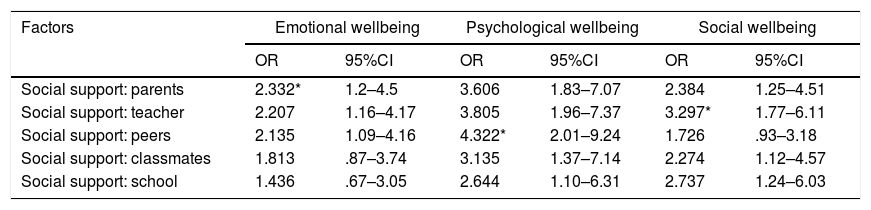
The aim of this study was to describe patterns and potential factors of mental health, including emotional, psychological, and social wellbeing among Indonesian adolescents. A descriptive, cross-sectional design was implemented. The sample consisted of 203 junior high school students from four schools (private and public schools) in Bali. Participants completed a one-time, self-report questionnaire on mental health and individual, family, and social community factors. Descriptive, pearson correlation, and logistic regression were used for the analysis. Approximately 44.3% of adolescents were flourishing, 42.4% had moderate mental health, and 13.3% were languishing. Almost all adolescents had high emotional, psychological, and social wellbeing. Self-esteem, behavioral problems, strength, hyperactivity, coping mechanisms, family relationships, social support from parents, teachers, peers, and classmates were perceived as contributing to adolescents’ mental health. Adolescents individuals need to develop adaptive coping abilities to deal with events positively. The involvement of parents and proximity between peers and school environments are needed to strengthen adolescent mental health. There needs to be a comprehensive between adolescents, family, and community as well as interventional strategies and policy directions to help adolescents maintain their mental health.

