



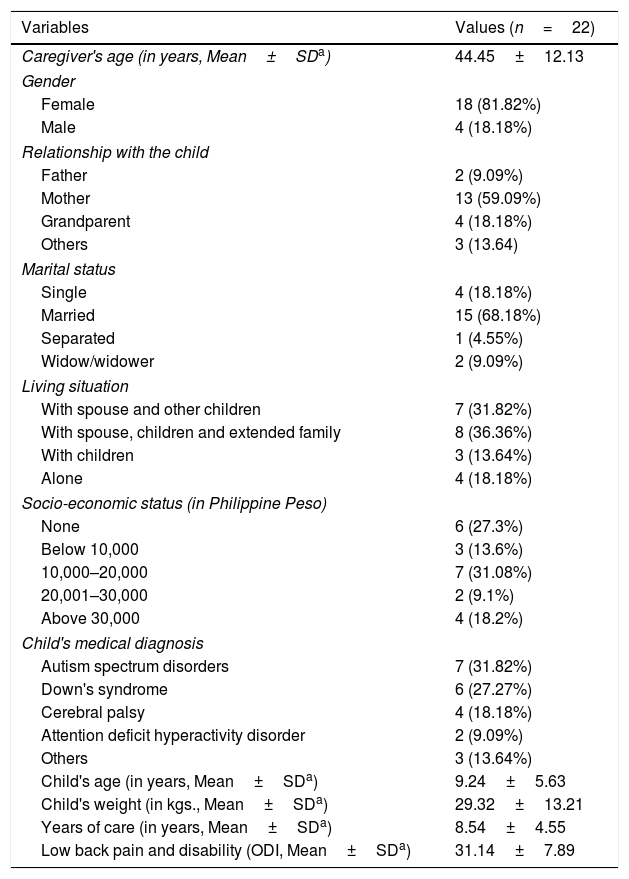
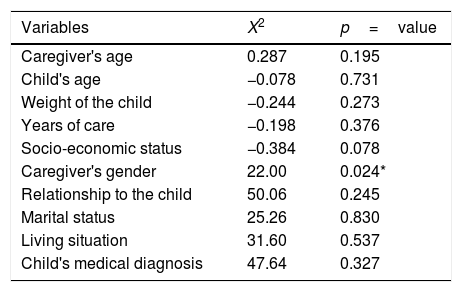
The caregiver's role in rearing a child with disability requires huge physical demands which may lead to development of musculoskeletal disorders such as low back pain (LBP). This study aims to determine the factors associated with low back pain among caregivers of children with disability. A quantitative, correlational research design was used. Data were gathered among caregivers of children with disabilities enrolled in a specialized educational and pediatric rehabilitation unit in Valenzuela City. A personal information sheet was used to gather relevant demographic data while Oswestry Disability Index (ODI) was used to measure low back pain and disability. Pearson's correlation and Chi-square were used to determine the relationship and association among demographic factors and low back pain and disability. Majority of the respondents are mothers (59.09%) caring for children with autism spectrum disorder (31.82%), married (68.18%), and living in an extended family (36.36%). Chi-squared revealed a statistically significant association between caregivers’ gender (p=0.003), relationship to child (p=0.000), and marital status (p=0.000) to low back pain and disability. Results imply that married mothers who are the primary caregivers to children with disability are prone to develop low back pain and disability. Preventive and restorative physical interventions, such as caring rotation, is recommended. Future studies should focus on other factors such as psychosocial, physical, and emotional aspects of low back pain and disability among caregivers of children with disability.

