



Determinar el nivel de conocimientos sobre el virus de la inmunodeficiencia humana (VIH), transmisión del VIH e infecciones de transmisión sexual (ITS), hepatitis, profilaxis pre-exposición (PrEP) y profilaxis postexposición (PEP) en personas heterosexuales, homosexuales y bisexuales/otros, que acuden a una consulta enfermera hospitalaria de ITS. Analizar los factores sociodemográficos, clínicos, de comportamiento sexual, hábitos tóxicos, soporte social y estigma asociados al nivel de conocimiento.
MétodosEstudio observacional, transversal, analítico y unicéntrico en un hospital español. Se reclutaron 259 pacientes de forma consecutiva entre noviembre de 2021 y julio de 2022. Se utilizó la encuesta European Men to Men Internet Survey (EMIS) y se realizó análisis estadístico bivariado y multivariado.
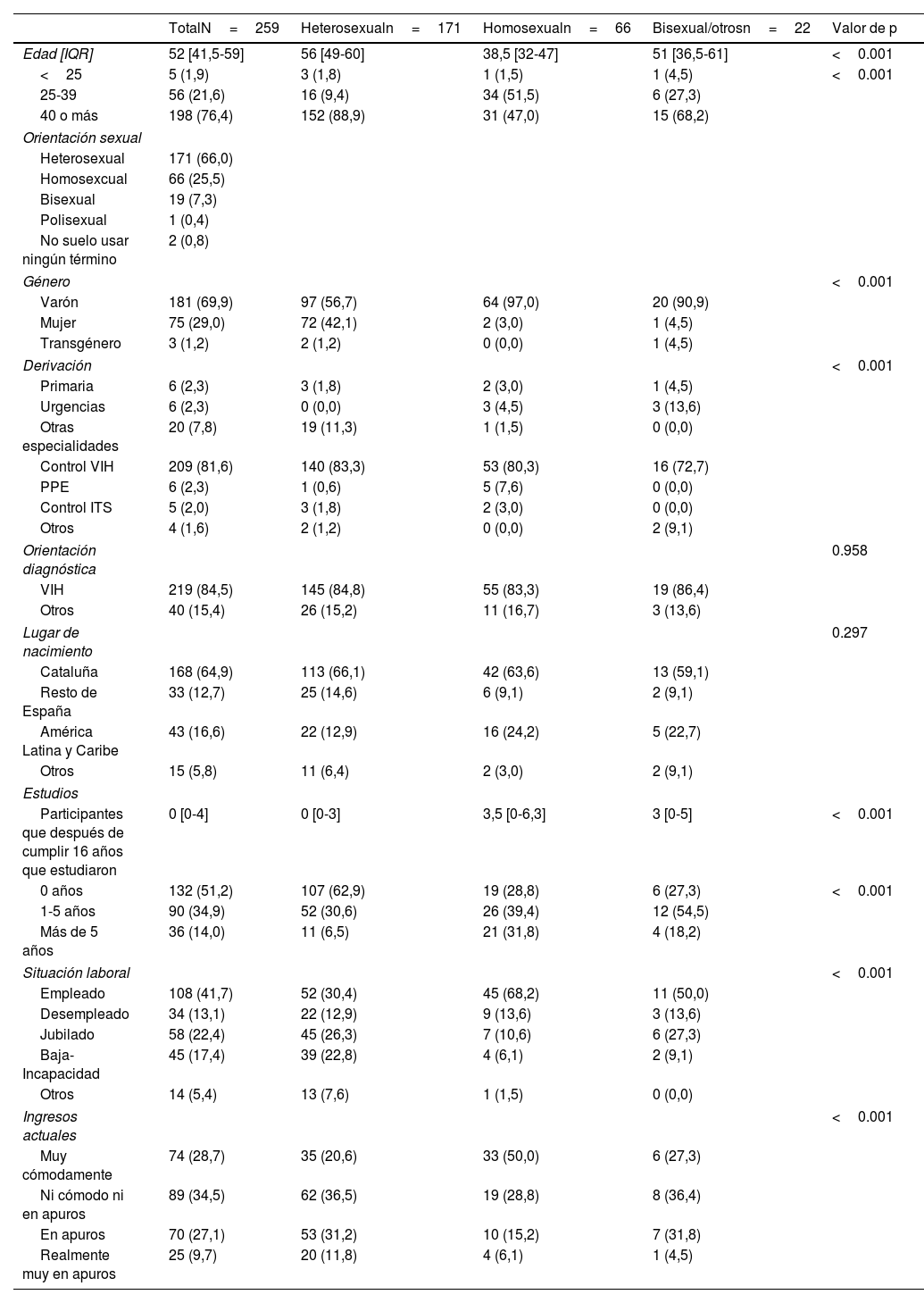
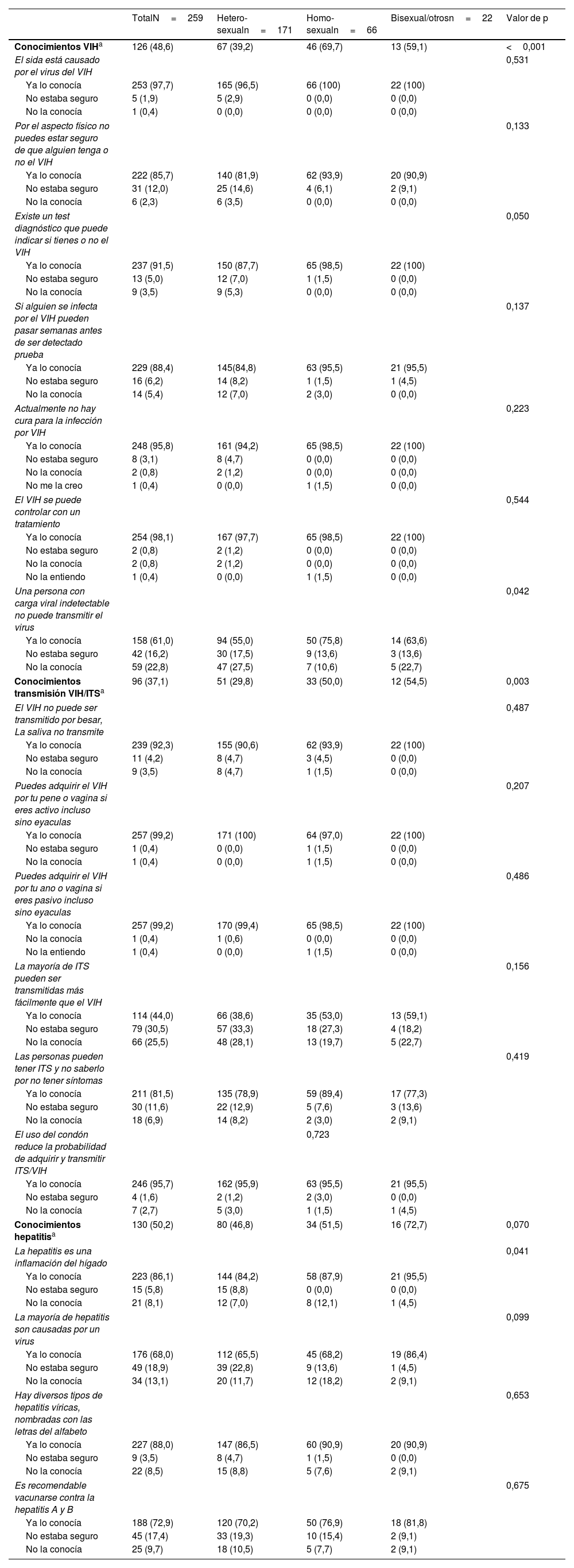
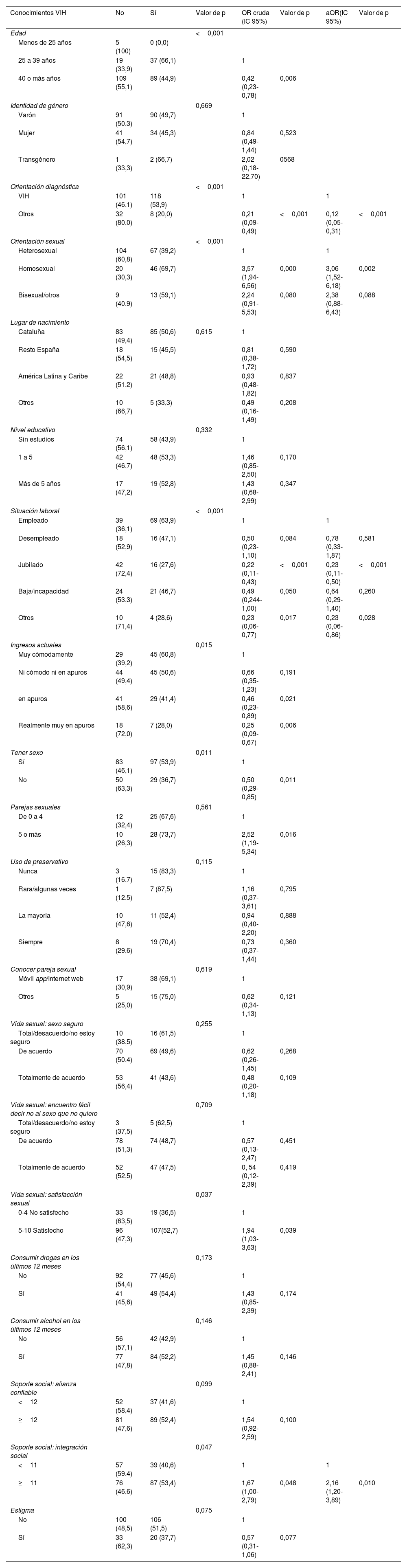
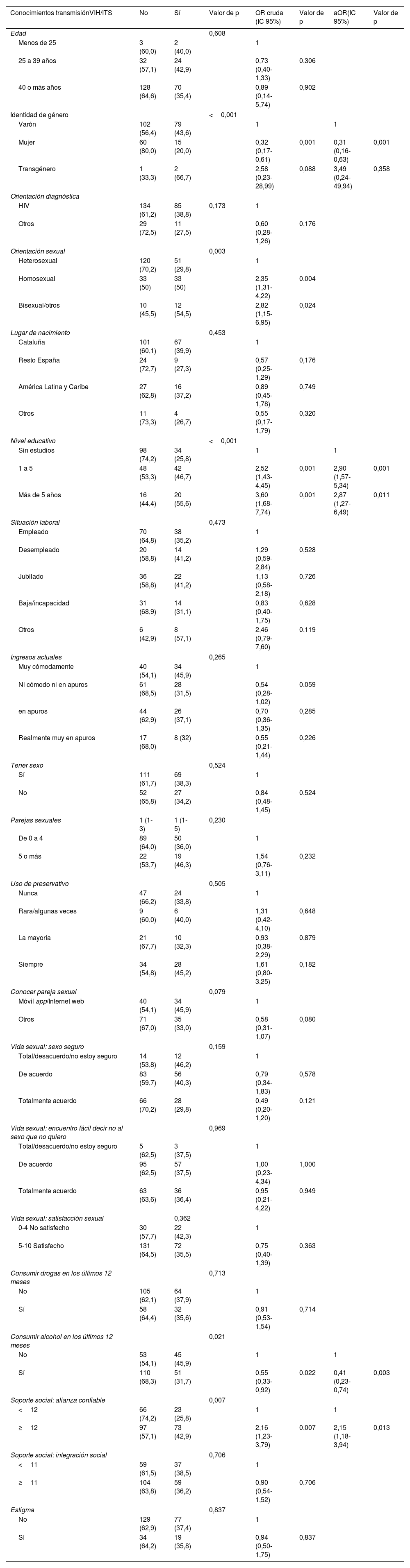
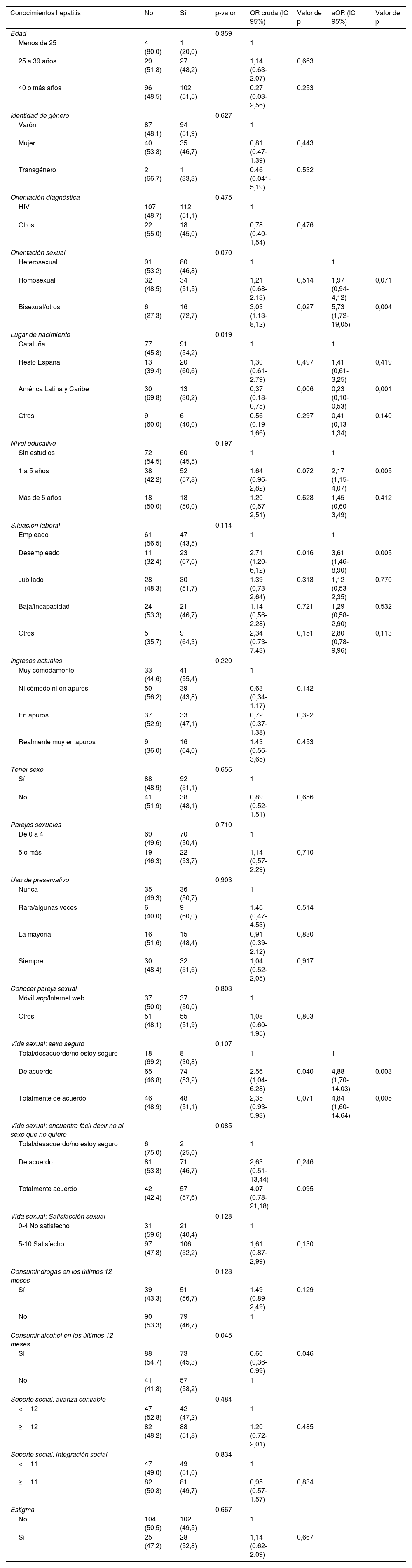
ResultadosEl 66,0% de los participantes eran heterosexuales, 25,5% homosexuales y 8,5% bisexual/otros. La mediana de edad fue de 52 años [IQR: 41,5-59,0]. El mayor conocimiento sobre el VIH se observó en las personas homosexuales (69,7%). El 93% de las personas heterosexuales desconocía la PrEP y PEP. Los factores asociados con menor conocimiento fueron: orientación heterosexual, edad mayor de 40 años, mujer, bajo nivel educativo e ingresos, desempleo, consumo de alcohol y drogas, no uso de Internet, menor número de parejas sexuales, falta de sexo seguro y baja integración social.
ConclusionesEs prioritario reforzar la educación sobre el VIH y las ITS, especialmente en heterosexuales, mujeres, adultos mayores y personas bisexuales/otras. Las intervenciones deben adaptarse a cada grupo, desmitificar la transmisión del VIH, fomentar el uso de PrEP y PEP, y reducir el estigma, favoreciendo estrategias educativas más inclusivas y eficaces para disminuir la prevalencia del VIH y las ITS.
To determine the level of knowledge about HIV, HIV transmission, Sexually Transmitted Infections (STIs), hepatitis, Pre-Exposure Prophylaxis (PrEP), and Post-Exposure Prophylaxis (PEP) in heterosexual, homosexual, and bisexual-other individuals attending a hospital-based nursing STI consultation. To analyze sociodemographic, clinical, sexual behavior, substance use, social support, and stigma factors associated with the level of knowledge about these infections.
MethodsObservational, cross-sectional, analytical, single-center study in a hospital in Spain, with 259 patients consecutively recruited between November 2021 and July 2022. The European Men to Men Internet Survey (EMIS) was used, and bivariate and multivariate statistical analysis was applied.
ResultsThe 66.0% of the participants were heterosexual, 25.5% homosexual, and 8.5% bisexual-other. The median age was 52 years [41.5–59.0]. The highest level of HIV knowledge was observed in homosexual individuals (69.7%). 93% of heterosexuals were unaware of PrEP and PEP. Factors associated with lower knowledge were: heterosexual orientation, age over 40, female gender, lower educational level and income, unemployment, alcohol and drug use, limited internet use, fewer sexual partners, lack of safe sex, and lower social integration.
ConclusionsIt is necessary to strengthen education on HIV and STIs, especially among heterosexuals, women, older adults, and bisexual-other individuals. Interventions should be adapted to each group, demystify HIV transmission, promote PrEP and PEP, and reduce stigma, contributing to the design of more inclusive and effective educational strategies to reduce the prevalence of STIs and HIV.

