


metricas
covid
Enfermería Clínica Choosing intrauterine device of mothers in rural area, Indonesia: Based on Healt...
Información de la revista
Vol. 31. Núm. S2.
4th International Conference for Global Health (ICGH) in conjunction with the 7th Asian International Conference in Humanized Health Care (AIC-HHC)
Páginas S343-S347 (Abril 2021)
Compartir
Descargar PDF
Más opciones de artículo
Vol. 31. Núm. S2.
4th International Conference for Global Health (ICGH) in conjunction with the 7th Asian International Conference in Humanized Health Care (AIC-HHC)
Páginas S343-S347 (Abril 2021)
Choosing intrauterine device of mothers in rural area, Indonesia: Based on Health Belief Model Theory
Aria Aulia Nastiti
Autor para correspondencia
aria.aulia.n@fkp.unair.ac.id

Corresponding author.
, Retnayu Pradanie, Desy Ratna Sari
Maternity and Pediatric Nursing Department, Faculty of Nursing, Universitas Airlangga, Surabaya, East Java, Indonesia
Información del artículo
Resumen
Texto completo
Bibliografía
Descargar PDF
Estadísticas
Tablas (3)
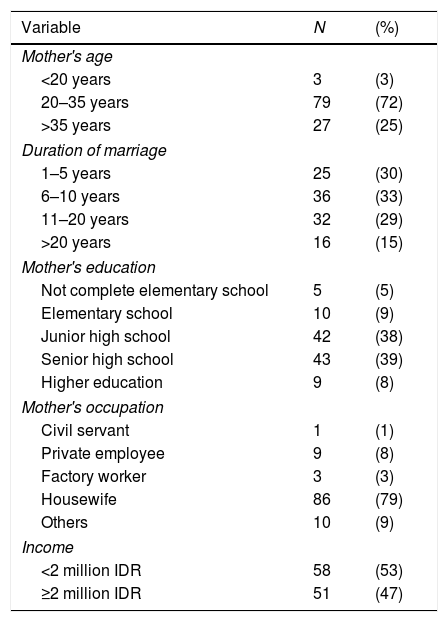
Table 1. Sociodemographic characteristics of participants (N=109).
Tablas
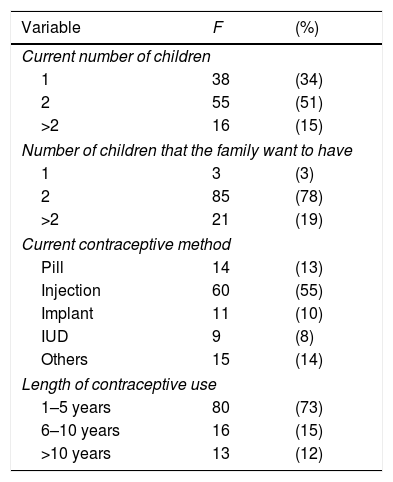
Table 2. Family planning history of participants (N=109).
Tablas
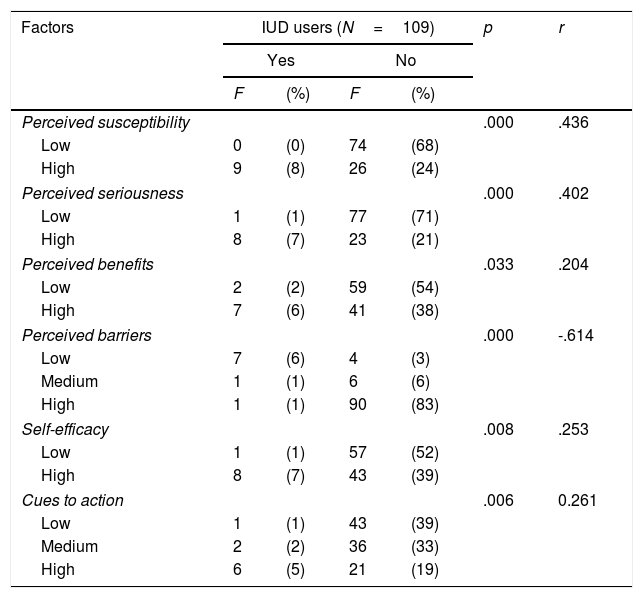
Table 3. Correlation between perceived susceptibility, perceived seriousness, perceived benefits, perceived barriers, self-efficacy, and cues to action and mothers’ decisions in choosing an intrauterine device.
Tablas
Mostrar másMostrar menos
Suplemento especial
Este artículo forma parte de:
Vol. 31. Núm S2

4th International Conference for Global Health (ICGH) in conjunction with the 7th Asian International Conference in Humanized Health Care (AIC-HHC)

Más datos
Abstract

This study aimed to identify the correlation between perceived susceptibility, perceived seriousness, perceived benefit, self-efficacy, perceived barrier, cues to action, and the choice of using the intrauterine device. A cross-sectional study was carried out to 109 mothers in Ngudikan Village. Data were collected using questionnaires. The data was analyzed using the Spearman Rank correlation with a level of significance α=0.05. The result show that there is a correlation between perceived susceptibility (p=0.000; r=0.436), perceived seriousness (p=0.000; r=0.402), perceived benefits (p=0.033; r=0.204), perceived barriers (p=0.00, r=−0.614), perceived self-efficacy (p=0.008; r=0.253) and cues to action (p=0.006; r=0.261) had a correlation with the choice of intrauterine device in Nganjuk, Indonesia. Perceived susceptibility, perceived seriousness, perceived benefits, self -efficacy, and cues to action will affect the decision of mothers in choosing an intrauterine device. This study recommended further research on a transcultural nursing approach to follow up on the result of this study.


Keywords:
Intrauterine device
Health belief model
Contraception
Women

Artículo

Opciones para acceder a los textos completos de la publicación Enfermería Clínica
Suscriptor
Suscriptor de la revista

Si ya tiene sus datos de acceso, clique aquí.

Si olvidó su clave de acceso puede recuperarla clicando aquí y seleccionando la opción "He olvidado mi contraseña".
Suscribirse
Suscribirse a:

Enfermería Clínica

Comprar
Comprar acceso al artículo

Comprando el artículo el PDF del mismo podrá ser descargado

Comprar ahora
Contactar
Teléfono para suscripciones e incidencias
De lunes a viernes de 9h a 18h (GMT+1) excepto los meses de julio y agosto que será de 9 a 15h
Llamadas desde España
932 415 960
Llamadas desde fuera de España
+34 932 415 960
E-mail
Opciones de artículo
Herramientas