



Marruecos, debido a su posición geográfica, está experimentando un creciente flujo de migrantes subsaharianos en situación irregular que intentan transitar hacia Europa. Este estudio tiene como objetivo identificar las barreras que enfrenta esta población para acceder a la atención sanitaria en la ciudad de Tetuán, en el norte de Marruecos.
MétodoSe utilizó un enfoque cualitativo que incluyó entrevistas semiestructuradas con 30 migrantes subsaharianos en situación irregular, reclutados a través de una organización no gubernamental en la ciudad de Tetuán. Se llevó a cabo una codificación doble independiente y una revisión interna de las transcripciones para minimizar los sesgos subjetivos y reforzar la fiabilidad de los resultados. El reclutamiento a través de una única ONG pudo haber sesgado la muestra y limitado la generalización de los resultados. Las entrevistas presenciales también podrían haber introducido un sesgo de deseabilidad social, afectando la precisión de las respuestas de los participantes.
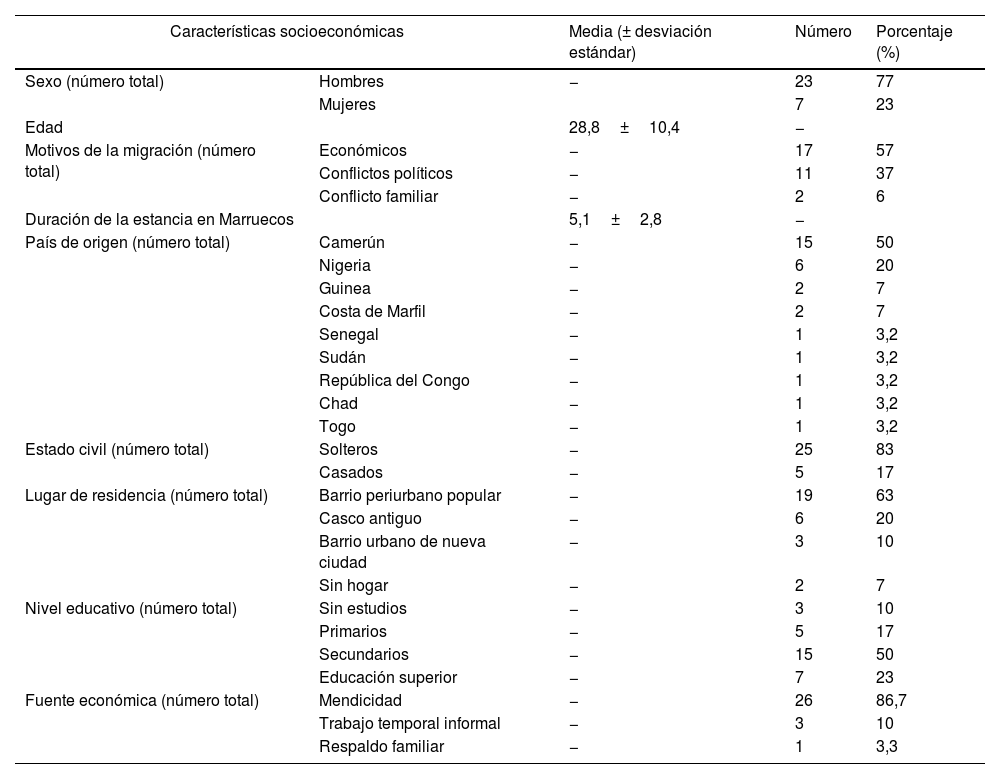
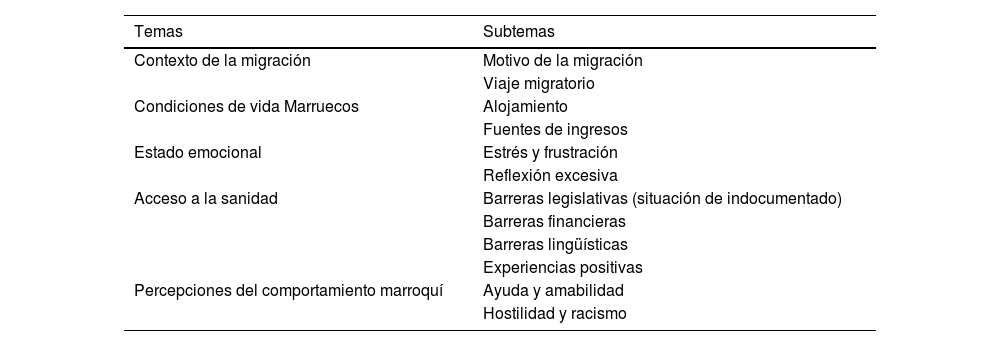
ResultadosLos participantes informaron haber enfrentado dificultades durante su trayecto migratorio (detenciones, malos tratos y lesiones). La pérdida del estatus social y las preocupaciones sobre el futuro son fuentes de estrés (19 de 30 encuestados). Veintiséis de los 30 encuestados se dedican a la mendicidad para ganar dinero. La accesibilidad financiera es la principal barrera para el acceso a la atención médica para estos migrantes. Los participantes señalaron un impacto positivo por el papel de la ONG en apoyar a los migrantes mediante servicios de salud y cubriendo parte de los costos de consultas y medicamentos. Para estos migrantes, la regularización de su estatus sigue siendo la única forma de alcanzar condiciones de vida óptimas.
ConclusiónEste estudio revela importantes obstáculos legales, lingüísticos y financieros para el acceso a la atención sanitaria de los migrantes indocumentados en Tetuán y destaca la urgente necesidad de esfuerzos en salud pública mediante una colaboración más estrecha entre los responsables políticos y las ONG.
Morocco, due to its geographical position, is experiencing a growing influx of irregular sub-Saharan migrants attempting to transit to Europe. This studY aims to identify the barriers that this population faces in accessing healthcare in city Tétouan of northern Morocco.
MethodA qualitative approach was employed, involving semi-structured interviews with 30 undocumented sub-Saharan migrants recruited through a non-governmental organization in city of Tétouan. Independent double-coding and an internal review of the transcripts were conducted to minimize subjective bias and strengthen the reliability of the findings. Recruitment via one NGO may have biased the sample and limited generalizability. Face-to-face interviews could also have introduced social desirability bias, affecting the accuracy of participant responses.
ResultsParticipants reported facing difficulties during their migratory journey (detentions, mistreatment, and injuries). The loss of social status and concerns about the future are sources of stress (19 out of 30 respondents). Twenty-six out of 30 respondents engage in begging to earn money. Financial accessibility is the main barrier to healthcare access for these migrants. Participants identified a positive impact from the role of the NGO in supporting migrants through healthcare services and covering part of the costs of consultations and medications. For these migrants, regularizing their status remains the only way to achieve optimal living conditions.
ConclusionThis study reveals major legal, language, and financial obstacles to healthcare for undocumented migrants in Tétouan and highlights the urgent need for public health efforts through stronger collaboration between policymakers and NGOs.

