

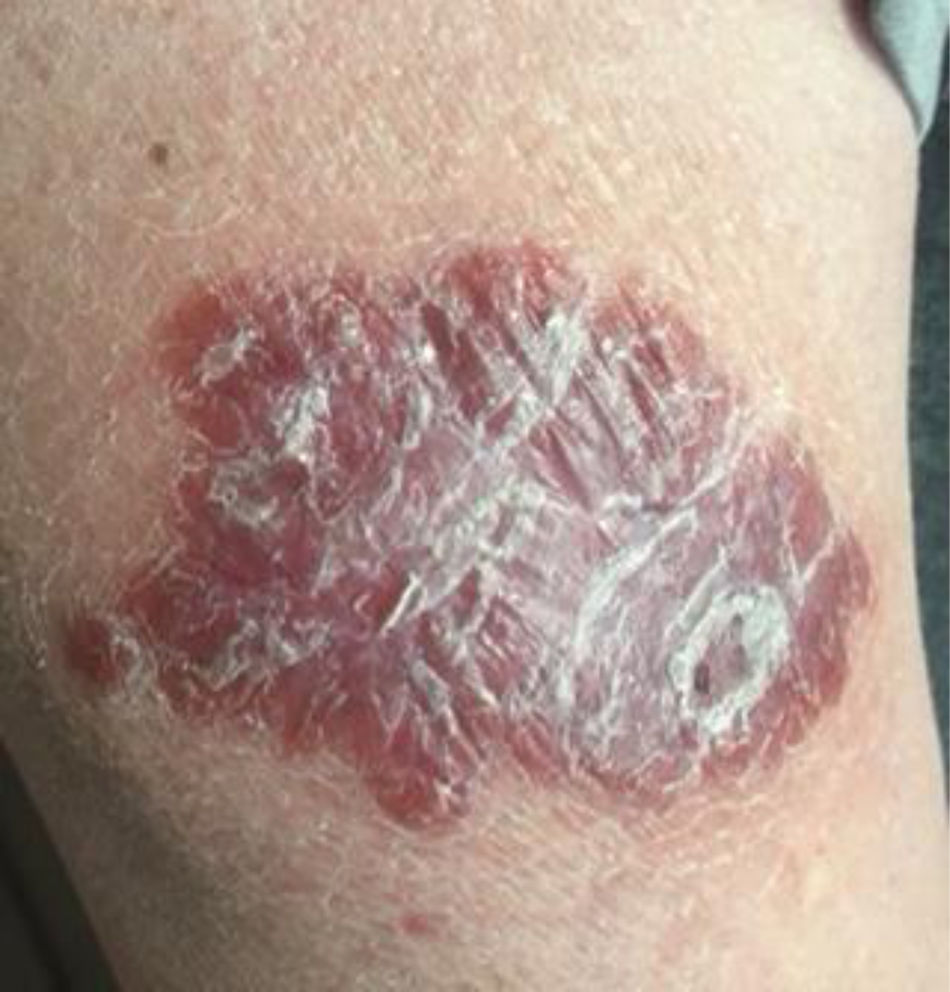
A 62-year-old male patient presented with a 30-year history of a progressively enlarging, non-pruritic, and painless lesion on the right arm. There was no history of fever, weight loss, anorexia, trauma, diabetes, immunosuppression, corticosteroid use, renal failure, recent tuberculosis (TB), or contact with TB. Upon physical examination, a BCG scar was noted on the skin over the left deltoid, while a brownish, indurated plaque measuring 6cm×10cm was observed on the right arm (Fig. 1). The patient reported that a variety of antibiotics were administered at different times, yet the skin lesion failed to regress. Radiographs of the chest demonstrated normal findings. Laboratory tests, including a complete blood count, C-reactive protein, erythrocyte sedimentation rate, biochemistry, and urinalysis revealed no abnormalities. Testing for HIV antibodies was also negative.
Diagnosis and evolution
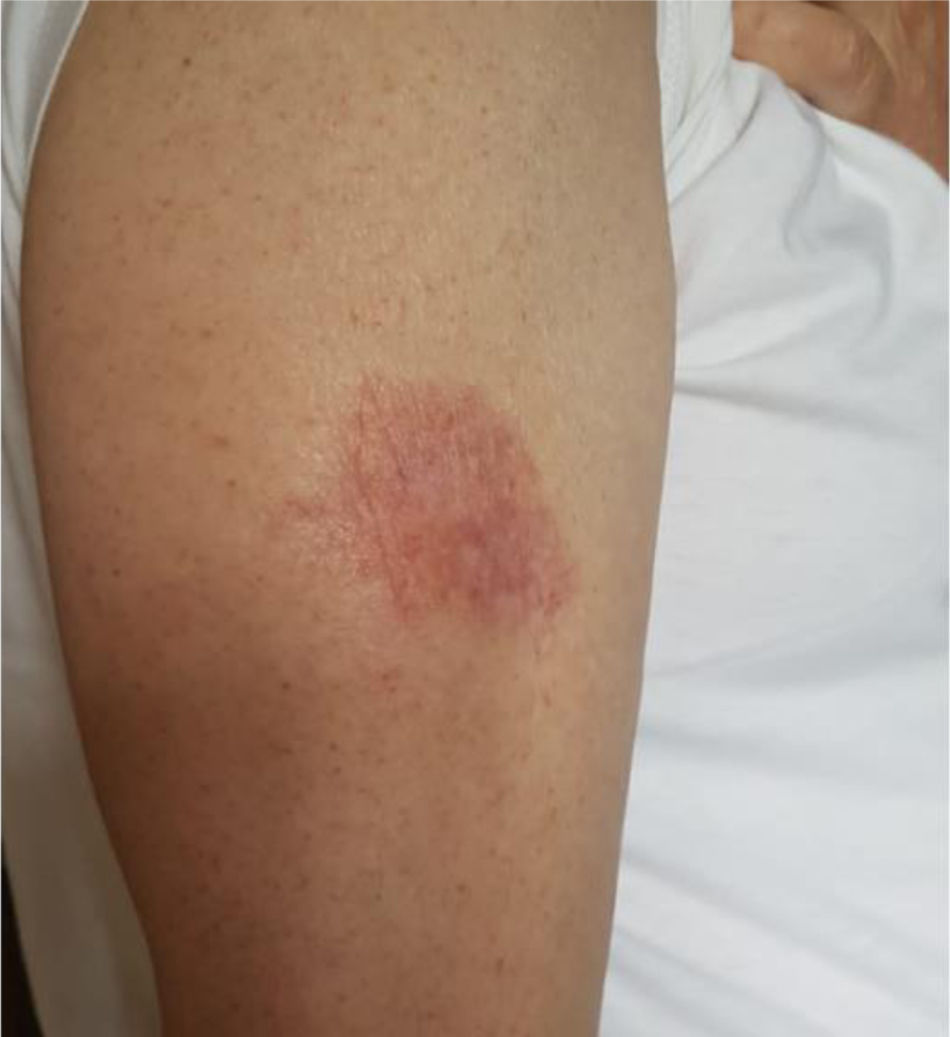
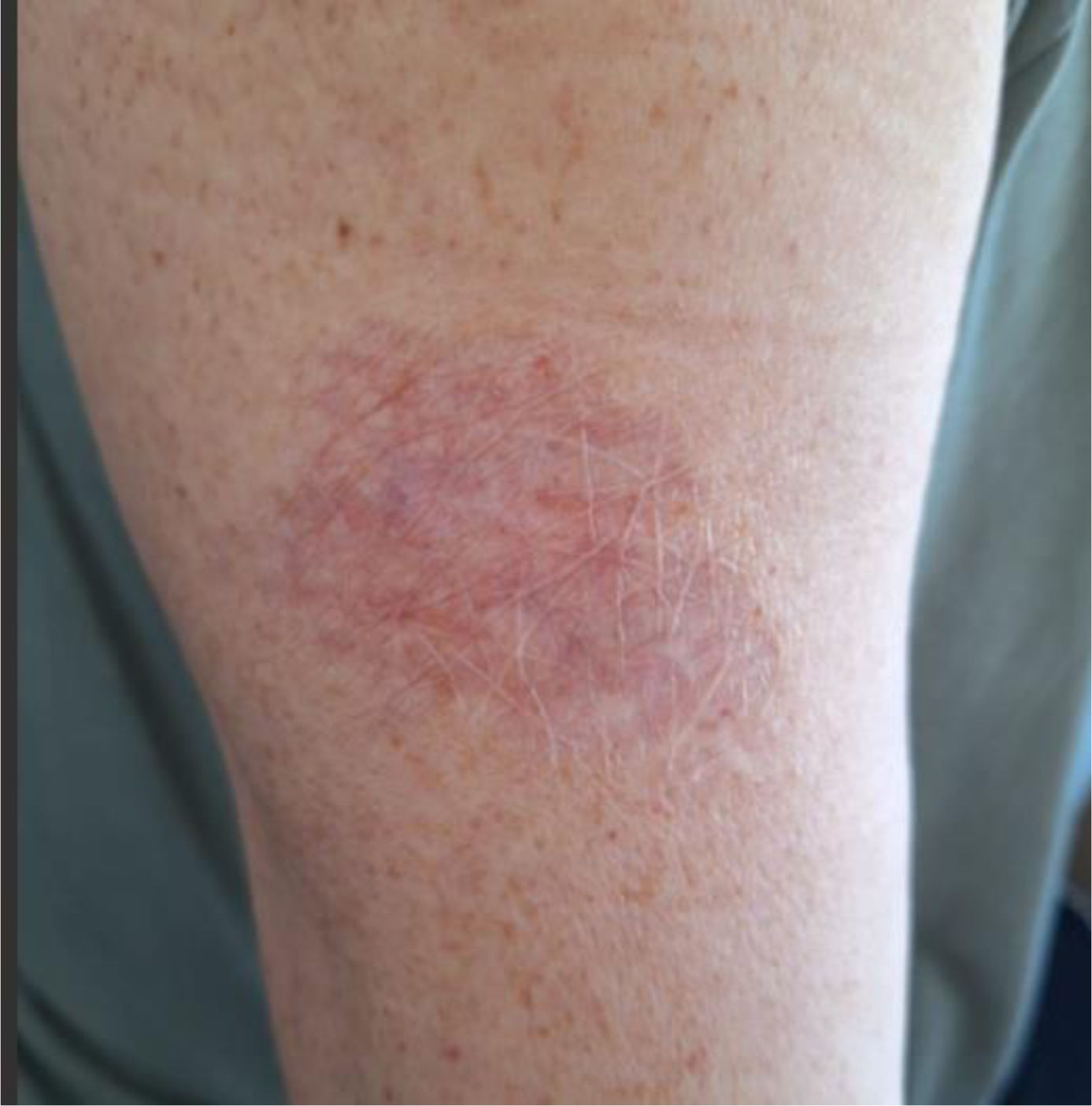
In the course of a comprehensive investigation, the tuberculin skin test (an induration of 20mm×20mm) and the interferon gamma release assay (T-SPOT.TB test) yielded positive results. The excisional biopsy of the lesion was reported as granulomatous dermatitis, which was compatible with TB. The presence of acid-fast bacilli was not observed in the granulomatous tissue using the Ehrlich–Ziehl–Neelsen smear. The GeneXpert MTB/RIF Ultra system was unable to detect DNA of the Mycobacterium tuberculosis complex from the tissue. Two weeks later, M. tuberculosis complex was grown in the automated BACTEC MGIT system (liquid media). Eventually, the patient was diagnosed with lupus vulgaris (LP) and was treated successfully with the traditional regimen (intensive phase: 2 months and maintenance phase: 4 months), which included the drugs isoniazid, rifampin, pyrazinamide, and ethambutol. During the initial three-month course of treatment, the lesions showed marked improvement (Fig. 2). The patient was observed for a total of five years and no recurrence was noted (Fig. 3).


In our case, the patient was diagnosed with the chronic skin lesion as LP based on microbiological and histopathological examinations of the materials. Cutaneous lesions are frequently caused by a variety of infectious agents, including mycobacteria, fungi, bacteria, and parasites. Such manifestations are frequently indicative of either localised or disseminated disease. The appearance of these lesions may be pathognomonic, but is often nonspecific. It is therefore crucial to perform a skin biopsy in order to reach a definitive diagnosis. A culture, microscopic, and histopathological examination of tissue samples is fundamental to the diagnostic process.
LP is one of the most prevalent forms of cutaneous tuberculosis. It can affect individuals of any age, with women being two to three times more likely than men to be affected.1 Lesions are often found on the head and neck, but rarely on the lower extremities or buttocks.1 Furthermore, tuberculin skin testing frequently yields positive results. LP is a chronic and progressive paucibacillary form of cutaneous TB, representing a reactivation of TB infection in individuals with immunity against the bacillus. If left untreated, lesions of LP tend to persist and may increase in enormous size over time.2,3 Squamous cell carcinoma may occasionally develop in such long-standing lesions. LP is challenging to distinguish from infectious and non-infectious entities, as both can manifest as infiltrated erythematous plaques. The most common differential diagnoses include leishmaniosis, leprosy, syphilitic gums, lymphoma, chronic cutaneous lupus erythematosus and sarcoidosis.4,5 Cutaneous leishmaniasis is a disease characterised by the appearance of papules at the site of the bite of the infected phlebotomine sandfly insect. These papules subsequently evolve into nodules and ulcers, which then spontaneously heal into atrophic cicatricial lesions. The diagnosis is confirmed by demonstrating the agent in tissue obtained by skin biopsy or special cultures. Sarcoidosis is a granulomatous disease of unknown aetiology, characterised by the presence of multiple skin-coloured, brown, yellowish or purplish macular or papular periorificial lesions on the face, as well as brown or purple infiltrative plaques of annular, polycyclic and serpentiginous form on the trunk, buttocks and extremities. These lesions typically present with mild central atrophy. It may be associated with general symptoms such as fever and arthralgias. The definitive diagnosis is made by skin biopsy. Tuberculoid leprosy is a disease caused by Mycobacterium leprae that affects the skin and cutaneous nerves and is characterised by hypopigmented, hypoesthetic macules of variable size, well defined, with raised erythematous–violaceous borders, atrophic central area and thickened peripheral nerves. Detection of the pathogen by direct visualisation or PCR confirms the diagnosis. Tertiary syphilis is a chronic systemic infection caused by Treponema pallidum. It presents with cutaneous, vascular and/or neurological involvement. Although rare, syphilitic gums are the main cutaneous manifestation, characterised by solitary painless nodular or papulosquamous plaques that may ulcerate, form circles or arcs, expand rapidly and heal without scarring. Diagnosis is based on clinical findings and confirmation by treponemal testing and skin biopsy. Cutaneous lymphomas are a group of lymphoproliferative disorders that first affect the skin and then the rest of the lymphoreticular system. The most common is mycosis fungoides, whose cutaneous manifestations are classified into patchy, plaque and tumour stages. Skin biopsy confirms the definitive diagnosis. Discoid lupus presents as round or oval, annular or polycyclic erythematous plaques with adherent keratotic scales and follicular plugging, which may develop into hypopigmented macules or atrophic scars. It is a chronic disease of autoimmune aetiology affecting only the skin. It can be triggered by sun exposure and its diagnosis is confirmed by histopathological examination.
As a conclusion, TB can present with a broad spectrum of clinical forms. In the differential diagnosis of subacute or chronic skin lesions that do not respond to antibiotics, skin TB should be considered as a potential diagnosis.
Conflicts of interestThere is no conflict of interest.