



Atherosclerosis is a multifactorial process underlying major cardiovascular diseases (CVDs). Among the associated risk factors, lipoprotein ratios have been identified as key indicators of atherogenic risk. However, the influence of sociodemographic variables, lifestyle factors, and stress levels on lipoprotein ratios remains underexplored.
ObjectiveTo analyze the relationship between sociodemographic variables, healthy lifestyle habits, and stress levels with lipoprotein ratios and atherogenic risk in a large cohort of Spanish workers.
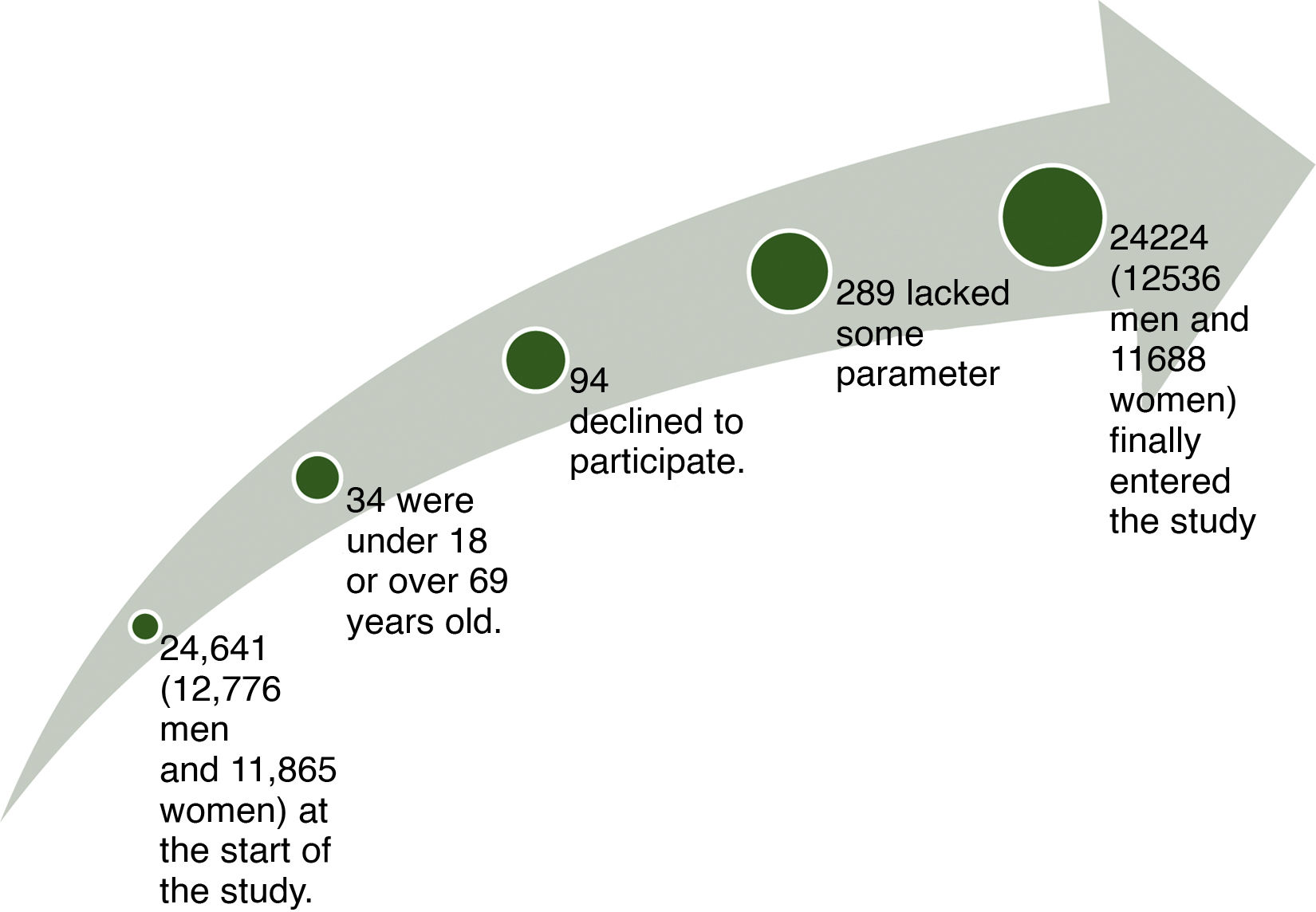
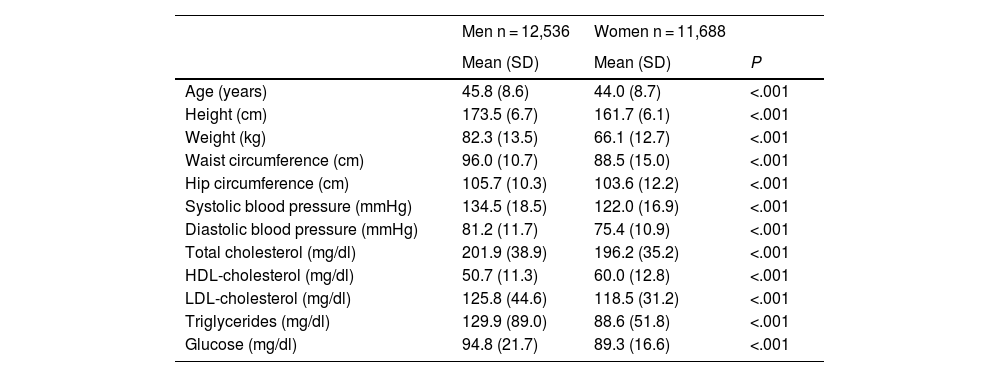
Materials and methodsA cross-sectional study was conducted in 24,244 Spanish workers. The association between age, gender, socioeconomic status, tobacco and alcohol consumption, physical activity, adherence to the Mediterranean diet, and stress levels with atherogenic risk scales, including atherogenic dyslipidemia (AD) and atherogenic indices, was evaluated.
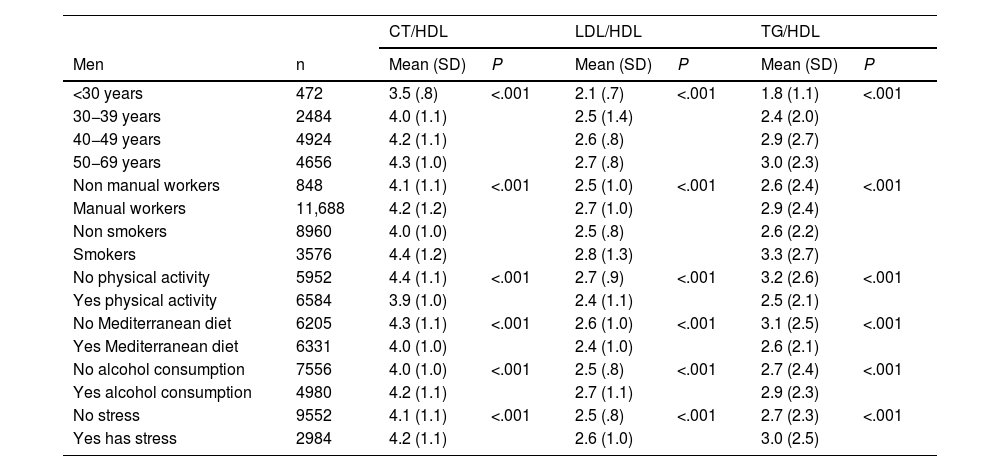
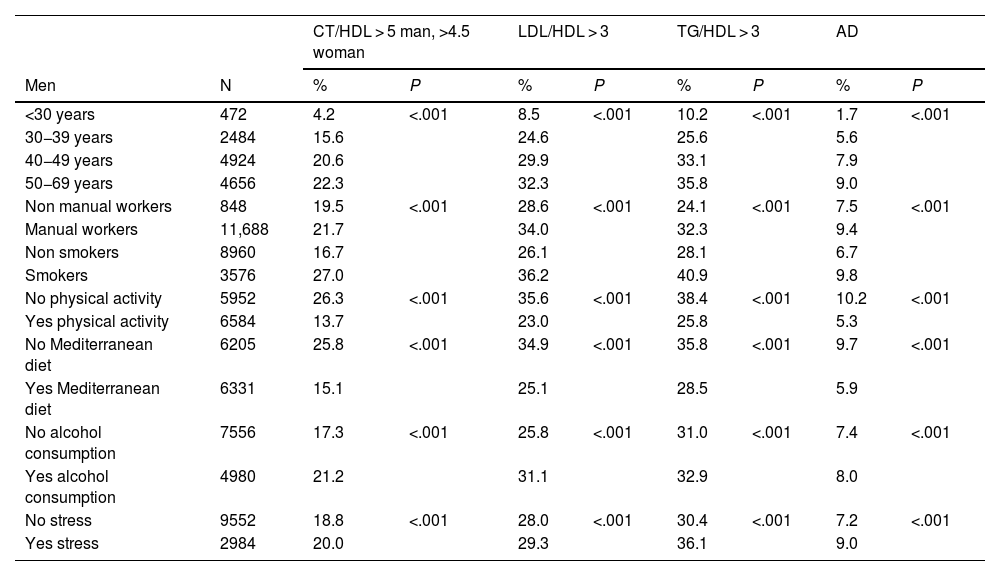
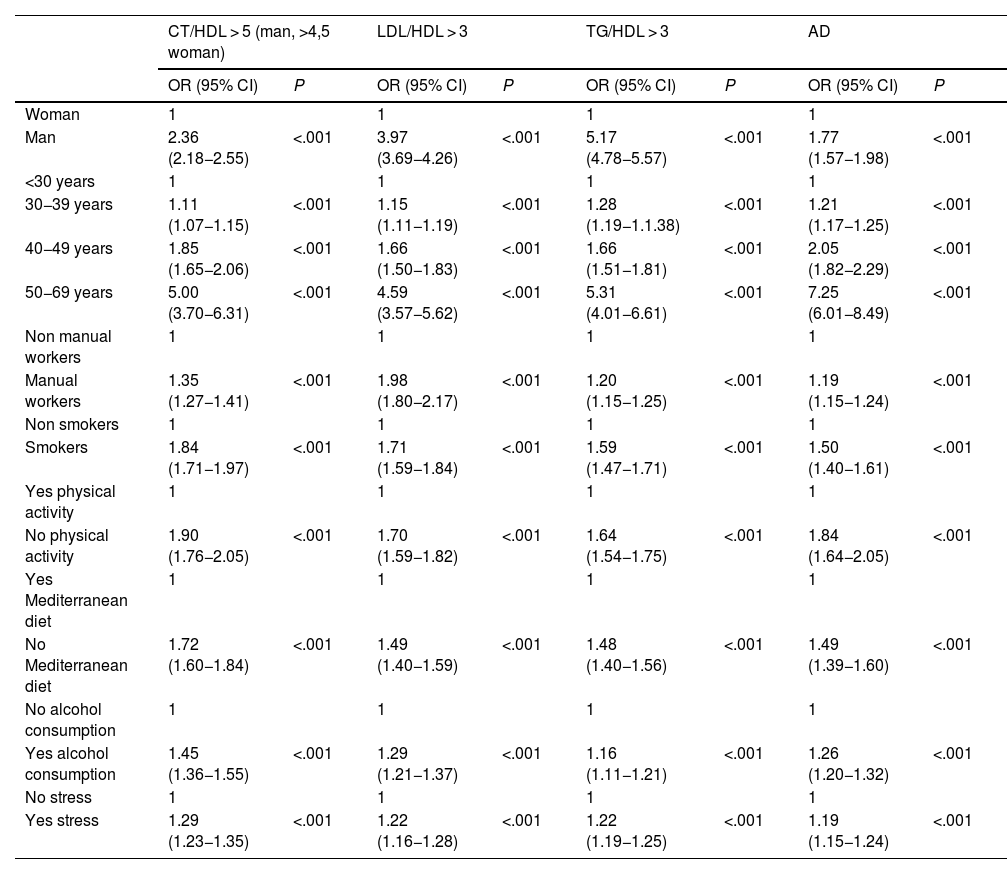
ResultsA significant association was found between all analyzed variables and lipoprotein ratios. The strongest associations were observed with age and gender, followed by occupational status, tobacco and alcohol consumption, physical activity, diet, and stress levels. Men exhibited a higher atherogenic risk compared to women (OR 2.36; 95% CI 2.18−2.55). The risk increased significantly with age, peaking in the 50−69 age group (OR 5.00; 95% CI 3.70−6.31). Manual workers had a higher prevalence of atherogenic dyslipidemia compared to non-manual workers (OR 1.35; 95% CI 1.27−1.41). Furthermore, smoking (OR 1.84; 95% CI 1.71−1.97) and alcohol consumption (OR 1.45; 95% CI 1.36−1.55), physical inactivity (OR 1.90; 95% CI 1.76−2.05), and low adherence to the Mediterranean diet (OR 1.72; 95% CI 1.60−1.84) were associated with higher atherogenic index values.
ConclusionsThe presence of an adverse lipoprotein profile is strongly influenced by sociodemographic factors, lifestyle habits, and stress. Identifying these determinants may enable the implementation of preventive strategies aimed at reducing atherogenic risk and improving cardiovascular health in working populations.
La aterosclerosis es un proceso multifactorial subyacente a las principales enfermedades cardiovasculares (ECV). Entre los factores de riesgo asociados, los perfiles lipoproteicos han demostrado ser indicadores clave del riesgo aterogénico. Sin embargo, la influencia de variables sociodemográficas, estilos de vida y niveles de estrés sobre los cocientes lipoproteicos requiere una mayor investigación.
ObjetivoAnalizar la relación entre variables sociodemográficas, hábitos de vida saludables y niveles de estrés con los cocientes lipoproteicos y el riesgo aterogénico en una amplia cohorte de trabajadores españoles.
Material y métodosSe realizó un estudio transversal en 24.244 trabajadores españoles. Se evaluó la asociación entre edad, género, estatus socioeconómico, consumo de tabaco y alcohol, actividad física, adherencia a la dieta mediterránea y niveles de estrés con diferentes escalas de riesgo aterogénico, incluidas la dislipemia aterogénica (DA) y los índices aterogénicos.
ResultadosSe identificó una asociación significativa entre todas las variables analizadas y los cocientes lipoproteicos. Las asociaciones más robustas se observaron con la edad y el género, seguidas por el tipo de ocupación, el consumo de tabaco y alcohol, la actividad física, la dieta y los niveles de estrés. Los hombres presentaron un mayor riesgo aterogénico en comparación con las mujeres (OR 2,36; IC 95% 2,18–2,55). El riesgo se incrementó significativamente con la edad, siendo más elevado en el grupo de 50–69 años (OR 5,00; IC 95% 3,70–6,31). Los trabajadores manuales mostraron una mayor prevalencia de dislipemia aterogénica en comparación con los no manuales (OR 1,35; IC 95% 1,27–1,41). Además, el consumo de tabaco (OR 1,84; IC 95% 1,71–1,97) y alcohol (OR 1,45; IC 95% 1,36–1,55), la inactividad física (OR 1,90; IC 95% 1,76–2,05) y la baja adherencia a la dieta mediterránea (OR 1,72; IC 95% 1,60–1,84) se asociaron con valores elevados de los índices aterogénicos.
ConclusionesLa presencia de un perfil lipoproteico adverso está fuertemente influenciada por factores sociodemográficos, estilos de vida y estrés. La identificación de estos determinantes puede permitir la implementación de estrategias preventivas dirigidas a reducir el riesgo aterogénico y mejorar la salud cardiovascular en poblaciones trabajadoras.
