



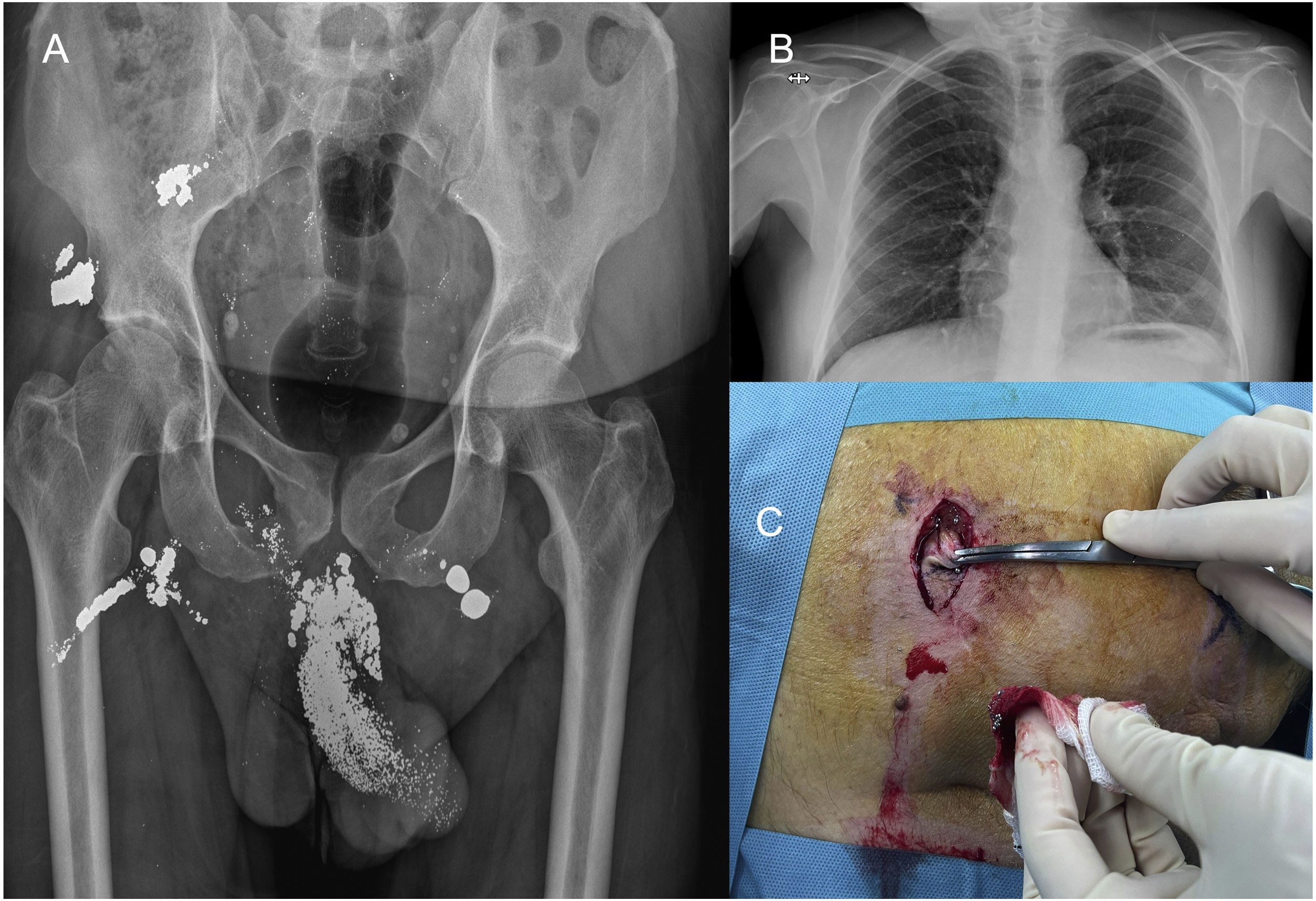
The patient is a 39-year-old male, under guardianship due to mental disability, who came to the hospital after intentional self-injection of elemental mercury in the gluteal and penile regions. Radiography revealed several images of metallic density in the corpora cavernosa, bilateral internal obturator region, ischioanal fossa, gluteal region, and sacral canal (Fig. 1A). Urinary mercury concentration was 2204 μg/L (normal <20 μg/L). Chelation therapy with Succicaptal was initiated. On day 7, the patient presented mercury deposits in the thorax due to hematogenous dissemination (B). To reduce the toxic load, we performed excision of the gluteal and ischioanal mercury deposits after prior labeling by ultrasound (C). The postoperative urine concentration was 1476 μg/L.
Impact factor
The Impact Factor measures the average number of citations received in a particular year by papers published in the journal during the two preceding years.
© Clarivate Analytics, Journal Citation Reports 2025
Impact factor 2024
1.3
Citescore 2024
1.0
SJR
SRJ is a prestige metric based on the idea that not all citations are the same. SJR uses a similar algorithm as the Google page rank; it provides a quantitative and qualitative measure of the journal's impact.
See moreSJR 2024
0.233
SNIP
SNIP measures contextual citation impact by wighting citations based on the total number of citations in a subject field.
See moreSNIP 2024
0.377
View more metrics

