

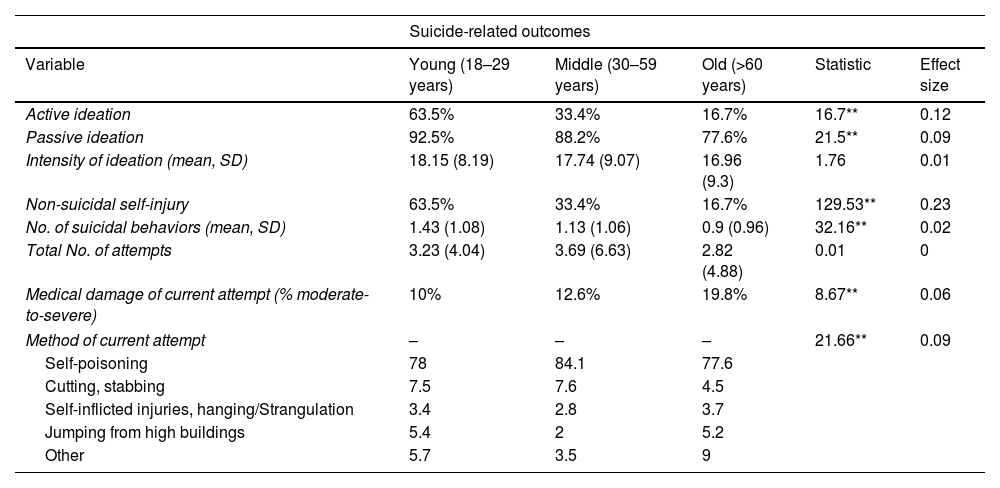
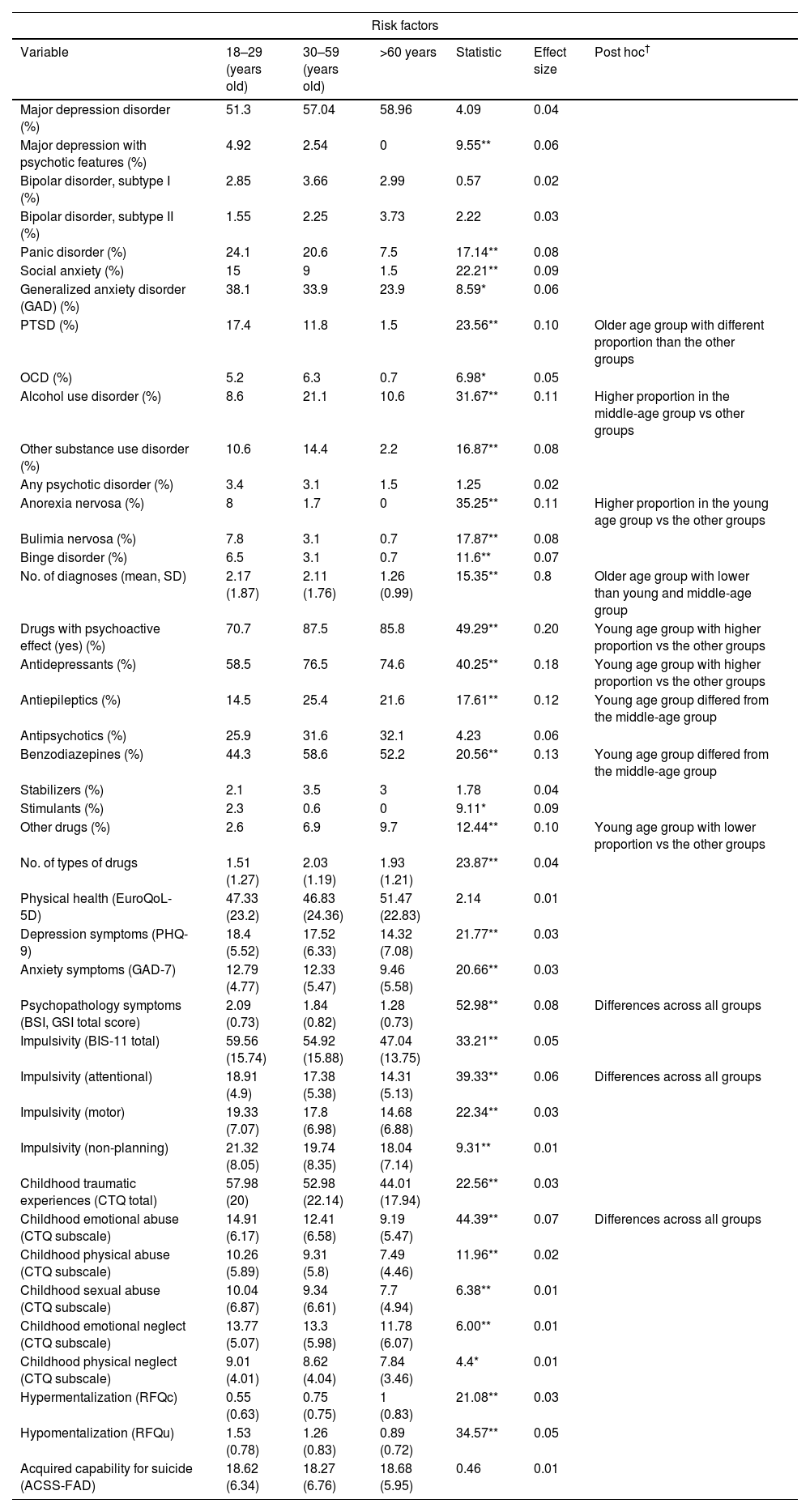
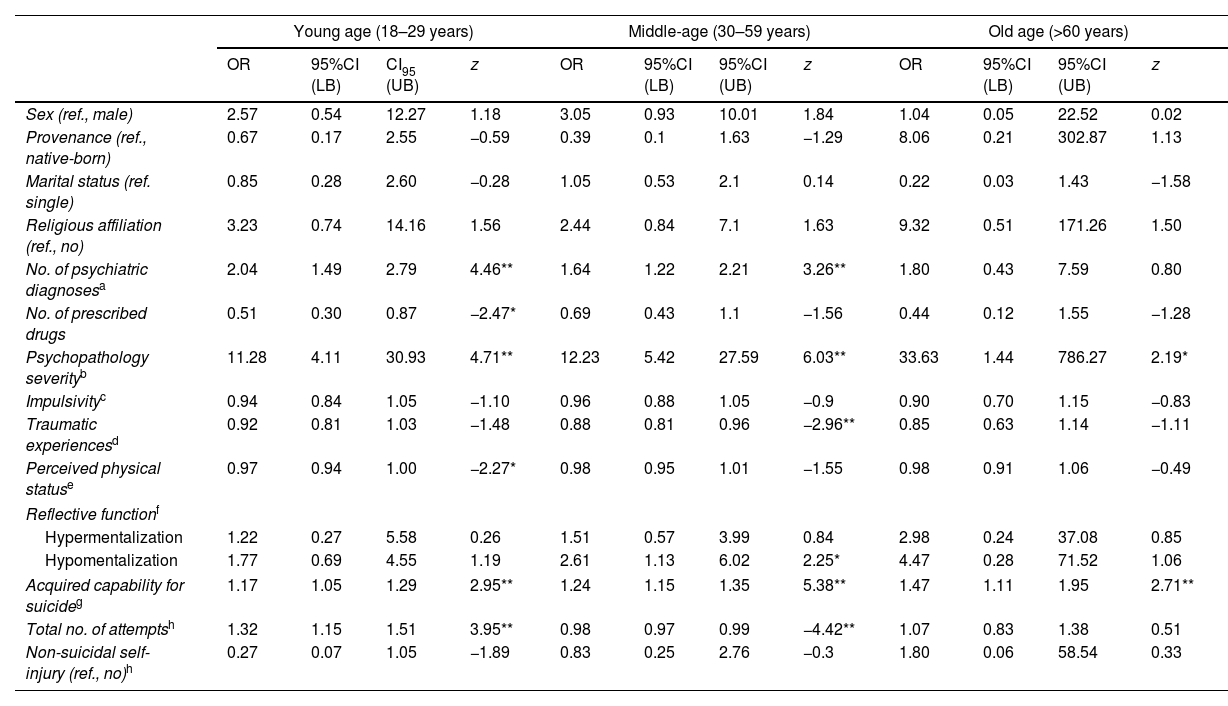
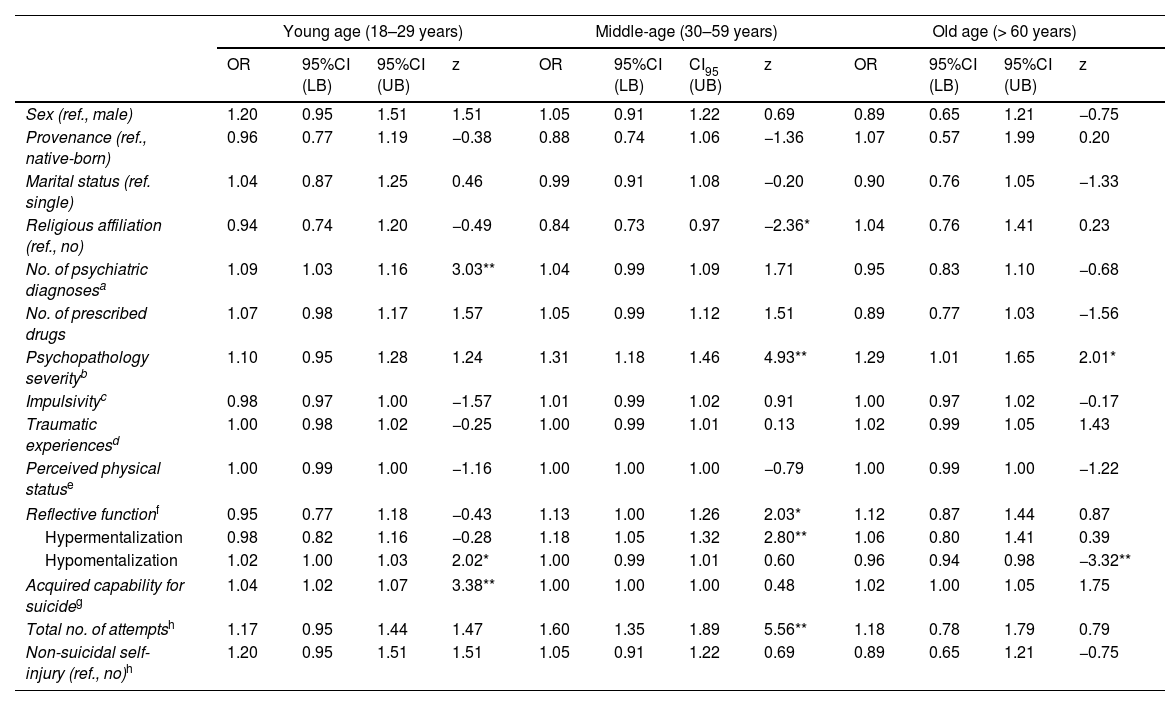
Suicide is a leading cause of mortality worldwide, with approximately 27% of deaths by suicide occurring in individuals older than 70 years. Suicide attempts in older adults are more likely to be fatal and are typically more premeditated than impulsive. The objective of this study was to identify key sociodemographic and clinical characteristics of older adults who recently attempted suicide.
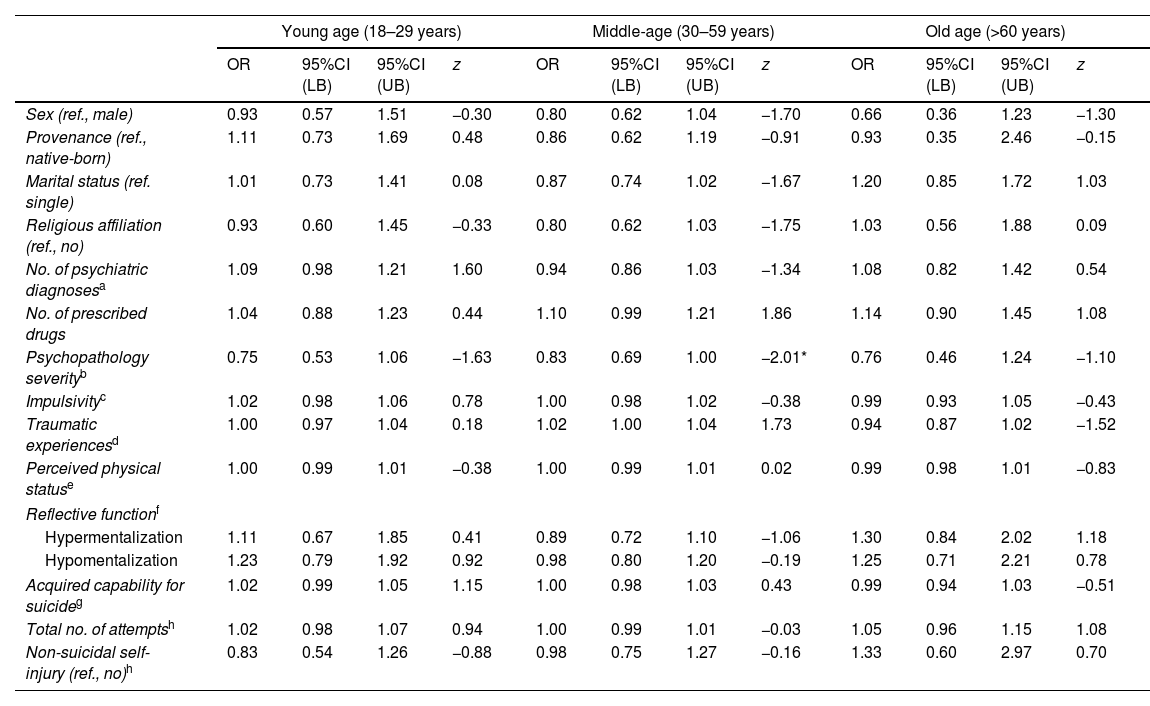
Material and methodsThe total sample included 1336 adult patients, categorized into 3 groups (young, middle-aged, and elderly group), who had attended the emergency room with a suicide attempt. An analysis was performed using Chi-square tests and ANOVA for risk factors, to study the relationships among suicidal ideation, behavior, psychiatric symptoms, impulsivity and childhood trauma. Similarly, to compare inter-group risk factors and suicidal behavior, multigroup path analysis was used.
ResultsThe older group stood out in lower levels of suicidal ideation, self-harm, trauma and impulsivity. Similarly, they showed higher levels of hypermentalization, greater medical damage after the suicide attempt and fewer psychiatric diagnoses, than the patients from the other age groups.
ConclusionsAlthough older people have fewer clinical symptoms and risk factors, their attempts are more severe. Preventing suicide in older people is complex, being a very vulnerable period, where there are unique risk factors, making it necessary to develop new effective interventions to prevent suicide in this neglected population.
Article
(Sociedad Española de Psiquiatría y Salud Mental)
Diríjase al área de socios de la web de la SEPSM, (https://sepsm.org/revista/) y autentifíquese.