



To determine whether the implementation of a blood conservation programme, and the adoption and progressive association of different methods, reduces transfusion requirements in paediatric patients undergoing scoliosis surgery of different origins.
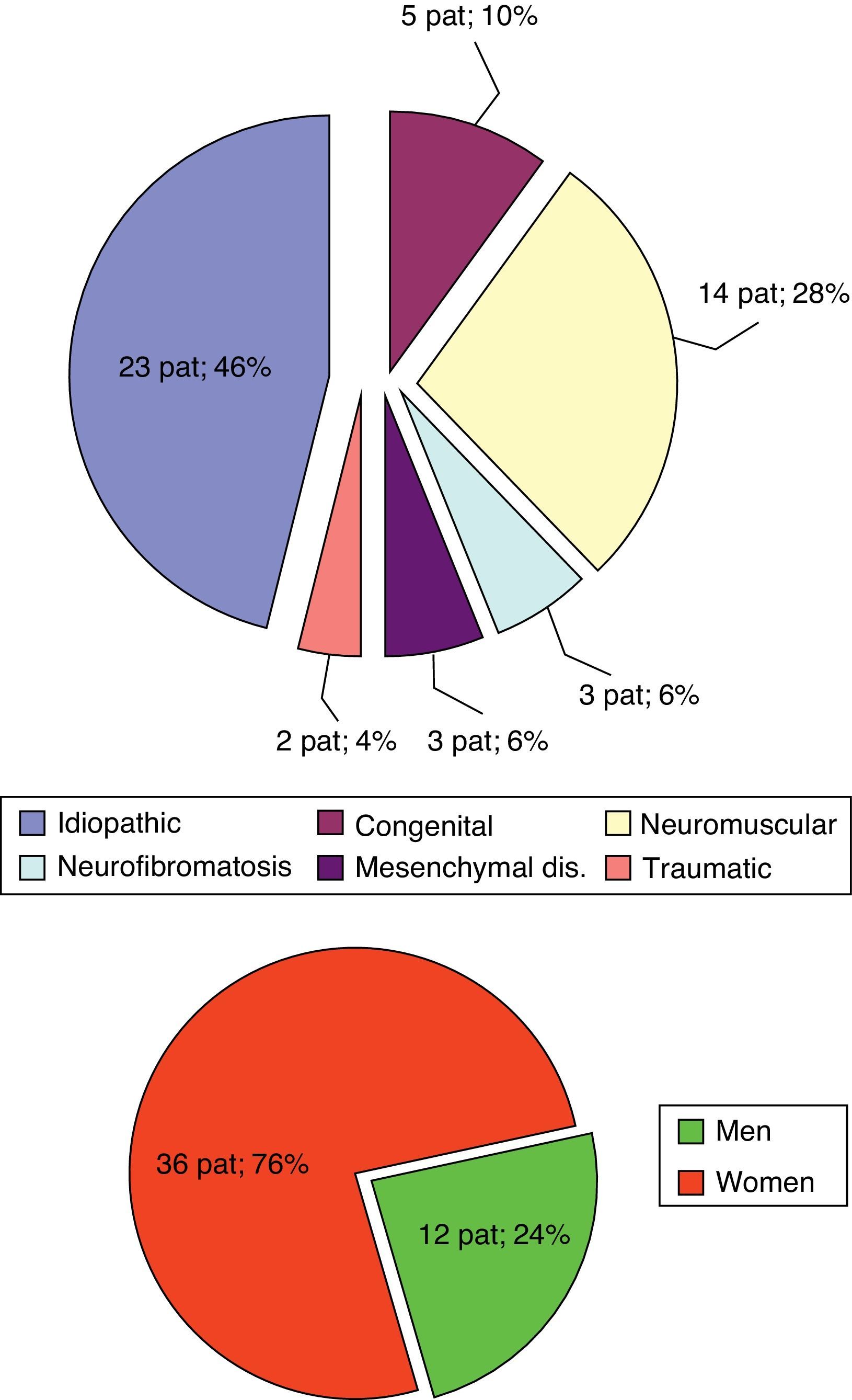
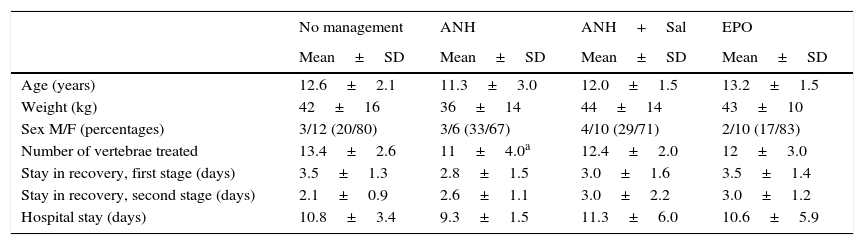
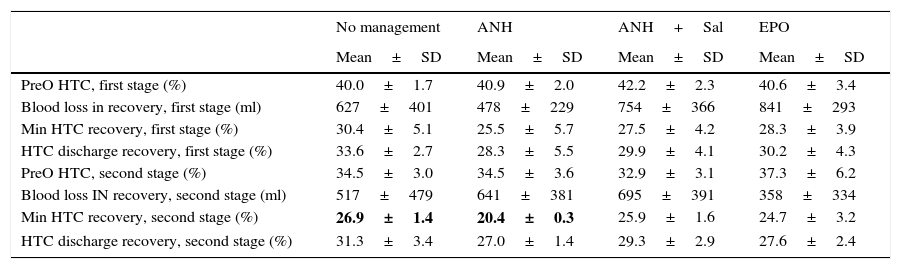
Material and methodQuasi-experimental, nonrandomized, descriptive study, approved by the Ethics Committee for Research of our institution. 50 paediatric patients (ASA I-III) aged 5–18 years, undergoing scoliosis surgery of any aetiology by a single posterior or double approach (anterior and posterior) were included. A historical group with no alternatives to transfusion: Group No ahorro=15 patients (retrospective data collection) was compared with another 3 prospective study groups: Group HNA (acute normovolemic hemodilution)=9 patients; Group HNA+Rec (intraoperative blood salvage)=14 patients, and Group EPO (HNA+Rec+erythropoietin±preoperative donation)=12 patients; according with the implementation schedule of the transfusion alternatives in our institution.
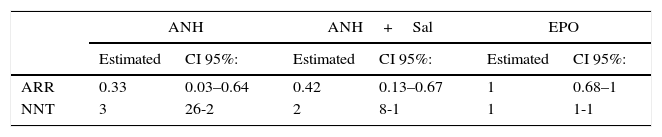
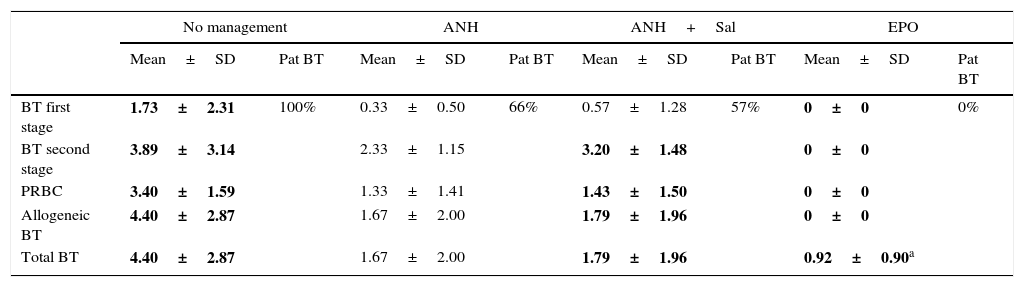
ResultsThe rate of transfusion in different groups (No ahorro, HNA, HNA+Rec, EPO) was 100, 66, 57, and 0% of the patients, respectively, with a mean±SD of 3.40±1.59; 1.33±1.41; 1.43±1.50; 0±0 RBC units transfused per patient, respectively. Statistically significant differences (p<.001) were found in both the transfusion rate and number of RBC units.
ConclusionsThe application of a multimodal blood transfusion alternatives programme, individualised for each paediatric patient undergoing scoliosis surgery can avoid transfusion in all cases.
Determinar si la puesta en marcha de un programa de ahorro de sangre y la adopción y asociación progresiva de diferentes métodos reducen las necesidades transfusionales en pacientes pediátricos intervenidos de escoliosis de múltiples etiologías.
Material y métodoEstudio cuasiexperimental, no aleatorizado y descriptivo, aprobado por el Comité de Ética para la Investigación de nuestra institución. Se incluyeron 50 pacientes pediátricos (ASA I-III) de edades comprendidas entre los 5 y los 18 años, intervenidos de cirugía de escoliosis de cualquier etiología mediante un único tiempo posterior o doble abordaje, anterior y posterior. Se compararon un grupo histórico (recogida retrospectiva de datos), sin alternativas a la transfusión (Grupo No ahorro=15 pacientes), y otros 3 grupos prospectivamente: Grupo HNA (hemodilución normovolémica aguda)=9 pacientes, Grupo HNA+Rec (recuperación intraoperatoria)=14 pacientes, Grupo EPO (HNA+Rec+eritropoyetina±donación preoperatoria)=12 pacientes, conforme se implementaron las diferentes alternativas a la transfusión en nuestra institución.
ResultadosLa tasa de transfusión en los diferentes grupos (No ahorro, HNA, HNA+Rec, EPO) fue del 100, 66, 57 y 0% de los pacientes, con una media±DE de 3,40±1,59; 1,33±1,41; 1,43±1,50; 0±0 unidades de CH transfundidas por paciente, respectivamente, con diferencias estadísticamente significativas (p<0,001) tanto en la tasa de transfusión como en el número de unidades.
ConclusionesLa aplicación de un programa multimodal de alternativas a la transfusión sanguínea en cirugía de escoliosis pediátrica, individualizado para cada paciente, puede evitar la transfusión en la práctica totalidad de los casos.

