



To describe the ultrasound characteristics of axillary lymph nodes in healthy individuals and analyse how these characteristics vary with age.
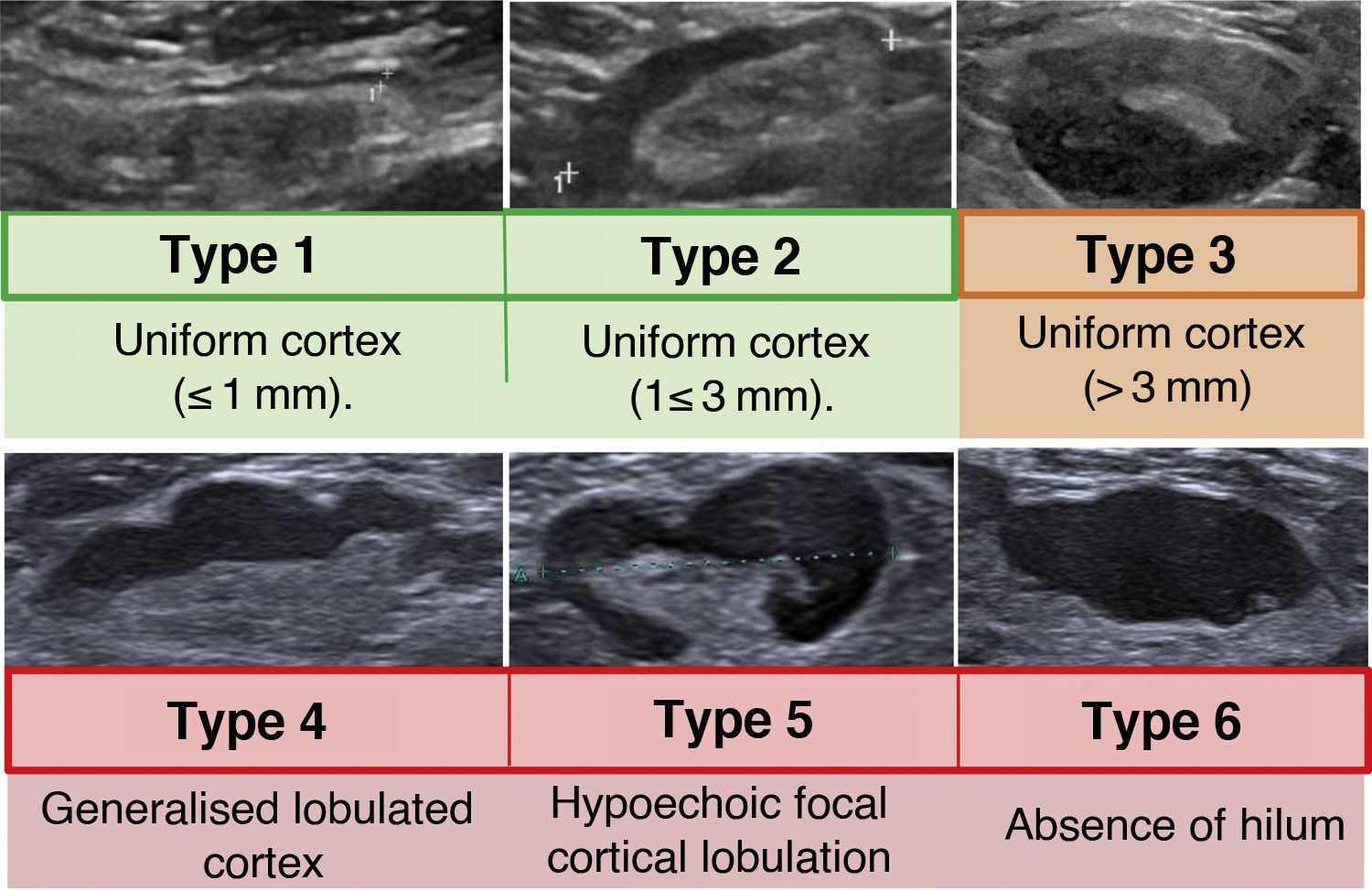
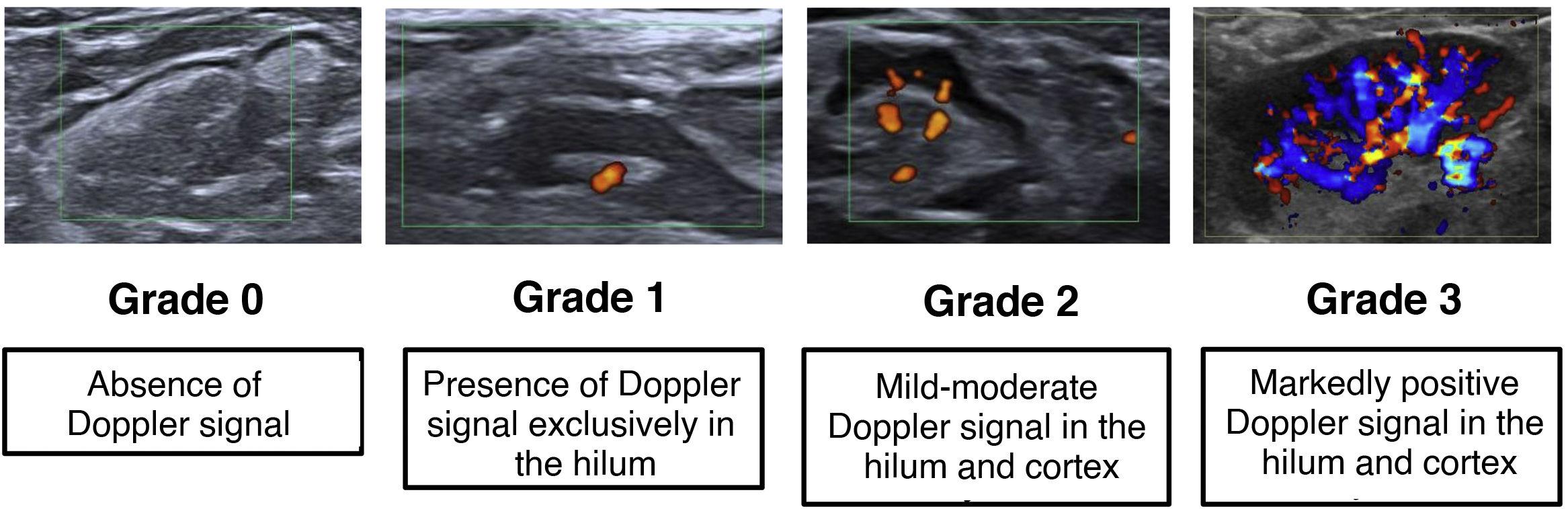
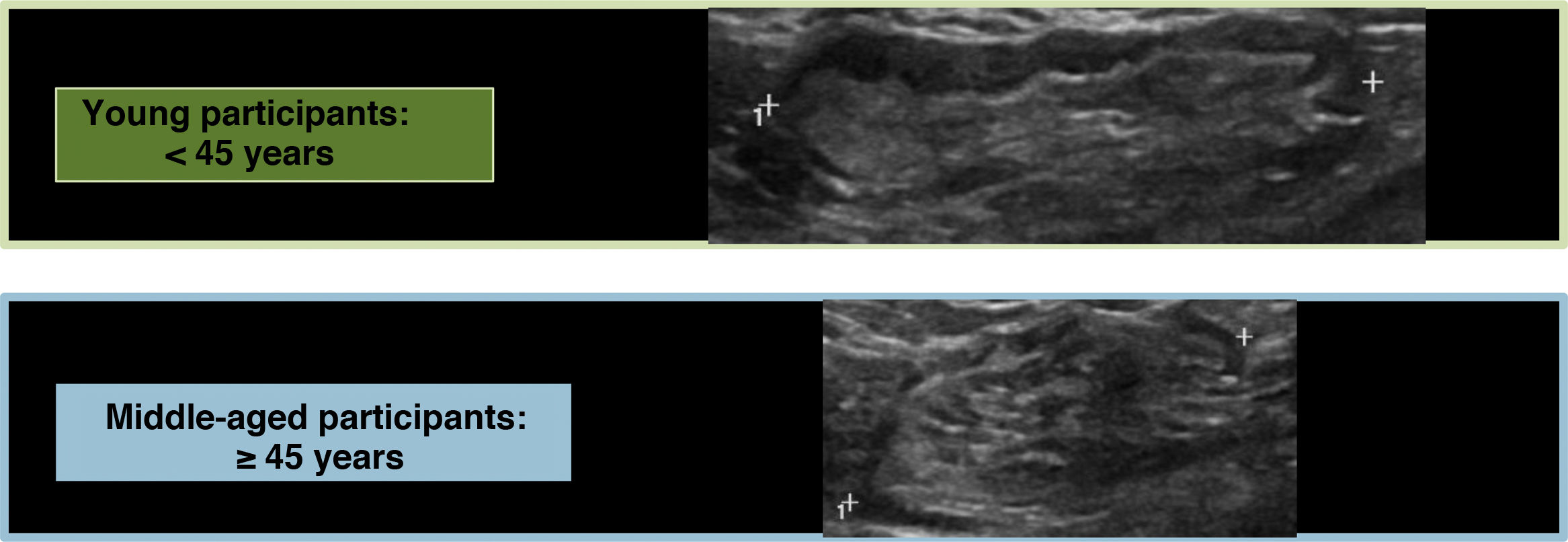
MethodsBetween February and April 2021, we enrolled a total of 91 healthcare professionals from our centre with no relevant medical history. All participants underwent an axillary ultrasound before participating in the COVID-19 vaccination campaign. The following parameters were recorded: total number of visible lymph nodes, maximum longitudinal diameter and cortical thickness, Bedi classification, and signal intensity on colour Doppler evaluation. We compared the data collected between two age groups [young (<45 years) vs middle-aged (≥45 years)] using the Student’s t-test for continuous quantitative variables and the Mann-Whitney U test for ordinal variables. Variables with a p-value < 0.05 were considered statistically significant.
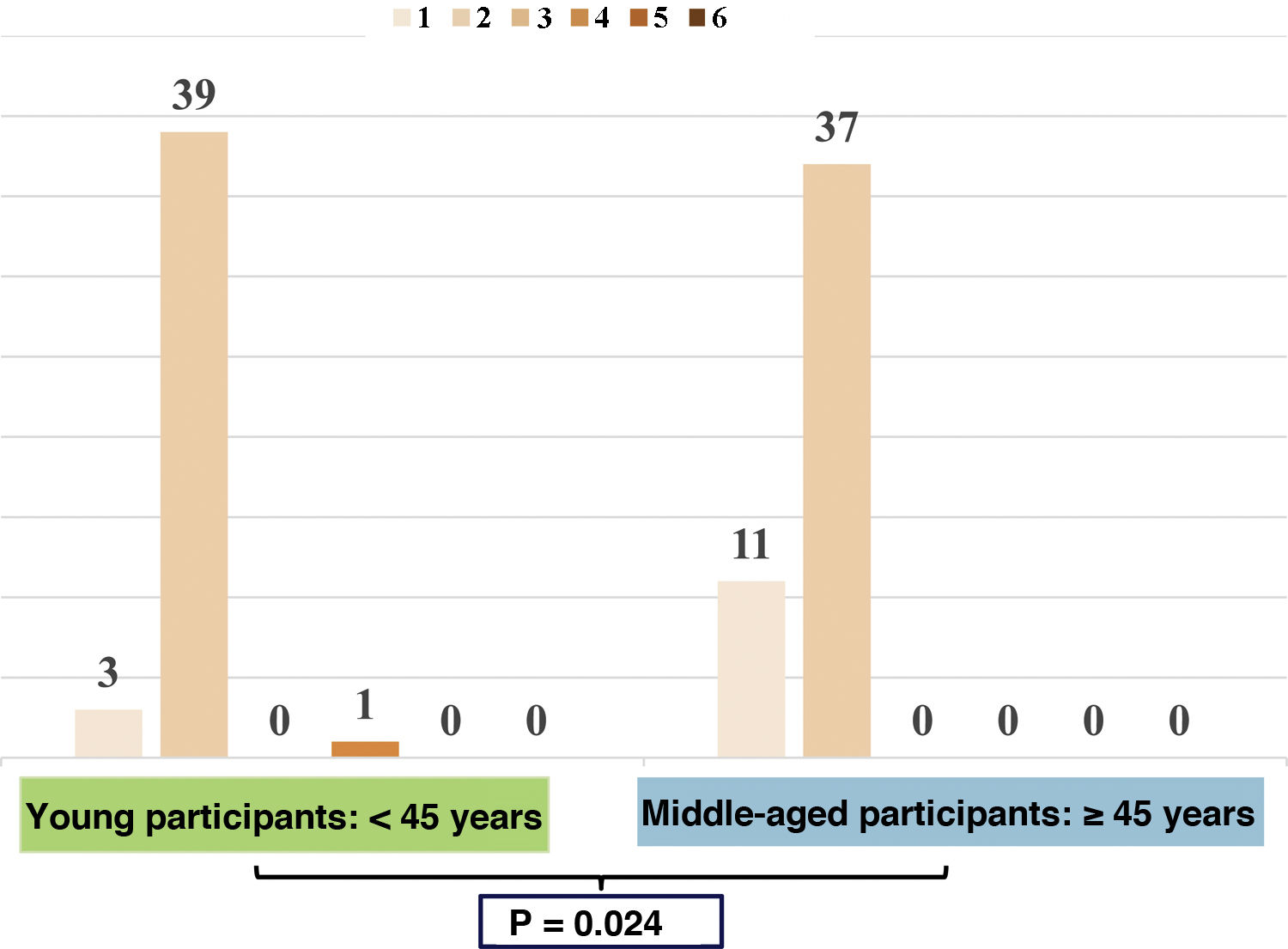
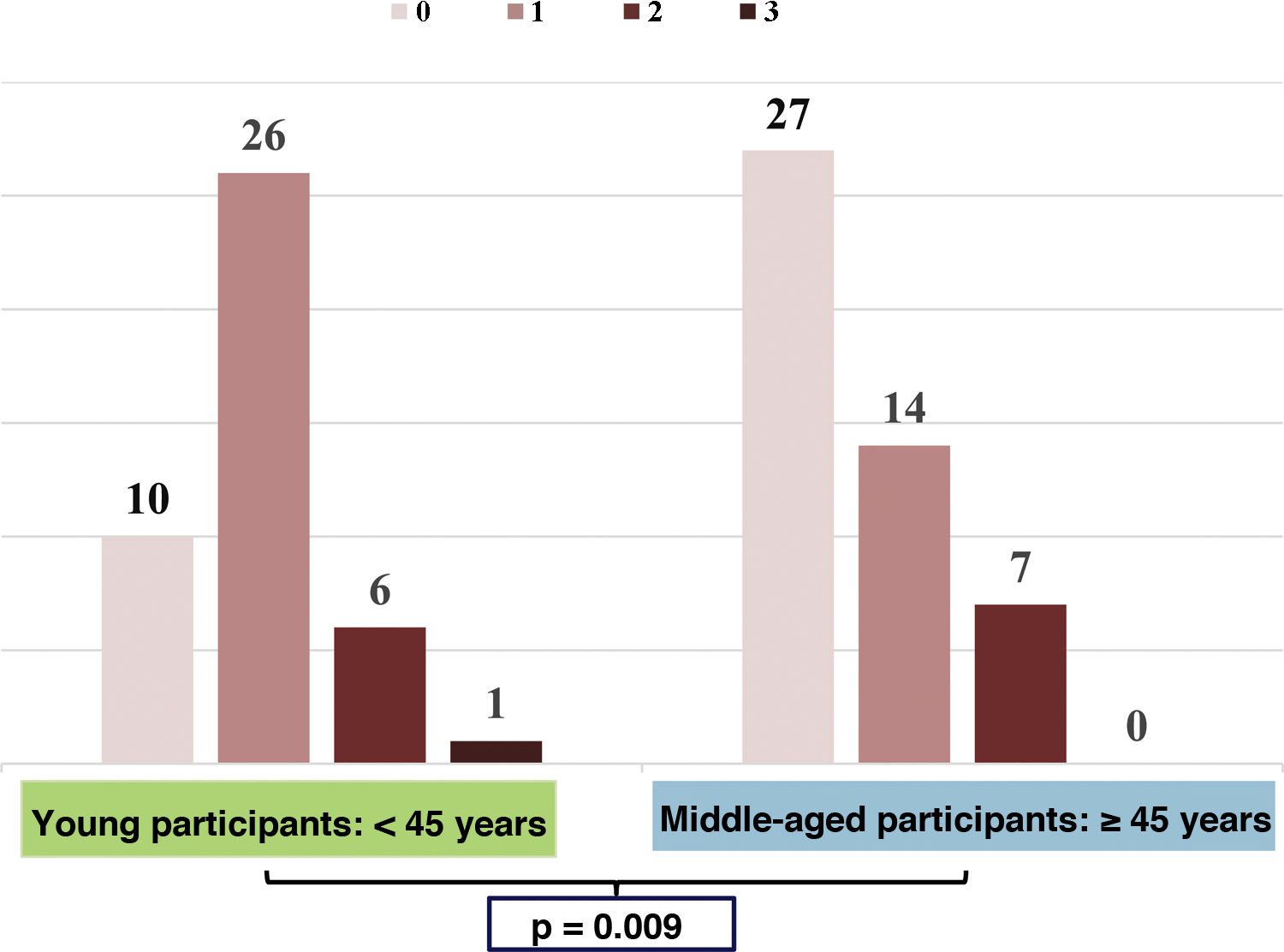
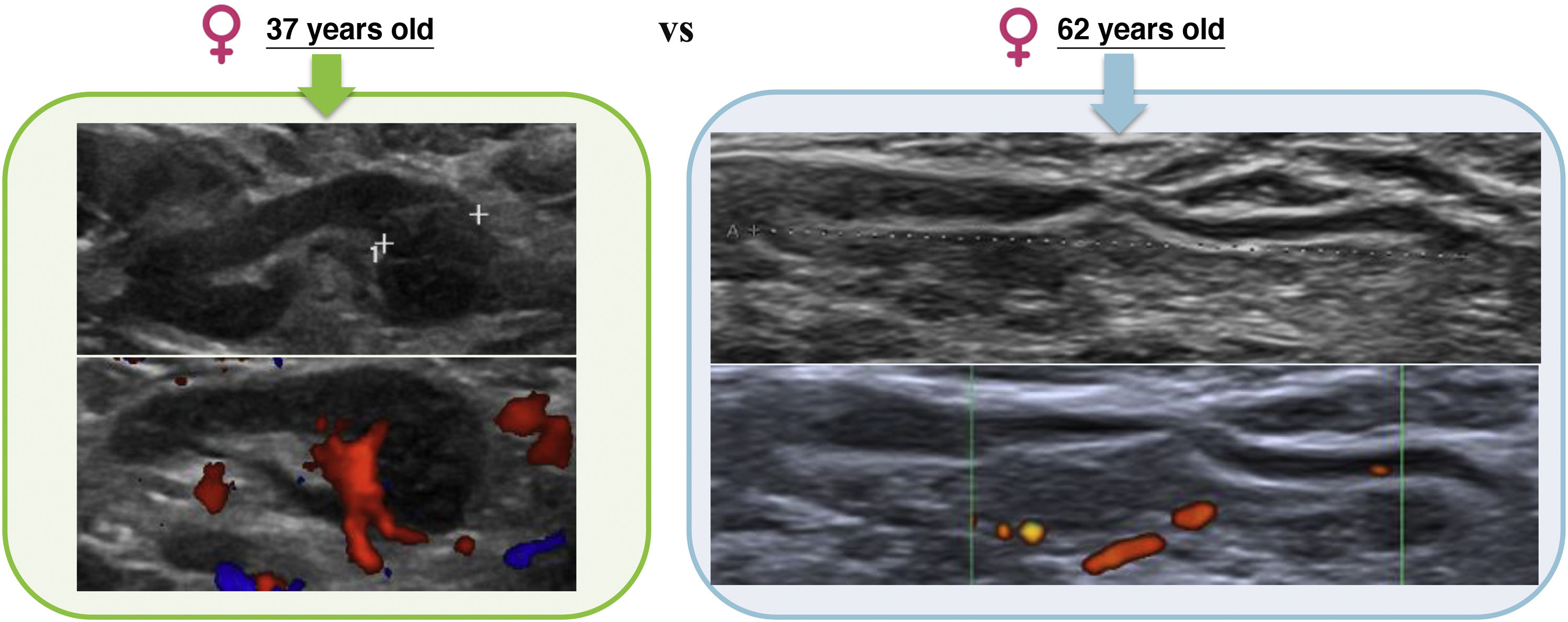
ResultsAn average of 2.96 lymph nodes was observed, with mean maximum longitudinal diameter and cortical thickness of 15.8 mm and 1.6 mm, respectively. Regarding the Bedi classification and colour Doppler scale, types 2 and 1 were the most common. A comparative analysis between the two age groups showed significantly higher values for cortical thickness, Bedi classification, and colour Doppler classification in the younger volunteers (p < 0.05).
ConclusionsOur study highlights the radiological differences between lymph nodes in young and middle-aged volunteers under baseline conditions, emphasizing the importance of careful assessments of borderline-appearing nodes in older patients, especially in oncological contexts.
Describir las características ecográficas de los ganglios linfáticos axilares en individuos sanos y analizar si éstas varían en función de la edad.
MétodosEntre febrero y abril de 2021, se reclutó a un total de 91 profesionales sanitarios de nuestro centro sin antecedentes médicos de interés. A todos ellos se les realizó una ecografía axilar antes de su participación en la campaña de vacunación frente al COVID-19. Se registraron los siguientes parámetros: número total de ganglios visibles, diámetro longitudinal y grosor cortical máximos, clasificación de Bedi e intensidad de señal en el estudio Doppler colour. Los datos recopilados se compararon entre dos grupos de edad diferentes [jóvenes (<45 años) vs mediana edad (≥45 años)] utilizando la prueba t de Student para variables cuantitativas continuas y la prueba de U de Mann-Whitney para variables ordinales. Se consideraron estadísticamente significativas las variables con un valor de p < 0,05.
ResultadosSe observó un promedio de 2,96 ganglios visibles con una media de diámetro longitudinal y grosor cortical máximos de 15,8 mm y 1,6 mm, respectivamente. En cuanto a la clasificación de Bedi y la escala Doppler colour, los tipos 2 y 1 fueron los más frecuentes. El análisis comparativo entre los dos grupos de edad evidenció valores significativamente más altos para el grosor cortical, la clasificación de Bedi y la escala Doppler colour en los voluntarios más jóvenes (p < 0,05).
ConclusionesNuestro estudio destaca las diferencias semiológicas entre los ganglios linfáticos de voluntarios jóvenes y de mediana edad en condiciones basales, subrayando la importancia de evaluar con más atención los ganglios de apariencia border-line en pacientes mayores, especialmente en contextos oncológicos.


