

metricas
covid
Radiología (English Edition) The use of imaging tests in paediatric button battery ingestion complications
Journal Information
Update in Radiology
Available online 16 October 2025
The use of imaging tests in paediatric button battery ingestion complications
Utilidad de las pruebas de imagen en las complicaciones por la ingestión de pilas de botón en niños
N.M. Buitrago Sáncheza,
Corresponding author
, G. Serra del Carpiob, C. Oterino Serranoa, E. Alonso Gamarraa, M. Bret Zuritaa, M. Parrón Pajaresa
a Sección de Radiología Pediátrica, Servicio de Radiodiagnóstico, Hospital Universitario La Paz, Madrid, Spain
b Servicio de Radiodiagnóstico, Hospital Universitario La Paz, Madrid, Spain
Article information
Abstract
Full Text
Bibliography
Download PDF
Statistics
Figures (9)
Show moreShow less
Tables (3)
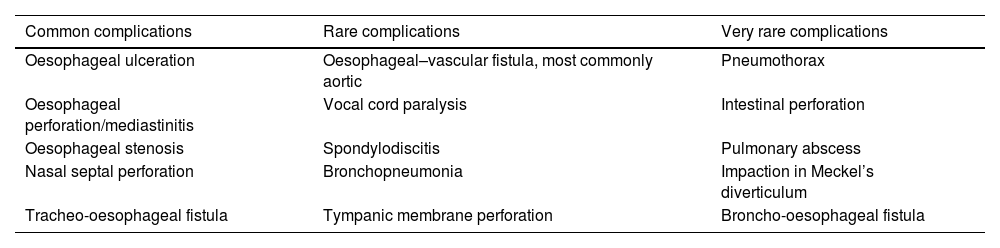
Table 1. Complications of button battery ingestion.
Tables
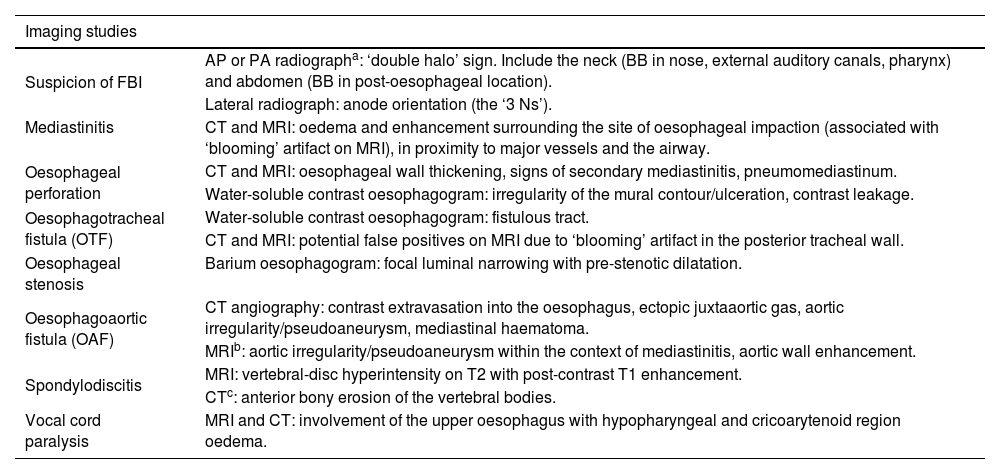
Table 2. Characteristics and findings on imaging studies.
Tables
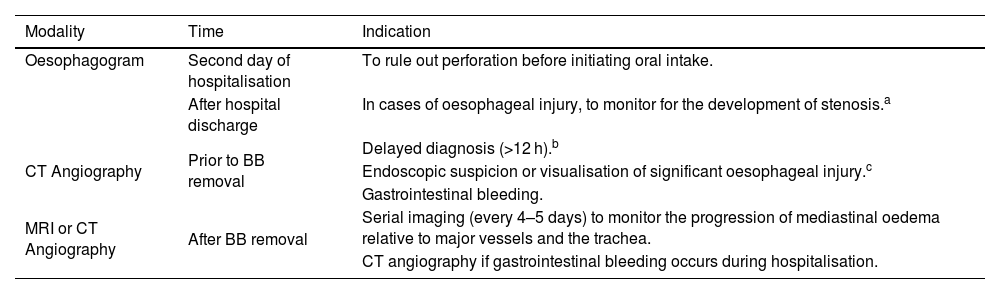
Table 3. Imaging Indications for the Follow-Up of Complications from Button Battery Ingestion.
Tables
Show moreShow less
Additional material (1)
Abstract

The ingestion of foreign bodies is a common issue among children, especially those under the age of three. Most pass through the gastrointestinal tract without any complications. However, button batteries are associated with a higher risk of complications, particularly in infants or when batteries are larger, due to the risk of oesophageal impaction, which can cause severe injuries. The initial clinical presentation is ambiguous, delaying and complicating diagnosis. There are times when complications are only suspected after symptoms become severe. Radiography, oesophagography, computerised tomography, and magnetic resonance are used in the diagnostic process. Oesophageal perforation or stenosis, mediastinitis, and tracheal or vascular fistulas are among the most serious complications. Episodes of gastrointestinal bleeding are associated with high death rates. This article examines the usefulness of imaging tests in the initial diagnosis, complication detection and follow-up.

Keywords:
Foreign body
Button battery
Children
Oesophagus
Computed tomography angiography
Magnetic resonance imaging
Oesophageal perforation
Tracheoesophageal fistula
Aortoesophageal fistula
Resumen

La ingestión de cuerpos extraños es un problema prevalente en niños, en particular menores de 3 años. La mayoría pasan y se eliminan por el tracto gastrointestinal sin complicaciones. Sin embargo, las pilas de botón asocian mayor tasa de complicaciones, especialmente en niños más pequeños y cuando son de mayor calibre por el riesgo de impactación esofágica que puede derivar en graves lesiones. El cuadro clínico inicial es inespecífico, lo que dificulta y retrasa el diagnóstico, y en ocasiones son los síntomas graves los que advierten de las complicaciones. En el proceso diagnóstico se emplean la radiografía, el esofagograma, la tomografía computarizada y la resonancia magnética. Las complicaciones graves incluyen perforación y estenosis esofágica, mediastinitis y fístulas traqueales o vasculares, con episodios de hemorragia digestiva de alta mortalidad. Revisamos la utilidad de las pruebas de imagen en el diagnóstico inicial, la detección de las complicaciones y el seguimiento.


Palabras clave:
Cuerpo extraño
Pila de botón
Niños
Esófago
Angiotomografía computarizada
Resonancia magnética
Perforación esofágica
Fístula traqueoesofágica
Fístula aortoesofágica

Article

These are the options to access the full texts of the publication Radiología (English Edition)
Subscriber
Subscriber

If you already have your login data, please click here .

If you have forgotten your password you can you can recover it by clicking here and selecting the option “I have forgotten my password”
Purchase
Purchase article

Purchasing article the PDF version will be downloaded

Purchase now
Contact
Phone for subscriptions and reporting of errors
From Monday to Friday from 9 a.m. to 6 p.m. (GMT + 1) except for the months of July and August which will be from 9 a.m. to 3 p.m.
Calls from Spain
932 415 960
Calls from outside Spain
+34 932 415 960
E-mail
Article options
Tools
Supplemental materials
