

metricas
covid
Radiología (English Edition) Mucin-producing cystic hepatobiliary neoplasms: Key diagnostic information for r...
Journal Information
Vol. 67. Issue 6.
(November - December 2025)
Visits
6
Vol. 67. Issue 6.
(November - December 2025)
Radiology through images
Mucin-producing cystic hepatobiliary neoplasms: Key diagnostic information for radiologists
Neoplasias quísticas hepatobiliares productoras de mucina: claves diagnósticas para radiólogos
Visits
6
A. Berbel Rodrígueza,
Corresponding author
andreaberbelrodriguez@gmail.com

Corresponding author.
, A. García-Baizána, S. Frade-Santosb, A. Robles Gómeza, P.N. Francoc, M. Otero-Garcíaa
a Servicio de Radiodiagnóstico, Hospital Álvaro Cunqueiro, Instituto de Investigación Sanitaria Galicia Sur (IISGS), Vigo, Pontevedra, Spain
b Servicio de Radiodiagnóstico, Instituto Portugués de Oncología de Lisboa Francisco Gentil, Lisboa, Portugal
c Servicio de Radiodiagnóstico, Fondazione IRCCS San Gerardo dei Tintori, Monza, Italy
This item has received
Article information
Abstract
Full Text
Bibliography
Download PDF
Statistics
Figures (11)
Show moreShow less
Tables (2)
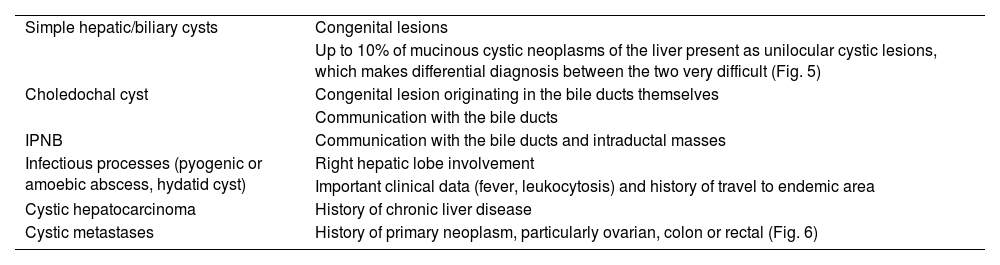
Table 1. Differential diagnosis for mucinous cystic neoplasms of the liver.
Tables
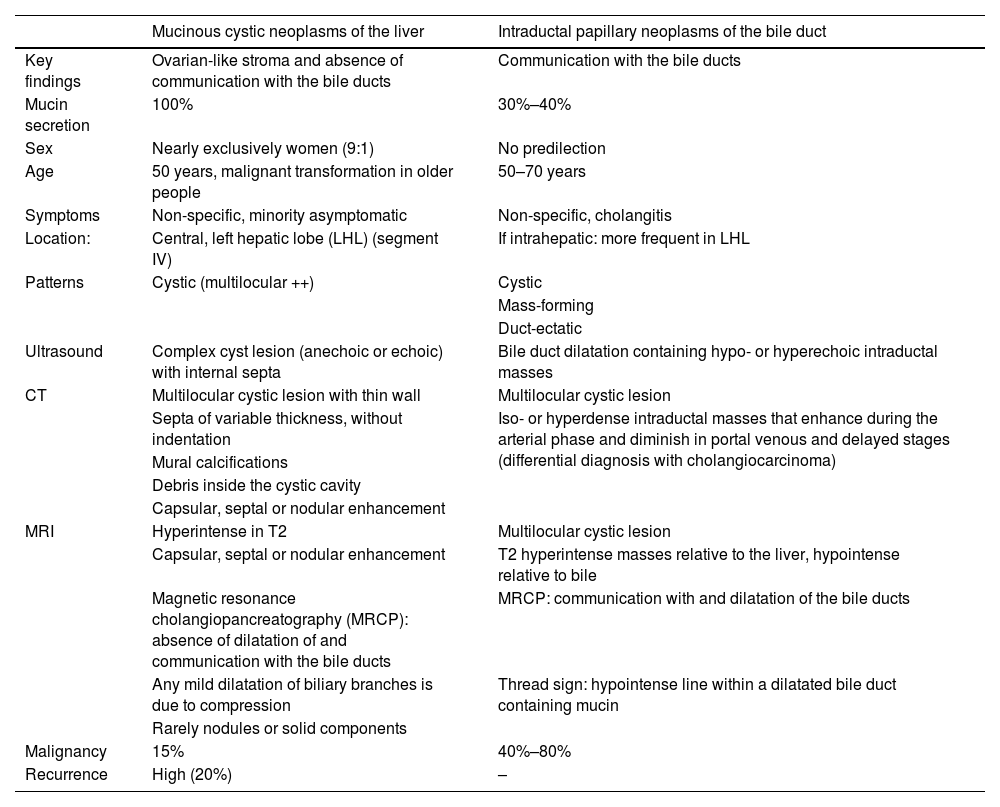
Table 2. Table summarising and comparing mucinous cystic neoplasms of the liver and intraductal papillary neoplasms of the bile duct, with a comprehensive approach that includes clinical, pathological and imaging data.
Tables
Show moreShow less
Abstract

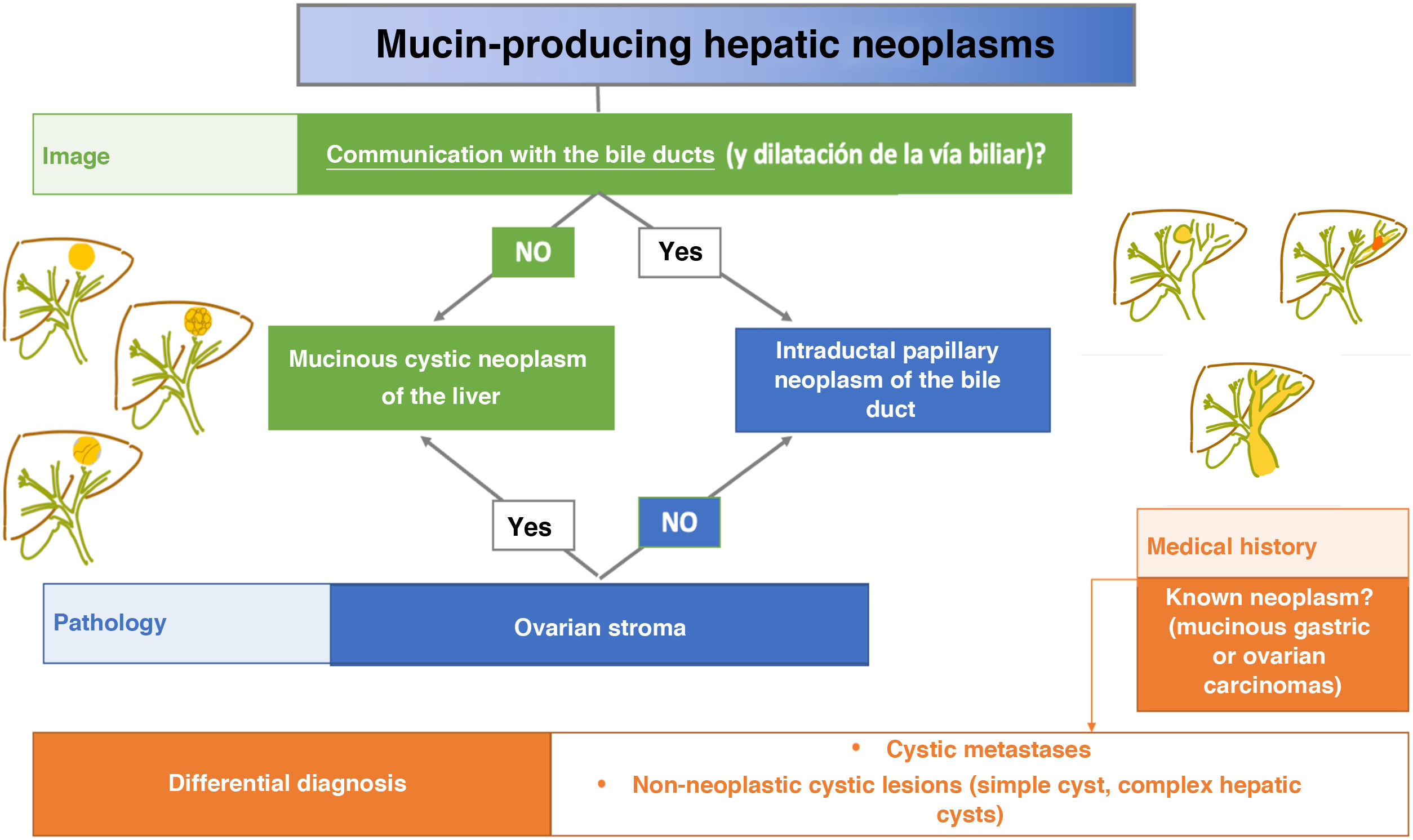
Mucin-producing cystic hepatobiliary neoplasms are rare neoplasms which include mucinous cystic neoplasms of the liver and intraductal papillary mucinous neoplasms of the bile duct.

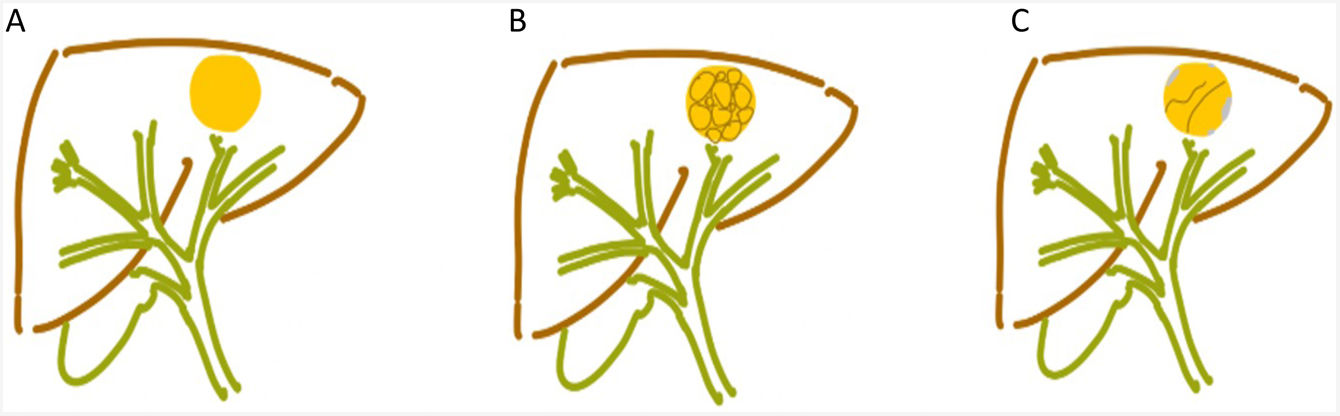
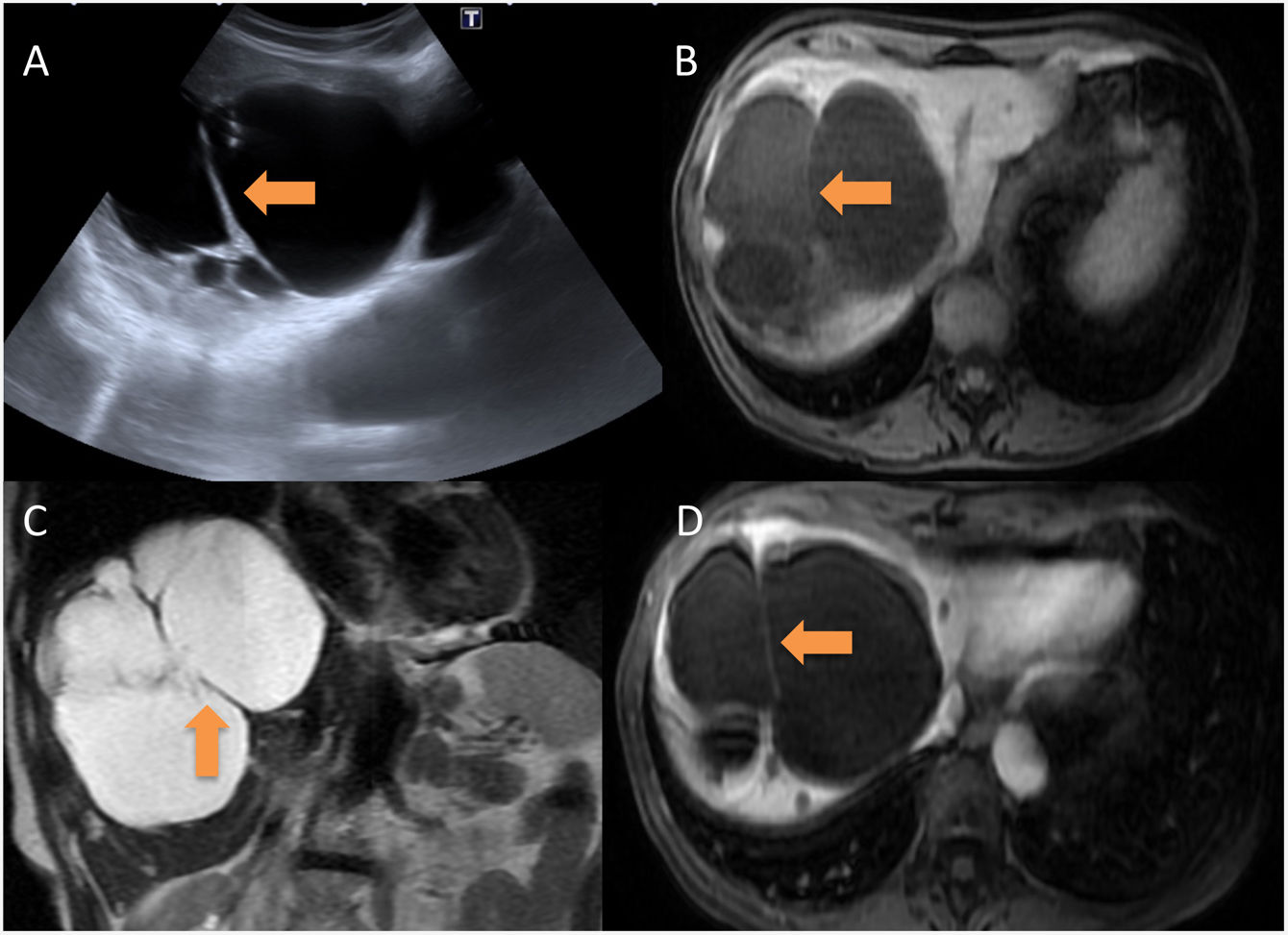
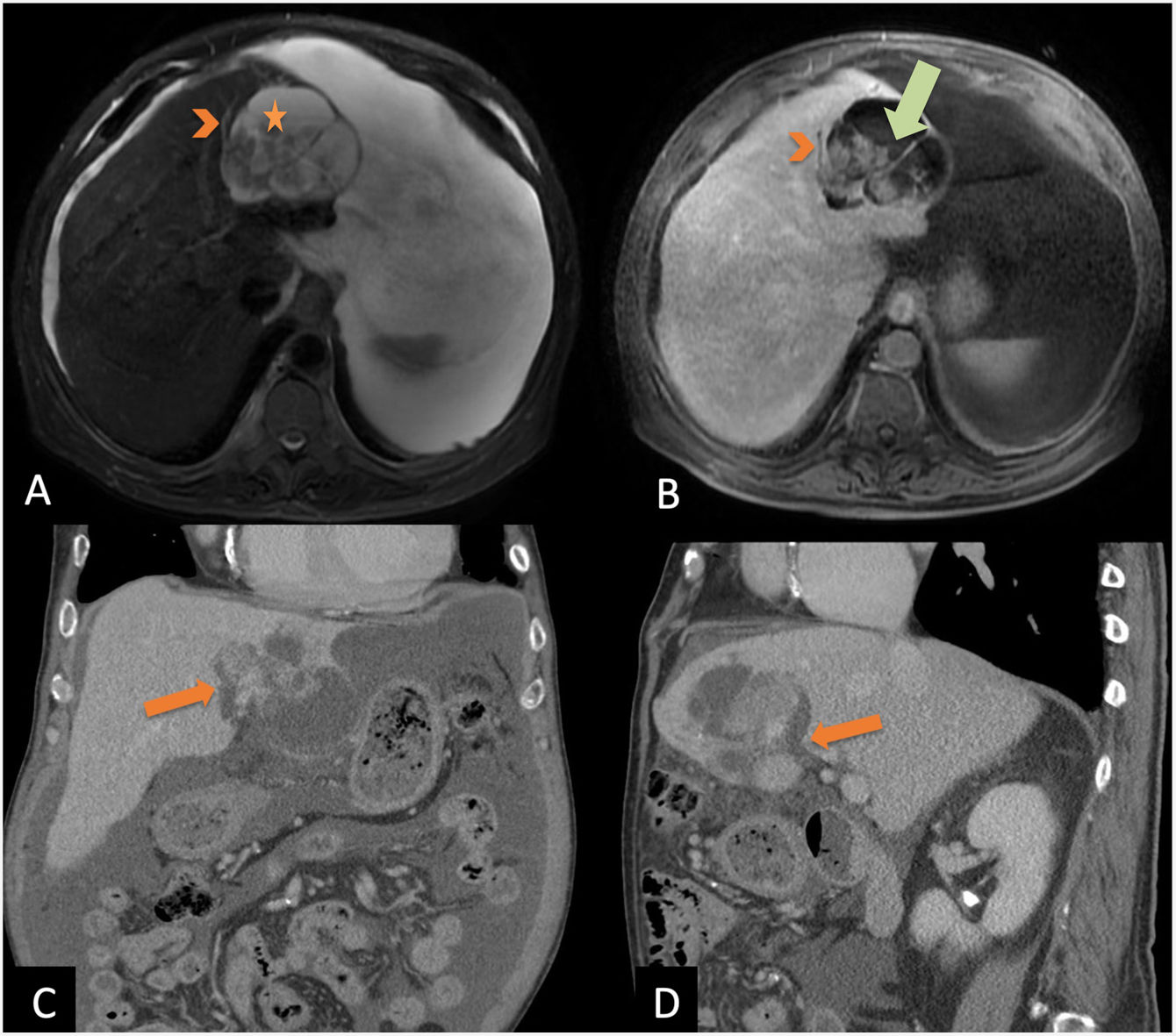
Mucinous cystic neoplasms of the liver are characterised by the presence of ovarian-like stroma, and are usually benign. They present as large, multiloculated, cystic masses without biliary communication and are more common among middle-aged women.

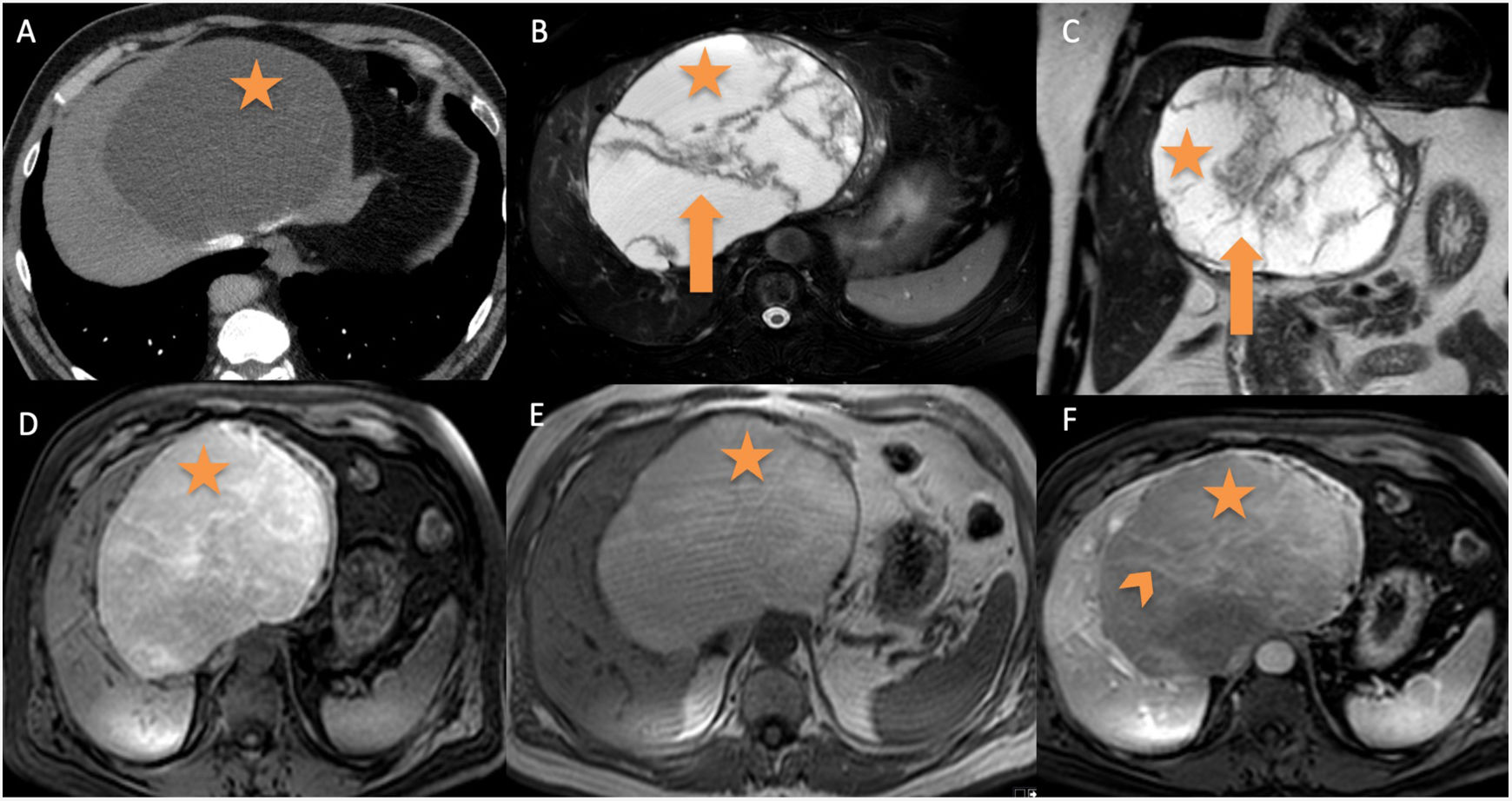
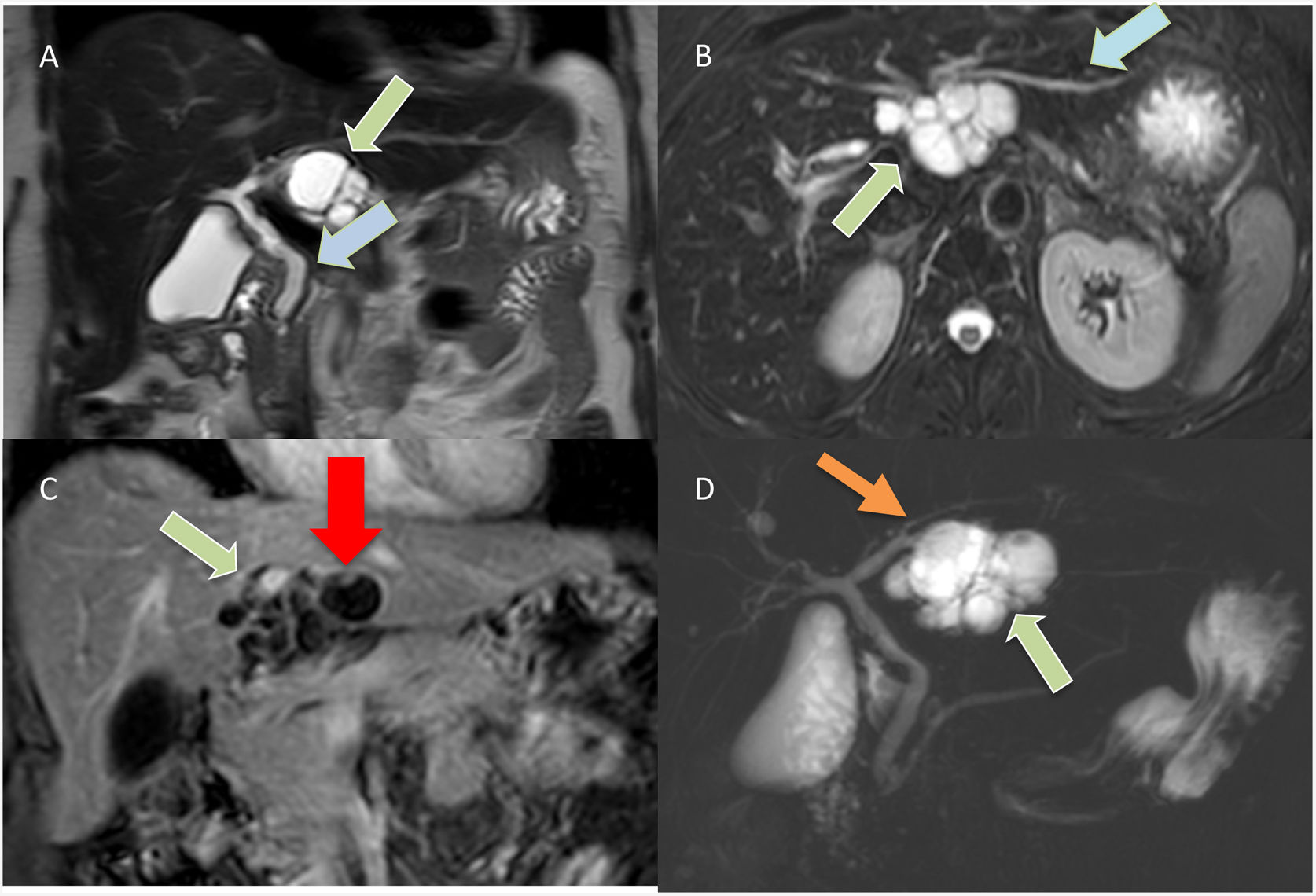
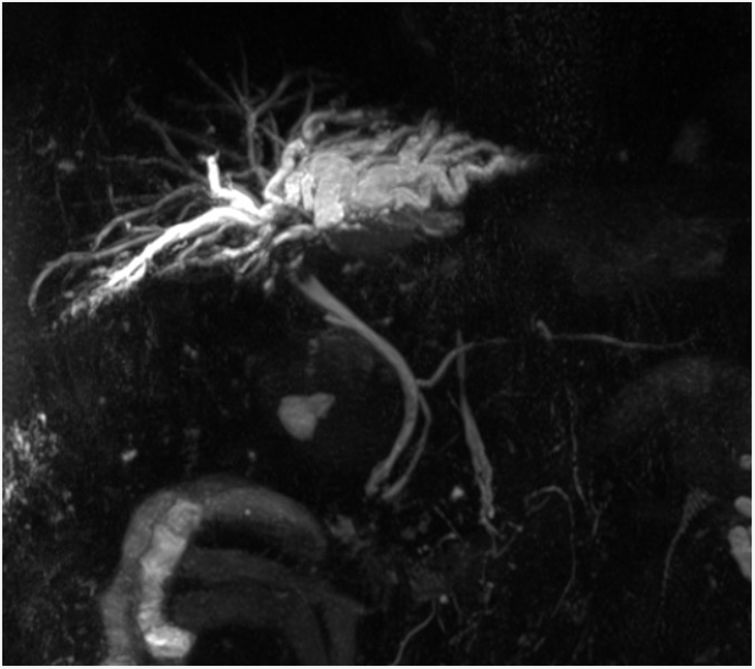
Intraductal papillary mucinous neoplasms of the bile duct are premalignant lesions originating in the bile duct and presenting with biliary communication. There are 3 growth patterns: cystic, duct-ectatic and mass-forming. They tend to appear between the ages of 50 and 70, with no gender predilection. There is a high probability of malignancy, so segment-oriented hepatic resection is the treatment of choice.

Both entities have overlapping and distinctive features, and it is important for the radiologist to be aware of these and be able to distinguish between them, as they have different prognoses and require different management approaches.

Keywords:
Cystic hepatobiliary neoplasm
Mucinous cystic neoplasms of the liver (MCN)
Intraductal papillary mucinous neoplasms of the bile duct
Biliary tract
Ultrasound
CT
MRI
Resumen

Las neoplasias quísticas hepatobiliares productoras de mucina son neoplasias poco frecuentes que incluyen el tumor mucinoso hepático y el tumor papilar mucinoso intraductal del conducto biliar.

Los tumores mucinosos hepáticos se caracterizan por la presencia de epitelio estromal ovarian-like, y son neoplasias comúnmente benignas. Se presentan como masas grandes quísticas, multiloculadas, sin comunicación con la vía biliar, y son más frecuentes en mujeres de mediana edad.

El tumor papilar mucinoso intraductal del conducto biliar es una lesión premaligna, con origen en la vía biliar y que presenta comunicación con la misma, con 3 patrones posibles de crecimiento: quístico, ductoectásico o formador de masa. Se presenta en torno a los 50–70 años, sin predilección por género. Presentan una alta probabilidad de malignización, por lo que la resección segmentaria hepática es el tratamiento de elección.

Ambas entidades presentan características superpuestas y otras distintivas, siendo importante que el radiólogo conozca y distinga cada una de ellas, ya que presentan pronóstico y manejo diferente.


Palabras clave:
Neoplasias quísticas hepáticas
Tumor mucinoso hepático (TMH)
Neoplasia papilar mucinosa intraductal del conducto biliar
Vía biliar
Ecografía
Tomografía computarizada
Resonancia magnética

Article

These are the options to access the full texts of the publication Radiología (English Edition)
Subscriber
Subscriber

If you already have your login data, please click here .

If you have forgotten your password you can you can recover it by clicking here and selecting the option “I have forgotten my password”
Purchase
Purchase article

Purchasing article the PDF version will be downloaded

Purchase now
Contact
Phone for subscriptions and reporting of errors
From Monday to Friday from 9 a.m. to 6 p.m. (GMT + 1) except for the months of July and August which will be from 9 a.m. to 3 p.m.
Calls from Spain
932 415 960
Calls from outside Spain
+34 932 415 960
E-mail
Article options
Tools
