



Post-COVID syndrome can hinder the quality of life of patients. This study aims at describing this syndrome and its natural history.
MethodsProspective study including 443 inpatient and outpatient survivors of COVID-19 acquired between March and May 2020. Patients with dementia, nursing home residents, and those rejecting participation were excluded. Symptoms were assessed 10 and 36 months after the infection using the C19-YRS questionnaire. The prevalence and severity of symptoms, as well as risk factors for symptom persistence were investigated.
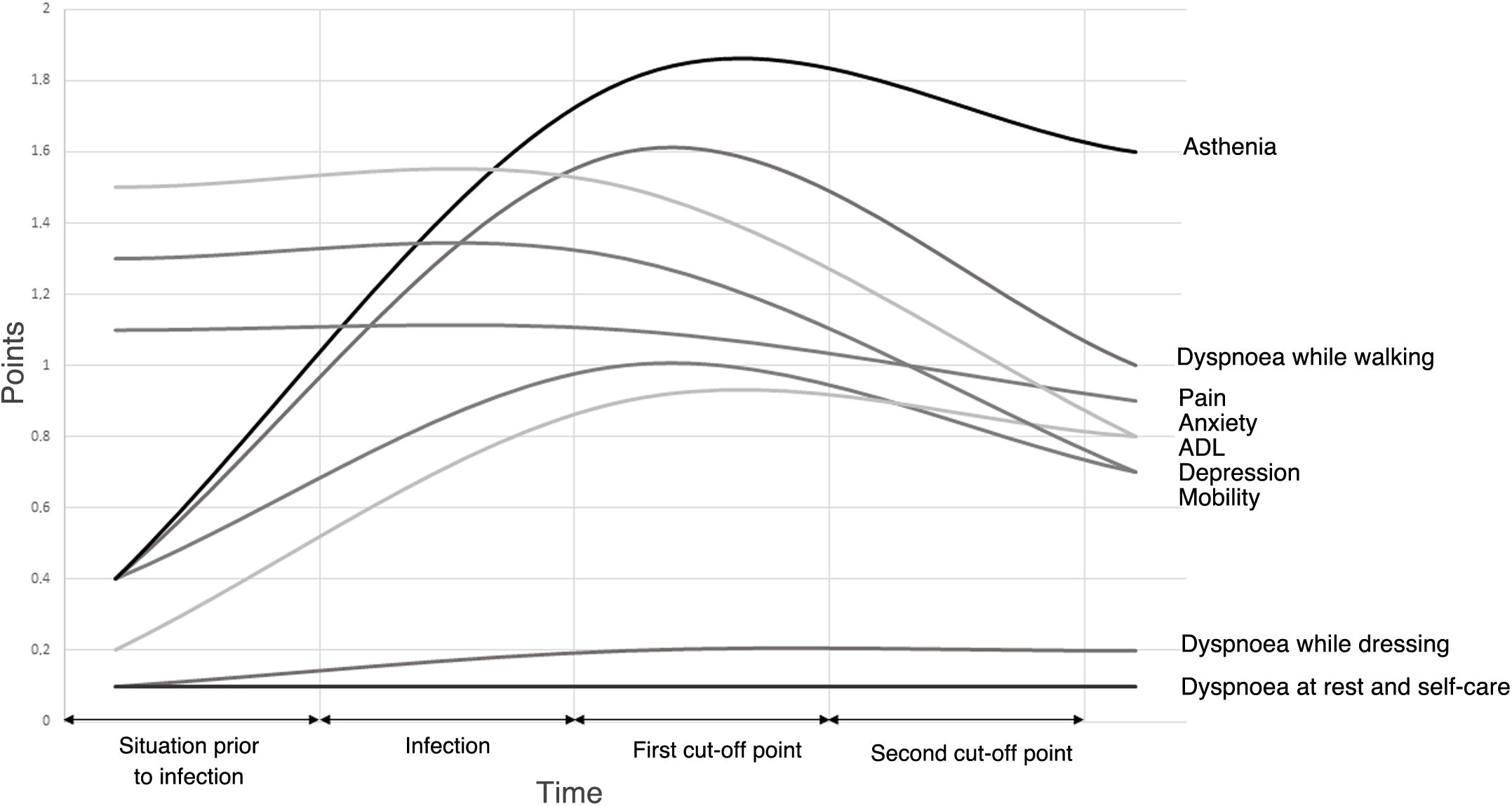
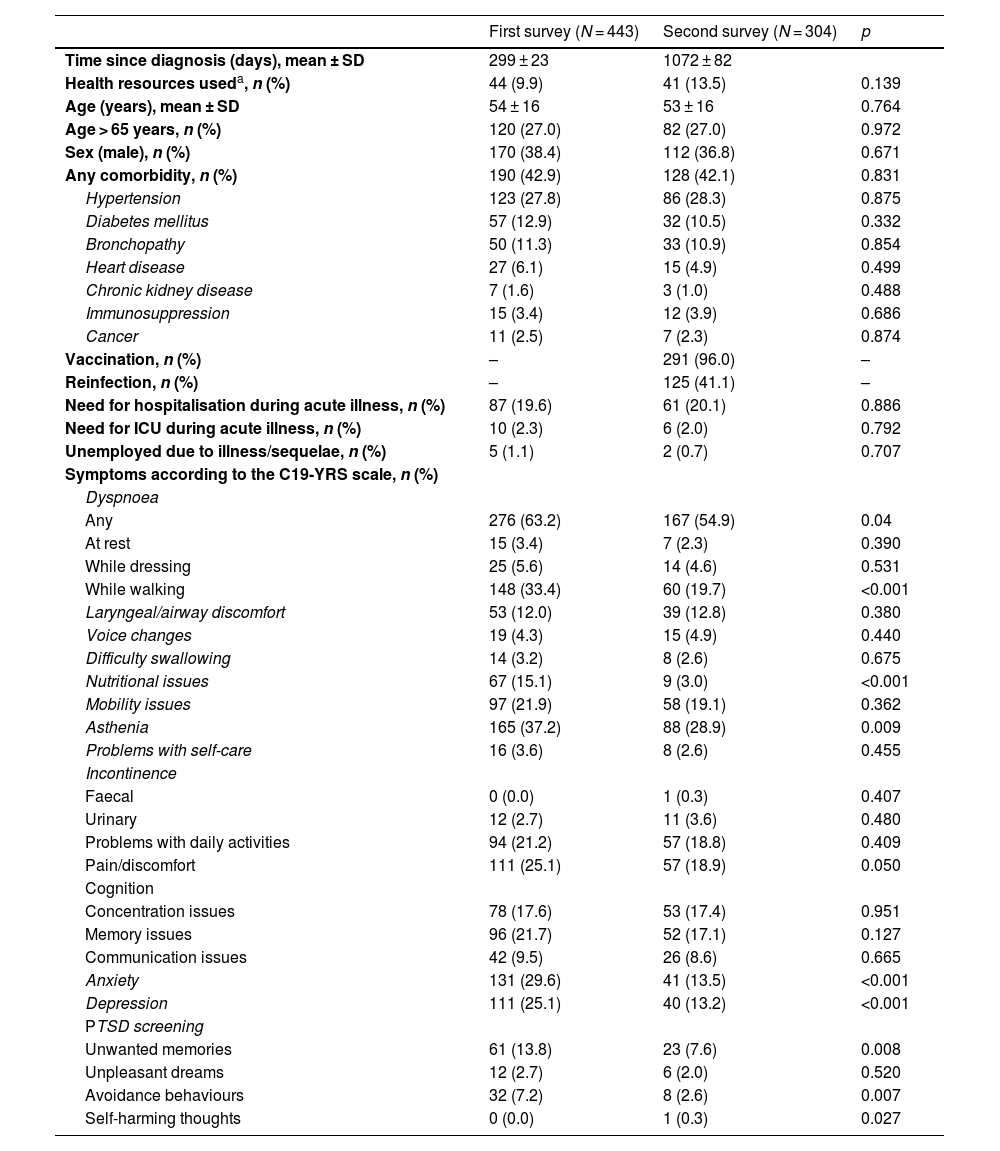
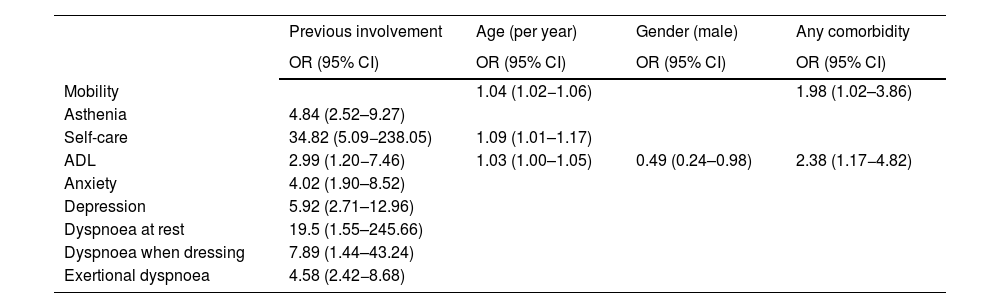
ResultsAt 10 months 62.3% of patients reported at least one symptom, down to 54.9% at 36 months. Fatigue (37.2%), dyspnea at exertion (33.4%), and anxiety (33.4%) were the most prevalent symptoms, all of which showed improvement at follow up. Domain-specific impairment was the strongest risk factor for symptom persistence. Most patients reported a similar health status (69.4%) and quality of life (71.4%) compared with their pre-infection condition.
ConclusionsAlthough frequent, post-COVID-19 symptoms improve over time, while quality of life remains stable compared to patients baseline status.
El síndrome post-COVID puede menoscabar la calidad de vida de los pacientes. Este estudio pretende describir este síndrome y su evolución temporal.
MétodosEstudio prospectivo de 443 pacientes ingresados y ambulatorios con COVID-19 entre marzo-mayo de 2020. Se excluyeron pacientes con demencia, institucionalizados o que rechazaron participar. La presencia de síntomas y su evolución se evaluaron 10 y 36 meses tras la infección mediante el cuestionario C19-YRS. Se analizó la prevalencia de síntomas, sus puntuaciones durante el seguimiento, así como los factores de riesgo para su persistencia.
ResultadosA los 10 meses un 62,3% declaró síntomas, que disminuyeron al 54,9% a los 36 meses. Los síntomas más frecuentes al inicio fueron: astenia (37,2%), disnea de esfuerzo (33,4%) y ansiedad (33,4%), que mostraron una mejora significativa con el tiempo. El estado de salud previo a la infección fue el mejor factor de predicción de persistencia. La mayoría refirieron una salud (69,4%) y calidad de vida (71,4%) igual a su situación pre-infección.
ConclusionesLos síntomas tras el COVID-19 aunque frecuentes, mejoran con el tiempo, permaneciendo estable la calidad de vida.

