


Cancer of unknown primary (CUP) is a clinical type of metastatic malignancy where the primary tumor remains unidentified despite thorough diagnostic evaluation. It presents a significant challenge in modern oncology due to its complex management and diagnostic difficulties. Although CUP accounts for approximately 2 to 5% of cancer cases worldwide, recent advancements in diagnostic techniques, such as immunohistochemistry and genomic sequencing, have improved the ability to classify and treat CUP using targeted therapies. However, limitations persist, including the biological heterogeneity of CUP and the frequent need for empirical treatments. This review discusses advancements in CUP diagnosis and treatment, emphasizing the importance of a multidisciplinary approach that integrates precision oncology and palliative care to enhance patient quality of life.
El cáncer de origen desconocido (COD) es un tipo de neoplasia metastásica cuyo tumor primario no se identifica tras una exhaustiva evaluación diagnóstica. Representa un desafío importante en la oncología moderna debido a la complejidad en su diagnóstico y tratamiento. Aunque el COD constituye entre el 2 y el 5% de todos los casos de cáncer, los avances recientes en técnicas diagnósticas, como la inmunohistoquímica y la secuenciación genómica, han mejorado la capacidad de clasificar y tratar el COD mediante terapias dirigidas. No obstante, persisten limitaciones, incluidas la heterogeneidad biológica del COD y la necesidad de tratamientos empíricos todavía en muchos casos. La presente revisión discute los avances en el diagnóstico y tratamiento del COD, enfatizando la importancia de un enfoque multidisciplinar que integre la oncología de precisión y los cuidados paliativos para mejorar la calidad de vida de estos pacientes.

Cancer of unknown primary (CUP), also known as cancer of unknown origin and more recently as occult primary cancer, is a clinical category that encompasses metastatic cancers for which the primary site cannot be identified despite a thorough diagnostic evaluation. This diagnosis represents one of the greatest challenges in modern oncology, as the metastases identified in the patient may have multiple potential origins, yet no specific primary site that links them to a known organ or tumour type.
The diagnosis of CUP is made when, after a series of standard diagnostic tests including medical history, physical examination, imaging tests, blood tests, and biopsy, the primary tumour cannot be identified. Although this group of patients is relatively small, accounting for around 2–5% of all diagnoses, what is most striking is both its rarity and its clinical complexity.1–5
EpidemiologyIncidenceCUP accounts for between 2% and 5% of all cancer diagnoses worldwide. In Spain, its prevalence is around 3% of oncological cases, positioning it as a significant challenge due to the complexity involved in diagnosing a neoplasm without a clearly identifiable primary site.2–7
Recent studies have shown a slight decline in CUP incidence in countries with advanced healthcare systems. This reduction has been made possible by improvements in diagnostic technologies, including computed tomography (CT), magnetic resonance imaging (MRI), positron emission tomography (PET), and more recently, next-generation sequencing (NGS). These innovations have enabled the identification of primary tumours that would previously have been classified as unknown.6,7
Biological models of cancer of unknown primaryTo understand the development of CUP, various biological models have been proposed that seek to explain its origin and progression8:
- •
Parallel progression model: this approach suggests that the primary tumour grows and spreads early, before it is clinically detectable at its site of origin, generating metastases that are already present at the time of diagnosis.
- •
Unknown primary metastatic disease model: this model proposes that the primary tumour never existed, possibly because the metastases originate directly from pluripotent stem cells through malignant transformation.
From a molecular perspective, CUPs often share genetic alterations such as persistent angiogenesis, resistance to apoptosis, and disruptions in cell signalling pathways or epithelial-mesenchymal transition.8 These factors could also explain why CUPs have a poorer prognosis and an unpredictable natural history, even if the primary tumour is found.
Furthermore, it is estimated that between 30 and 40% of patients with CUP have genetic mutations that can be treated with targeted therapies, highlighting the crucial role of molecular biology in both diagnosis and treatment.9–13
Diagnostic process in cancer of unknown primary (Table 1)Initial assessment, radiology and laboratory testsThe diagnosis of CUP begins with a thorough medical history and physical examination, focusing on the head and neck, along with rectal, pelvic, gynaecological, and breast examinations, aimed at identifying signs of the primary tumour and metastases.2–4
Algorithm for confirming the existence of cancer of unknown primary.
| First level |
| Clinical data and medical history |
| Detailed medical history: toxic habits, medical and surgical history, previous neoplasms, occupational history, and family history |
| Complete physical examination by organ system, including all peripheral lymph nodes, breast examination, skin examination, and pelvic-genital and rectal examination |
| Basic tests for all patients |
| Complete blood count |
| Complete biochemistry: liver and kidney function, electrolytes including calcium and LDH |
| CT scan of the chest, abdomen, and pelvis |
| Mammography (for all women, to be assessed on a case-by-case basis)a |
| Biopsy (not FNA). Histologically confirmed metastatic cancer |
| Second level |
| Additional studies for a selected group of patients (presence of target signs or symptoms) based on previous findings |
| Breast MRI (if mammography is inconclusive)b |
| Testicular ultrasound/thyroid ultrasound |
| Serum PSA concentration (for all men) |
| Serum CA-125 concentration (for all women with peritoneal involvement) |
| Endoscopy (colonoscopy and/or gastroscopy) if gastrointestinal symptoms or CT findings indicate it |
| PET-CT for cases with a single metastatic presentation or supraclavicular or lateral cervical lymphadenopathy |
| Serum α-FP and β-hCG concentration for undifferentiated tumours in patients under 50 years of age, or predominantly midline lymph node metastatic involvement |
| Laryngoscopy in cases of predominantly cervical lymph node involvement |
| Bronchoscopy in cases of pulmonary symptoms and/or radiological findings such as hilar or mediastinal lymphadenopathy |
| Gynaecological ultrasound in cases of pelvic or peritoneal metastasis CK7+ |
| Anatomopathological data |
| Histopathological review with a specific IHC study |
α-FP: alpha-fetoprotein; β-hCG: beta human chorionic gonadotropin; CA-125: carbohydrate antigen 125; CK7+: cytokeratin 7 positive; CT: computed tomography; FNA: fine needle aspiration; IHC: immunohistochemistry; LDH: lactate dehydrogenase; MRI: magnetic resonance imaging; PET: positron emission tomography; PSA: prostate-specific antigen.
Laboratory tests include a full blood count, liver and kidney function tests, LDH levels, and electrolytes. Tumour markers have limited value, except in specific scenarios such as PSA in suspected prostate cancer with bone metastases, calcitonin in medullary thyroid carcinoma, catecholamines and chromogranin A in neuroendocrine tumours, and alpha-fetoprotein (α -FP) and beta human chorionic gonadotropin (β-hCG) in midline lymph node involvement (germ cell tumour) or liver involvement (hepatocellular carcinoma).2–4
Diagnostic imaging is key to locating metastases and possible primary tumours. Thoracoabdominal CT allows the extent of the disease to be assessed and metastases in the liver, lungs and lymph nodes to be visualised. Its ability to assess the extent of the disease and locate potential metastases is crucial for treatment planning. MRI is useful for detecting metastases in the central nervous system, especially in the posterior fossa, evaluating breast tumours that are hidden on mammography, and characterising liver and biliopancreatic lesions or gynaecological malignancies.
PET-CT has revolutionised the diagnosis of CUP in recent years. It uses a radioactive tracer (fluorodeoxyglucose) that accumulates in tumour cells due to their high metabolic activity. This accumulation allows tumours to be visualised at an early stage, even before they are visible in other imaging studies.2–4
In the context of CUP, PET-CT can be useful in identifying the primary tumour in approximately one-third of cases. However, although it can detect occult metastases and provide clues regarding the tumour’s origin, its ability to identify a primary tumour is not significantly superior to that of CT. Its use is therefore generally limited to head and neck tumours, solitary metastatic sites, or situations where the clinician deems that performing a PET-CT could potentially alter the patient’s treatment strategy.14,15
HistopathologyHistopathological examination is a fundamental component in the diagnosis of cancer of unknown primary (CUP), as it enables the classification of tumours according to their lineage—epithelial, mesenchymal, haematological, germ cell, or neuroendocrine. Morphological assessment, alongside additional techniques such as immunohistochemistry (IHC) and molecular analysis, provides valuable clues regarding the potential location of the primary tumour and plays a key role in guiding diagnosis and identifying tumours that may be amenable to specific therapies (such as haematological malignancies or germ cell tumours).
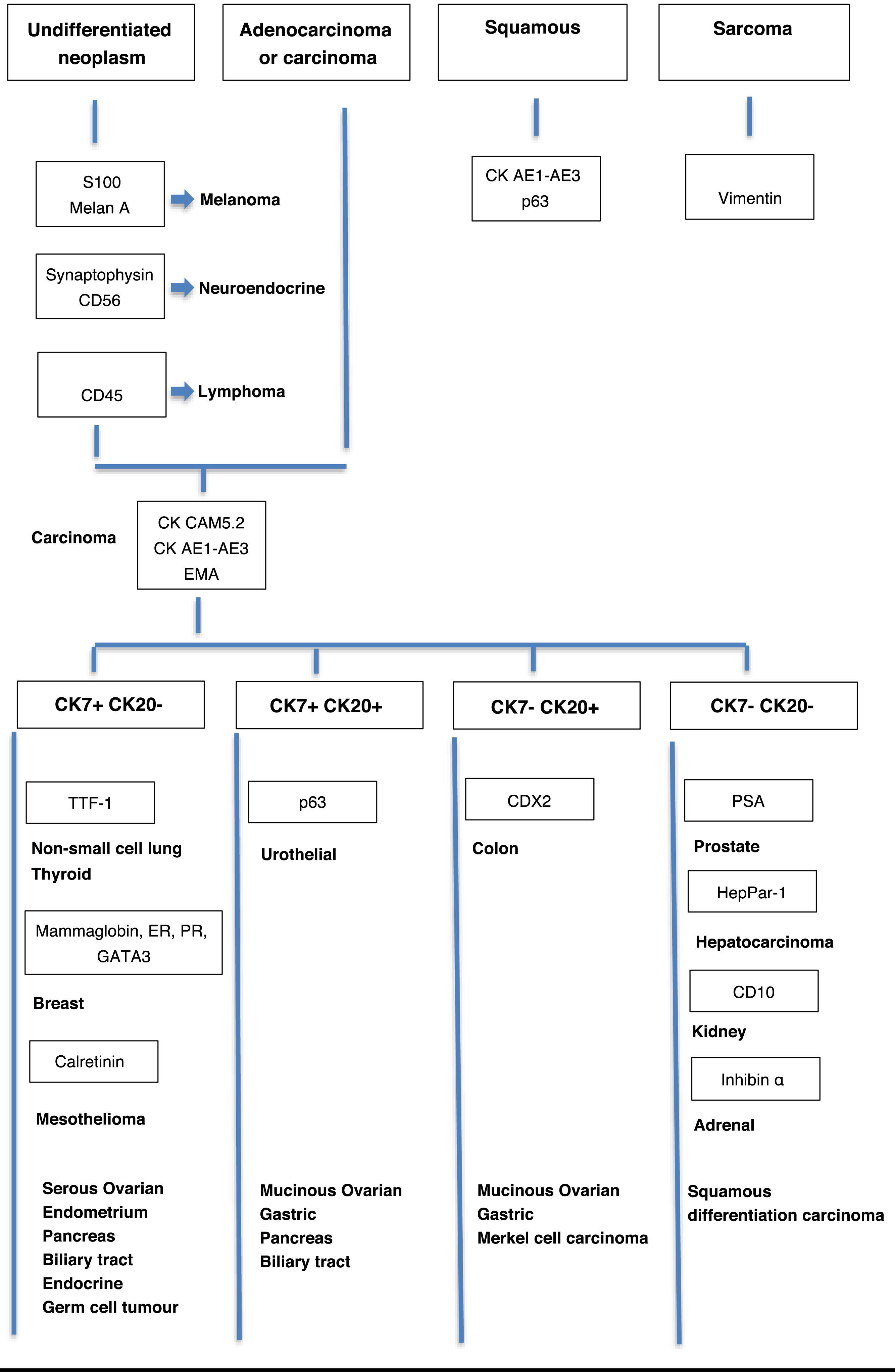
Given that tissue samples are often limited in CUP cases, it is recommended that IHC studies be performed in a systematic manner. To this end, several diagnostic algorithms have been proposed16,17 (Fig. 1).
Algorithm for the diagnosis of cancer of unknown primary using immunohistochemistry. CAM5.2: antibody against low molecular weight cytokeratins; CDX2: colorectal cancer marker; CD10: metalloproteinase expressed in B-cell lymphomas; CK AE1/AE3: cytokeratin AE1/AE3; CK7: cytokeratin 7; CK20: cytokeratin 20; EMA: epithelial membrane antigen; GATA3: transcription factor associated with breast and urothelial tumours; HepPar-1: hepatocyte paraffin 1; LCA: leukocyte common antigen; NCAM: neural cell adhesion molecule; PSA: prostate-specific antigen; p63: transcription factor related to p53; ER: oestrogen receptor; PR: progesterone receptor; S100: protein of the S100 family with a role in cell signalling; TTF1: thyroid transcription factor 1.
Modified from Losa et al.4
Among immunohistochemical markers, cytokeratins CK7 and CK20 are particularly useful, playing a crucial role in the classification of carcinomas. The various patterns of positivity of these markers can suggest different tumour origins, which may then be confirmed using more specific organ-associated markers such as TTF1 for lung adenocarcinoma or PAX8 for gynaecological, renal, or thyroid primaries (Table 2).
Main markers in extended immunohistochemical analysis.
| Type of suspected cancer | Immunohistochemical marker |
|---|---|
| Urothelial origin | GATA3, p63, CK7, CK20, uroplakin, thrombomodulin |
| Mucinous ovarian | WT1 |
| Serous ovarian | PAX8, CK7 WT1, BerEp4, CA-125, ER, MUC5AC, mesothelin |
| Lung adenocarcinoma | CK7, TTF1, napsin A, surfactant A and B |
| Lung (non-adenocarcinoma) | CK7, TTF1, p63, CK5/6, napsin A |
| Small cell lung carcinoma | CD56, synaptophysin, chromogranin, TTF1, Ki-67 |
| Breast | CK7, GATA3, ER, PR, Her2neu, mammaglobin, GcdFP-15, p53 |
| Endometrium | Vimentin, ER, PAX8 |
| Mesothelioma | Calretinin, WT1, mesothelin, CK5/6, D2-40, thrombomodulin, antimesothelin |
| Germ cell tumours | α-FP,β -hCG, CD30, OCT3/4, SALL4 |
| Thyroid | TTF1, thyroglobulin, PAX8, PAX9 |
| Prostate | PSA, PSMA, PSAP, NKX3, racemase |
| Kidney (non-urothelial) | PAX8, CD10, RCC, vimentin, EMA |
| Colorectal | CEA, CDX2, SATB2 |
| Hepatocellular carcinoma | Glutamine synthetase, HSP70, glypican 3, pCEA, anti-hepatocytic |
| Pancreas/bile duct | CDX2, CK7, CA 19.9 |
| Neuroendocrine | CD56, synaptophysin, chromogranin, INSM1, PGP9.5 |
| Adrenal | Alpha-inhibin, Melan-A |
α-FP: alpha-fetoprotein; β-hCG: beta human chorionic gonadotropin; BerEp4: epithelial antigen, useful in differentiating between carcinoma and mesothelioma; CA 19.9: pancreatic adenocarcinoma marker; CA-125: carbohydrate antigen 125; CD10: expressed in renal cancers and lymphomas; CD30: expressed in lymphomas and germ cell tumours; CDX2: colorectal cancer marker; CEA: carcinoembryonic antigen; CK20: cytokeratin 20; CK7: cytokeratin 7; D2-40: marker for lymphatic cancers and mesotheliomas; EMA: epithelial membrane antigen; ER: oestrogen receptor; GATA3: transcription factor associated with breast and urothelial tumours; GcdFP-15: gross cystic disease fluid protein 15; Her2neu: human epidermal growth factor receptor 2; HSP70: heat shock protein 70 ( KDa); INSM1: insulinoma-associated 1; Ki-67: cell proliferation index; MUC5AC: mucin associated with pancreatic and gastric adenocarcinomas; NKX3: prostate-specific transcription factor; OCT3/4: expressed in germ cell tumours; PAX8: transcription factor in ovarian, endometrial and kidney cancer; PAX9: transcription factor in thyroid and dental development; p53: tumour suppressor protein; p63: p53 family protein; pCEA: polyclonal carcinoembryonic antigen; PGP9.5: protein gene product 9.5; PR: progesterone receptor; PSA: prostate-specific antigen; PSAP: prostatic-specific acid phosphatase; PSMA: prostate-specific membrane antigen; RCC: renal cell carcinoma marker; SALL4: transcription factor in germ cell tumours; SATB2: expressed in colorectal cancer; TTF1: thyroid transcription factor 1; WT1: Wilms tumour.
It is important to note that, while IHC is a powerful diagnostic tool in oncology, it does have limitations—especially in small samples from poorly differentiated and disseminated tumours, where the IHC profile may differ significantly from that of the original primary tissue.
Genomic and molecular diagnosisGenomic and molecular diagnostics have revolutionised the approach to cancer of unknown primary (CUP), enabling significant advances in both the identification of the primary tumour and the selection of personalised treatments. Molecular diagnostic platforms and high-throughput sequencing technologies, such as next-generation sequencing (NGS), have made it possible to perform detailed analyses of the genetic and epigenetic profiles of tumours. This contributes to more accurate diagnoses and facilitates the selection of targeted therapies. Tools that assess gene expression—such as CancerTYPE ID and EPICUP—alongside NGS-based techniques, are among the latest innovations in molecular oncology, offering key insights into tumour behaviour and potential origin.4,8,18,19
Gene expression platformsGene expression platforms like CancerTYPE ID can predict the type of primary tumour by analysing the expression patterns of specific genes. This method can identify up to 39 different cancer types with an accuracy ranging from 75% to 92%, reducing the need for invasive procedures and improving clinical decision-making.8,20 EPICUP, on the other hand, is based on the analysis of DNA methylation patterns and stands out for its ability to predict tumour origin even in cases where conventional techniques yield inconclusive results. With an accuracy exceeding 95% in certain contexts, this epigenomic tool analyses chemical modifications in tumour DNA and compares them with reference databases of known tumour profiles, providing a critical second-line diagnostic resource in complex cases21 (See Appendix B, Supplementary Table 1).
Next-generation sequencing techniquesThe impact of NGS on CUP diagnosis is remarkable. This technology enables comprehensive analysis of tumour genomes, identifying specific mutations and genetic alterations responsible for tumour aggressiveness. Among its most notable applications is the detection of mutations in key genes such as BRCA1 and BRCA2, which are treatable with PARP inhibitors, as well as gene fusions such as NTRK, which allow for targeted therapies with specific inhibitors like entrectinib or larotrectinib. NGS also facilitates the detection of alterations in genes involved in angiogenesis and DNA repair—both of which are essential for understanding cancer biology and developing more effective therapeutic strategies.
The potential of NGS and other molecular platforms in CUP includes, among other applications, the detection of key genomic alterations that enable a targeted therapeutic approach (Table 3).
- •
Guidance for targeted therapies: Molecular profiling enables the selection of more precise treatment options, including immunotherapies and specific inhibitors.
- •
Detection of key genomic alterations: Mutations in genes such as EGFR, BRAFV600E, KRASG12C, FGFR2, IDH1/2, or HER2 amplifications offer opportunities for tumour-specific targeted therapy. Other mutations, such as STK11 or KEAP1 confer primary resistance to immunotherapy.
- •
Targetable gene fusions: Rearrangements such as NTRK, ALK, RET, or ROS1 can be treated with targeted therapies, transforming the management of CUP.
- •
Detection of genes associated with hereditary cancer: detecting molecular alterations in known cancer susceptibility genes, such as BRCA1/2 or PALB2.
Targeted treatment according to genomic profile.
| Actionable genomic alteration | Targeted treatment |
|---|---|
| ALK | Crizotinib, ceritinib, alectinib, brigatinib, lorlatinib |
| RET | Selpercatinib, pralsetinib |
| ROS1 | Crizotinib, ceritinib, lorlatinib, repotrectinib |
| NTRK | Entrectinib, larotrectinib |
| PI3K | Temsirolimus, everolimus, alpelisib |
| BRCA1/2 | Olaparib, niraparib, rucaparib, talazoparib |
| EGFR | Gefitinib, erlotinib, afatinib, dacomitinib, osimertinib |
| FGFR2/3 | Pazopanib, ponatinib, erdafitinib |
| MET | Crizotinib, tepotinib, capmatinib |
| BRAF V600 | Vemurafenib, encorafenib, dabrafenib, regorafenib |
| KRAS G12C | Sotorasib, adagrasib |
| ERBB2 | Trastuzumab, lapatinib, pertuzumab, afatinib, neratinib, trastuzumab-deruxtecan, trastuzumab emtansine, tucatinib |
| SMO | Vismodegib |
| AKT1 | Ipatasertib, capivasertib |
| IDH1 | Ivosidenib, vorasidenib |
| IDH2 | Vorasidenib |
| TMB-High | Immune checkpoint inhibitors |
| MSI-High | Immune checkpoint inhibitors |
MSI-High: microsatellite instability-high; TMB-High: tumour mutational burden-high.
Despite their promise, these tools are not without controversy. The high cost of molecular platforms and associated technologies remains a significant barrier, limiting access in many healthcare institutions. Interpretation of molecular results is another major challenge: the complexity of the data often requires highly specialised personnel, and in some cases, results are inconclusive. This may necessitate additional testing or the use of combined diagnostic approaches to reach a definitive diagnosis. Moreover, while retrospective studies have demonstrated the clinical utility of these technologies, prospective trials are still needed to evaluate their true impact on patient survival and quality of life.
Despite these limitations, molecular and genomic diagnostics represent a crucial breakthrough in modern oncology. They offer powerful tools for understanding and treating CUP. Continued research and the integration of these platforms into routine clinical practice are essential to maximising their potential and ensuring broader access to these innovations for more patients.
TreatmentThe treatment of is primarily based on empirical chemotherapy (CT) and targeted therapies guided by molecular profiling. However, treatment must be personalised and tailored to the specific characteristics of both the tumour and the patient.
The treatment of CUP patients is generally divided into two main groups: those with clinical features that allow for a specific treatment approach similar to known primary tumours, called favourable CUP, and those lacking specific features, requiring empirical treatment with chemotherapy, called unfavourable CUP (Table 4).
Optimal management of patients in the favourable cancer of unknown primary group.
| Carcinoma of unknown primary subtype | Proposed treatment | Equivalent tumour |
|---|---|---|
| Poorly differentiated carcinoma | Combined platinum-based CT | Extragonadal germ cell tumour |
| Poorly differentiated neuroendocrine carcinoma | Combined platinum and etoposide CT | Small cell lung cancer |
| Serous-papillary histology peritoneal adenocarcinomatosis in women | Surgical resection followed by carboplatin-based CT and taxanes | Ovarian cancer |
| Metastases in axillary lymph nodes in women | Surgical excision of lymph nodes, mastectomy or breast RT and adjuvant chemo-hormone therapy | Breast cancer |
| Squamous cell carcinoma with involvement of non-supraclavicular cervical lymph nodes | Neck surgery and/or bilateral radiation of the neck and head-neck axis. For advanced stages, induction CT with platinum-based combination or QRT | Head and neck cancer |
| Bone metastases with adenocarcinoma histology in males with elevated PSA | Hormone therapy with LHRH agonists and/or antiandrogens | Prostate cancer |
LHRH: luteinising hormone-releasing hormone; PSA: prostate-specific antigen; QRT: chemoradiotherapy; CT: chemotherapy; RT: radiotherapy.
This distinction is essential, as patients in the first group tend to have a considerably better prognosis than those in the second.
Favourable cancers of unknown primary and specific therapeutic strategiesCertain clinical CUP presentations have shown good response to treatments guided by protocols for known primary tumours:
Women presenting with axillary lymphadenopathy and no identifiable primary lesionThis presentation is often associated with occult breast cancer. Its clinical behaviour and treatment follow the guidelines for stage II–III breast cancer, depending on nodal involvement. Five- and ten-year survival rates are approximately 75% and 60%, respectively.
Women with peritoneal carcinomatosisClinically similar to advanced ovarian cancer, though it may also be linked to primary breast or gastrointestinal tumours. Histology typically reveals poorly differentiated or serous papillary adenocarcinomas. Treatment follows protocols for stage III–IV ovarian cancer, especially if associated with raised CA-125 levels.
Men with midline lymphadenopathyThis clinical syndrome is suggestive of an extragonadal germ cell tumour. Immunohistochemical markers such as PLAP, α-FP, β-hCG and CD117 are key to differentiating between seminomas and non-seminomas.
Cervical lymphadenopathy with squamous histologyRepresents around 5% of head and neck cancers. Management includes surgical excision of affected lymph nodes, followed by postoperative radiotherapy or combined chemoradiotherapy.
Men with bone metastases and elevated PSAIn men presenting with bone metastases and adenocarcinoma, a raised PSA level points towards metastatic prostate cancer. These patients should receive treatment appropriate for stage IV prostate cancer.
Patients with single metastasisThis group has a better prognosis, as these lesions often represent rare primaries with metastatic appearance. Once other lesions are ruled out (e.g. via PET/CT), management typically involves curative-intent surgery and/or radiotherapy. Some patients achieve long-term survival.
Unfavourable cancers of unknown primary and empirical or targeted treatmentThe treatment of CUP is rapidly evolving towards a more personalised approach based on the molecular characteristics of the tumour. However empirical therapy remains the cornerstone for managing this complex disease.4,8,22
Empirical treatment with chemotherapyEmpirical CT continues to be the standard approach when a primary tumour cannot be identified. Standard regimens typically include platinum-based agents such as cisplatin or carboplatin, combined with other drugs like taxanes, gemcitabine, or irinotecan. While these treatments benefit some patients, response rates are modest, and long-term survival outcomes remain limited23–29 (Table 5).
Chemotherapy regimens in patients with unfavourable cancer of unknown primary.
| Reference | Chemotherapy regimen | OR | OS |
|---|---|---|---|
| Culine et al.23 (2003) | Cisplatin + gemcitabine vs cisplatin + irinotecan | 55 vs 38 | 8 vs 6 |
| Greco et al.24 (2000) | Cisplatin + docetaxel vs carboplatin + r docetaxel | 26 vs 22 | 8 vs 8 |
| Huebner et al.25 (2009) | Carboplatin + paclitaxel vs gemcitabine + vinorelbine | 23.8 vs 20 | 11 vs 7 |
| Dowel et al.26 (2001) | Carboplatin + etoposide vs paclitaxel + 5-fluorouracil + leucovorin | 19 vs 19 | 8.3 vs 6.4 |
| Briasoulis et al.27 (2008) | Irinotecan + oxaliplatin | 13 | 2.7 |
| Schuette et al.28 (2009) | Capecitabine + oxaliplatin | 11.7−19 | 3.9−9.7 |
| Hainsworth et al.29 (2010) |
OR: objective response; OS: overall survival.
Median overall survival in patients treated with empirical CT ranges between 6 and 9 months. Outcomes depend on several factors including patient performance status, histological subtype, and extent or location of metastases. Patients with hepatic or multiple metastatic sites tend to have poorer responses to chemotherapy, with response rates below 20% and median survival rarely exceeding 9 months (see Appendix B, Supplementary Table 2).
Targeted treatments based on molecular profilesThe incorporation of personalised medicine in the treatment of CUP allows oncologists to tailor therapies to each tumour’s unique genetic features, improving precision and efficacy of the therapeutic approach.
Targeted therapies have ushered in a paradigm shift in CUP management. The ability to identify actionable genetic alterations using molecular technologies enables more precise treatment planning. This has led to improved survival, especially in patients with treatable mutations such as NTRK rearrangements or high tumour mutational burden30–34 (Table 3).
Notable developments include TRK tyrosine kinase inhibitors such as entrectinib and larotrectinib, which block autophosphorylation and downstream intracellular signalling. These gene fusions, found across a wide range of tumours, are typically detected using NGS. Clinical studies have shown these inhibitors produce high response rates and significantly improve progression-free survival, while being well tolerated by patients.35–37
Mutations in DNA repair genes such as BRCA1 and BRCA2 are also important targets. PARP inhibitors are effective in these cases by disrupting tumour DNA repair pathways, leading to cell death. These therapies can be combined with immunotherapy or chemotherapy to enhance their effectiveness.
Immunotherapy has also emerged as a promising treatment for selected CUP subgroups, particularly those with high mutational burden or microsatellite instability. PD-1/PD-L1 inhibitors such as pembrolizumab and atezolizumab have demonstrated improved response rates and significant survival benefits compared to conventional therapies. Clinical trials have validated their efficacy regardless of tumour origin, highlighting the importance of comprehensive molecular analysis.9,38
Combination therapies and experimental treatmentsCombination strategies are redefining the management of CUP. The future points towards integrated treatments, combining targeted therapies with conventional approaches such as chemotherapy or radiotherapy. This multifaceted approach aims to increase treatment efficacy by attacking the tumour from multiple angles, reducing resistance and improving outcomes.
Clinical trials are exploring various CUP treatment combinations with promising results. For instance, integrating NTRK inhibitors with immunotherapy or chemotherapy has shown potential to improve progression-free survival in early-phase studies. A landmark trial, CUPISCO, involving over 600 patients, demonstrated that those receiving molecularly guided treatment, including targeted therapies, achieved better outcomes than those treated with empirical CT alone. These findings reinforce the need for continued development and assessment of personalised treatment approaches.9
Research in CUP is progressing rapidly, with new therapies on the horizon. These include cancer vaccines and immune response modulators, which could transform the therapeutic landscape in the coming years. The future also holds more personalised therapies based on the genetics and immunological profile of the tumour. These approaches seek to maximise efficacy and reduce side effects through treatments designed specifically for the unique characteristics of each tumour.
Localised treatments and radiotherapyIn cases where CUP presents with limited or solitary metastases, localised treatments such as surgery and radiotherapy can be valid options. Although less common due to the disseminated nature of CUP, these strategies may offer significant benefits in selected patients.3,4
Surgery in cancer of unknown primaryIn cases of CUP where metastases are limited or present as solitary lesions, localised treatments such as surgery and radiotherapy may be valid options. Although these strategies are less common due to the disseminated nature of CUP, they can offer significant benefits in selected patients.3,4
Surgery can be an effective option when metastases are localised and accessible. Surgical success is greater when dealing with solitary or oligometastatic lesions. However, surgery is often not feasible due to the typically advanced and widespread nature of CUP.
Radiotherapy, on the other hand, plays an important role in the treatment of localised or solitary metastases, such as those affecting the brain, bones or lungs. In particular, stereotactic radiotherapy allows for the delivery of high radiation doses with high precision, minimising damage to surrounding tissues.
In addition to curative intent, radiotherapy can improve quality of life by relieving symptoms such as bone pain or organ obstruction.
Assessment of treatment response and follow-upThe management of CUP requires continuous assessment, using imaging techniques such as CT, MRI, and PET-CT, alongside tumour markers. Given the variability in treatment response, therapeutic strategies must be regularly adjusted to optimise patient outcomes based on disease progression.
Quality of life in patients with cancer of unknown primaryThe impact of CUP on quality of life encompasses physical, emotional, and social aspects, requiring a comprehensive approach that combines symptom management, nutritional support, psychological care, and family support. Multidisciplinary treatment with early integration of palliative care, as well as the strengthening of support networks, allows for improved symptom control, family support, and enhance overall care.
Palliative therapies and a comprehensive approach. Impact on quality of life in patients with cancer of unknown primaryA diagnosis of CUP has a profound impact on a patient's quality of life due to its uncertain prognosis and the burden of treatment. The non-specific nature of CUP requires a broad therapeutic approach, which involves side effects and both emotional and physical challenges.
CUO presents a variety of symptoms depending on the presence of metastases. Pain, particularly in the bones, lungs, or abdomen, is debilitating and requires management with analgesics, including opioids. Dyspnoea, common in pulmonary metastases, exacerbates discomfort and requires oxygen support and treatments to reduce inflammation. Chronic fatigue and weight loss, worsened by chemotherapy and disease progression, impact the patient’s functionality, making adequate nutritional support essential.
Palliative care plays a key role in alleviating both physical and emotional symptoms, focusing on improving the quality of life. A multidisciplinary team is crucial for the comprehensive management of the patient.
Importance of psychological, family and social supportCUP is often aggressive and has a poor prognosis, leading to rapid disease progression and significant emotional burden. Psychological support helps patients and their families cope with stress, anxiety, depression, and insomnia. Early detection of emotional problems and psycho-oncological intervention are essential for improving adaptation.39
The role of the family is vital in symptom management and emotional support. Studies such as those by Ishida et al.40 show that the well-being of the patient is closely linked to the emotional state of their family members, with caregivers experiencing greater depression when the patient's quality of life is poorer. It is essential to care for the mental health of caregivers to prevent emotional burnout.
Social networks and support groups provide a space for sharing experiences, reducing the emotional burden on the patient and their surroundings. These resources strengthen psychological well-being, promoting adaptive coping strategies and a better quality of life for all involved.
The role of clinical nursingAdvanced practice nursing specialising in oncology plays a key role in the care of patients with CUP.40
The care of patients diagnosed with CUO requires a detailed medical history to identify both health issues and the patient’s desires and preferences at each stage of the disease, so that dynamic and personalised care plans can be established.
These patients, typically fragile and experiencing multiple symptoms, face a prolonged diagnostic process and greater uncertainty about their illness41 Furthermore, the emotional impact of being diagnosed with a rare cancer type is significant, as the degree of ignorance and misunderstanding about the disease increases anxiety levels, psychological stress, and feelings of isolation and loneliness.42,43
This impact extends beyond the emotional sphere, affecting all dimensions of the patient and family’s experience: economic, social, psychological, and physical levels. As a result, after diagnosis, these patients and their families have specific needs and care requirements, and the role of the advanced practice nurse specialising in cancer care is crucial in ensuring continuity of care. This includes managing individual cases, coordinating tests, visits, and treatments, as well as developing personalised care plans with a holistic approach, focusing on promoting patient autonomy and placing special emphasis on educational needs and psychosocial support for both the patient and the family.
Given the incorporation of personalised treatments, it is essential for nursing professionals to receive specific training and participate in case discussions, decision-making, and research projects, both multidisciplinary and within their own areas of expertise, to improve the care and quality of life of these patients.
ConclusionsCUP remains one of the greatest challenges in oncology. Although there have been significant advances in the diagnosis and treatment of this disease, the prognosis remains generally unfavourable. Despite this, recent advances in molecular biology, genetic diagnostic platforms and targeted therapies are opening up new perspectives for these patients.
The identification of key genetic alterations, such as NTRK fusions and mutations in DNA repair genes, is transforming the treatment of CUP, providing more specific and personalised options that improve treatment response and patients' quality of life. Personalised medicine and targeted therapies will undoubtedly be the future of CUP treatment, allowing clinicians to tailor therapies to the unique characteristics of each patient and tumour.
While empirical treatment with CT remains the mainstay of CUP management, immunotherapy and molecular profiling-based treatments offer new options for selected patients. Clinical trials and research will be crucial to further improving outcomes for CUP patients and ensuring that these advances translate into more effective treatment and greater survival.
The integration of all these technologies and approaches represents a step towards the future of precision oncology, where treatment for each patient will be more specific, less invasive and, ultimately, more effective and multidisciplinary.
Collaboration between members of a multidisciplinary team is vital to ensure personalised and comprehensive care. This allows cases to be approached from different perspectives and enables appropriate strategies to be selected for the treatment and care of patients and their families. This approach should be tailored to their specific physical, emotional and social needs to optimise treatment outcomes for CUP.
Informed consent and ethical considerationsNo patients are mentioned and, therefore, no informed consent is required.
FundingNo funding has been received.
Neither the lead/corresponding author nor any other co-author has any conflicts of interest.
Marta Martin Richard1, Javier Míguez González2, Mariluz Villegas Urbano3, Juan Carlos Pardo Ruiz4, Gemma Soler González4, Alejandro Hernández Martínez5, Eduard Teixidor Vila5, Andrés Tapias Mesa6, Angels Cañas Tello7, María Pané Foix8.
1Medical Oncology Department. Sant Joan Despí Moisès Broggi Hospital/ICO-Hospitalet, 2Radiodiagnosis Department, Sant Joan Despí Moisès Broggi Hospital, 3Internal Medicine Department. Sant Joan Despí Moisès Broggi Hospital, 4Medical Oncology Department, ICO-Badalona, 5Medical Oncology Department, ICO-Girona, 6Nuclear Medicine Department. Bellvitge University Hospital, 7Pathology Department. H. Sant Joan Despí Moisès Broggi, 8Pathology Department. H. U. Bellvitge.
All contributing authors are members of the Multicentre CUP Committee of the Catalan Institute of Oncology (ICO), Bellvitge University Hospital (HUB) and Moisès Broggi Hospital Complex (CHMBroggi).


