



Despite the progressive socioeconomic and healthcare recovery following the SARS-CoV-2 pandemic, its sequelae remain markedly evident today. Among them, Long COVID significantly impairs patient functionality and quality of life. Neurocognitive impairment stands out as one of its most debilitating manifestations.
Patients and methodsWe assessed 16 patients diagnosed with Long COVID and neurocognitive dysfunction, quantifying the degree of impairment using cognitive evaluation tests and comparing these results with findings from prior [18F]FDG-PET-CT brain scans.
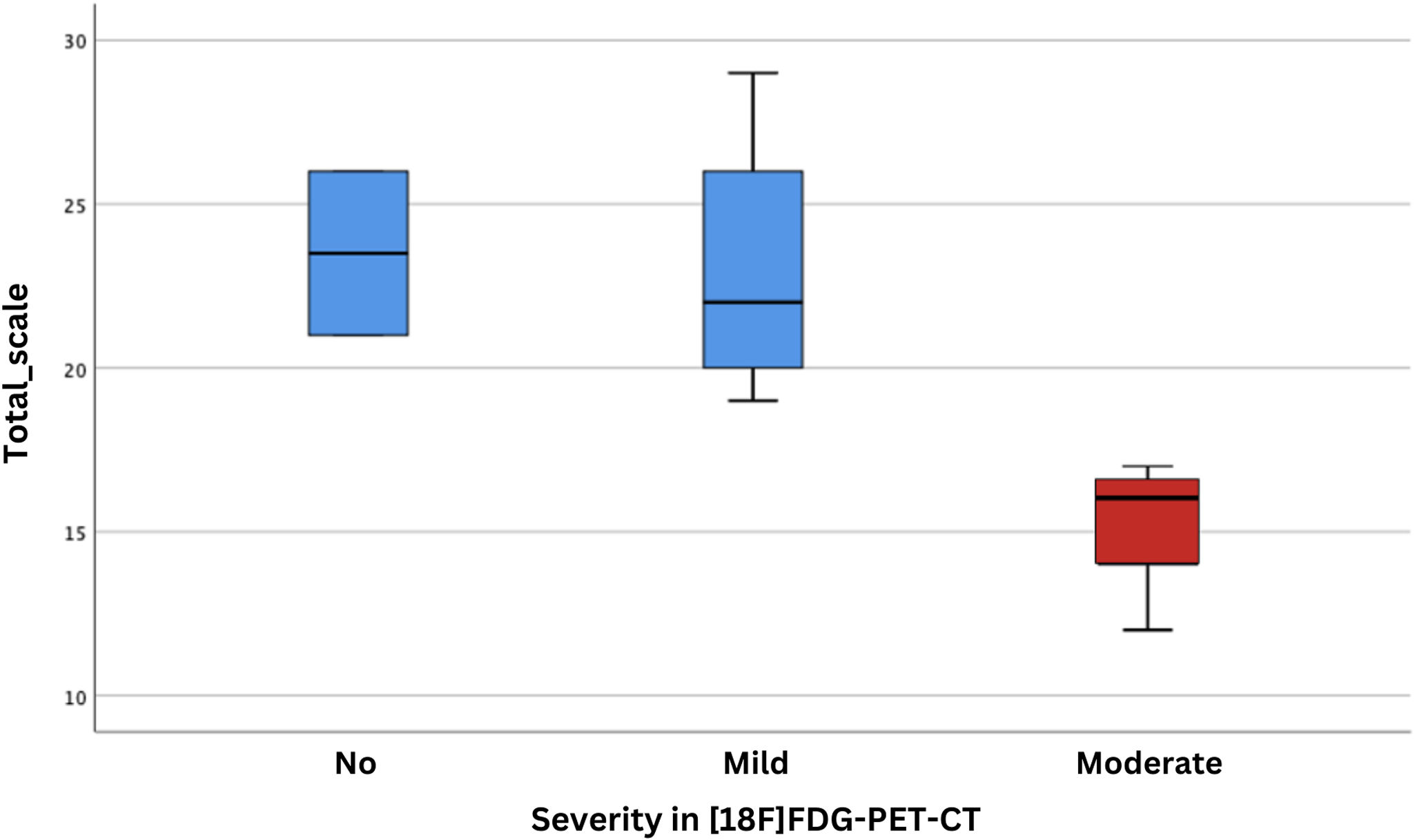
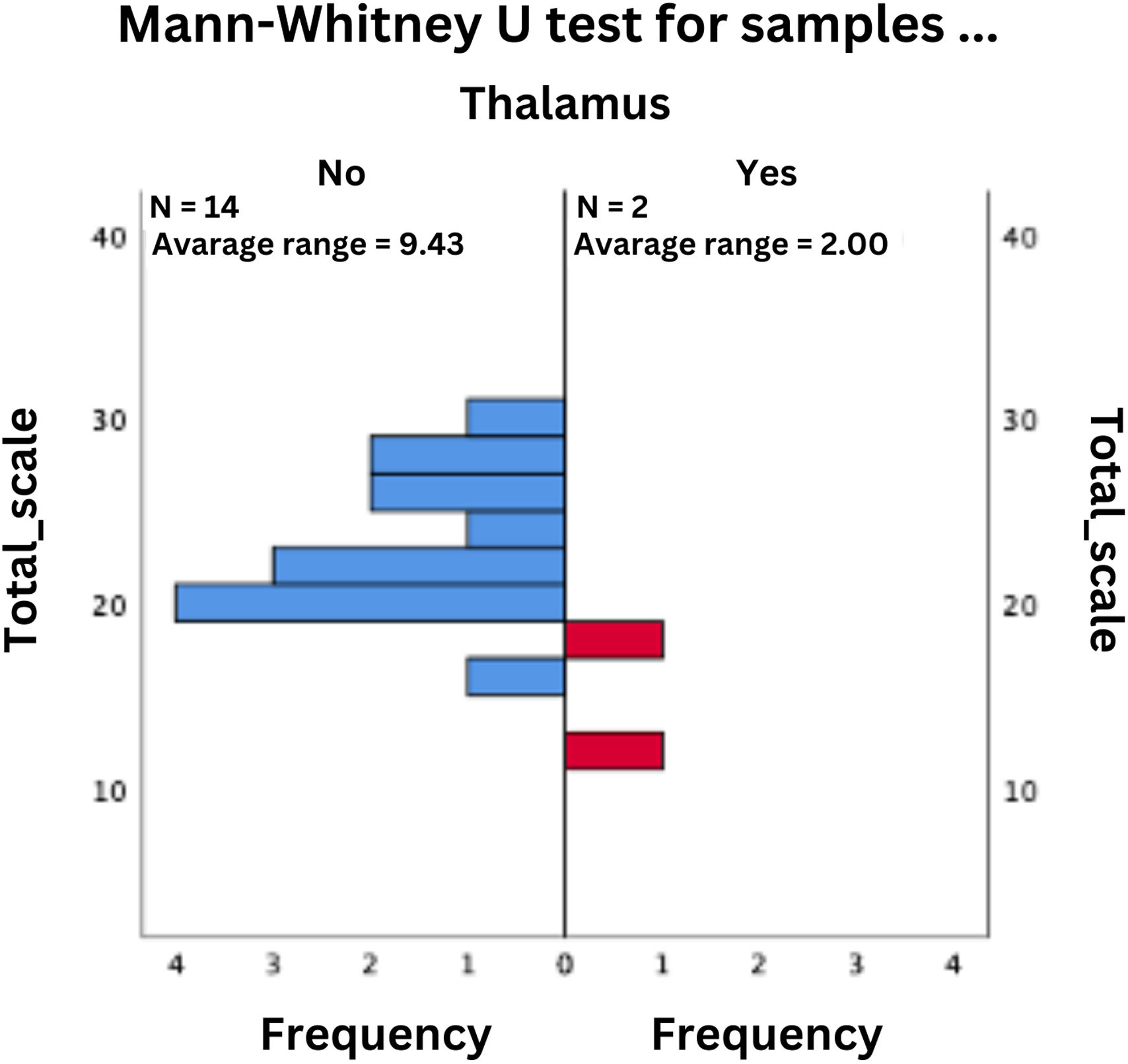
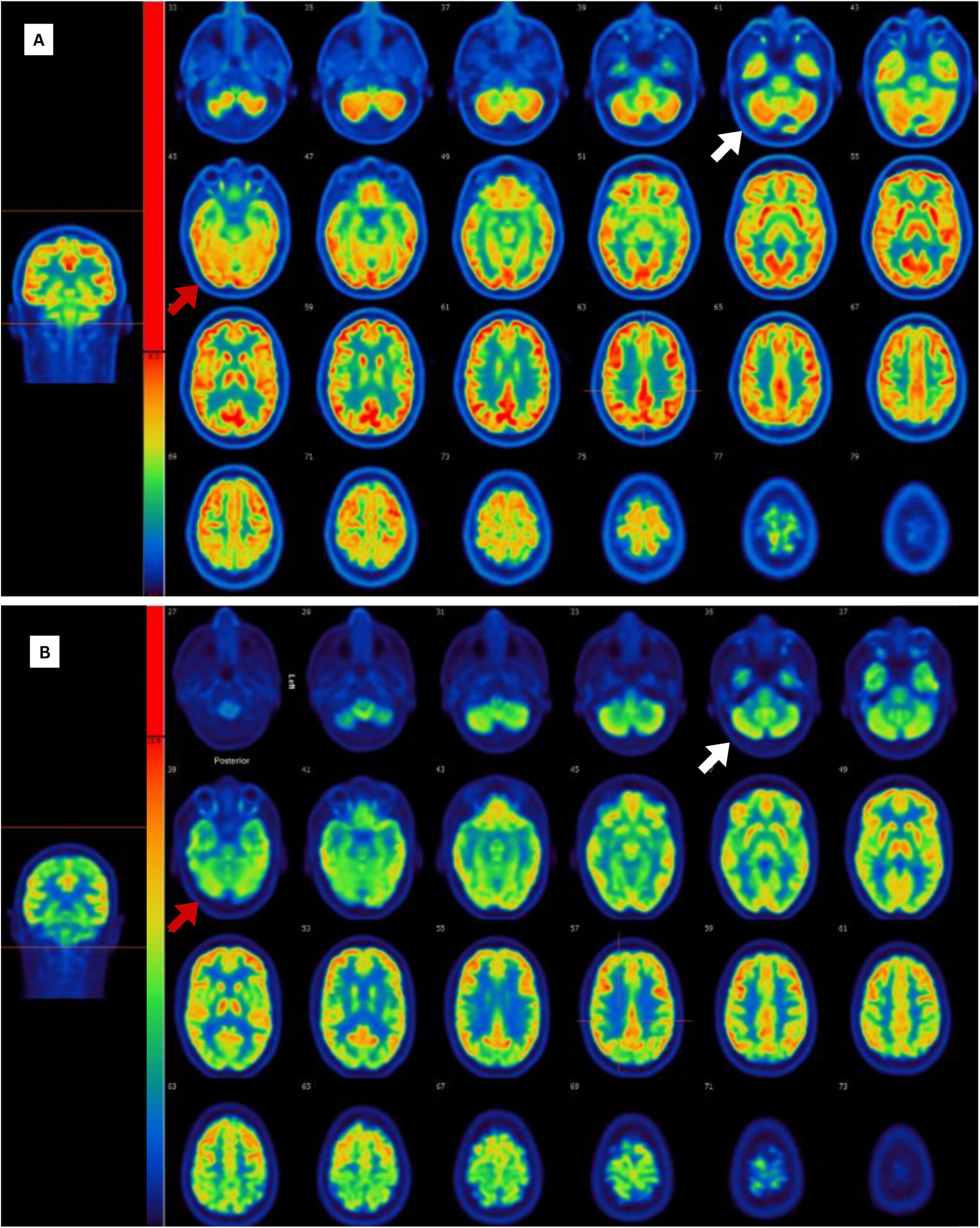
ResultsThe mean cognitive test scores demonstrated significant impairment. Patients predominantly exhibited mild hypometabolism across various regions, with the cerebellum identified as the most frequently affected area. Those with more pronounced [18F]FDG-PET-CT abnormalities exhibited greater cognitive deficits. Greater hypometabolism and thalamic involvement were associated with lower cognitive assessment score.
ConclusionWe support the role of cerebral hypometabolism in the development of neurocognitive impairment associated with Long COVID, although its underlying pathophysiological mechanisms remain to be elucidated. We further endorse the potential link between cerebellar hypometabolism and cognitive decline. Greater severity in brain [18F]FDG-PET-CT abnormalities and thalamic dysfunction may correlate worse cognitive impairment.
A pesar de la progresiva recuperación socioeconómica y sanitaria tras la pandemia por SARS-CoV-2, sus secuelas permanecen con notoriedad hoy en día. Entre ellas, el long COVID supone un deterioro significativo de la funcionalidad y calidad de vida. La afectación neurocognitiva se postula como una de sus manifestaciones más incapacitantes.
Pacientes y métodosEvaluamos 16 pacientes con long COVID y afectación neurocognitiva, cuantificando el grado de deterioro mediante test cognitivos y comparando los resultados con hallazgos en [18F]FDG-PET-TC cerebrales previamente realizados.
ResultadosLa puntuación media de los test cognitivos mostró un deterioro manifiesto. Los pacientes presentaron generalmente hipometabolismo leve de diferentes regiones, siendo el cerebelo el área más frecuentemente afectada. Un grado de afectación más severo en el [18F]FDG-PET-TC y la afectación talámica se asociaron con menores puntuaciones cognitivas.
ConclusiónApoyamos el papel del hipometabolismo cerebral en el desarrollo de la afectación neurocognitiva en el long COVID, cuyos mecanismos fisiopatológicos están aún por esclarecer. Respaldamos la posible relación entre el hipometabolismo cerebeloso y el desarrollo de deterioro cognitivo. Una mayor afectación en el [18F]FDG-PET-CT y la disfunción talámica podrían correlacionarse con un fenotipo más severo.

