




metricas
covid
Medicina Clínica (English Edition) Benign prostatic hyperplasia
Journal Information
Vol. 163. Issue 8.
Pages 407-414 (October 2024)
Vol. 163. Issue 8.
Pages 407-414 (October 2024)
Review
Benign prostatic hyperplasia
Hiperplasia benigna de próstata
Sarelis Infante Hernándeza,
Corresponding author
sarelis91@gmail.com

Corresponding author.
, Juan Gómez Rivasa,b, Jesús Moreno Sierraa,b
a Servicio de Urología, Hospital Clínico San Carlos, Madrid, Spain
b Universidad Complutense de Madrid, Facultad de Medicina, Departamento de Cirugía, Sección de Urología, Madrid, Spain
Article information
Abstract
Full Text
Bibliography
Download PDF
Statistics
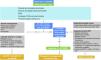
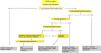
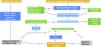
Figures (3)
Show moreShow less
Tables (3)
Table 1. Filling, emptying and postvoid symptoms.
Tables
Table 2. Interpretation of the IPSS score.
Tables
Table 3. Recommendations for patients with LUTS/BPH according to treatment modality.
Tables
Show moreShow less
Abstract

Benign prostatic hyperplasia (BPH) is a histopathologic definition associated with enlargement of the prostate gland that causes obstruction of the lower urinary tract and manifests clinically with characteristic symptoms that are what bring patients for consultation.

Urinary tract symptoms are common, especially in an increasingly aging population. Diagnosis and the decision on when and how to treat depend on the patient's quality of life and objective clinical parameters.

An individualized, risk-based approach is necessary to guide conservative, pharmacologic, or surgical treatment.

Keywords:
Lower urinary tract symptoms
Benign prostatic hyperplasia
Transurethral resection of prostate
Resumen

La hiperplasia benigna de próstata (HBP) es una definición histopatológica asociada al crecimiento de la glándula prostática, que genera obstrucción del tracto urinario inferior y se manifiesta clínicamente con síntomas característicos que son los que conducen a los pacientes a la consulta.

Los síntomas del tracto urinario son frecuentes, especialmente en una población cada vez más envejecida. Diagnosticarlos y decidir cuándo y cómo tratarlos depende de la afectación de la calidad de vida del paciente, junto con parámetros objetivos clínicos.

Es necesario un enfoque individualizado basado en el riesgo para orientar a un tratamiento conservador, farmacológico o quirúrgico.


Palabras clave:
Hiperplasia prostática benigna
Síntomas del tracto urinario inferior
Resección transuretral de próstata

Article

These are the options to access the full texts of the publication Medicina Clínica (English Edition)
Subscriber
Subscriber

If you already have your login data, please click here .

If you have forgotten your password you can you can recover it by clicking here and selecting the option “I have forgotten my password”
Subscribe
Subscribe to

Medicina Clínica (English Edition)

Purchase
Purchase article

Purchasing article the PDF version will be downloaded

Purchase now
Contact
Phone for subscriptions and reporting of errors
From Monday to Friday from 9 a.m. to 6 p.m. (GMT + 1) except for the months of July and August which will be from 9 a.m. to 3 p.m.
Calls from Spain
932 415 960
Calls from outside Spain
+34 932 415 960
E-mail
Article options
Tools