



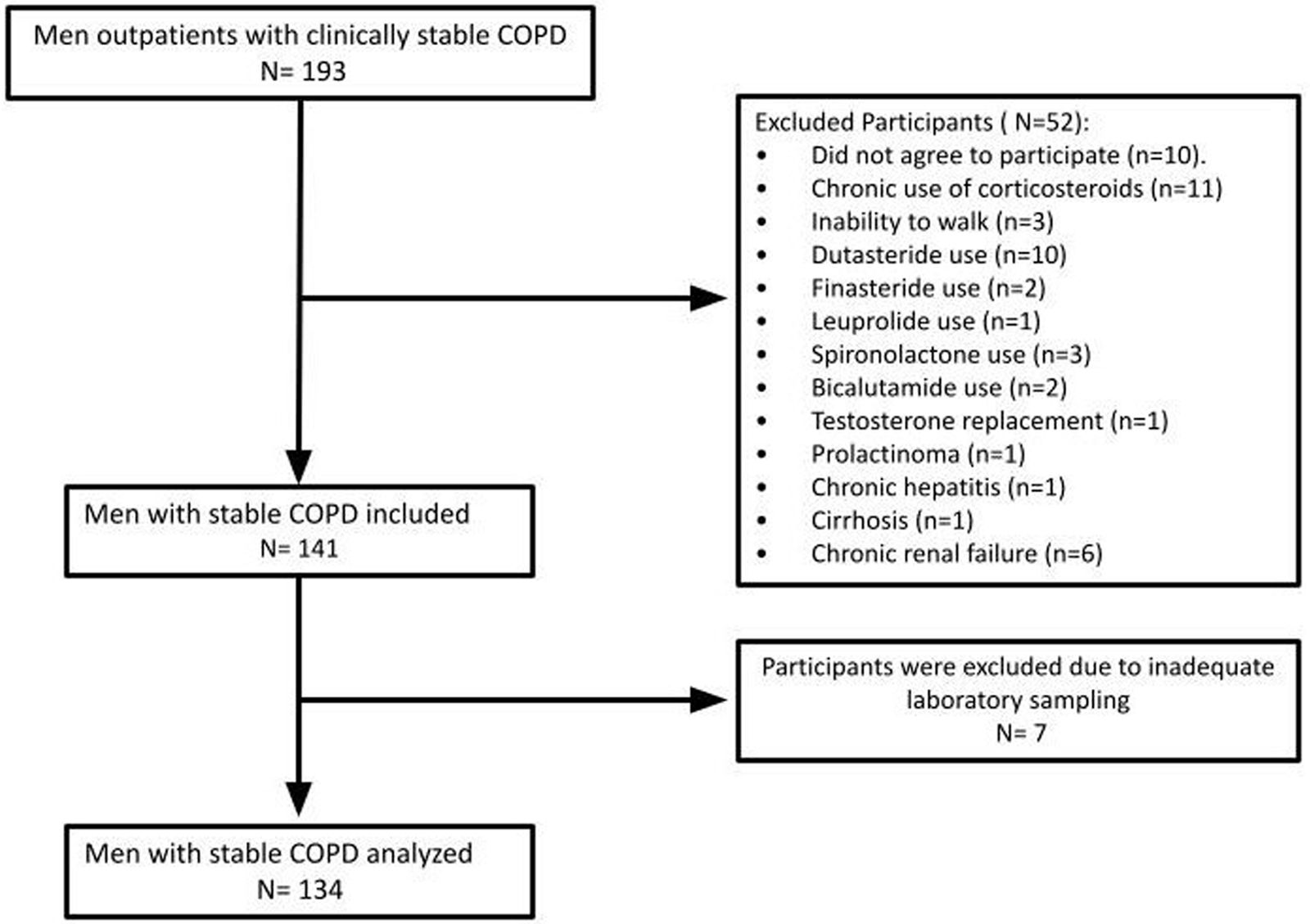
Chronic obstructive pulmonary disease (COPD) frequently coexists with other comorbidities, including hypogonadism. However, the association between COPD severity and hypogonadism remains controversial. This study aimed to evaluate this association and compare the clinical characteristics of hypogonadal and eugonadal COPD patients.
Materials and methodsA cross-sectional study including men with stable COPD was performed. Hypogonadism was diagnosed based on the presence of symptoms, according to the Androgen Deficiency in Aging Males questionnaire, and a total testosterone deficit (<300ng/dL). COPD severity was classified according to the Spanish COPD guideline risk classification. A multivariate logistic regression analysis was performed in order to evaluate the relationship between COPD severity and hypogonadism.
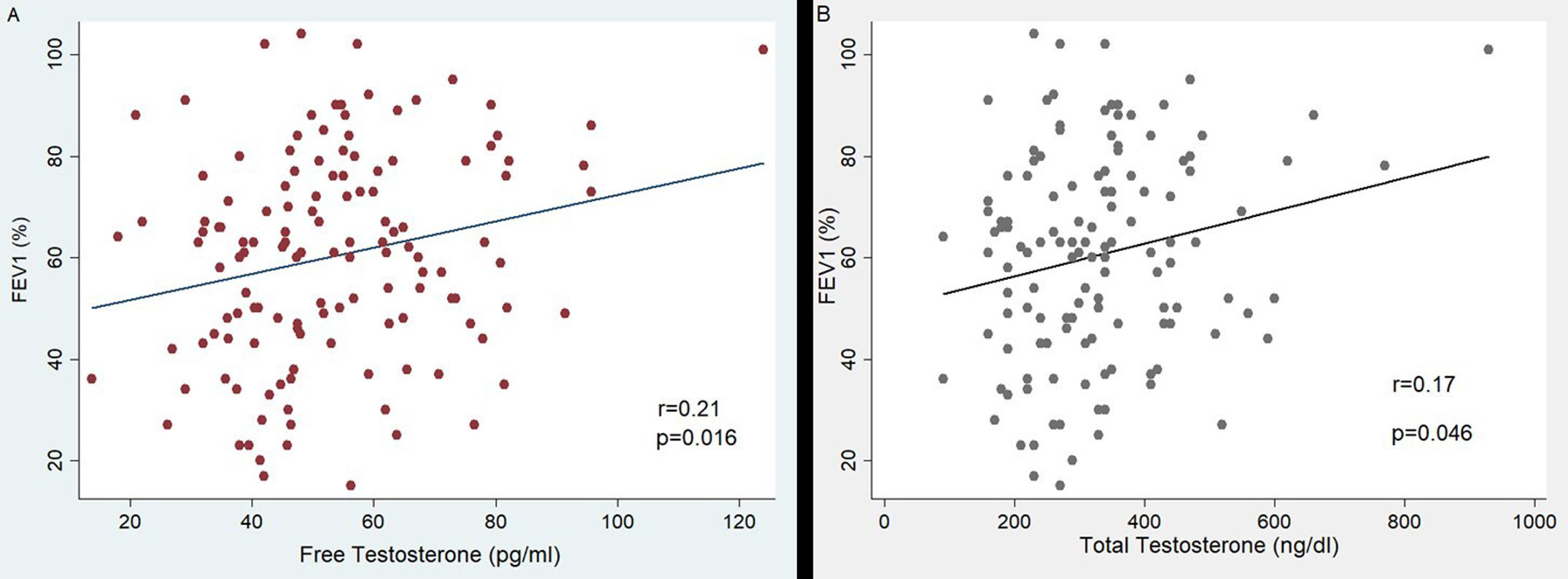
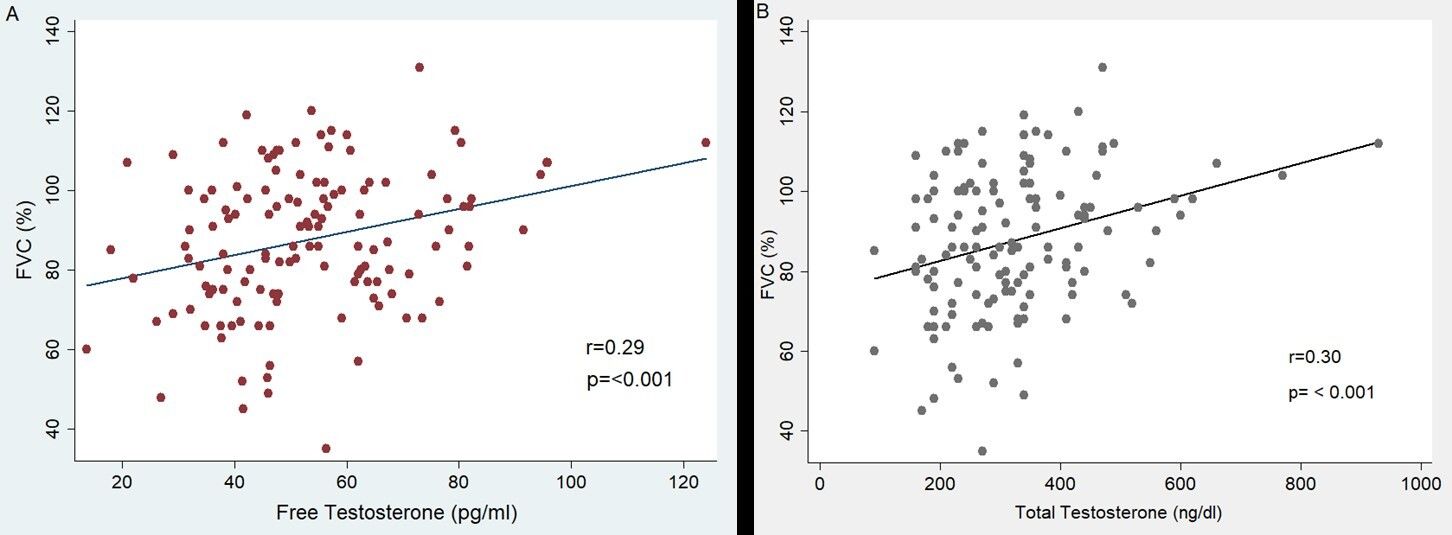
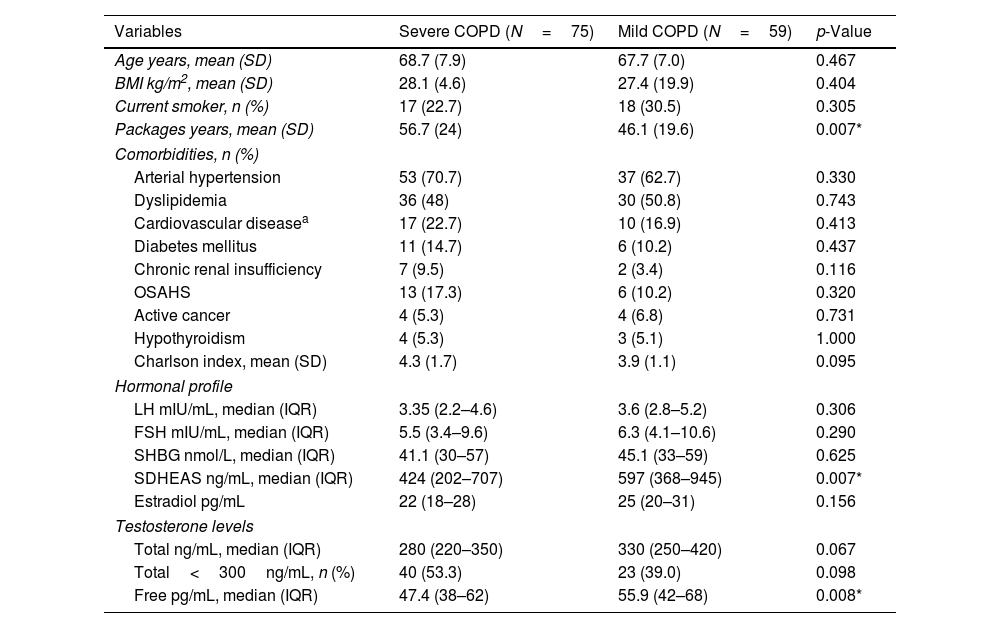
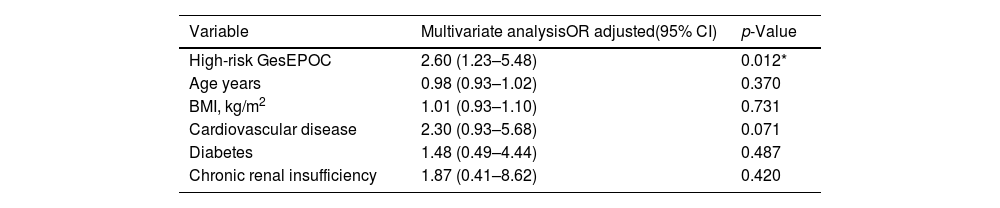
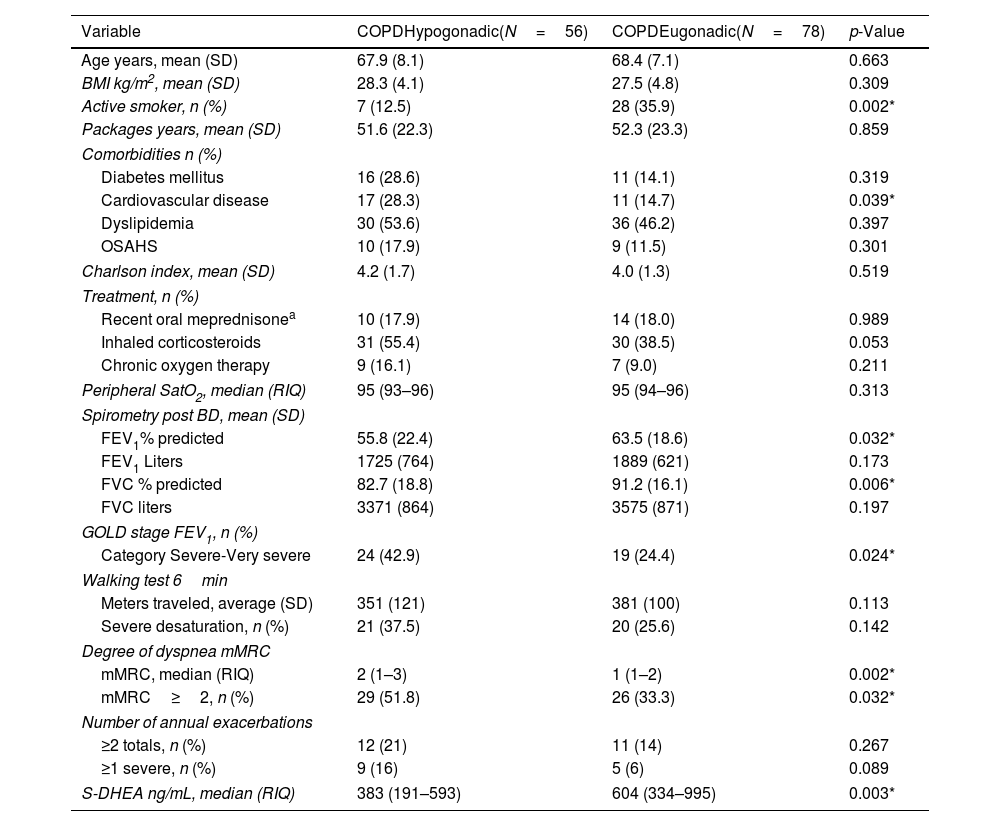
Results134 subjects were recruited. The prevalence of hypogonadism was higher in severe COPD than in mild COPD, with a prevalence ratio of 1.8 (p=0.007). An increased odds of hypogonadism was observed in severe COPD subjects (OR 2.60, 95% CI 1.23–5.48, p=0.012) independent of age, body mass index, cardiovascular disease, and chronic renal failure. Hypogonadal COPD patients exhibited lower percentage levels of FVC and FEV1 and a higher degree of dyspnea than compared to eugonadal COPD patients.
ConclusionPatients with severe COPD had a higher prevalence of hypogonadism compared to those with mild COPD. Additionally, severe COPD was identified as an independent risk factor for hypogonadism. These findings suggest that hypogonadism should be evaluated in patients with COPD, particularly in those with severe disease.
La enfermedad pulmonar obstructiva crónica (EPOC) coexiste frecuentemente con otras comorbilidades, incluido el hipogonadismo. Sin embargo, la asociación entre la gravedad de la EPOC y el hipogonadismo sigue siendo controvertida. El objetivo del estudio fue evaluar esta asociación y comparar las características de los pacientes con EPOC hipogonádicos y eugonádicos.
Material y métodosSe realizó un estudio transversal que incluyó hombres con EPOC estable. El diagnóstico de hipogonadismo se basó en la presencia de síntomas, según el cuestionario Androgen Deficiency in Aging Males, y un déficit de testosterona total (<300ng/dL). La gravedad de la EPOC se clasificó según la clasificación de riesgo de la guía española de EPOC. Se realizó un análisis de regresión logística multivariado para evaluar la relación entre la gravedad de la EPOC y el hipogonadismo.
ResultadosSe reclutaron 134 sujetos, encontrando una mayor prevalencia de hipogonadismo en EPOC grave en comparación con EPOC leve, con una razón de prevalencia de 1,8 (p=0,007). Se observó un aumento del odds de hipogonadismo en pacientes con EPOC grave (OR 2,60 IC 95%: 1,23-5,48, p=0,012) independientemente de la edad, el índice de masa corporal, la enfermedad cardiovascular y la insuficiencia renal crónica. Los pacientes con EPOC hipogonádicos mostraron menores valores de FVC y FEV1 y un mayor grado de disnea que los pacientes con EPOC eugonádicos.
ConclusiónLos pacientes con EPOC grave tuvieron una mayor prevalencia de hipogonadismo en comparación con los EPOC leve. La EPOC grave se identificó como un factor de riesgo independiente de hipogonadismo. Estos hallazgos sugieren que el hipogonadismo debe evaluarse en pacientes con EPOC, particularmente en aquellos con enfermedad grave.

