




Our study delves into understanding the bottom-up processes within a public service delivery system by studying the last-mile interactions between frontline workers, citizens, and other stakeholders. Specifically, we focus on these aspects in the context of the Solid Waste Management (SWM) system, and a proposed intervention under the Smart City Mission, in the city of Bengaluru, Karnataka. The paper aims to grasp the current functionality and structure of the SWM system, and the role of different actors and their interactions in sustaining it. We employ qualitative methods such as participant-observation-based ethnography, interviews, focus group discussions, and review of documents related to the intervention, to understand the inner workings of the system and the potential disruption from the intervention. We adopt a complex adaptive systems framework to analyze our findings and highlight a set of design requirements and principles that must be acknowledged and incorporated into the proposed intervention to ensure the resilience of the SWM system. We also present practical implications for Information System (IS) designers by recommending relevant design features for the Smart City Intervention (SCI), drawing upon the features of an existing digital public infrastructure whose architecture is underpinned by a similar set of design principles identified in our study. Additionally, we discuss pertinent policy implications in the context of effectively governing the SWM system alongside the intervention, building on the design implications.
What should a Public Service Delivery (PSD) system optimize for? With the growing urban population, demands and expectations for service delivery are also rising. To address these challenges, governments are increasingly embracing smart technologies with the potential to provide intelligent, responsive, accelerated, and sustainable solutions to foster innovative governance arrangements (Jiang, 2021; Meijer & Bolívar, 2016). At the forefront of this shift is the emergence of smart cities, which leverage smart technologies like the Internet of Things (IoT), Artificial Intelligence (AI), and others, to build networking and data layers for efficient management of PSD in cities. This configures a unique, robust, and connected data and information ecosystem between the state and its citizens (Sharma et al., 2023).
In 2015, the Indian government launched the Smart City Mission (SCM) to leverage data collected from various infrastructure systems within a city and use the digital capabilities intelligently for predictive analysis, enabling evidence-based decision-making (Parthasarathy & Sastry, 2019) and automation-oriented smart applications (Kitchin, 2014; Sharma et al., 2023) for service delivery, all with the commonly recognized goal of improving urban quality of life (Parthasarathy & Sastry, 2019).
However, Smart City Interventions (SCI) predominantly follow top-down approaches, where powerful actors such as government, private entities, and academic consultants drive smart technology initiatives to improve urban governance (Burns & Welker, 2023). While these technologies offer transformative benefits, SCI often faces criticism for prioritizing technology over people and for being preoccupied with identifying applications for emerging technologies rather than finding technologies and channels already solving issues daily in the real world (Saunders & Baeck, 2015). These interventions often fail to acknowledge the existing last-mile context where the smart city applications are deployed. This oversight frequently leads to exclusion and neglect of local innovations that meet specific needs, (Constantin Vasile & Liviu Mocan, 2019) resulting in a gap between promised and delivered services (Saunders & Baeck, 2015).
Additionally, SCI predominantly promotes online channels with smart technologies for interactions between state actors and citizens through various PSD projects (Brandt et al., 2018; Docherty et al., 2018; Singhania & Kinker, 2015). While aiming to automate PSD tasks, these interventions overlook the burdens on human intermediaries who support these channels (He et al., 2020; Lepore et al., 2023; Subbanarasimha et al., 2023; Williams et al., 2022). These intermediaries are preoccupied with repetitive tasks like data collection, labeling, meeting documentation, and logging, which impacts the end-users decision-making autonomy (Docherty et al., 2018; Venumuddala et al., 2024), the dignity of labor and workload (Williams et al., 2022), leading to reduced time for in-person interactions at the last mile.
The practical difficulties, technical hurdles, and daily delivery challenges confronted by the end-users of the PSD system are often experientially rich with embedded local knowledge (Mattern, 2017). However, they are frequently omitted, overlooked, and rendered invisible in the SCIs (Parthasarathy & Sastry, 2019). Although there is growing literature on human intermediaries (Caves & Oswald-Egg, 2024; Michel, 2024), there is still limited understanding of the rigorous work performed and the role played by front-line workers to sustain the PSD system. Motivated by this gap, this paper highlights the essential yet often-invisible work of these front-line workers, exploring: 1. What is the existing role of front-line workers—human intermediaries facilitating services at the last mile—in the functioning of the PSD system? 2. What are their various networks of interaction? 3. How does the government-proposed SCI influence the existing system? and 4. What implications does this have for rethinking such interventions? To this end, we examine the case of Solid Waste Management (SWM) in Bengaluru, Karnataka, and the proposed SCIs within this existing PSD system, to investigate the current situation of, and the potential disruptions to, the bottom-up processes, last-mile interactions, and work practices of front-line workers.
To investigate the work practices of frontline workers in the SWM system as an empirical case and real-world phenomenon, our research employs ethnographic qualitative methods for data collection, including participant observations (both physical and digital), semi-structured interviews, and focus group discussions spanning over a year. We opted for field-work-based methods to gain a deep understanding of the social practices, interactions, and narratives of frontline workers through their lived experiences in their natural work environments. Participant observation and focus group discussions took place across various Bengaluru wards, where we accompanied frontline workers, attended committee meetings, and interviewed end-users. Additionally, we reviewed secondary sources like project reports, tender documents, smart city guidelines, and maturity frameworks to contextualize the proposed SWM interventions.
We adopt a complex adaptive systems (CAS) framework to structure and analyze the findings on the current SWM system without the intervention, explore potential disruptions from the intervention, and suggest design requirements, principles, and features to address these disruptions. CAS framework motivates one to observe systems in hierarchical levels, where agents interact within their environment (Cilliers, 2001; Nan, 2011). CAS theory demonstrates that diversity and redundancy among agents and their interactions are essential features, enabling systems to self-organize from the bottom-up and adapt to external disruptions (Heylighen et al., 2006), making systems robust, fault-tolerant, and resilient (Heylighen et al., 2006; Nel & Nel, 2021). This approach is informed by existing literature that recognizes urban systems as bottom-up structures, driven by local interactions that contribute to system resilience (Nel et al., 2018).
Our research illustrates the importance of informal last-mile interactions and work practices of frontline workers in enhancing the SWM system's resilience to disruptions and uncertainties. We observed diverse formal and informal interaction channels between frontline workers, citizens, and other PSD actors, as well as a redundancy of actors performing similar roles, particularly among frontline workers delivering last-mile services. Our findings illustrate that these complexity features of diversity and redundancy enable the current SWM system to self-organize, adapt, and stay resilient to external disruptions and intrinsic uncertainties.
Overlaying the proposed SCM intervention within the current SWM system risks disrupting the informal interaction networks among system actors. It prioritizes top-down processes through online channels, affecting both city officials’ interactions with citizens and frontline workers. Our findings highlight how these smart solutions impact frontline work practices and actor interactions—especially at the last mile—by limiting frontline workers' autonomy and creating a paradox of dual expectations leading to reduced SWM system's diversity and redundancy. This, in turn, threatens the system's resilience against disruptions and uncertainties, raising issues of privacy, neglect, and exclusion.
Our CAS analysis outlines design requirements and principles essential for maintaining SWM system resilience, which should be incorporated into the proposed intervention. We provide practical recommendations for IS designers, suggesting relevant features for the SCI based on an existing digital public infrastructure whose architecture is underpinned by a similar set of design principles identified in our study. Additionally, we discuss policy implications for effectively governing the SWM system alongside the intervention, using these design insights.
We hope this work encourages policymakers and technologists to collaborate on interventions that sustain, rather than disrupt, the complexity features of current socio-technical systems. Our study argues that such carefully designed interventions are key to ensuring resilience in any PSD system.
Background and theoryPublic service delivery systems and smart citiesThe term ‘public service’ refers to the services provided mainly by governmental agencies, directly or through private businesses, to fulfil the basic needs and core expectations of the citizens (Osborne, 2023). PSD systems in cities consist of manpower and infrastructure that facilitate the provision of essential services such as water, energy, solid waste management, transportation, etc. Such systems are often seen in terms of networks of operations personnel and infrastructural components together ensuring the flow of services from the suppliers, like the city authorities, to the consumers, i.e., citizens (Watson et al., 2010).
While the central governmental agencies within a city administer and manage these networks that make up any PSD system, operations personnel facilitate the delivery of services at the last mile to the citizens. Their role is vital in ensuring the day-to-day functioning of the system, addressing citizen grievances locally, and providing feedback to the central administrators (Singhania & Kinker, 2015). Since citizens ultimately bear the costs of PSD, they sometimes engage in deviant behaviors to minimize these costs—actions that may go unobserved by administrators. Such behaviors, which deviate from expected norms, increase uncertainty and make the environment more complex and unpredictable for administrators (Fledderus et al., 2015). This lack of control and rising uncertainty can impact both the efficiency and sustainability of service delivery outcomes (Fledderus et al., 2015) and the system as a whole. To mitigate these uncertainties and avoid suboptimal decision-making (Fledderus et al., 2015), city administrators often rely on operations personnel who interact directly with citizens, nudging or guiding behavior to enhance system efficiency and sustainability.
With the advent of smart technologies like IoT and AI in the context of SCM for PSD, city authorities are now increasingly leveraging edge devices situated close to the citizens, to monitor their actions closely and nudge their behavior through pricing policies (Adil & Ko, 2016; Faruqui & George, 2005). Zysman et al. (2010) argue usage of smart technologies is transforming service activities, altering how PSD is conducted and service value gets created. Traditionally, as explained above, service value was created through the experiential process of direct interactions between city administrators, operations personnel, and citizens, shaped by the specific context and the needs, expectations, and experiences of those involved (Osborne, 2023). However, as interactions increasingly move online, the focus on value creation is shifting, giving rise to new challenges—particularly around interpersonal inferences of trust (Saunila et al., 2017), privacy risks (Davies, 2015; Kitchin et al., 2017) and the ability to survive or thrive in the digital service delivery ecosystem (Peters et al., 2016).
Consequently, SCIs add an extra layer of digital data-rich complexity (Osborne, 2023) by generating vast amounts of digital data, requiring city authorities to focus heavily on data management and monitoring. Hence as PSD systems increasingly rely on digital technologies and their application for service delivery, they risk losing valuable local, experiential knowledge provided by front-line personnel, ultimately making it harder to tailor services to community needs. While previous studies have highlighted these tensions between top-down and bottom-up approaches (Constantin Vasile & Liviu Mocan, 2019; Mattern, 2017; Parthasarathy & Sastry, 2019; Saunders & Baeck, 2015; Williams et al., 2022), our research emphasizes the critical role of informal, last-mile interactions and the frontline work practices in preserving local insights, making PSD systems more effective and relevant.
Smart city interventions and the neglect of informal networkSCI has been constructed and has emerged as an innovative solution to various urban challenges, such as traffic congestion, crime, waste management, public safety, water shortages, etc. With the rise of IS-driven approaches in SCI, city authorities are increasingly focusing on utilizing ICT solutions with emerging tracking capabilities to deliver public services more efficiently to citizens (Adejuwon, 2018; Ismagilova et al., 2019). City authorities often concentrate on optimizing the outcomes and benefits of PSD to citizens through smart technology solutions, rather than focusing on the operations personnel or human intermediaries involved (He et al., 2020). The usage of digital technologies in SCIs is expected to establish a direct connection between city authorities and citizens, potentially replacing human intermediaries with online interaction channels at both individual and institutional levels (Chaudhuri, 2019; Heeks, 2001). When end-users or citizens become the primary focus for achieving an efficient PSD system under SCI, and the crucial role of last-mile intermediaries and operations personnel is overlooked, the resulting smart city project may fail to address the actual needs of these intermediaries. This oversight can widen the gap between the promised benefits of technology and the real user experience.
Although the structure of SCI systems in cities is largely top-down—designed to rely on formal channels of interaction—recent literature increasingly highlights the critical role of hyperlocal, informal interactions in sustaining these systems (Nel & Nel, 2021). Further Bobbins et al. (2024) argue that formal and informal channels often cross boundaries, negotiate, complement, and influence each other, while also experiencing tension and friction in the real-world scenario. Together, these dynamics play a crucial role in shaping and developing PSD systems. Such interactions are seen to structure the service delivery systems from both top-down and bottom-up and help them to be resilient (Bobbins et al., 2024; Nel et al., 2018). While Nel et al. (2018) and Nel and Nel (2021) examine system boundaries and map change patterns through hyperlocal interactions and bottom-up processes in urban planning, Bobbins et al. (2024) reposition the concepts of 'formal and informal' to emphasize avenues for citizen autonomy. However, the role of frontline workers—their decision-making autonomy, interaction channels, influence on system resilience, and ability to address uncertainties—remains underexplored, especially in an Indian PSD system under SCIs. To bring these perspectives to the forefront, a more nuanced study in the Indian urban context is necessary. We conduct such an investigation within the SWM system in Bengaluru, analyzing potential disruptions to bottom-up processes, last-mile interactions, and frontline work practices due to proposed intervention on the existing PSD system.
Framework of complex adaptive systemsHolland (1995) defines CAS as “systems composed of interacting agents described in terms of rules… the agents adapt by changing their rules as experience accumulates.” The CAS theory has been extensively utilized as an analytical tool to unpack the complexities of real-world socio-technical systems, for example, to understand interactions between stakeholders in public health systems (Tan et al., 2005), understand the emergent patterns of human settlements in cities (Nel et al., 2018), model electricity systems (Wildberger, 1997), and analyze IT-use in organizations (Nan, 2011).
The CAS theory can be used in understanding complex systems, systems that involves numerous interacting components that continually shift and evolve, either autonomously or in response to their surrounding environment (Simon, 1996). This aspect of complex systems contributes to emergent behaviors that are often unpredictable and uncertain. However, to cope with this uncertainty, the components of the system adapt and self-organize themselves to find a ‘fit’ between the system and the environment (Heylighen, 2001). Self-organization can be conceptualized as the spontaneous emergence of a globally coherent pattern from local interactions, with adaptivity as a system property aiding in adjusting to this emergence while maintaining the system intact as much as possible (Heylighen, 2001). The system's inherent self-organization and adaptivity allow it to endure internal tensions and external disturbances, showcasing resilience to uncertainties and disruptions (Tan et al., 2005).
In a CAS multiple agents with varied interests interact regularly by collaborating, cooperating, or even competing with each other within the system's environment. These complex networks of interactions between agents are typically characterized by two features: diversity and redundancy. Diversity exists in terms of the varied roles and capabilities exhibited by different agents, and diverse channels of interaction between them. Redundancy on the other hand exists by virtue of having multiple agents, or multiple interaction channels between any two agents, that perform similar function(s) within the system. These two features, diversity, and redundancy, are necessary for the system and its subsystems (e.g., composed of local and hyperlocal interactions) to self-organize and adapt (Cilliers, 2001; Heylighen et al., 2006). In the event of external perturbations, diversity enables at least some of the agents or interaction channels to cope, adapt, and maintain the system. Similarly, redundant agents and interaction channels help the system to reorganize when some of them fail to function. These complexity features are therefore essential to the self-organization and adaptivity of the system and also make it fault-tolerant, fail-safe, and ultimately resilient to disruptions (Heylighen et al., 2006; Nel & Nel, 2021).
The CAS theory foregrounds these concepts which are intrinsic to a system but often gets obscured when one analyzes the system in a top-down manner. It is employed as an analytical framework to understand and untangle the bottom-up processes, by emphasizing the agents, interactions, and the environment where these interactions manifest, at different levels within the system (Nan, 2011). First, agents are human or non-human entities that execute actions within complex adaptive systems. They are characterized by attributes, detailing their knowledge base and adaptive capacity within the system, as well as behavioral rules that govern their actions based on interests, meanings, values, and understanding. Second, interactions are connections, flow of conversations, and functions of agents that produce interaction patterns. The connection provides information about interrelationships and links formed between agents within the system. Over the continued interactions these connections evolve and form new potential channels where interactions happen. Flow is the movement of information between agents through connections formed. The third component is the environment, a medium, setting, or context where agents operate and interact with each other. The environment of a system or its subsystems is defined by the structures that dictate how agents at that level (system or any subsystem) interact with each other (Nan, 2011).
This paper employs the aforementioned aspects of CAS to analyze the current structure of the SWM delivery system and its proposed intervention under the SCM in Bengaluru, Karnataka. Analyzing the impact of the proposed intervention through CAS therefore entails two things – a) identification of complexity features of the current system that may be affected by the intervention, and b) analysis of how these features may contribute to the self-organizing and adaptive properties of the system that are necessary for it to be resilient to uncertainties and disruptions. This way of using CAS for analysis helps us to identify necessary requirements for designing information systems under smart cities that continue to sustain, rather than disrupt, the public service delivery systems (Venumuddala et al., 2024).
Designing digital public infrastructuresDeveloping design requirements, deriving design principles, and mapping these principles to design features are some of the key activities associated with the design of any information system (Chanson et al., 2019). In the context of SCIs, we rely on the output of CAS analysis to come up with a broad set of design requirements and corresponding design principles that the interventions need to incorporate to support the resilience of PSD systems. Subsequently, we draw upon existing literature on Information Systems (IS) Design to suggest recommendations around broad design features.
Literature that deals with the design of transitional systems, where technological interventions are designed to take the current systems in the direction of efficiency and sustainability improvement, is relevant in this context. Architectures of real-world Digital Public Infrastructure (DPI) - a set of shared digital systems built on open standards and specifications intended to provide equitable access to public and/or private services at a societal scale – provide a promising direction to explore the necessary design features that should go into SCIs (UNDP, 2023). The design of DPIs is typically underpinned by principles fostering inclusivity, sustainability, an environment of innovation, trust, competition, and respect for human rights and fundamental freedoms (UNDP, 2024).
Some notable examples of DPI include interoperable digital technology stacks for the effective management of water, energy, mobility, etc., in cities. These technology stacks are commonly referred to as smart grids (UNDP, 2024). Extant literature within is presents useful insights into the type of design features that should go into such DPI. For example, Adil et al. (2016) highlight important design features that technological interventions need to support to ensure a sustainable co-evolution of social and technical components in the existing electricity grid systems. Chanson et al. (2019) propose the design of a Blockchain and IoT-based intervention that incorporates features which meet the principles of data security, scalability, user-privacy-preservation, and user autonomy in the context of a logistics use case. The authors also present the generality of these features to actualize similar principles in other networked systems like supply chains, smart grids, etc. Brandt et al. (2018) conceptualize IS design features in the context of enhancing legacy urban infrastructure systems towards IoT-based cyberphysical systems. Venumuddala (2024) proposes design features in an AI-based information system that can facilitate data-driven contracts to improve cold-chain transport systems. The proposed Open Network for Digital Commerce (ONDC) in India envisages the transition of the e-commerce ecosystem from being a monopolistic and platform-centric system, towards being constituted by more decentralized and democratic open networks that privilege hyper-local transactions (ONDC, 2022b).
Research methodologyResearch designHerbert Gans (1962) once pointed out, that the purpose and methods of a study are closely related to its findings, having a significant impact on the research outcomes. Our purpose in this study is motivated by the desire to gain a descriptive understanding of the daily work practices, processes, and people at the last mile who sustain the current PSD system. We believe that the ethnographic method of inquiry will allow us to study the real-world phenomena of frontline workers’ activities as they occur, without isolating their work from the other interconnected activities in space and time (Blomberg & Karasti, 2013). This is one of the reasons that our primary set of data collection is from ethnographic methods and participant observations. However, without the contextual understanding of SCI and the SWM systems our results and inquiry become limited and misleading. We also relied on secondary sources of data collection, more specifically, a comprehensive review of related literature and government records related to proposed projects under SCI and SWM systems. The below table provides detailed information of our inquiry [refer to table 1].
Showing the details of respondents of our study.
This research, involving a range of stakeholder groups and multiple inquiry sites, necessitated a collaborative approach to data collection, analysis, conceptualization, review, and supervision. The first author conducted participant observations and semi-structured interviews with ward-level officials, frontline workers, and end-users through field immersion, while the second author gathered data from secondary sources, conducted interviews with city officials, and collaborated with the first author in data analysis. The third and fourth authors contributed to conceptualization, review discussions, and research supervision. This collaborative effort fostered in-depth discussions that ultimately strengthened our arguments and findings.
Data sourcesOriginating from the field of anthropology, ethnographic studies has developed as one of the powerful methods to explore the everyday realities of people and their activities in their natural setting (Blomberg & Karasti, 2013). To truly understand the world of end-users, we believed it was essential to experience their work environments, where bottom-up processes, practices, and interactions naturally unfold. For this reason, our study relies extensively on ethnographic fieldwork for primary data collection, incorporating participant observations, semi-structured interviews, and focus group discussions involving various stakeholders engaged in the SWM system. Over the course of a year, we conducted both physical and digital ethnographic research with stakeholders at different levels within the system. Physical ethnography entailed observing participants in diverse settings such as dumping grounds, waste collection sites, sweeping areas, ward offices, and union meetings. Additionally, we conducted a digital ethnography of four ward-level WhatsApp groups over a Ten-months, observing daily conversations within these groups involving Resident Welfare Associations (RWA), Civil Society Organizations (CSO), and city officials regarding the SWM system.
We realized that participant observation alone limited our understanding of specific encounters, engagements, and the particular language used among frontline workers. Therefore, we incorporated semi-structured interviews to gain deeper insights into the perspectives of the individuals we were studying. These interviews were conducted in the participants' natural settings while they carried out their work, including city officials at various levels involved in the SWM system. Our interviews included forty individuals and three focus group discussions, involving a total of 68 participants over the course of a year. The categories of interviews and focus groups include: (a) Four smart city officials responsible for overseeing, monitoring, and managing the SCI projects at different levels in the Karnataka government (b) Five academicians from educational institutions specializing in designing various SWM interventions, (c) Two focus group discussions done with a month's interval at different wards of Bengaluru city involving union leaders of frontline workers and ward-level officials responsible for administering SWM, (d) One focus group with CSOs and city officials discussing the challenges of SCI and SWM interventions at the last-mile, (e) Twenty-five interviews with frontline workers or Pourakarmikas directly involved in the SWM system in their work environments, and (f) Five end-users of the SWM system from diverse settings, including residents, hotel staff, and security guard of apartments.
We conducted secondary data collection to enhance our understanding of the growing scholarship on the complexity of last-mile delivery and the current state of the SWM system in the region by performing a comprehensive review of academic journals and news articles. We also reviewed published smart city project documents, including tenders, maturity assessment frameworks, protocols, and reports from government intervention projects, to understand the efforts made by the officials working on the SWM projects to enhance the efficiency of the PSD system.
Employing ethnographic research methods allowed us to study, interact with, and understand the perspectives of participants within their everyday surroundings, particularly how they collaborate to accomplish tasks. The participants shared their lived experiences and the daily challenges they face to sustain themselves in their work environments. These approaches facilitated a reflective comprehension of both the last-mile interactions and work practices within the SWM context. The semi-structured interviews provided clarity for many actions and conversations that were not obvious during our observations. Initial interviews with city officials provided insights into ongoing efforts and the challenges they recognized to improve the performance of the SWM service delivery system. Alongside project documents, the interviews with city officials helped us understand the current system, its formal channels of operation, the involved agents, and their efforts toward improvement. Insight from academic consultants from educational institutions gave us insights regarding technology designs, policy reviews, and proposed digital solutions for various SWM service delivery projects. The interviews with city officials, and academic consultants provided perspectives primarily on the top-down approaches.
To obtain a more comprehensive understanding of bottom-up processes, last-mile interactions, and frontline workers' experiences, we conducted different sets of semi-structured interviews and focus group discussions exclusively for union leaders and Pourakarmikas. Conducting exclusive interviews with Pourakarmikas encouraged them to discuss their issues more openly, without fear of consequences. The initial discussions with Pourakarmikas yielded valuable insights into the work processes, the hierarchy of control, a network of interactions, and work routines. Additionally, our interviews with end-users who utilize the services provided by the SWM system such as residents, hotel staff, security guards, and civic communities enabled us to understand their perspectives and how they navigate the challenges posed by the current SWM system's service delivery.
Data analysisWe have triangulated the insights obtained from the series of interviews, focus group discussions, and participant observations conducted for a year to build an empirical case of the SWM service delivery system under SCM in Bengaluru, Karnataka. The data collected from the ethnographic inquiries were written down in the field notes, and placed in both digital and manual dairies daily. The field notes included direct quotations and dialogues from participants, capturing their context, identity, and positions, as well as instances of multiple individuals speaking simultaneously. In the initial stage of analysis, we focused on transcribing these dialogues and translating them from Kannada, the regional language used in most interviews and observations, into English. This process helped preserve the nuances of participants' perspectives and ensured that their voices were accurately represented in our findings. The transcriptions were subsequently used for coding and making further notes regarding the content of the observations, recordings, and interviews. By the end of our field study, the field notes comprised approximately 45,400 words in our digital diary and 40 pages of manual entries. The second stage of analysis involved a series of discussions among the authors to familiarize ourselves with the interview transcriptions and the reflective notes recorded by the first author. This stage was crucial, as the other three authors, who were not involved in participant observation and field immersion, helped balance the insider-outsider perspectives, providing valuable external insight for data analysis. These discussions played a key role in interpreting our field data. We documented these analytical notes alongside the transcriptions, which greatly facilitated the finalization of codes.
In the third stage, we coded substantive elements such as actors, their emotions, behaviors, contexts, locations, and choices made during observations and interviews. The initial coding phase produced a long list of labels, which were then refined through multiple rounds of open coding and labeling. The data were thematically coded to identify meaningful patterns and to develop overarching themes.
In the fourth and final stage, we categorized these themes, selecting the most relevant ones to support our argument for the paper. Through multiple discussions, we identified key themes to strengthen our conceptual framework and narrative. Notably, we did not use any analysis software for this study; instead, the analysis was conducted manually, allowing for a more hands-on and interpretive approach. By using direct quotes from our interviews as data points, we applied an interpretive analytical approach to examine the proposed SWM intervention and the last-mile interactions and work practices within the current system. We found that the interpretive analysis was suitable and substantiated the key points we were emphasizing, as the quotes directly reflected the individual interpretations of their daily experiences within the system. Moreover, our previous work in this area was positively received (Subbanarasimha et al., 2023), reinforcing the credibility of our findings. We received approval from our institution's Ethics Review Board (IRB) before conducting our field studies. In line with IRB requirements, we have anonymized participant identities by using pseudonyms for all participant names in this paper.
FindingsStudy context: a case of solid waste management systemOur research is based on a case study of the PSD system within the context of the SWM system and a proposed intervention under the SCM in Bengaluru, Karnataka. SWM is one of the most essential and basic services a municipal authority can provide in urban areas, yet it remains one of the most poorly managed service deliveries in Indian cities today (Asnani, 2006). There are a lot of interconnected issues when SWM is ill-managed such as health risks associated with infections and diseases, unequal land-use distribution, varying land rates, increasing water and air pollution in the surrounding, unsanitary living conditions contributing to the aesthetic and functionality of the city and so on (Nemerow et al., 2009).
Growing population leads to a proportional increase in per capita waste production, presenting significant challenges for Indian city municipalities. Acknowledging the tensions, the Indian government initiated the Swachh Bharat Mission in 2014 as a campaign aimed at raising public awareness about cleanliness and health issues associated with waste (Pradhan, 2017). In 2015, the SCM was launched with the aim of proposing data-driven or ‘smart’ solutions for addressing pressing problems in cities. These smart solutions are also anticipated to initiate a virtuous cycle of growth and development in cities by attracting people and investments on one hand and providing a better quality of life on the other (MoUD, 2015). Smart solutions around sustainable solid-waste management are also among the many interventions proposed to be deployed across multiple cities in the country, under the SCM.
Government's proposal for enhanced system efficiency and sustainabilityLeveraging this opportunity, the government of Karnataka has also initiated efforts to enhance the efficiency of the SWM system through smart solutions, relying on an IoT-based intervention to improve the status quo of the current SWM system. The problem points recognized by the authorities within the current system included 1. disproportionate household coverage in certain areas, 2. inadequate response and coordination between citizens, frontline workers, contractors (who recruit the frontline workers) and other operations personnel, 3. insufficient information on last-mile activities for tracking, collecting, and monitoring system efficiency, 4. transfer issues between primary and secondary transports (where the former entail waste collection at the last mile and the latter entails waste gathering from primary vehicles and transportation to dumping sites or processing plants), and 5. waste segregation issues. According to one of the respondents, only 50–60 % of waste is currently collected, of which approximately 15 % reaches processing units, with minimal reuse.
To address field-level challenges, authorities have proposed a smart city intervention to improve the efficiency of last-mile service delivery. To understand the details of this intervention, we have reviewed an associated detailed project report and interviewed concerned city authorities who are currently procuring technology solutions to implement it, in a pilot form, in some areas within the city. The intervention mainly includes the installation of telemetric devices on waste collection vehicles, and smart mobile phones for the frontline workers to register household waste collection. The latter is done by scanning Quick Response (QR) codes which are expected to be pasted on every household. Telemetric devices on waste-collection vehicles enable city authorities to monitor primary and secondary vehicles, assess the geographic coverage of waste collection, and monitor waste pickups from households, all in real time.
The location data from the vehicles and the waste collection data sent by frontline workers are gathered into centralized data platforms. These platforms enable the development of data-driven solutions to predict chronic garbage spots, optimize pickup routes, forecast breakdowns, schedule waste collection based on past trends, and estimate costs. The QR codes to be scanned by frontline workers during waste collection are linked to a household's property tax information so that the SWM cess can be levied jointly with household property tax. While scanning them, the frontline workers are also expected to enter information about the type and quantity of waste collected. Such information is expected to assist in the development of solutions for minimizing solid waste at the source and promoting reuse.
The proposed intervention also aims to predominate online channels of interaction for citizens to access SWM services, make payments, give feedback, and raise grievances, all through mobile-based web applications. As per the detailed project report, city authorities can mobilize waste collection vehicles along with the frontline workers, dynamically, based on waste collection requests registered by citizens through mobile applications. As per one of the respondents, Ashwin, a male city official, this is akin to how users of mobility platforms, like Uber and Ola, use mobile applications to raise requests for trips, give feedback to drivers, and make payments. Frontline workers are also expected to adapt their current ways of work to suit these online channels of interaction. As mentioned earlier, they are expected to gather data about the type and quantity of waste collected from each household. They must also respond and by waste collection demand requests that get assigned to them via centralized platforms.
It is evident that the proposed intervention supports city authorities in their daily communications with frontline workers, citizens, and other operations personnel. Further, it is also clear that the intervention intends to gather adequate data through these stakeholders and utilize it to build solutions to improve the efficiency and sustainability of the service delivery process. The solutions described earlier are largely tackling problems of efficiency. In the context of sustainability, one of the respondents described that the city authorities are looking for vendors who can develop the following solution to meet the city's sustainability goals. The details of this solution are also presented in the detailed project report.
At a high-level, the solution must be able to leverage field-level data gathered from the intervention and use it to algorithmically compute and impose dynamic SWM cess for citizens at various households. At a household level this cess is proposed to be estimated based on the type and quantity of waste reported, and how much does such waste adds to the overall costs of collection, transportation, processing, and disposal. The detailed project report associated with this intervention states that such solutions may be first experimented with by levying cess on households based on the aggregate waste collected at their ward level. Then as the data gathering apparatus strengthens, extend it to levy cess based on waste gathered at individual household level, and further extend to the level of an individual citizen. The report also states that the ultimate objective envisaged through such solutions is to nudge individual citizens towards zero waste, as part of achieving sustainability goals for the city.
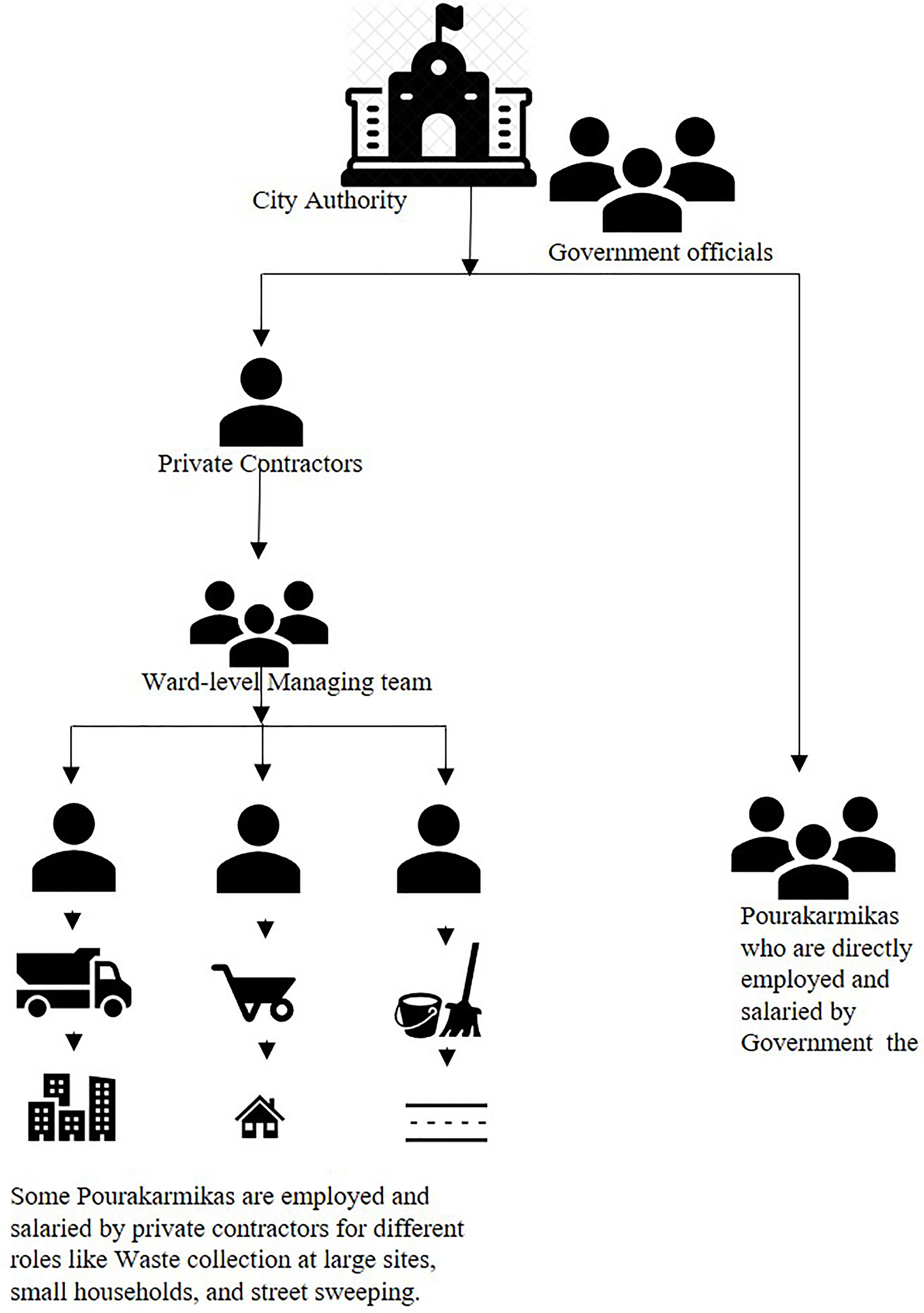
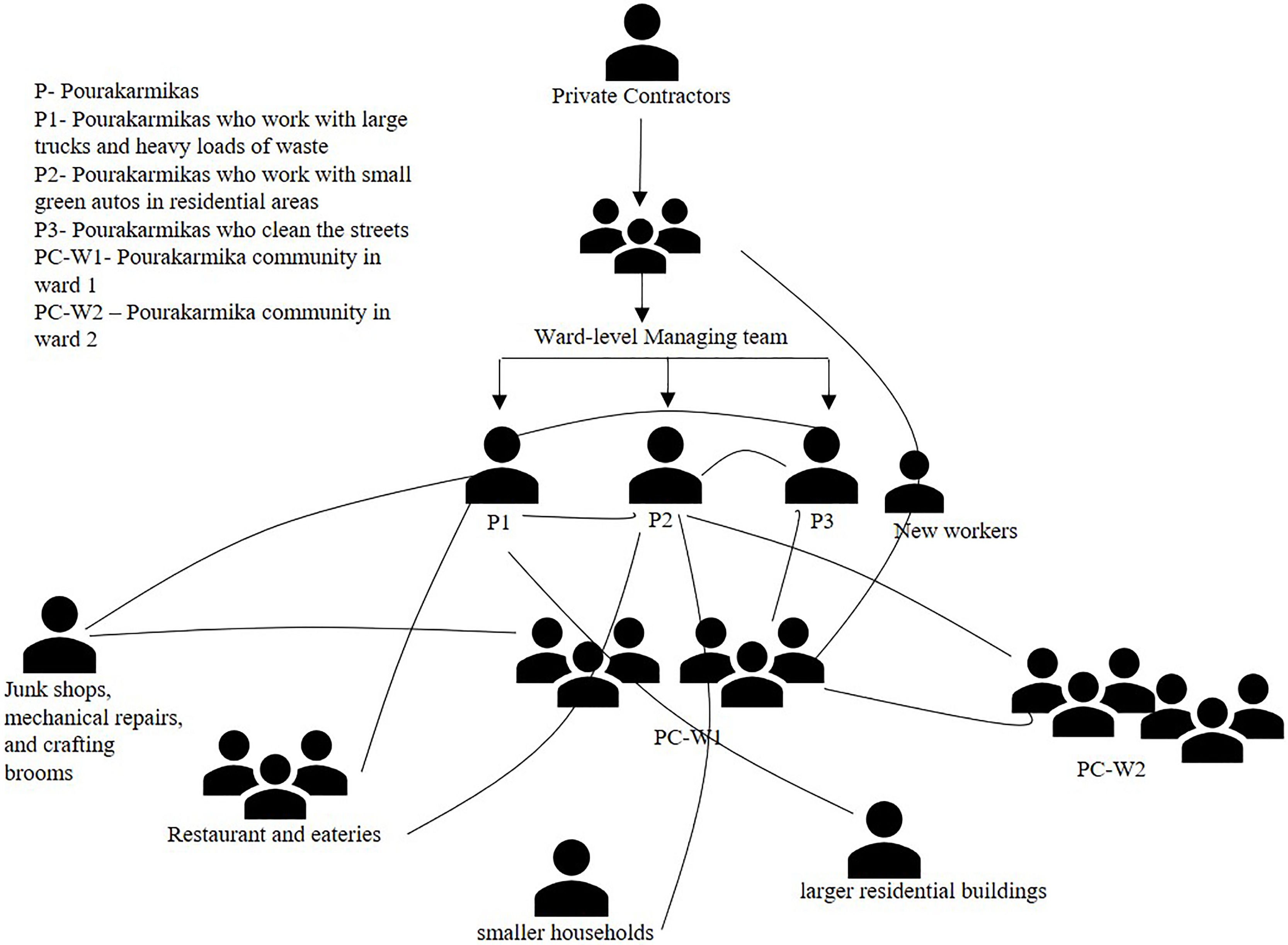
Current structure of the service delivery systemWhile the city municipal corporation holds the responsibility for door-to-door collection, segregation, transfer, transportation, storage, processing, dumping, recycling, and reusing of the city's solid wastes, the majority of these tasks are outsourced to private contractors at the ward level, with oversight provided by ward-level SWM officers (refer to Fig. 1). The private contractors recruited for various responsibilities range from deployment of primary transport vehicles, management of on-site segregation, deployment of secondary collection and transport vehicles, management of dumping sites, and waste processing plants meant for recycling and reuse of waste. These private contractors further recruit sanitation workers for various tasks such as waste collection, sweeping, and driving the autos and trucks. While most of these sanitation workers are employed by private contractors, a small number of cleaning workers, who have served for an extended duration, were granted the benefit of regularizing their cleaning services during 2017–18. According to a news report, they were appointed as permanent workers under special rules of the urban development authority (Reporter, 2022).

The city municipal corporation oversees daily operations such as processing documents, reports, letters, and government orders. It also manages the appointment of private contractors for various responsibilities through tender calls and monitors feedback and grievances. To facilitate this, the corporation appoints system operators, field officials, and ward-level officers. Private contractors communicate directly with these field officers and ward-level officials to discuss responsibilities and progress regularly. Solid waste management is a complex process involving numerous responsibilities and requiring various technologies and labor from different disciplines. It comprises multiple layers of functions and teams, including administration, finance, legal, statistics, information technology, planning and engineering, frontline workers led by union leaders, and more.
Pourakarmikas: sanitation workersThe frontline workers, consisting of door-to-door waste collectors, street sweepers, collectors of street waste, and drivers of small autos and large trucks, are crucial members of the sanitation workforce. In Karnataka, these workers are known as Pourakarmikas, a term in Kannada referring to citizen laborers. Pourakarmikas play a vital role in last-mile service delivery in urban areas and are key agents in ensuring the functionality of the system.
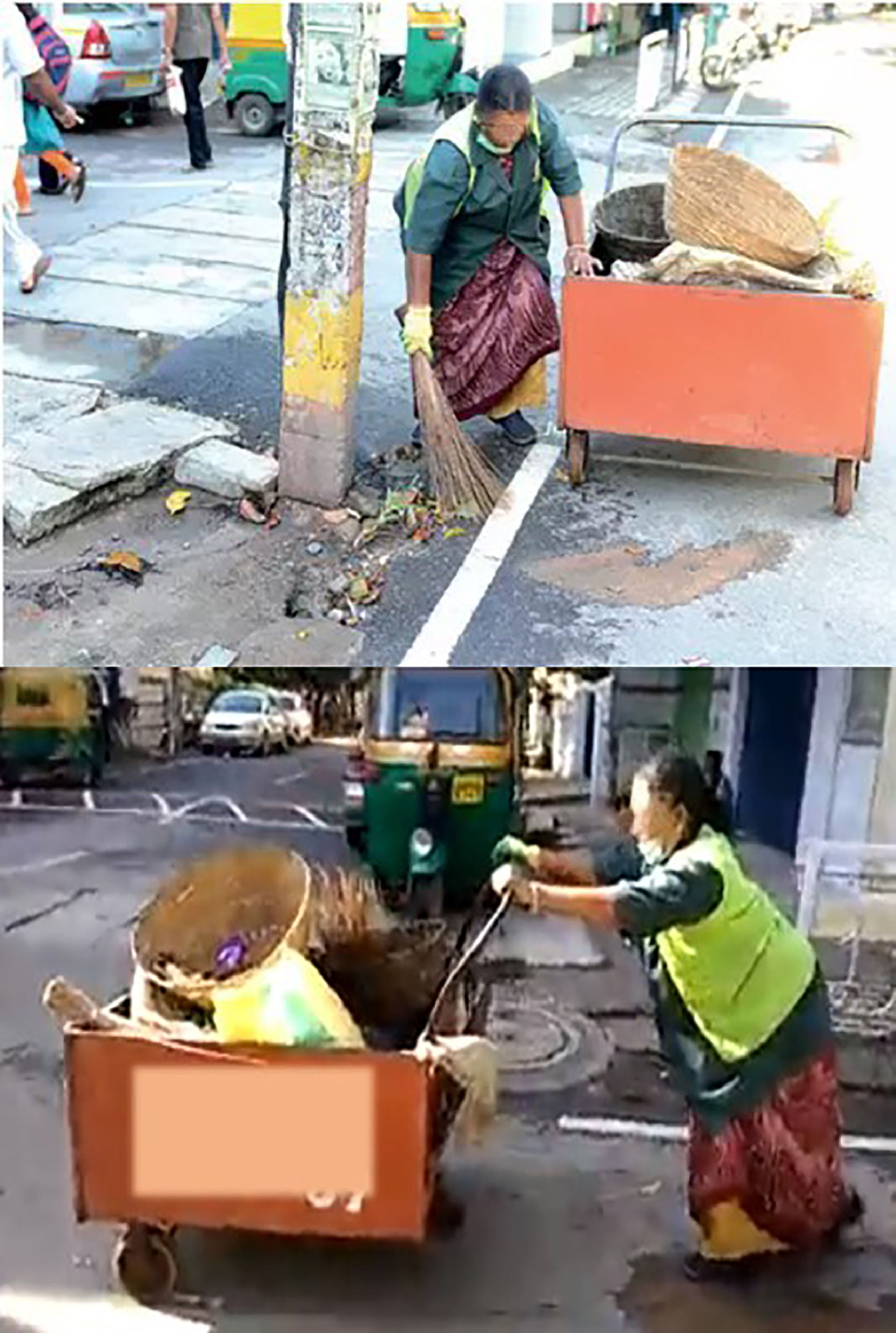
Based on the insights gathered from our participant observation we noticed that the work timings of different Pourakarmikas vary. For street sweepers, work often starts from 5:30 AM to lasts till 10:00 AM on a normal day. Typically, women are offered the job of street sweepers, collectors of small heaps of street waste, and dumping in the nearby bins (refer to Image 1). Often the job allocation of Pourakarmikas happens in the same ward as their resident address. This eases them to reach the cleaning site early in the morning and to finish the work faster. Geetha, a female Pourakarmika informed us that women usually prefer the street cleaning job as they have other housekeeping responsibilities with kids and cooking. This greatly provides flexibility and fitness for women Pourakarmikas to achieve a positive payoff by fulfilling their work requirements.

Female pourakarmikas (Reddy, 2019).
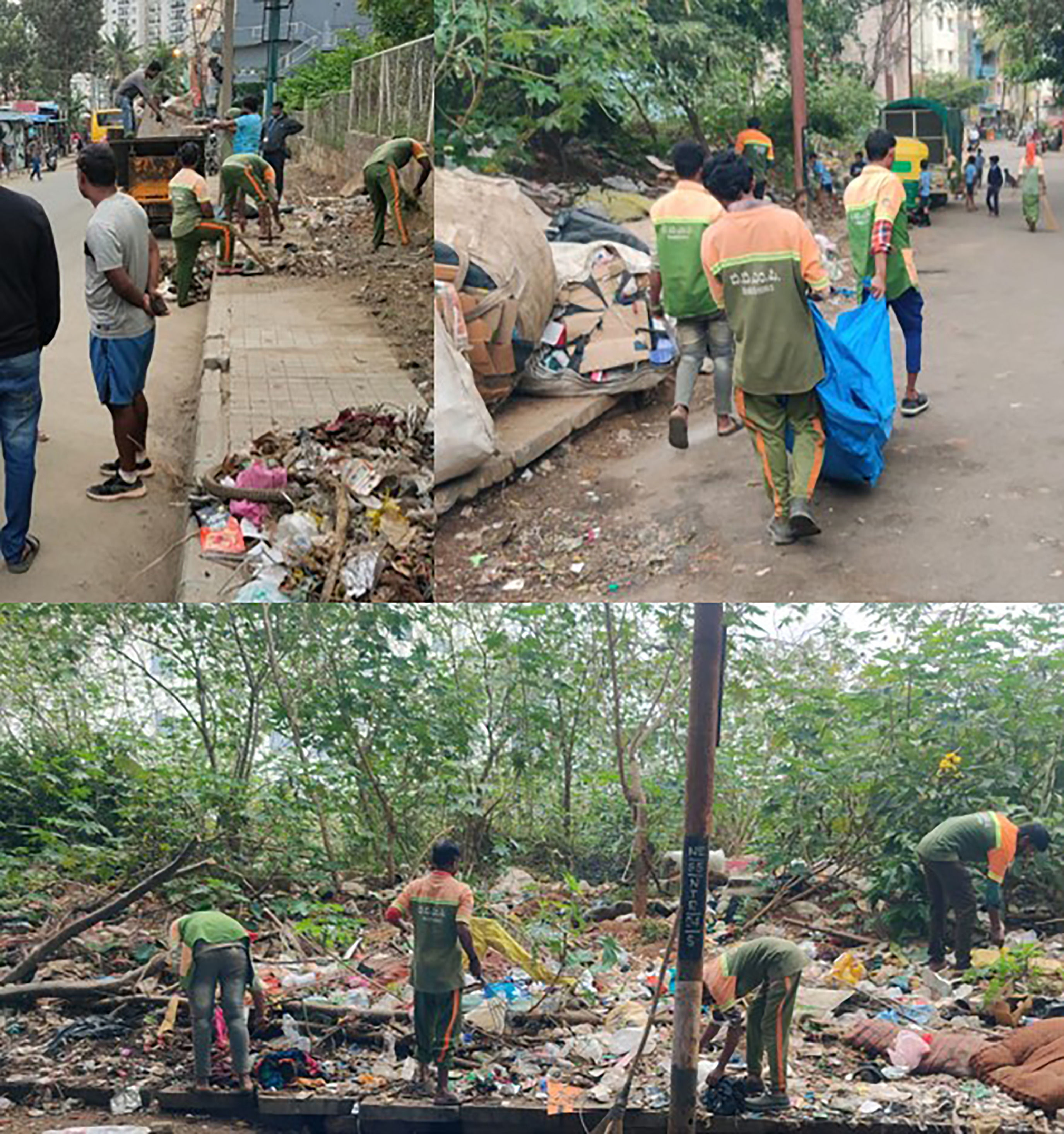
The door-to-door waste collectors, who also work as drivers for small autos and large trucks work typically from 5:30 AM to 4:00 PM on a typical day. One of the Pourakarmikas informed us that, even though their time is from 6:00 AM to 2:00 PM, they have the flexibility to start late and finish late depending on the waste collection, the vehicle they are driving, workloads for the day, and on-demand requests. Normally, male Pourakarmikas are chosen for this job position (refer to Image 2). Just as female Pourakarmikas often select street cleaning roles, male Pourakarmikas frequently choose this position because it entails driving, handling heavy waste, traveling longer routes, and working on an on-demand basis, which is often unpredictable. The frontline workers within the SWM system have gradually adapted to their roles in terms of (a) negotiating the nature of work and the time flexibilities at work based on their fitness and their alternate occupations (like housekeeping or work as maids), (b) developing necessary capacities to drive through congested roads, and to cover a greater number of households by learning to quickly and skillfully pick-up waste into vehicles during the trips.
Network of interaction centered around pourakarmikas
The daily interactions of the Pourakarmikas occur through both formal and informal channels and networks. While formal interactions are apparent from government documents and initial interviews with city officials, understanding informal interactions requires drawing upon semi-structured interviews, participant observations, and focus group discussions with Pourakarmikas in various work settings. Formal interactions are heavily influenced by hierarchical organization, which dictates job roles, task allocations, and a set of reporting structures within their respective offices.
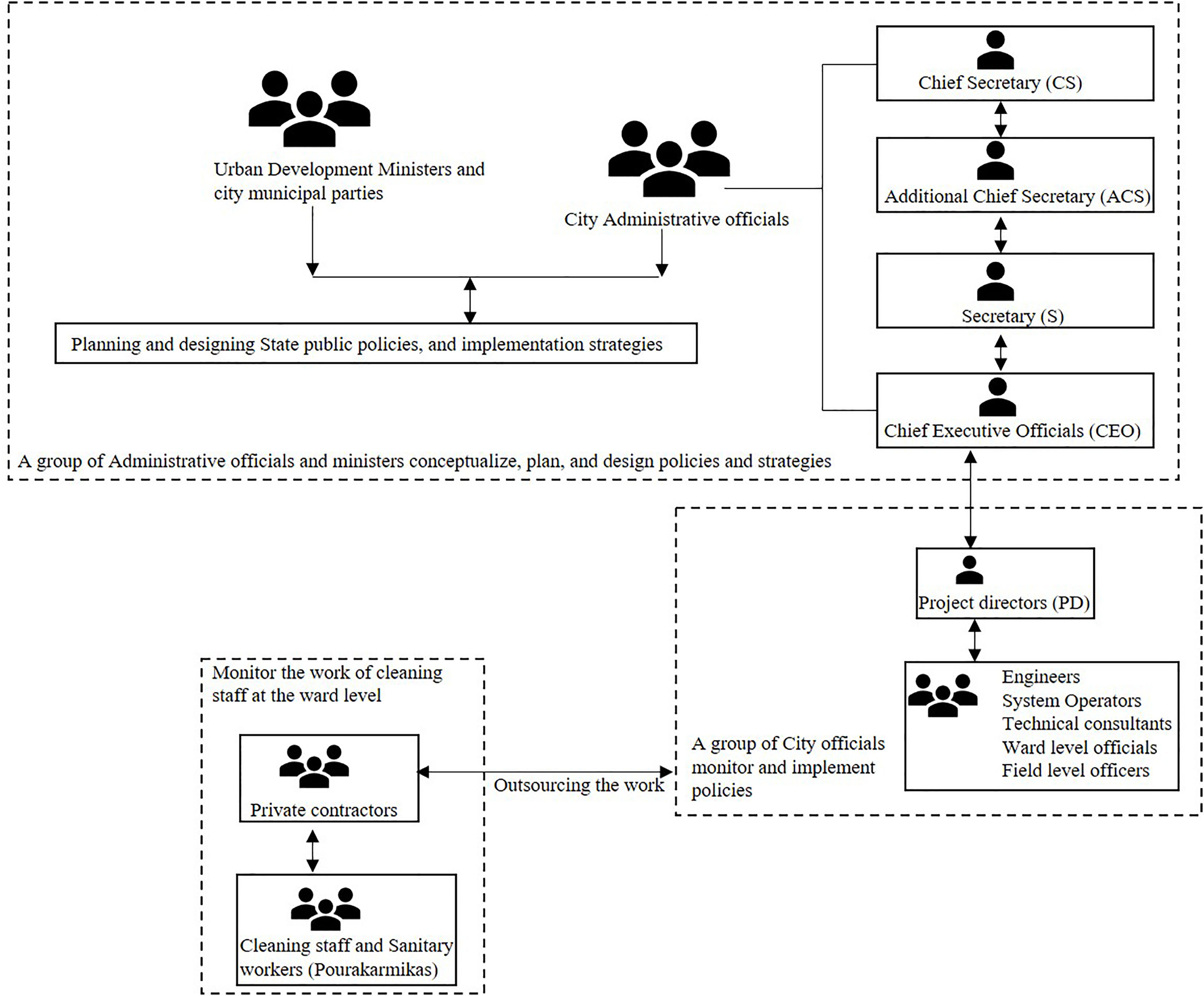
The formal interactions predominantly follow a top-down approach, as depicted in Fig. 2. A group consisting of central administrative officials, including chief executive officials, secretaries, additional chief secretaries, and chief secretaries, along with urban development ministers, formulate policies, implement them, and make crucial decisions at both state and ward levels, while also aligning with national initiatives. Below these administrative officials, a team of city officials collaborate to execute planned policies, projects, and initiatives. This team comprises engineers, analysts (in both business and Information Technology), system operators, technical consultants, and others responsible for monitoring system functionality. The city authorities delegate the hiring of consultants, field contractors, and cleaning workers at various levels to private contractors through competitive bidding and tenders. These private contractors oversee the work of cleaning staff at the ward level and report to the city officials at the ward level. The interactions are primarily linear; however, even in the case of two-way communication, it is restricted to immediate officials and does not extend further.

Interactions among frontline workers are largely structured by the influence of caste, class, and gender dynamics, and a shared set of challenges they face. The composition of Pourakarmikas is dominated by the Dalit community (Gowda et al., 2022). One of our respondents, Savitha emphasized that caste and gender-based discriminations are closely associated with cleaning work, with three-fourths of Pourakarmikas belonging to the Dalit community. Savitha further noted that in addition to street sweepers, loaders (waste collectors), drivers, and unloaders (workers who handle waste segregation, waste pickers, and transfers) are predominantly Dalits. Gender dynamics are evident in terms of the segregation of job roles associated with the frontline workers of the SWM system. For instance, initially, the job roles in the frontline had a slight inclination towards gender preference, however, recurrent applications of this slight preference for the job roles led to an unintended consequence of gender segregation. “Usually, the tasks assigned to female Pourakarmikas involve sweeping, cleaning, or picking up small dump yards on the streets. These cleaning locations are typically near our houses, which we prefer. We are usually not assigned to locations that are farther away, which allows us to manage other household responsibilities such as cooking, taking care of children, and their schooling. Additionally, this flexibility enables us to engage in secondary work like selling vegetables or flowers on the streets after we finish our morning cleaning duties. On the other hand, male Pourakarmikas are assigned different job roles that may require them to drive autos and trucks, pick up large amounts of waste from distant locations, and perform cleaning tasks, including sweeping streets, large dustbins, and other areas.”
The above response from Savitha a female Pourakarmika not only signifies the gender segregation among frontline workers but also highlights the importance of work flexibility for Pourakarmikas within the existing SWM system, to sustain their livelihoods.
We observed that not only a similar socio-economic status but also a shared set of challenges among Pourakarmikas have led to the formation of strong work groups and unions that provide solidarity in confronting challenges from both the government and society. Some of these challenges are highlighted in the ongoing discussions surrounding the contractual work of Pourakarmikas and the demeaning labor conditions in the state for over a decade (Gowda et al., 2022). “Standing on waste barefoot is nothing new to us [laughs]. We do it every day, and we hardly even notice it anymore. Initially, we used to request gloves and shoes. Occasionally, we receive them once every six months or so, but the gloves don't even last a month. As for the shoes, after a while, they become so dirty that standing barefoot on the waste actually feels better for our skin [laughs again]. We don't have a choice but to do the job to earn money. That's what it all comes down to, but a small drink [alcohol] helps us forget about it all at the end of the day”- Shivappa a male Pourakarmika explaining the conditions of his work.
The challenges related to the working conditions of Pourakarmikas also stem from the way administrative structures are set up within the existing SWM system. According to the Karnataka government, cleaning staff are often hired through private contractors, and the contractors are responsible for providing salaries to the Pourakarmikas they hire. However, this arrangement has often led to issues for Pourakarmikas, including salary discrepancies, assigning demeaning tasks, inhumane treatment, and gender-based harassment (Sreenivasa, 2017). Over time, the constant protests by Pourakarmikas and their interactions have influenced the administration to think about abolishing the contractual system and recognizing Pourakarmikas as permanent workers. Chandrakala, one of the female Pourakarmika mentioned, “we have demanded various benefits such as on-time salary payment, job security, pension, and housing similar to those provided in other government jobs. The government has now granted permanent employment status to some Pourakarmikas, particularly those who have served as cleaning staff for a long time. They have taken internal transfers to different departments and are doing different tasks, no longer engaged in cleaning duties. We hope to have the opportunity to join them. Despite any challenges, we are committed to our cleaning jobs and will not leave them.”
Despite facing exploitation and ethical issues in their contractual jobs, including periods of up to three months without pay and a lack of job security, many Pourakarmikas, as Chandrakala mentioned, choose to remain in their positions, hoping that the government will take action to make them permanent employees and provide direct pay comparable to that of government officials.
The networks of interaction within Pourakarmikas are also largely sustained by informal conversations (refer to Fig. 3) at casual gathering places. According to one respondent, Ravi, a male Pourakarmika, they are all neighbors who frequently gather for functions, festivals, community events, and elections, and often commute to work together. When assisting individuals within the community with work, they recommend workers from the same community to support each other and provide local information and domain knowledge necessary for the job role. Ravi mentioned that they also frequently discuss work-related challenges outside the work environment, as they often meet as neighbors and some are even relatives. This fosters a strong sense of cooperation and bond among frontline workers at the ward level.

These informal communal connections among frontline agents also serve to exchange current local and business information within their community interactions. For example, Kashi explained to us that they often share details about peripheral business opportunities such as selling collected waste to junk shops, providing mechanical repairs for autos and trucks, crafting brooms and baskets, and more. During our interview, Kashi one of the male Pourakarmikas shared, “My mobile number is with most of the citizens who use the service delivery in this locality. You [one of the authors] can take it too and call me when there is on-demand waste collection, waste pickups for house shifting, waste newspapers, or any other cleaning work you have. I will send someone else if I am busy. We have been operating like this from the long time.”
This web of business relations often influences work dynamics, behaviors, and career choices mutually. They also help them to survive, provide support, and act as a fallback opportunity in uncertain situations like the recent COVID-19 pandemic as mentioned by Surya (pseudonym), one of the male Pourakarmikas in our interviews: “We managed to navigate through the multiple lockdowns during the Covid-19 situation thanks to our local connections. While the city authority operated from home and proposed digital solutions, our work involves physical labor in waste collection. So, how much would digital solutions actually benefit us? They did not have much impact on our work, but we continued nonetheless.”
During our participant observations and interviews, we encountered multiple instances that underscored the strong community ties fostering mutually beneficial business relationships and partnerships. Communal gatherings provided opportunities to deepen these collaborations, facilitating knowledge exchange and helping members adapt more readily to new situations.
Interactions between frontline workers and citizens in various settings, including smaller households, larger residential buildings, commercial shops, and restaurants, also informally take place. Waste collectors at these locations engage in daily conversations with residents, security guards of gated communities, and staff members of restaurants and smaller eateries. Pourakarmikas often exchange contact information with security guards, homeowners, and shopkeepers, facilitating communication for waste collection requests, house relocations, and other needs. Lakshmi, a female Pourakarmika mentioned that citizens from whom they collect waste daily know them by name and often offer them money or food during functions or festivals. Customers at small eateries and restaurants who utilize the services of frontline workers often communicate about food availability for the day. This ensures that the frontline workers receive sufficient food for their families without any prepared food going to waste.
Citizens also take on the responsibility of monitoring the cleanliness of their surroundings and the ward where they reside by establishing an RWA team at the ward level. The civil society members from the respective ward collaborate with RWAs to raise awareness and ensure cleanliness, providing local-level information to ward officials through WhatsApp community group chats. These WhatsApp groups, primarily intended for ward-level interactions, are named after the respective wards, making it easier to identify and recognize specific ward groups. The specific ward-level government officials will also participate in these informal or semi-formal interactions to ensure they can promptly address citizens' on-demand requests and issues. These interactions are bottom-up and they visibilizes a lot of local concerns and information to city authorities.
During our interview, Anirudh, an RWA member shared, “Fed up with the ongoing issues concerning cleaning and waste collection, we decided to take matters into our own hands. We maintain regular communication with ward officials through digital platforms such as WhatsApp, Twitter, and Instagram. We noticed that unless we highlight inefficiencies on social media for the public to see, city authorities were not addressing the issues seriously. Once we identified this solution, we implemented it. We have added all officials to our groups to ensure swift responses, and if necessary, we escalate matters to social media platforms. Our WhatsApp conversations show that officials now respond promptly, resulting in cleaner neighborhoods and fewer issues for us to address.”
We observe that these informal networks of interaction at the last mile of service delivery—among the frontline workers, between frontline workers and citizens in various settings, and between citizen groups, ward officials, and civil society members—are considered essential to the day-to-day functioning of the overall SWM system.
In the following section, we look at this SWM system through a CAS lens and discuss the complexity features of the current system that contribute to its resilience. We highlight the potential impact of the proposed SCI, in terms of its disruption to the resilience-enabling complexity features of the current system. Based on these observations, we also present cases with design principles that align with our proposed design requirements and can help steer the proposed SCI in a direction that enhances the resilience of the SWM system.
DiscussionSWM in a city signifies the operation and management of activities such as collection, segregation, transportation, storage, processing, transfers, disposal, recycle, and reuse of solid wastes. The agents contributing to the functioning of these activities must interact and operate within an environment determined by the overarching social and administrative structures. In the foregoing section, we discussed a central activity within SWM, i.e., waste collection, through a thick description of the work practices of frontline workers, who operated within the existing social and administrative structures. In this context, we also discussed the nature of last-mile interactions that exist between frontline workers, between frontline workers and the citizens, and between civil society, citizen groups, and ward officials.
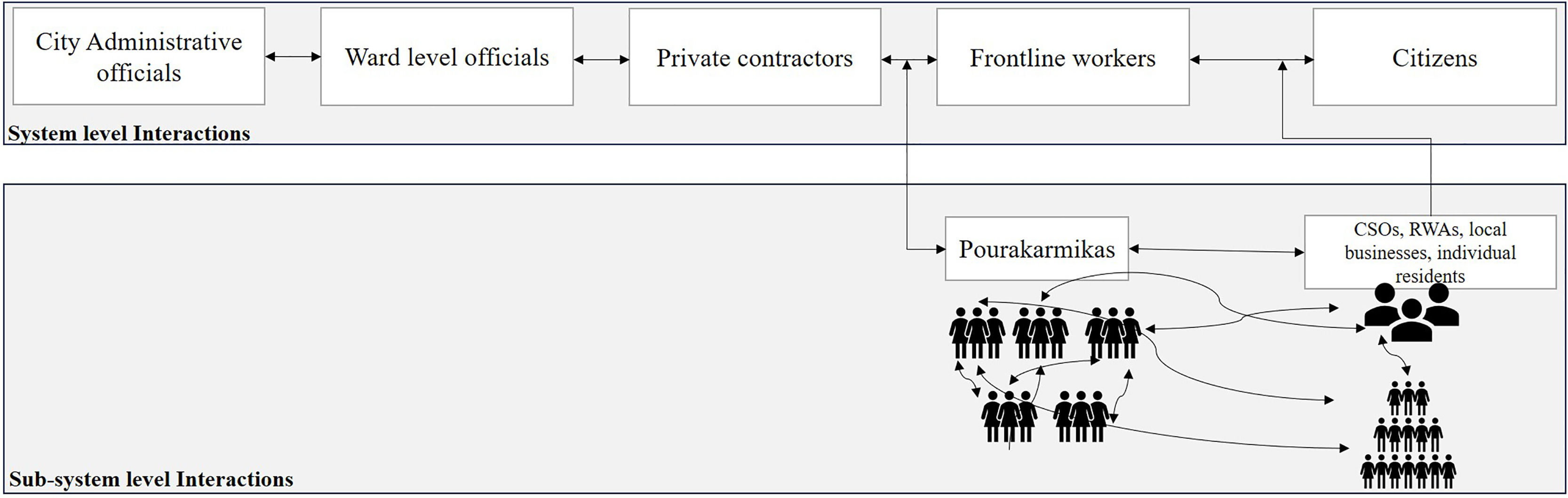
Our findings indicate that the structure of SWM as a public service delivery system can be broadly understood in terms of agents and their interactions at two levels (refer to Fig. 4). First is at a very broad system level that is constituted by interaction between city administrative officials, ward level officials, private contractors and frontline workers, civil society members, and RWA teams. The second is at the level of last-mile of service delivery where sub-structures or sub-systems are centered around Pourakarmikas. These sub-systems are largely self-organized employing informal interactions that exist among Pourakarmikas, and between Pourakarmikas and citizens in various settings.

Within the last-mile sub-systems, it is observed that the frontline workers were able to build and sustain a diverse set of informal interaction channels with different stakeholders. Such diversity can be identified through the specific nature of their interaction with citizens in various settings (like individuals, residential complexes, local businesses, etc.,), and interaction amongst themselves, as we discussed earlier.
At the level of these sub-systems, informality has also enabled redundancy by allowing officials to arrange alternate Pourakarmikas for waste collection when the assigned Pourakarmikas are preoccupied with other tasks or absent on a given day. The close ties among Pourakarmikas—rooted in shared caste, class, and gender, as well as common work pressures, challenges, and opportunities—have fostered a strong sense of belonging and community among them. The strong community ties among Pourakarmikas encourage mutual support. They often step in to cover each other's work when someone is unable to attend, sharing opportunities for business and professional growth, which enables a form of redundancy to manifest within the community.
This points to a certain level of autonomy or flexibility in the way frontline workers conduct their work beyond the formal top-down prescriptions from contractors or ward officials. It is in the last-mile informal interaction channels where the frontline workers are seen to negotiate such flexibility. For example, frontline workers negotiate flexibility in waste collection times with citizens and owners of local restaurants based on parameters like availability of extra food, additional money, etc. Since these parameters are largely informal, we observed that the frontline workers of the SWM system in Bengaluru prefer to negotiate different roles specific to different interaction channels, and would not like such roles to be visible to agents across channels.
In the context of the last-mile sub-systems within SWM in the city, our findings highlight the diversity and redundancy features, discussed above, are very much crucial to the SWM system's resilience against disruptions. The diversity of interaction channels and redundancy within the Pourakarmika community at the ward-level in Bengaluru strengthened local connections, helping them endure the COVID lockdowns and sustain their livelihoods. Their established local connections allowed them to adapt quickly to changing restrictions, keeping essential services running smoothly. This solidarity fostered resilience, ensuring the community remained cohesive and functional despite the uncertainty.
Even at the level of the SWM system, as a whole, we observed that the informal interactions between civil society members, RWAs, and ward officials in Bengaluru have helped in the resilience of the overall system. These interactions - for example in the form of informal WhatsApp groups that are formed at the ward levels - are also indicative of the self-organizing property of the system, i.e., being organized from the bottom-up and not necessarily driven by central control. For citizen groups these interactions can also be understood in terms of an alternate channel - to raise grievances about service delivery and to initiate service-delivery requests - in addition to the usual channel that exists between them and the frontline workers.
In certain areas of Bengaluru, the PSD system is autonomously adapting to uncertainties and managing disruptions in waste management through informal interaction channels at the last mile. Although not all citizen groups are part of such interaction channels, those who are part are helping the overall SWM system to adapt to daily challenges and disruptions. The interaction within the sub-system between CSOs, RWAs, and officials has encouraged many citizens to become part of the local communication channels that collect area-specific information required by officials, enabling them to address issues swiftly.
The foregoing observations indicate that interactions within the SWM system in Bengaluru occur at two levels: (a) within the subsystem, involving interactions among frontline workers and between frontline workers and citizens in various settings, and (b) within the overall system, involving ward officials, contractors, civil society members, and citizen groups. These interactions are predominantly informal and characterized by non-linearity. This informality of interactions is also manifested in the form of diversity of interaction channels at the system level and sub-system level, and redundancy of actors at the sub-system level. Such diversity and redundancy features reinforced the self-organizing and adaptive capabilities of the SWM system in Bengaluru, thereby contributing to the system's resilience to disruptions and uncertainties within the delivery of public services.
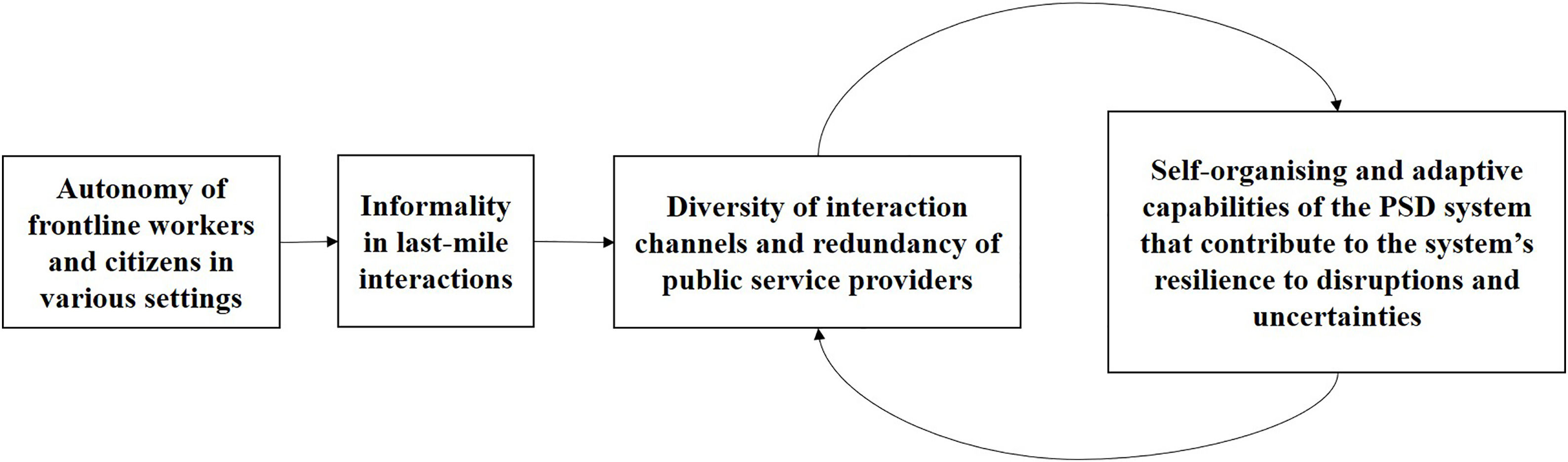
Our findings indicate that the informality of interactions between frontline workers and citizens of Bengaluru at the last mile is primarily a result of the autonomy of the frontline workers and citizens in various settings. This autonomy has given way to flexibility in the way frontline workers negotiate their work with different citizens on mutually agreeable parameters. We found that even though these parameters are largely informal in nature (for example, frontline workers negotiating customized waste collection requests with citizens, in exchange for money or excess food), they exist on top of their formal work commitments and remunerations set by the city authorities.
Any smart city intervention will therefore need to acknowledge the informality in interactions that exist within the current system and the autonomy of actors that underpin such interactions. Since this informality manifests as diversity and redundancy features that reinforce the SWM system's self-organizing and adaptive capabilities, from a CAS lens, acknowledging them is vital to ensuring the system's resilience to disruption and uncertainties (Heylighen, 2001). The above Fig. 5 graphically summarizes the CAS analysis of the current SWM system discussed in this section.
Potential impact of the proposed intervention
As we introduced in Section 4.1, the proposed smart city intervention in Bengaluru privileges online channels of interaction and data-driven smart solutions to help city officials better monitor the functioning of the SWM system and enhance its efficiency and sustainability. While the broader goal is to optimize the PSD system, focusing solely on online channels could disrupt the daily operations of city officials. We found that officials, in their daily management of PSD, face challenges when relying exclusively on online interaction channels within the current SWM system in Bengaluru. This shift to online channels has potentially increased the workload of city officials by requiring them to digitize various processes including attendance, monitoring real-time activities of Pourakarmikas, private contractors, and field officers, measuring their daily productivity and issues handled on a daily basis. Consequently, added responsibilities have diverted their attention from more strategic tasks, hindering their ability to respond effectively to the dynamic needs of the community. As a result, the emphasis on digital solutions may inadvertently lead to inefficiencies in service delivery, complicating their already demanding roles.
Our findings indicate that while online interactions are administratively favored for their system efficiency and control, direct engagement with frontline workers is crucial for understanding the on-ground issues. The communal interactions and field observations conducted often revealed problems that remain hidden in online communications. This is because offline interactions allow city officials to directly observe the work of frontline workers, helping to recognize and uphold their dignity. Such interactions help grasp the genuine reasons behind Pourakarmikas' work delays and absences when compared to interacting with them through online modes.
As discussed in the earlier section, the proposed intervention also burdens the frontline workers with additional tasks related to data collection and online reporting of the type and quantity of waste collected from every household. At the same time, they are subjected to online monitoring by city officials and dynamic work assignments to cater to the waste collection requests raised by citizens. This is akin to how drivers are monitored by platforms like Ola and Uber and assigned to serve nearby commuters. As a result, the intervention can potentially increase the workload for the frontline workers and subject them to excessive centralized monitoring and algorithmic control. A similar risk is posed to citizens when they are subjected to smart solutions around dynamic SWM cess that intend to monitor the waste gathered at the level of citizens and nudge their behavior towards generating zero waste.
The intervention may therefore reduce the autonomy of citizens and frontline workers by regulating their behavior towards achieving higher-order system objectives, thereby supplanting their hitherto negotiated roles within the current informal interactions. This situation is problematic for two primary reasons. First, it raises significant privacy risks for frontline workers and their data, a risk that is well-documented in existing literature (Bowker & Star, 2000; Davies, 2015; Kitchin et al., 2017). Second, it creates a void—a significant gap in accountability and autonomy. The proposed SCI, on the one hand, prioritizes online interactions and data-driven solutions, effectively diminishes the decision-making autonomy of frontline workers and end-users. However, on the other, the same frontline workers remain responsible for PSD and are the primary points of contact when uncertainties and disruptions arise on the ground. This dual expectation places them in a paradox where they bear responsibility without the corresponding authority to make decisions. This lack of autonomy could hinder their ability to respond flexibly to local issues, ultimately jeopardizing the effectiveness of the PSD system.
It is also conspicuous that such an overwhelmingly central control will inevitably privilege top-down processes over bottom-up processes. The rationale behind digitally mediated PSD solutions in SCIs appears to be reducing, sidelining, or even eliminating, the need for human intervention (Venumuddala et al., 2024). This effectively diminishes the role and autonomy of frontline workers within top-down approaches, ultimately limiting their ability to engage in decision-making processes.
This could disrupt the diversity and redundancy features of the existing SWM system thereby affecting its resilience to disruptions and uncertainties. It is therefore important to facilitate the interoperability of the current informal interaction channels alongside the online and formal ones. Such interoperability is essential for the system to become fault-tolerant in the event when some of the interaction channels fail to function, even the existing ones. For instance, during our digital ethnography, we observed in a WhatsApp group chat that when cleaning and waste collection are neglected in certain locations, and the SWM system fails to provide its services, individuals share videos and photos of these locations on social media and in the WhatsApp chat, urging officials to address the issue promptly. These online yet informal feedback channels allow officials to receive notifications quickly via mobile devices, enabling them to redirect tasks to Pourakarmikas available in the vicinity within minutes to address the problem immediately, regardless of their initial assignments.
In summary, the proposed interventions affect the autonomy of frontline workers and citizens, and sideline informal interaction channels for top-down, formal, and online channels. As discussed earlier, this can lead to a disruption to the complexity features of the SWM system affecting its resilience to disruptions and uncertainties.
Implications for IS designers and policy makers“To see that a situation requires inquiry is the first step in inquiry” –
By John Dewey (Dewey, 1939)
A fundamental question that must be considered when devising smart interventions for public service delivery to enhance efficiency is: “Efficient for whom?” This question is crucial at every stage, from conception to implementation to the daily operation of service delivery. The term “efficient” holds varied meanings for different stakeholder groups. The key consideration is whose perspective shapes the design of a smart intervention, and who holds the decision-making power in a digitally mediated PSD? When human intervention is viewed as a source of disturbance or inefficiency, limiting the government's ability to monitor and control system functions and outcomes, information system (IS) designs often aim to bypass or eliminate intermediaries and frontline workers. We argue that this rationale creates two crucial problems. First, it leads to these workers being perceived as “noise” rather than essential contributors, reducing their role in favor of a more streamlined, top-down approach focused solely on operational efficiency. This shift risks overlooking the value that frontline workers bring to understanding local challenges and adapting the system to real-world complexities.
Second, this approach becomes “shortsighted” by focusing on a single issue while neglecting its broader implications. If the primary problem is framed as the intervention of frontline workers in system functionality, the resulting solution often involves limiting or even eliminating of their autonomy. From this perspective, the problem appears solved by removing the workers' intervention. However, this narrow focus leads digital PSD designs to prioritize features that exclude frontline workers, overlooking other critical problems within the PSD system, as well as challenges that may arise from such exclusion.
Through our study, we argue that it is crucial to adopt both bottom-up and top-down perspectives when understanding the existing service delivery system. This dual approach is essential for identifying the design requirements, principles, and features that any SCI should include. Failing to incorporate this comprehensive approach is a fundamental issue in the design of information systems, rather than merely a problem with the implementation of the PSD system. Additionally, overlooking this balance risks reinforcing existing power asymmetries among city administrative officials, ward officers, private contractors, and Pourakarmikas, further marginalizing those most integral to service delivery. This oversight can create a disconnect between design intentions and on-the-ground realities, weakening the effectiveness of the intervention itself.
Implications for IS designersIn the context of IS Design, according to Gregor and Jones (2007), justificatory knowledge provides a basis and explanation as to why a particular information system intervention works or doesn't work for a stated purpose. In the context of the proposed SWM intervention, this justificatory knowledge seems to be predominantly aligned with an assumption that – facilitating centralized monitoring and control over the SWM operations will help city authorities improve the efficiency of service delivery and address their stated objectives.
The proposed SWM intervention aims to achieve efficiency and sustainability through three main strategies. Firstly, it seeks to encourage households to move towards zero waste by employing frontline workers to scan QR codes to track household-level waste type and volume and accordingly levy a dynamically variable SWM cess. The objective is to nudge households and eventually, the citizens to reduce waste generation at the source and promote reuse. Secondly, it intends to utilize vehicle tracking sensors to monitor and manage waste collection and improve overall coverage. Third, it intends to process real-time waste collection requests by dynamically allocating frontline workers to demand requests raised by citizens. These approaches to efficiency and sustainability privilege centralized monitoring and control by city authorities to manage PSD.
Our findings emphasize that it is important for the proposed SWM intervention to acknowledge the bottom-up processes and the role of frontline workers, who maintain the self-organizing and adaptive capabilities of the current SWM system that are vital to its resilience. We note that it is important to acknowledge the autonomy of citizens and frontline workers in the context of last-mile service delivery during the designing process. It is essential to incorporate design features that ensure citizens have the autonomy to choose multiple channels to access SWM services or raise grievances. Similarly, frontline workers should be given the autonomy to navigate informal channels of interaction with citizens, tailored to specific contexts, in addition to the formally prescribed channels set by city officials, on their terms. In addition to autonomy, our discussion in the previous section highlights the need for IS designs to acknowledge the specific roles that different actors negotiate during their interactions. Failing to do so may lead to privacy risks and create a void in system functionality. As discussed, this also entails a shift from centralized monitoring and control to a more decentralized structure.
The two main design principles underpinning the architecture of ONDC align with our proposed design requirements for PSD systems: (1) decentralization and (2) participant-centricity (ONDC, 2022b). The former entails the design of technologies that ensure decentralization of facilities and control instead of concentrating power within a handful of participants. The latter entails the need for such technologies to be inclusive and to offer choices and agents to all participants. Like how buyers and sellers prefer to negotiate transactions on their mutually agreeable terms without being unduly dictated by central platforms, in SWM, the frontline workers and citizens also exhibit similar preferences as depicted in our findings. Instead of predominating central control through integrated data platforms, it is therefore important to distribute control by enabling a diverse set of entities to participate within the SCI in SWM. For example, local entities like civil society members and ward officials can provide a diversity of decentralized channels between frontline workers and citizens. This is like how a diversity of network entities in the form of seller applications and buyer applications connect sellers and buyers (Refer (ONDC, 2022a) for detailed mapping of the transition from platform-centric design to open network design).
In addition to the features presented in ONDC, several other similar IS designs have been explored to address the principles of participant autonomy and decentralization. For example, Adil et al. (2016) and many other scholars working in the area of smart grids present ideas around decentralizing interactions in the context of the electricity grid. Chanson et al. (2019) present IS design features that can give autonomy to data-sharing to different entities interacting within the network. It is therefore important to review multiple such IS design examples to map out the design features that are most suitable to the context of the SWM system in Bengaluru.
Implications for policy makersFollowing on the foregoing recommendations on the potential design features that SCIs for SWM systems can incorporate, it is also important to understand the policy implications that may entail. There are several important challenges policymakers need to address to mitigate the risks associated with the proposed SCI intervention. First, it is essential to understand the role of frontline workers and the human intervention currently integral to the PSD system, for which a proposed intervention needs to be designed. This includes identifying and analyzing the key actors and patterns of interaction—both offline and online—that are crucial for effective service delivery. This step is particularly important as these actors and interaction patterns are context-specific, varying across locations, times, and sectors. Accordingly, policy recommendations should recognize the value of existing digital channels, such as decentralized platforms like WhatsApp, Twitter, and Instagram in our case study, while also supporting offline interactions between the various stakeholders within the PSD system. While the above proposed design requirements for PSD systems provide means to decentralize the SCI and better facilitate the existing bottom-up processes that contribute to the system's resilience, such features once again predominate digital channels of interaction. The only advantage is that the diversities and redundancies can be provisioned in a decentralized open network. To preserve diversity and redundancy features, it is equally important to interoperate the current offline channels of interaction alongside the online channels. If not, only the digitally immersed frontline workers and citizens may benefit from the system, excluding the others.
An advantage of enabling an open network for interactions between frontline workers and citizens at the last mile is that the frontline workers can work towards formalizing the parameters around how they negotiate work with citizens in various settings. For instance, they can propose additional charges for waste collection during busy schedules or beyond regular work hours, etc. However, this flexibility of negotiating transactional parameters at a decentralized level may pose the risk of exclusion for certain households and neighborhoods. Policymakers must be attentive to such a problem and think about appropriate policies to mitigate such exclusionary tendencies that may result from the interventions.
Second, the state should actively support frontline workers and establish communication channels in adapting to new interventions, with an emphasis on democratic engagement. This involves creating structured avenues where frontline workers can regularly share their insights, opinions, and grievances, enabling the collection of field-level data essential for improving the overall SWM system. It is critical to ensure these insights are gathered without imposing excessive control over frontline workers and citizens. Feedback from these workers, grounded in their daily experiences, can significantly inform and refine IS designs to suit the unique contexts of PSD systems. Policy measures should ensure that this bottom-up feedback is systematically incorporated into periodic IS design updates, so these systems remain responsive and relevant.
To ensure the effectiveness of this process, decisions about preferred communication channels for feedback and the metrics used for evaluating service delivery should be made collaboratively, respecting the terms of engagement set by frontline workers. These metrics could account for diverse customer categories (such as residential, restaurants, and hotels), shifts in waste generation patterns (e.g., due to festivals or events), and potential service disruptions. By aligning system designs with real-world challenges, this approach fosters a more resilient and inclusive service delivery model.
Third, policy recommendations should focus on identifying and empowering frontline workers and their interactions, which are integral to the system's functioning. Policymakers and designers must engage in regular, democratic dialogues with frontline workers, respecting their terms of engagement to understand critical challenges and points of friction within the system. Since these challenges are context-specific, ongoing engagements allow for a deeper understanding and help to formulate strategies for meaningful support and empowerment. For instance, in our study, several Pourakarmikas mentioned the challenges they face due to the lack of social and job security in their work. Measures can be taken after discussing these issues with the workers, which could help them engage more proactively in the SWM system, as opposed to the current situation where they are forced to explore alternative occupations, as found during our field study. These dialogues can also inform the design of targeted incentives to improve overall system functionality, tailored to the needs and experiences of frontline workers.
Fourth, policy recommendations should enable the state to support citizens in adapting to the intervention by providing incentives that encourage accountability in waste generation, segregation, and disposal. For example, waste collection kiosks could be set up in neighborhoods, where citizens earn rewards for responsibly sorting and disposing of various types of waste. These incentives might be monetary, such as small cash rewards, or involve reductions in SWM cess. Specific incentive schemes can be tailored to each locality or ward through democratic discussions to best meet local needs and preferences, fostering a more engaged and accountable community approach to waste management.
Policy measures should be carefully tailored to address previously identified issues arising from the government's proposed intervention, such as privacy risks and the potential for creating conflicting expectations for frontline workers in digital solutions under SCIs. By integrating safety measures that protect worker privacy and defining clear roles that avoid dual expectations, these policies can help create a more balanced system that respects the autonomy of frontline workers. Additionally, policies can be designed to enhance the alignment between the online channels of interactions introduced and the actual, on-the-ground interactions of service delivery. This approach ensures that digital solutions are not only effective but also equitable, creating a sustainable framework that promotes both efficiency and fairness in the service delivery ecosystem.
ConclusionIn this study, we aim to understand the last-mile interactions and work practices of frontline workers within an existing PSD system and explore the potential impact of a proposed SCI on such a system. We specifically focus on SCIs in the context of SWM in Bengaluru, Karnataka. Smart city initiatives often draw criticism for their tendency to prioritize technologies over people and their inclination towards identifying applications for emerging technologies, rather than leveraging existing technologies and channels that address daily real-world issues. Our focus lies in understanding the bottom-up process and the channels of interactions sustaining the current SWM service delivery. Through ethnographic research, we acquire insights into these last-mile interactions.
We adopt a CAS framework to analyze the current PSD system at different levels in terms of its complexity features, self-organizing, and adaptive capabilities. This analysis helped us highlight key design requirements and principles that any SCI must incorporate to ensure the resilience of the PSD system against disruptions and uncertainties. We also present practical implications for IS designers by proposing design requirements for PSD systems that highlight the means to decentralize the SCI. Additionally, we discuss pertinent policy implications in the context of effectively governing the SWM system alongside the intervention, building on the design implications.
We believe that this study offers valuable insights for policymakers, practitioners involved in designing IS for PSD, government officials, researchers, and students, who can further build upon our research to explore its significance in various PSD contexts. However, the study has its limitations. Firstly, it provides detailed ethnographic data on a specific SWM service delivery system in Bengaluru, Karnataka. Understanding similar complexity aspects in other PSD systems would reveal common patterns for building generic IS designs. Secondly, the study also focuses on one specific activity within the chain of activities that constitute SWM. While the view of the SWM system through this one specific activity uncovered useful insights, a comprehensive view into the interconnected set of activities will uncover more complex interaction patterns that can yield richer insights. Given the scope of this study, we restricted ourselves to the former, and will try to take up the latter in future work.
FundingThe study was carried out as part of an ongoing project at the Centre for Internet of Ethical Things (CIET) at the International Institute of Information Technology Bangalore (IIIT-B). CIET has been set up with grants received from the Government of Karnataka (GoK), India. The authors would like to acknowledge the administrative and funding support received for the study from GoK, through CIET.
CRediT authorship contribution statementRashmi Pavagada Subbanarasimha: Writing – original draft, Methodology, Investigation, Formal analysis, Data curation, Conceptualization. Vinay Reddy Venumuddala: Writing – review & editing, Methodology, Conceptualization. Amit Prakash: Writing – review & editing, Supervision, Conceptualization. Bidisha Chaudhuri: Writing – review & editing, Conceptualization.
We extend our sincere gratitude to the frontline workers, who patiently answered all of our questions and allowed us to observe their tireless efforts in maintaining the cleanliness, safety, and health of the city. Additionally, we express our appreciation to the city and provincial government officials for their assistance in comprehending the proposals and processes being implemented on the ground. Thanks are also due to the researchers involved in service design for generously sharing their experiences and insights. We are grateful to the Center for Internet of Ethical Things (CIET) at IIIT Bangalore for supporting our research endeavors. This work would not have been possible without the collective efforts and contributions of these individuals and organizations, and for that, we are profoundly grateful.