

metricas
covid
European Journal of Psychiatry Has psychiatric emergency care changed after the COVID-19 pandemic? A retrospect...
Journal Information
Vol. 39. Issue 1.
(January - March 2025)
Share
Download PDF
More article options
Vol. 39. Issue 1.
(January - March 2025)
Original article
Has psychiatric emergency care changed after the COVID-19 pandemic? A retrospective study in a tertiary hospital in Madrid, Spain
Visits
170
Carolina Fajardoa, Simona Sciacchitanoa, Alba Maria Pozo-Pradosa, Ana Izquierdob,c,d, Álvaro Orosa-Duartea,d,
Corresponding author
alvaro.orosa@salud.madrid.org

Corresponding author.
, Eduardo Delgado-Paradaa,d, Jose Luis Ayuso-Mateosa,b,c,d, Iosune Torioa,b,c,d
a Department of Psychiatry, Hospital Universitario de La Princesa, c/ Diego de León, 62, (28006) Madrid, Spain
b Instituto de Investigación Sanitaria Hospital Universitario de la Princesa (IIS-Princesa), c/ Diego de León, 62, (28006) Madrid, Spain
c Centro de Investigación Biomédica en Red en Salud Mental (CIBERSAM), Av/ Monforte de Lemos, 3-5. Pabellón 11. Planta 0 (28029) Madrid, Spain
d Departament of Psychiatry, Universidad Autónoma de Madrid, c/ Arzobispo Morcillo, 4, (28029) Madrid, Spain
This item has received
Article information
Abstract
Full Text
Bibliography
Download PDF
Statistics
Figures (1)
Tables (1)
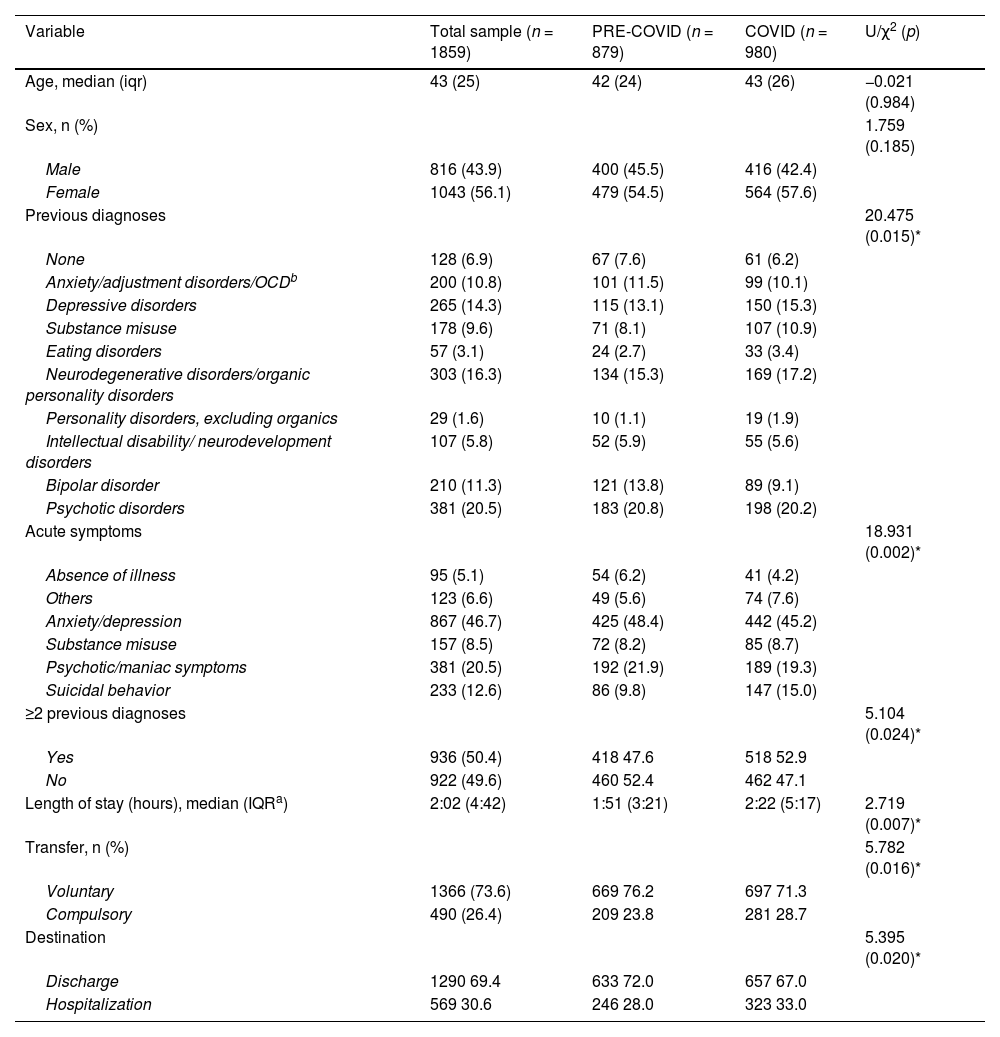
Table 1. Clinical and sociodemographic characteristics of the sample.
Tables
Abstract
Background and objectives

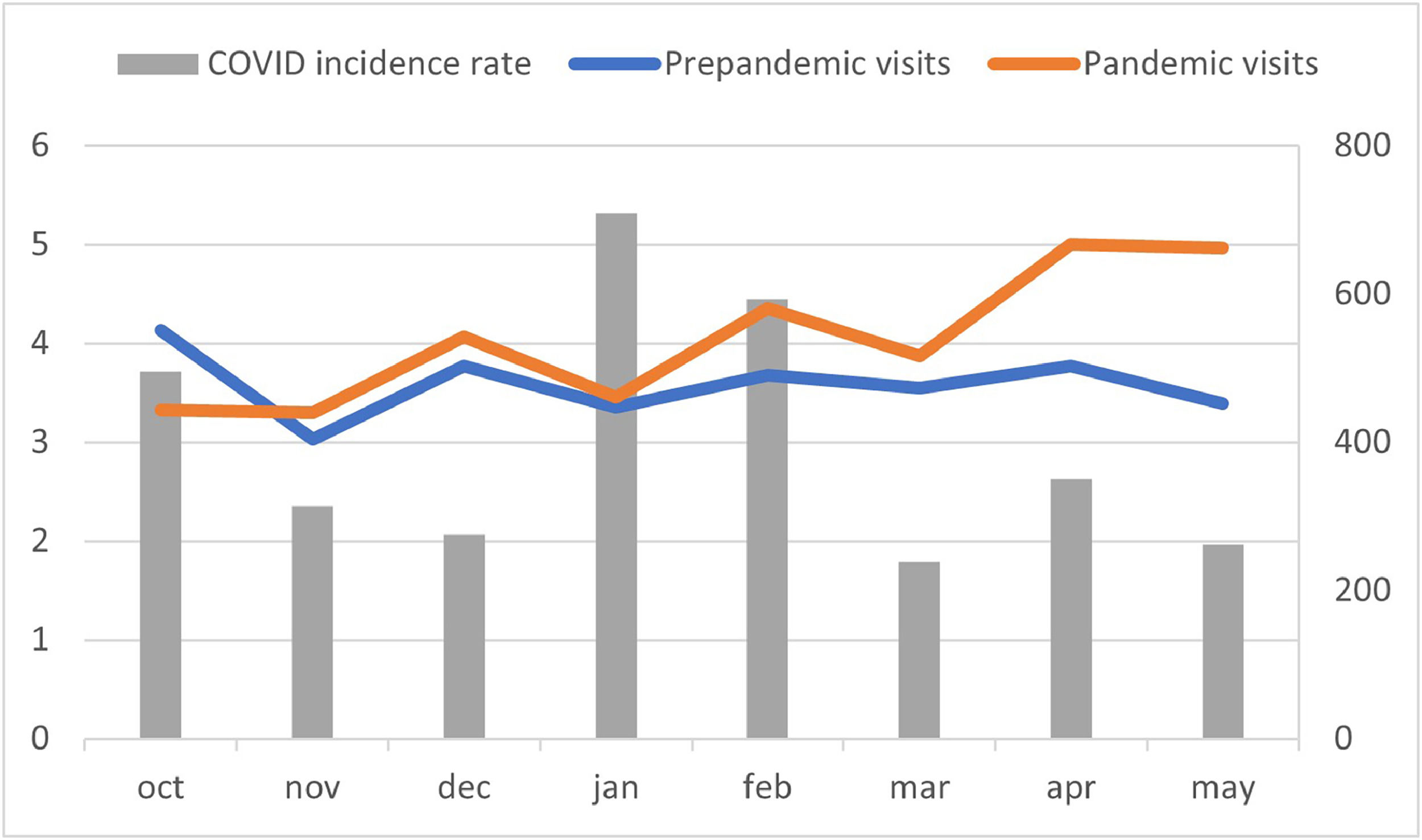
The COVID-19 pandemic and the ensuing restrictive measures had a detrimental impact on the mental health of the population, potentially altering the pattern of seeking psychiatric care. A retrospective cross-sectional study was conducted to compare Psychiatric Emergencies after the most restrictive phases of the pandemic with an equivalent pre-pandemic period. Additionally, we aimed to investigate a possible association between the influx of patients to the emergency department (ED) and the cumulative incidence of COVID-19 cases.

Methods

Data from the psychiatric ED of a tertiary hospital in Madrid, Spain, during the so-called “new normal” phase (October 2020 - May 2021) were compared with a corresponding period (October 2018 - May 2019).

Results

The number of visits to the ED significantly increased from 879 to 980 after the pandemic. Patients were more likely to be compulsorily transferred (M = 281, SD 28.7 vs. M = 209, SD 23.8) and had a higher likelihood of requiring psychiatric hospitalization (M = 323, SD 33.0 vs. M = 246, SD 28.0). Notably, the number of visits related to suicide attempts was significantly higher during the pandemic (M = 147, SD 15.0 vs. M = 86, SD 9.8), while the proportion of patients with bipolar disorder decreased (M = 89, SD 9.1 vs. M = 121, SD 13.8). No significant results were found regarding a possible association between the number of patients in the ED and the COVID-19 incidence rate.

Conclusions

These results suggest critical changes in psychiatric emergency care and an increasing trend of suicide attempts during the pandemic, emphasizing the need for the reorganization of emergency care in future health crises.

Keywords:
COVID-19
Mental health
Emergency department
Psychiatric emergency care
Suicidal behavior

Article

These are the options to access the full texts of the publication European Journal of Psychiatry
Subscriber
Subscriber

If you already have your login data, please click here .

If you have forgotten your password you can you can recover it by clicking here and selecting the option “I have forgotten my password”
Purchase
Purchase article

Purchasing article the PDF version will be downloaded

Purchase now
Contact
Phone for subscriptions and reporting of errors
From Monday to Friday from 9 a.m. to 6 p.m. (GMT + 1) except for the months of July and August which will be from 9 a.m. to 3 p.m.
Calls from Spain
932 415 960
Calls from outside Spain
+34 932 415 960
E-mail
Article options
Tools