




To adapt and validate for use in Spain the ECCOE questionnaire for assessing nurse caring behaviours from the perspective of nurses; to apply the adapted questionnaire to a sample of hospital registered nurses in Spain and to examine the perceptions of humanised care behaviours.
MethodsMulti-centre cross-sectional study. Validity evidence based on the ECCOE_Es internal structure through confirmatory factor analysis and convergent and divergent validity in the relationships with moral sensitivity and burnout, respectively. Reliability was also examined through Cronbach’s alpha and temporal stability with Pearson’s correlation of test scores. Descriptive and comparative analysis of nurses’ responses to the ECCOE_Es was performed.
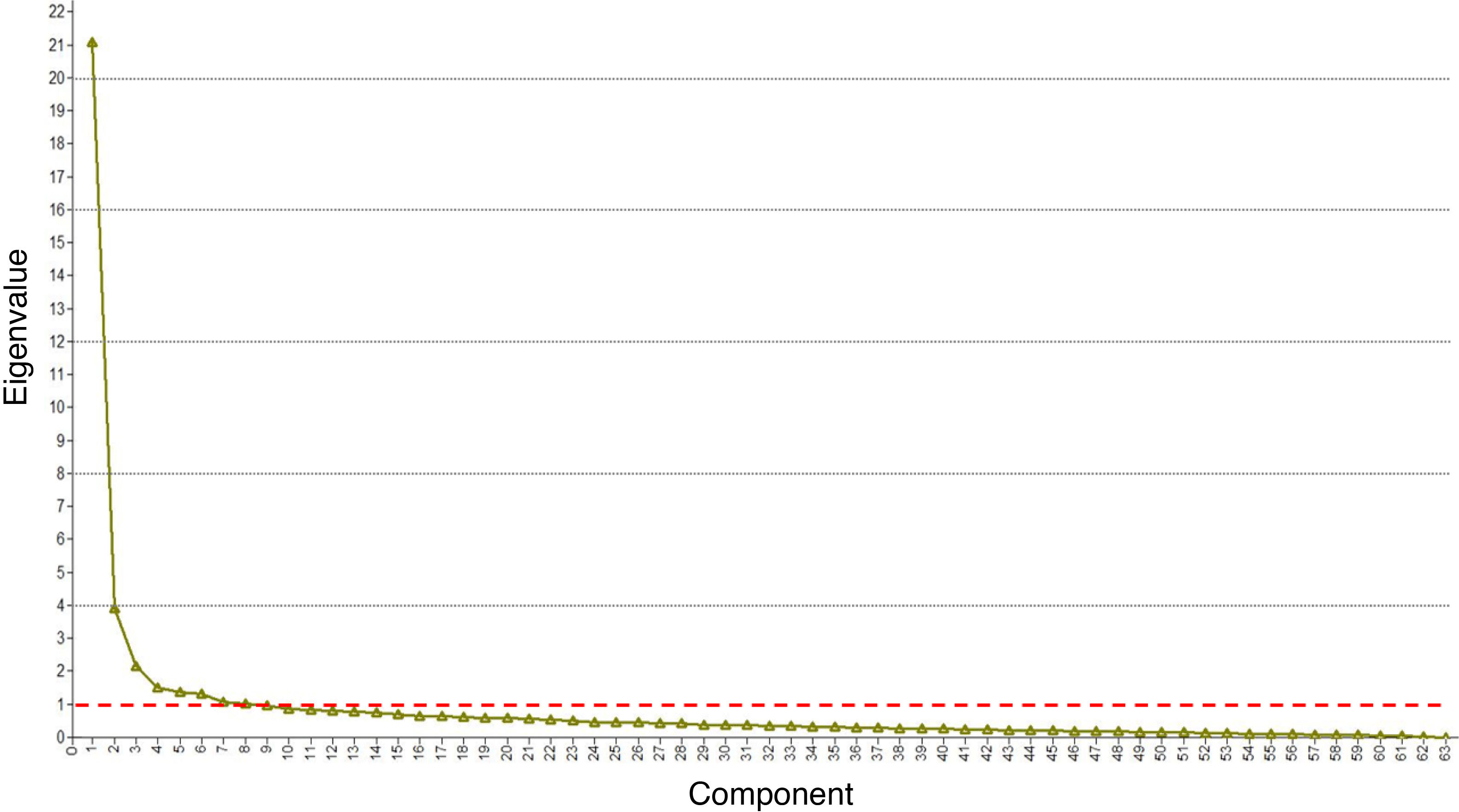
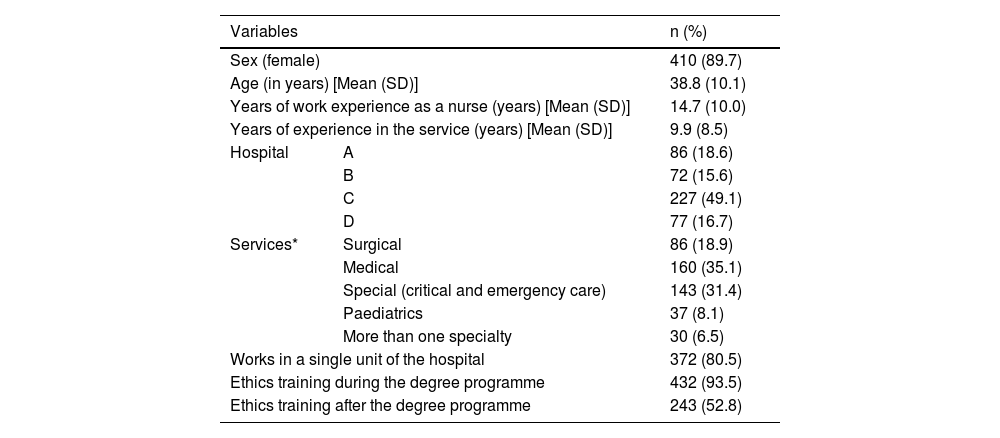
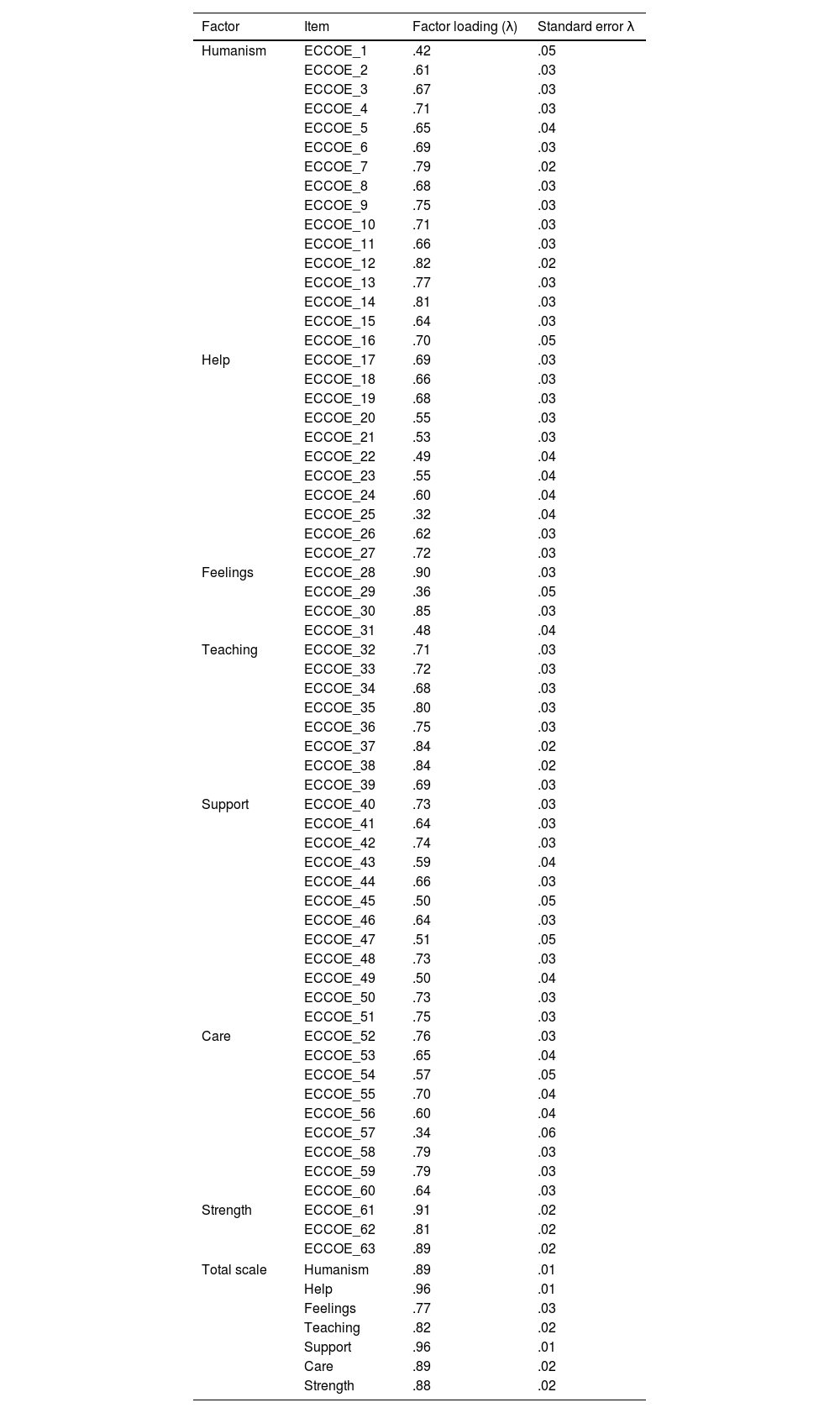
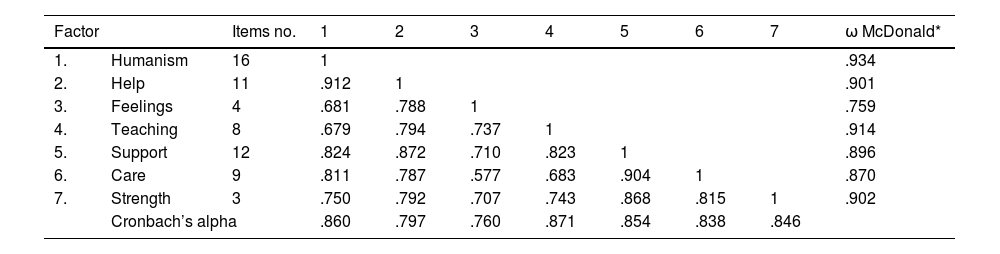
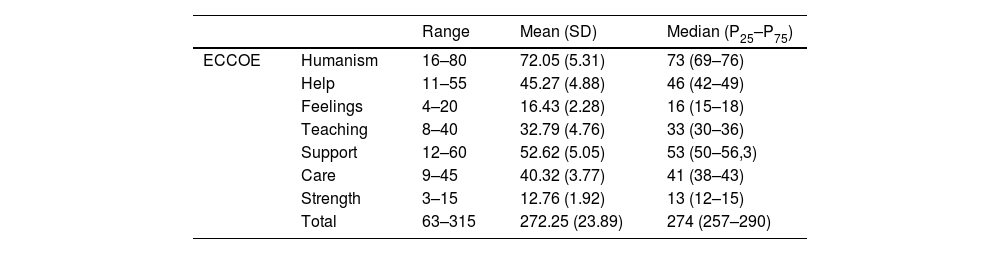
ResultsA total of 462 nurses’ questionnaires were analysed. Temporal stability (r = 0,908) and internal consistency were adequate (α > 0,76 for the subscales and α = 0,96 for the total scale). Confirmatory factor analysis supported the structure of the original instrument with 7 subscales. ECCOE-Es were positively correlated with moral sensitivity (r = 0,454) and negatively correlated with burnout (r = −0,265). Humanism subscale was perceived as the most important, whereas items related to individualised care were less frequently endorsed.
ConclusionsECCOE’s Spanish adaptation has adequate psychometric properties, and its original properties and structure are confirmed as a suitable tool for assessing nurses’ perceptions of humanised care. Overall, they perceived themselves as delivering humanised care, there was a scope for improvement in this respect.
Adaptar culturalmente y validar el cuestionario ECCOE en enfermeras del ámbito hospitalario en España y conocer la percepción de los comportamientos de cuidado humanizado.
MétodoEstudio transversal multicéntrico. Se obtuvieron pruebas de validez basadas en la estructura interna mediante un análisis factorial confirmatorio y de validez convergente y divergente en las relaciones con la sensibilidad moral y el burnout, respectivamente. También se examinaron la fiabilidad a través del alfa de Cronbach y la estabilidad temporal con la correlación de Pearson de las puntuaciones de la prueba. Se realizó un análisis descriptivo y comparativo de las respuestas de la ECCOE-Es.
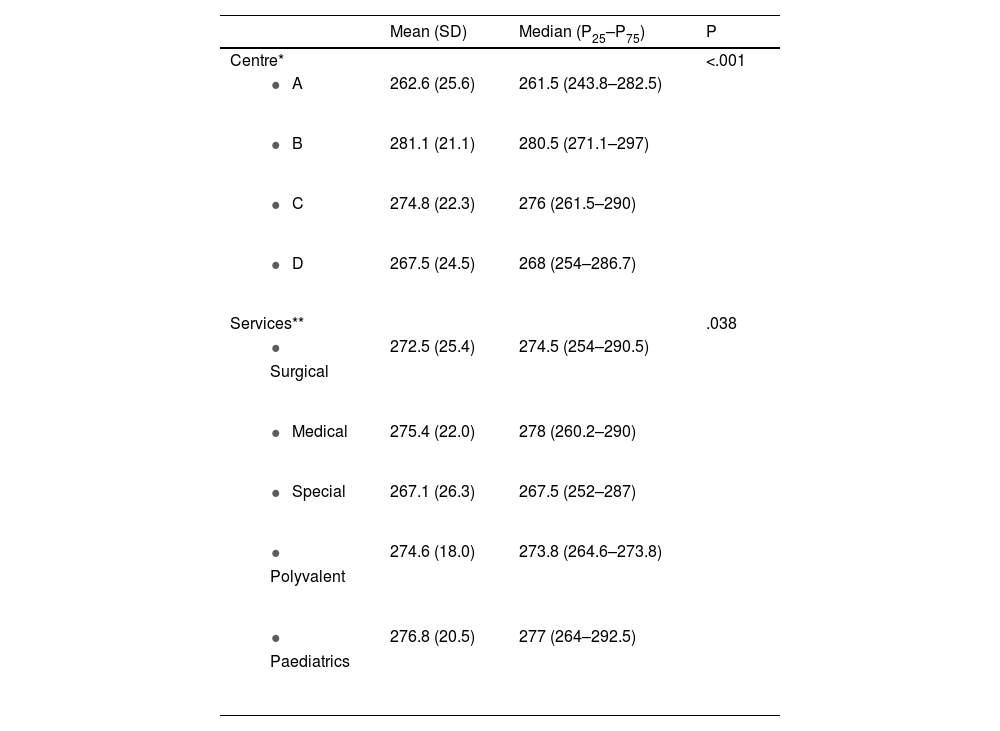
ResultadosSe analizaron 462 cuestionarios de enfermeras de 4 hospitales. La estabilidad temporal (r = 0,908) y la consistencia interna fueron adecuadas (α > 0,76 para las subescalas y α = 0,96 para el total de la escala). El análisis factorial confirmatorio respaldó la estructura del instrumento original evidenciando 7 subescalas. La ECCOE-Es se correlacionó positivamente con la sensibilidad moral (r = 0,454) y negativamente con el burnout (r = -0,265). La subescala de humanismo fue percibida como la más importante, mientras que los ítems relacionados con la atención individualizada fueron respaldados con menor frecuencia.
ConclusionesLa adaptación española del ECCOE tiene propiedades psicométricas adecuadas y se confirma sus propiedades y estructura original siendo un instrumento apropiado para evaluar las percepciones de los profesionales sobre los cuidados humanizados. En general, se perciben a sí mismos como prestadores de cuidados humanizados, existiendo un margen de mejora en este aspecto.

