


metricas
covid
Endocrinología, Diabetes y Nutrición (English ed.) Attention deficit hyperactivity disorder risk, mental health diagnoses and exper...
Journal Information
Vol. 72. Issue 8.
(October 2025)
Share
Download PDF
More article options
Vol. 72. Issue 8.
(October 2025)
Original article
Attention deficit hyperactivity disorder risk, mental health diagnoses and experience of discrimination in transgender adolescents and youth
Riesgo de trastorno por déficit de atención con hiperactividad, diagnósticos de salud mental y experiencia de discriminación en adolescentes y jóvenes transgénero
Carmen Martínez del Ríoa,
Corresponding author
carmenmtudela@hotmail.com

Corresponding author.
, Isabel Cuellar-Floresb, Diego López de Larab, Raúl Castañeda-Vozmedianoc, María Miguélez Gonzálezd, Alicia Gaitero Pérezb, Olga Pérez Rodríguezb, Adrián García Ronb
a Endocrinología Pediátrica, Servicio de Pediatría, Hospital del Sureste, Arganda del Rey, Madrid, Spain
b Instituto del Niño y Adolescente, Hospital Clínico San Carlos, Madrid, Spain
c Facultad de Medicina, Universidad Francisco de Vitoria, Pozuelo de Alarcón, Madrid, Spain
d Endocrinología, Unidad de Género, Fundación Jiménez Díaz, Madrid, Spain
Article information
Abstract
Full Text
Bibliography
Download PDF
Statistics
Tables (5)
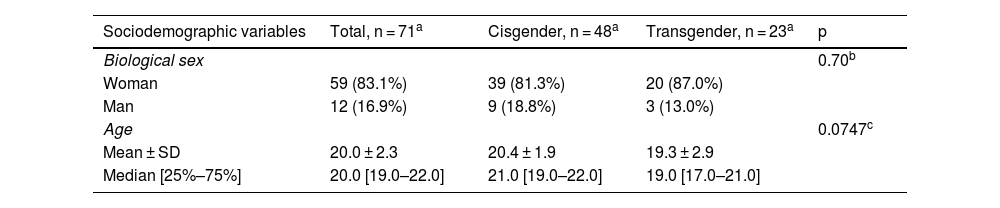
Table 1. Demographic characteristics of the cisgender and transgender groups.
Tables
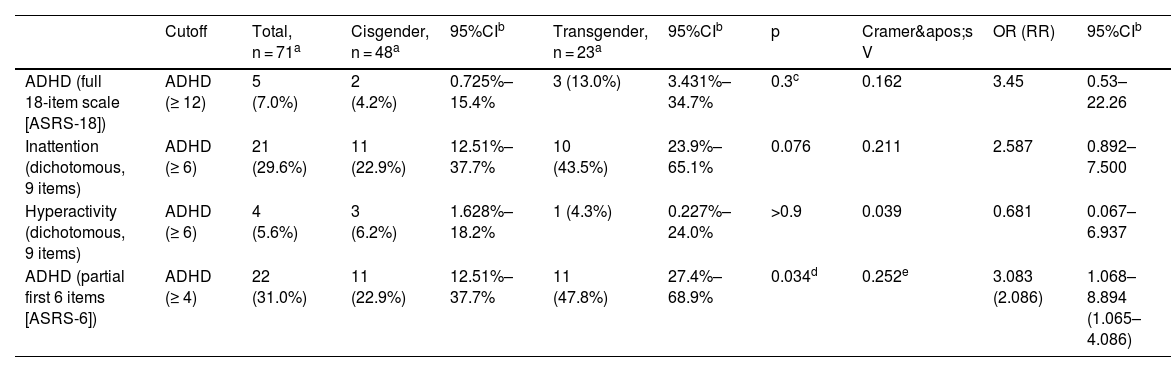
Table 2. Difference in prevalence between groups (ADHD risk by dichotomous total-score cutoffs).
Tables
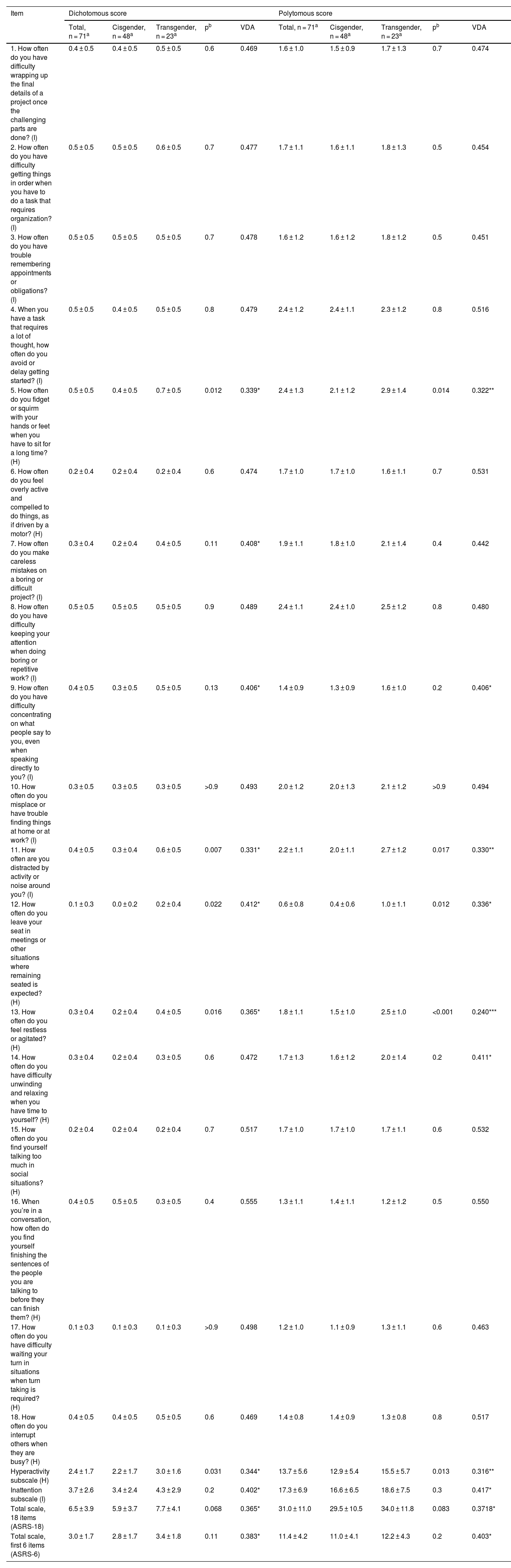
Table 3. Mean differences in total score, domain, and item between cisgender and transgender groups — Dichotomous and polytomous scoring.
Tables
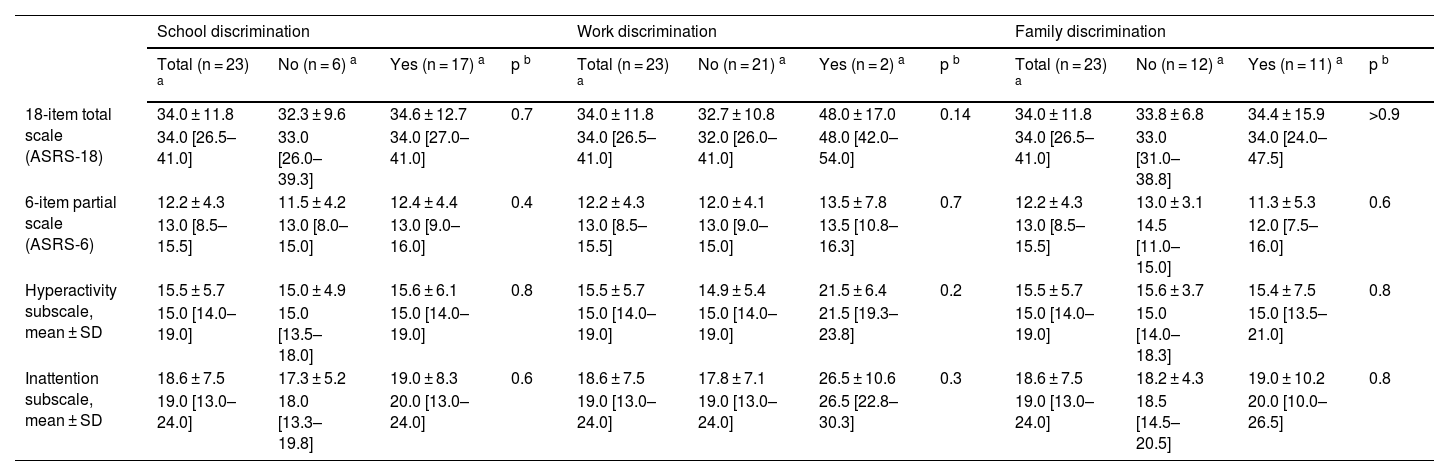
Table 4. Differences in ADHD scores by discrimination item in the transgender group.
Tables
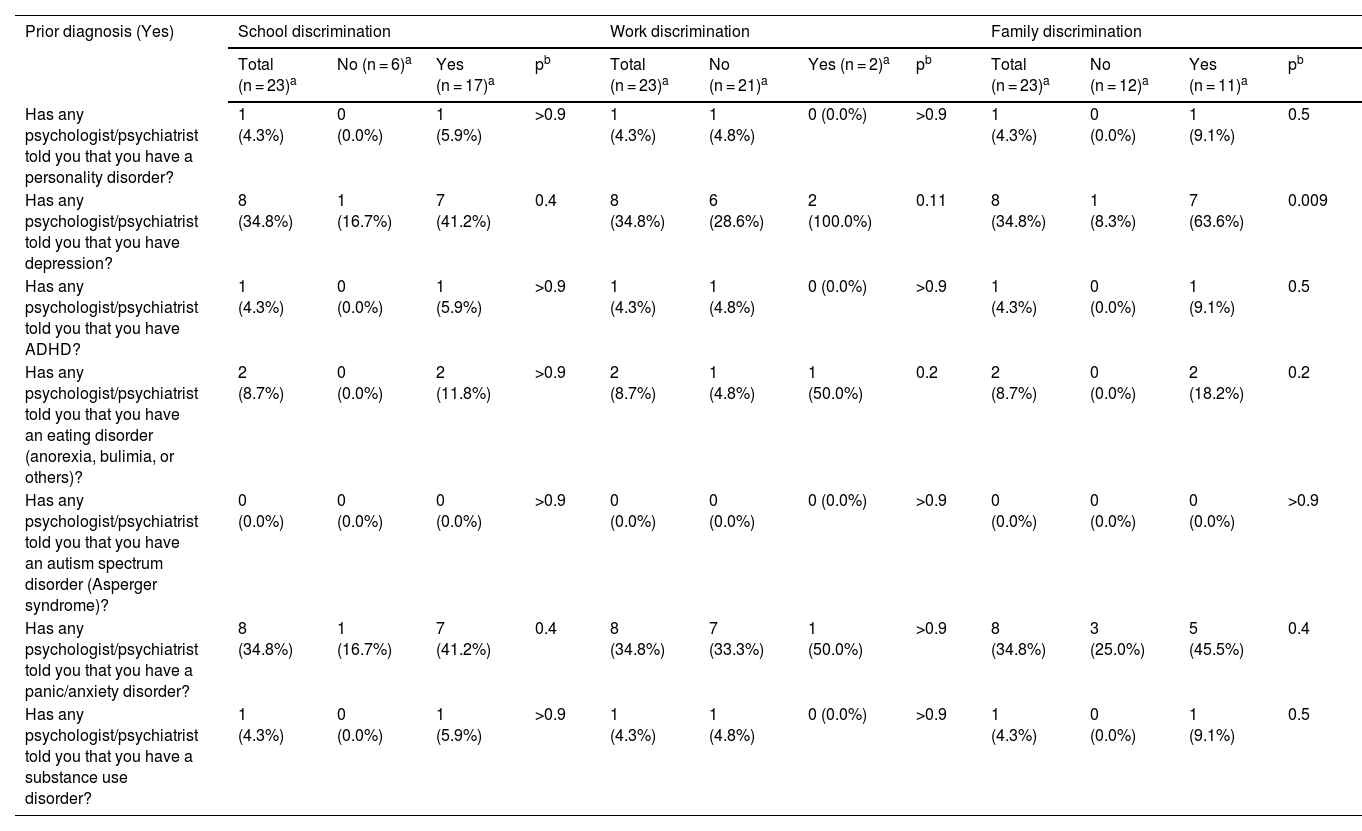
Table 5. Association of prior mental-health diagnoses and discrimination in the transgender group.
Tables
Show moreShow less
Additional material (1)
Abstract
Introduction

Recent studies suggest a higher prevalence of attention-deficit hyperactivity disorder (ADHD) in transgender individuals compared to the general population. However, no studies have been conducted in the Spanish population, and most focus on individuals with a prior ADHD diagnosis rather than screening for the disorder.

Materials and methods

This is a single-center, cross-sectional observational study assessing the risk of ADHD in transgender adolescents and young adults compared to cisgender individuals using the World Health Organization's (WHO) Adult ADHD Self-Report Scale (ASRS-V1.1). Additionally, previous mental health diagnoses and experiences of discrimination are analyzed in both groups.

Results

Transgender youth scored higher on the short-form scale, indicating a greater risk of ADHD, as well as on the hyperactivity/impulsivity subscale. A significant association was also found between experiences of discrimination and a prior diagnosis of depression.

Conclusions

The ASRS-V1.1 scale may be useful for ADHD screening in transgender individuals; however, further studies are needed to confirm these findings. Risk factors for neurodevelopmental and anxiety-depressive disorders may differ in the transgender population.

Keywords:
Transgender
Gender incongruence
Attention-deficit/hyperactivity disorder (ADHD)
Minority stress
Discrimination
Mental health
Resumen
Introducción

Estudios recientes parecen indicar que existe mayor prevalencia de trastorno por déficit de atención con hiperactividad (TDAH) en personas transgénero que en la población general, si bien ninguno se ha realizado en población española y la mayoría buscan un diagnóstico previo de TDAH y no un despistaje del mismo.

Material y métodos

Se trata de un estudio observacional transversal unicéntrico en el que se valora el riesgo de TDAH en adolescentes y adultos jóvenes transgénero comparado con personas cisgénero mediante el cuestionario auto-informado de cribado del TDAH del adulto de la Organización Mundial de la Salud (OMS)(ASRS-V1.1). Así mismo se analizan diagnósticos de salud mental y experiencia de discriminación previos en ambos grupos.

Resultados

Los jóvenes transgénero obtienen una puntuación mayor en la escala reducida, indicando un mayor riesgo de TDAH, así como puntuaciones mayores en la subescala de hiperactividad/impulsividad. Se encuentra también una relación significativa entre haber sufrido discriminación y el diagnóstico previo de depresión.

Conclusiones

La escala ASRS-V1.1 podría ser útil para el cribado de TDAH en personas transgénero, sin embargo, son necesarios más estudios que confirmen estos resultados. Los factores de riesgo de los trastornos en el neurodesarrollo y de los trastornos ansioso-depresivos podrían ser diferentes en la población transgénero.

Palabras clave:
Transgénero
Incongruencia de género
Trastorno por déficit de atención e hiperactividad (TDAH)
Estrés de las minorías
Discriminación
Salud mental

Article

These are the options to access the full texts of the publication Endocrinología, Diabetes y Nutrición (English ed.)
Subscriber
Subscriber

If you already have your login data, please click here .

If you have forgotten your password you can you can recover it by clicking here and selecting the option “I have forgotten my password”
Subscribe
Subscribe to

Endocrinología, Diabetes y Nutrición (English ed.)

Purchase
Purchase article

Purchasing article the PDF version will be downloaded

Purchase now
Contact
Phone for subscriptions and reporting of errors
From Monday to Friday from 9 a.m. to 6 p.m. (GMT + 1) except for the months of July and August which will be from 9 a.m. to 3 p.m.
Calls from Spain
932 415 960
Calls from outside Spain
+34 932 415 960
E-mail
Article options
Tools
Supplemental materials