


metricas
Clínica e Investigación en Arteriosclerosis (English Edition) Strategies to improve cardiovascular health and treatment of dyslipidemia in Spa...
Journal Information
Vol. 37. Issue 4.
(July - August 2025)
Cite
Cite
Share
Download PDF
More article options
Visits
1662
Vol. 37. Issue 4.
(July - August 2025)
Original article
Full text access

Strategies to improve cardiovascular health and treatment of dyslipidemia in Spain. Expert Insights Project

Estrategias de mejora en la salud cardiovascular y el tratamiento de la dislipidemia en España. Proyecto Expert Insights
Visits
1662
Juan Pedro-Boteta,
Corresponding author
Jpedrobotet@psmar.cat

Corresponding authors.
, Román Freixab, Juan José Tamaritc, José López-Mirandad, Rosa Fernández-Olmoe, Ovidio Muñiz-Grijalvof, Rafael Vázquez-Garcíag, Carlos Guijarroh, Luis Rodríguez-Padiali, José Luis Díaz-Díazj, Marisol Bravo-Amarok, José Luís Hernándezl, José Antonio Alarcón-Duquem, José Alfredo Martin-Armasn, Martín García-Lópezo, Juan Cosín-Salesp,q,
Corresponding author
jcosinsales@gmail.com

Corresponding authors.
a Unidad de Lípidos y Riesgo Vascular, Hospital del Mar, Universidad Autónoma de Barcelona, Barcelona, Spain
b Servicio de Cardiología, Complex Hospitalari Moisès Broggi, Sant Joan Despí, Barcelona, Spain
c Servicio de Medicina Interna, Unidad de Lípidos y Riesgo Cardiovascular, Hospital General Universitario de Valencia, Valencia, Spain
d Unidad de Lípidos y Arteriosclerosis, UGC de Medicina Interna, Hospital Universitario Reina Sofía, Córdoba, Instituto Maimónides de Investigación Biomédica de Córdoba (IMIBIC), Universidad de Córdoba, Córdoba, CIBER Fisiopatología de la Obesidad y Nutrición (CIBEROBN), Instituto de Salud Carlos III (ISCIII), Madrid, Spain
e Unidad de Cardiología, Hospital Universitario de Jaén, Jaén, Spain
f Unidad de Lípidos y Riesgo Vascular, Servicio de Medicina Interna, UCERV, UCAMI, Hospital Virgen del Rocío de Sevilla, Sevilla, Spain
g Servicio de Cardiología, Hospital Universitario Puerta del Mar, Departamento de Medicina, Universidad de Cádiz, Grupo de Investigación EM1 GADICOR, Instituto de Investigación e Innovación Biomédica de Cádiz (INiBICA), Cádiz, Spain
h Unidad de Medicina Interna, Hospital Universitario Fundación Alcorcón, Universidad Rey Juan Carlos, Alcorcón, Madrid, Spain
i Unidad de Cardiología, Complejo Hospitalario Universitario de Toledo, Toledo, Spain
j Sección de Medicina Interna, Unidad de Lípidos y Riesgo Cardiovascular, Hospital Abente y Lago Complejo Hospitalario Universitario A Coruña, La Coruña, Spain
k Unidad de Rehabilitación Cardiaca, Servicio de Cardiología, Hospital Universitario Álvaro Cunqueiro de Vigo, Vigo, Pontevedra, Spain
l Unidad de Lípidos y Riesgo Vascular, Servicio de Medicina Interna, Hospital Marqués de Valdecilla-IDIVAL, Departamento de Medicina y Psiquiatría, Universidad de Cantabria, Santander, Cantabria, Spain
m Unidad Rehabilitación Cardíaca/Prevención Secundaria, Hospital Universitario Donostia, Donostia, Guipuzkoa, Spain
n Unidad de Lípidos y Riesgo Vascular, Hospital Universitario de Gran Canaria Dr. Negrín, Servicio de Medicina Interna, Gran Canaria, Las Palmas de Gran Canaria, Las Palmas, Spain
o Servicio de Cardiología, Hospital Doctor José Molina Orosa, Las Palmas de Gran Canaria, Las Palmas, Spain
p Servicio de Cardiología Hospital Arnau de Vilanova, Valencia, Spain
q Facultad de Medicina, Departamento de Medicina y Cirugía, Universidad CEU Cardenal Herrera, Alfara del Patriarca, Valencia, Spain
Ver más
This item has received
Article information
Abstract
Full Text
Bibliography
Download PDF
Statistics
Figures (4)
fig0005
fig0010
fig0015
fig0020
Tables (2)
Table 1. Improvement proposals in force or under development in different Spanish regions.
Tables
Table 2. Other proposals for improvement presented at the clinician meetings.
Tables
Additional material (1)
Abstract
Objectives

To gather opinions, recommendations, and proposals for improvement from Spanish clinicians on cardiovascular (CV) health, with particular focus on dyslipidemia management.

Methods

The Expert Insights project involved 8 face-to-face sessions held throughout Spain, attended by 138 CV health experts. Clinicians answered to 25 questions survey related to CV health and dyslipidemia control. Each session included an analysis and a discussion on the perceived realities and areas for improvement.

Results

72% of centres have a standardised process for monitoring patients after a CV episode at discharge, but only 37% during their clinical follow-up. Patient care and management are dependent on the physician, with a lack of coordination between hospital specialties and primary care (PC). 95% of clinicians believe it is necessary to standarise treatment optimisation. 65% of centres prescribe combined lipid-lowering treatment after a CV episode. Updating cLDL levels in the Therapeutic Positioning Report and standardising and globalising the prescription document would reduce iPCSK9 prescription barriers and lead to more equitable access.

Conclusions

In Spain, there are significant deficiencies in the management of dyslipidemia, with a great need for a consensus on standardising management processes and optimising patient treatment. The opinions, recommendations, and improvement proposals from Spanish clinicians on CV health are an important starting point to improve the situation.

Keywords:
Lipid-lowering drugs
Lipid control
Cardiovascular health
Dyslipidemia
Proposals for improvement
LDL cholesterol
Resumen
Objetivo

Recoger opiniones, recomendaciones y propuestas de mejora de los clínicos españoles sobre la salud cardiovascular (CV), con especial énfasis en el control de la dislipidemia.

Metodología

El proyecto Expert Insights consistió en 8 sesiones presenciales realizadas por todo el territorio nacional a las que asistieron 138 clínicos expertos en salud CV. Los clínicos contestaron una encuesta de 25 preguntas relacionadas con la salud CV y el control de la dislipidemia. En cada sesión se analizó y estableció un debate sobre las distintas realidades percibidas y las áreas de mejora.

Resultados

El 72% de los centros tiene un proceso estandarizado de control del paciente tras un episodio CV al alta, pero solo el 37% durante su seguimiento clínico.

La atención y el control del paciente es médico dependiente, con una elevada descoordinación entre especialidades hospitalarias y atención primaria (AP). El 95% de los clínicos cree necesario protocolizar la optimización del tratamiento. El 65% de los centros prescribe tratamiento hipolipidemiante combinado tras un episodio CV.

Actualizar los niveles de cLDL del informe de posicionamiento terapéutico y homogenizar y globalizar el documento de solicitud reducirían las barreras de prescripción de iPCSK9 y producirían un acceso más equitativo.

Conclusión

En España hay importantes deficiencias en el control de la dislipidemia, con una gran necesidad de consenso para la estandarización de los procesos de control y de optimización del tratamiento del paciente. Las opiniones, recomendaciones y propuestas de mejora de los clínicos sobre la salud CV son un importante punto de partida para mejorar la situación.

Palabras clave:
Fármacos hipolipidemiantes
Control lipídico
Salud cardiovascular
Dislipidemias
Propuestas de mejora
Colesterol LDL
Full Text
Introduction

Cardiovascular disease (CVD) causes the death of 5000 citizens per day in the European Union,1 and in Spain, was the leading cause of death during the first half of 2023, accounting for 27.1% of total deaths.2 CVD therefore constitutes a major challenge and a significant economic burden for healthcare systems. It has recently been suggested that the main challenges in cardiovascular (CV) health management in Spain are early diagnosis and prevention of CVD, the collection, distribution, and management of CVD data, together with CVD-related equity.1

Despite the multifactorial origin of atherosclerotic CVD, the INTERHEART study3 demonstrated that 9 modifiable factors account for 90% of the attributable population risk in men and 94% in women. Specifically, dyslipidaemia, assessed using the apolipoprotein Apo B/Apo A1 ratio, was responsible for 54% of the attributable risk of myocardial infarction.

Furthermore, as with other CV risk factors, the fact that it is not only cholesterol concentration but also cumulative exposure time that is responsible means that therapeutic delay will continue to expose people to a risk that was, a priori, avoidable. Early diagnosis of CVD is still lacking in Spain, and secondary prevention remains a pending issue. Only two-thirds of Spanish cardiology services offer cardiac rehabilitation units (CRUs), and only 1 in 10 people are aware of their target cholesterol levels.1

Despite scientific evidence stating that the lower the low-density lipoprotein cholesterol (LDL-C) level and the earlier the better, especially in patients at high/very high CV risk, European clinical practice studies repeatedly indicate that dyslipidaemic patients are undertreated and, consequently, undercontrolled, with an unacceptably low rate of LDL-C therapeutic goal achievement.4–7 Studies conducted in Spain provide very similar data, with two peculiarities: interterritorial differences have been identified in the degree of LDL-C therapeutic goal achievement, and the use of lipid-lowering therapy.8 Furthermore, Spain, along with Portugal and Italy, are the European countries with the highest rates of combined statin and ezetimibe therapy.5

Taking advantage of Spain's presidency of the European Union and the PwC1 Report, the main objective of the Expert Insights Project - Spanish Forum on Cardiovascular Health and Dyslipidemia Treatment - was to evaluate, the opinions, recommendations, and proposals for improvement of Spanish clinicians on cardiovascular health, with special emphasis on dyslipidaemia control.

Methods

The Expert Insights project was structured into 8 in-person sessions with expert clinicians in CV health from different specialties (Cardiology, Internal Medicine, Endocrinology, among others) from across Spain and from centres representative of each autonomous community. These meetings analysed the current state of CV and dyslipidaemia prevention in Spain and Europe, as a starting point for developing opinions, recommendations, potential areas for improvement, and controversies as perceived by the specialists. All sessions were conducted using common material generated by the project's scientific coordinators and led by 2 regional coordinators (one cardiologist and one lipid specialist per region). Between 11 and 27 specialist physicians participated in all meetings and were divided into 2 groups. In the first, the regional coordinators presented the project's objectives and the current state of CV prevention at the national level. The scientific content of this presentation, prepared by the national coordinators and based on an extensive bibliographic search, focused on three main areas: 1) the current context of the state of cardiovascular health in Spain; 2) the current status of lipid control; and 3) available pharmacological treatments. The second part of the session focused on the search for possible proposals for improvement, for which all participants completed a 25-question survey live. The survey, which constitutes the quantitative data for the project, was generated by the national project coordinators based on current medical needs and was subsequently evaluated by the rest of the regional coordinators. The questions were grouped into three main sections and, in turn, divided into subsections based on the different areas of interest: clinician-related (Patient monitoring through a standardised process, Promotion of multidisciplinary management, and Homogenisation of criteria in standardised patient management), institutional-related (Patient screening strategies and Access to more effective medications), and patient-related (Patient awareness of the importance of lipid monitoring and available treatments, and Treatment delivery/improvements in quality of life).

The surveys were anonymous, and responses were recorded using the Mentimeter platform. A dialogue and debate (qualitative data) were then established among the attendees, organised around these three sections of the survey, to highlight the different perceived realities and areas for improvement based on the attendees' experience.

Statistical analysis

Minutes were compiled for each meeting to collect the qualitative data presented. These were subsequently compared to identify points of consensus and controversies among the attendees' responses.

The data are presented descriptively, and a quantitative analysis of the questionnaire was performed as a whole. The data obtained are expressed as percentages and mean scores, depending on the question, and in aggregate form to maintain the anonymity of the participating physicians. Data analysis was performed using Microsoft Excel (Microsoft 365 for Windows version 2408).

Results

Between October 25 and November 14, 2023, 8 meetings were held throughout the country, with the participation of 138 clinicians from the 17 autonomous communities (Supplementary Table 1, Appendix A). The majority of the clinicians were specialists in Internal Medicine (46.8%) and Cardiology (32.4%), and, to a lesser extent, in Endocrinology (17.3%) and other specialties (3.6%).

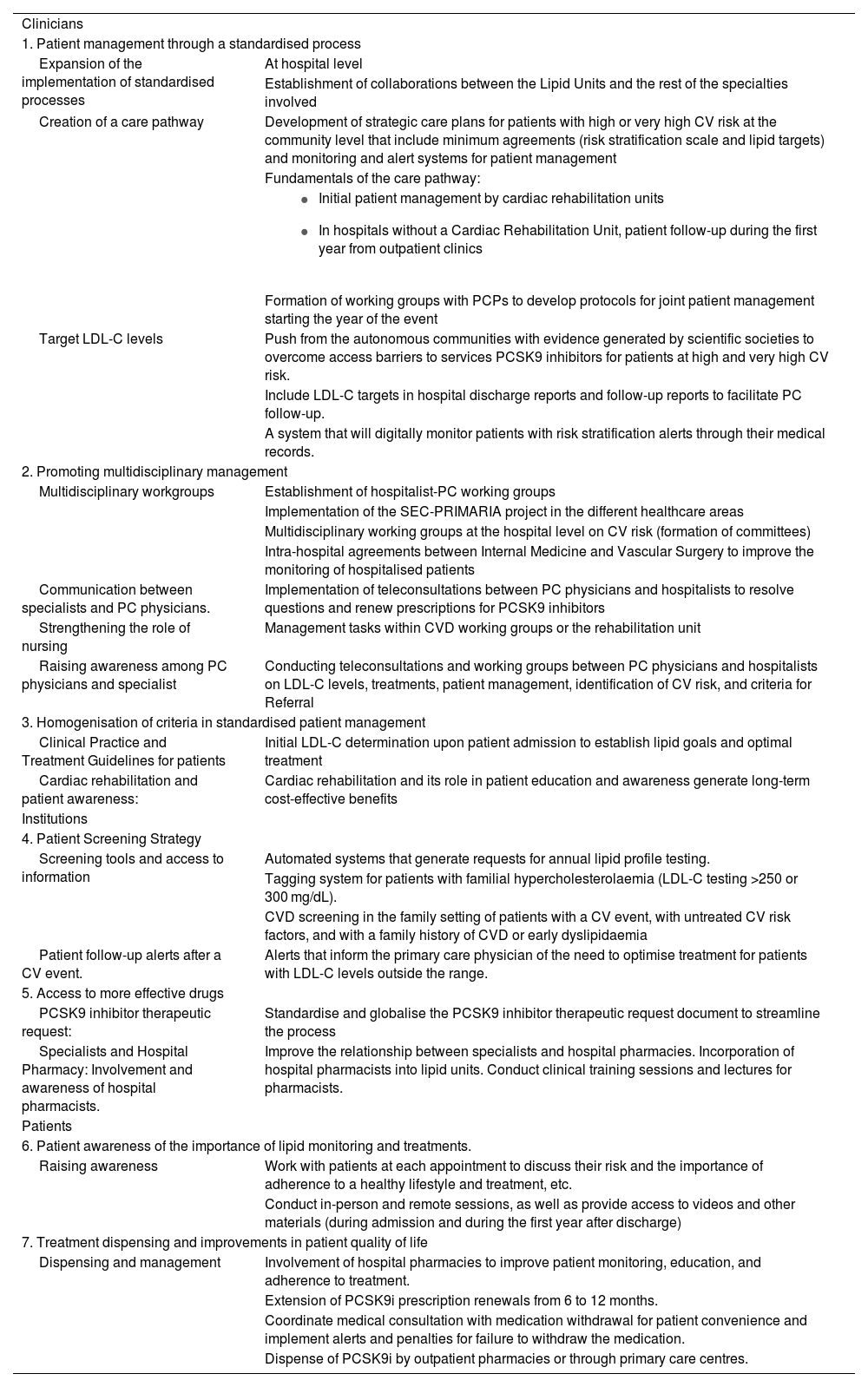
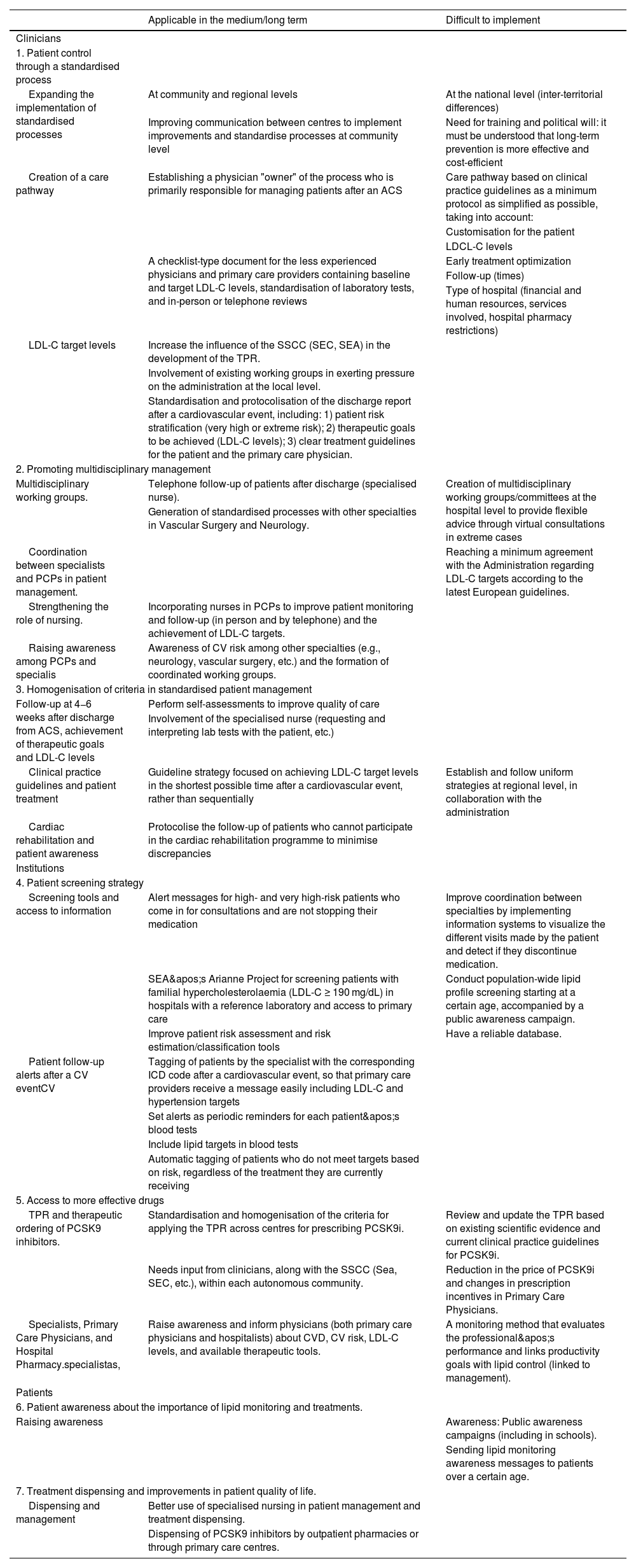
The results of the survey conducted during these sessions (Supplementary Table 2, Appendix A), as well as the recommendations and possible areas for improvement suggested by the participating clinicians for each of the blocks discussed (clinician, institutions, and patient), compiled according to their degree of implementation, are presented in Table 1 (proposals already underway in some regions) and in Table 2 (proposals that can be implemented in the medium/long term or are not yet implemented).

Table 1.

Improvement proposals in force or under development in different Spanish regions.

Clinicians
1. Patient management through a standardised process
Expansion of the implementation of standardised processesAt hospital level 
Establishment of collaborations between the Lipid Units and the rest of the specialties involved 
Creation of a care pathwayDevelopment of strategic care plans for patients with high or very high CV risk at the community level that include minimum agreements (risk stratification scale and lipid targets) and monitoring and alert systems for patient management 
Fundamentals of the care pathway: 
  • Initial patient management by cardiac rehabilitation units

  • In hospitals without a Cardiac Rehabilitation Unit, patient follow-up during the first year from outpatient clinics

 
Formation of working groups with PCPs to develop protocols for joint patient management starting the year of the event 
Target LDL-C levelsPush from the autonomous communities with evidence generated by scientific societies to overcome access barriers to services PCSK9 inhibitors for patients at high and very high CV risk. 
Include LDL-C targets in hospital discharge reports and follow-up reports to facilitate PC follow-up. 
A system that will digitally monitor patients with risk stratification alerts through their medical records. 
2. Promoting multidisciplinary management
Multidisciplinary workgroupsEstablishment of hospitalist-PC working groups 
Implementation of the SEC-PRIMARIA project in the different healthcare areas 
Multidisciplinary working groups at the hospital level on CV risk (formation of committees) 
Intra-hospital agreements between Internal Medicine and Vascular Surgery to improve the monitoring of hospitalised patients 
Communication between specialists and PC physicians.  Implementation of teleconsultations between PC physicians and hospitalists to resolve questions and renew prescriptions for PCSK9 inhibitors 
Strengthening the role of nursing  Management tasks within CVD working groups or the rehabilitation unit 
Raising awareness among PC physicians and specialist  Conducting teleconsultations and working groups between PC physicians and hospitalists on LDL-C levels, treatments, patient management, identification of CV risk, and criteria for Referral 
3. Homogenisation of criteria in standardised patient management
Clinical Practice and Treatment Guidelines for patients  Initial LDL-C determination upon patient admission to establish lipid goals and optimal treatment 
Cardiac rehabilitation and patient awareness:  Cardiac rehabilitation and its role in patient education and awareness generate long-term cost-effective benefits 
Institutions
4. Patient Screening Strategy
Screening tools and access to informationAutomated systems that generate requests for annual lipid profile testing. 
Tagging system for patients with familial hypercholesterolaemia (LDL-C testing >250 or 300 mg/dL). 
CVD screening in the family setting of patients with a CV event, with untreated CV risk factors, and with a family history of CVD or early dyslipidaemia 
Patient follow-up alerts after a CV event.  Alerts that inform the primary care physician of the need to optimise treatment for patients with LDL-C levels outside the range. 
5. Access to more effective drugs
PCSK9 inhibitor therapeutic request:  Standardise and globalise the PCSK9 inhibitor therapeutic request document to streamline the process 
Specialists and Hospital Pharmacy: Involvement and awareness of hospital pharmacists.  Improve the relationship between specialists and hospital pharmacies. Incorporation of hospital pharmacists into lipid units. Conduct clinical training sessions and lectures for pharmacists. 
Patients
6. Patient awareness of the importance of lipid monitoring and treatments.
Raising awarenessWork with patients at each appointment to discuss their risk and the importance of adherence to a healthy lifestyle and treatment, etc. 
Conduct in-person and remote sessions, as well as provide access to videos and other materials (during admission and during the first year after discharge) 
7. Treatment dispensing and improvements in patient quality of life
Dispensing and managementInvolvement of hospital pharmacies to improve patient monitoring, education, and adherence to treatment. 
Extension of PCSK9i prescription renewals from 6 to 12 months. 
Coordinate medical consultation with medication withdrawal for patient convenience and implement alerts and penalties for failure to withdraw the medication. 
Dispense of PCSK9i by outpatient pharmacies or through primary care centres. 

ACS: acute coronary syndrome; CV: cardiovascular; CVD: cardiovascular disease; CVR: cardiovascular risk; LDL-C: low-density lipoprotein cholesterol; Lp(a): lipoprotein type A; PC: Primary Care; PCSK9i: proprotein convertase subtilisin/kexin type 9 inhibitors; SEA: Spanish Society of Atherosclerosis; SEC: Spanish Society of Cardiology; TPR: Therapeutic Positioning Report.

Table 2.

Other proposals for improvement presented at the clinician meetings.

  Applicable in the medium/long term  Difficult to implement 
Clinicians     
1. Patient control through a standardised process     
Expanding the implementation of standardised processesAt community and regional levels  At the national level (inter-territorial differences) 
Improving communication between centres to implement improvements and standardise processes at community level  Need for training and political will: it must be understood that long-term prevention is more effective and cost-efficient 
Creation of a care pathwayEstablishing a physician "owner" of the process who is primarily responsible for managing patients after an ACSCare pathway based on clinical practice guidelines as a minimum protocol as simplified as possible, taking into account: 
Customisation for the patient 
LDCL-C levels 
A checklist-type document for the less experienced physicians and primary care providers containing baseline and target LDL-C levels, standardisation of laboratory tests, and in-person or telephone reviewsEarly treatment optimization 
Follow-up (times) 
Type of hospital (financial and human resources, services involved, hospital pharmacy restrictions) 
LDL-C target levelsIncrease the influence of the SSCC (SEC, SEA) in the development of the TPR. 
Involvement of existing working groups in exerting pressure on the administration at the local level. 
Standardisation and protocolisation of the discharge report after a cardiovascular event, including: 1) patient risk stratification (very high or extreme risk); 2) therapeutic goals to be achieved (LDL-C levels); 3) clear treatment guidelines for the patient and the primary care physician. 
2. Promoting multidisciplinary management
Multidisciplinary working groups.Telephone follow-up of patients after discharge (specialised nurse).  Creation of multidisciplinary working groups/committees at the hospital level to provide flexible advice through virtual consultations in extreme cases
Generation of standardised processes with other specialties in Vascular Surgery and Neurology. 
Coordination between specialists and PCPs in patient management.    Reaching a minimum agreement with the Administration regarding LDL-C targets according to the latest European guidelines. 
Strengthening the role of nursing.  Incorporating nurses in PCPs to improve patient monitoring and follow-up (in person and by telephone) and the achievement of LDL-C targets.   
Raising awareness among PCPs and specialis  Awareness of CV risk among other specialties (e.g., neurology, vascular surgery, etc.) and the formation of coordinated working groups.   
3. Homogenisation of criteria in standardised patient management
Follow-up at 4−6 weeks after discharge from ACS, achievement of therapeutic goals and LDL-C levelsPerform self-assessments to improve quality of care 
Involvement of the specialised nurse (requesting and interpreting lab tests with the patient, etc.) 
Clinical practice guidelines and patient treatment  Guideline strategy focused on achieving LDL-C target levels in the shortest possible time after a cardiovascular event, rather than sequentially  Establish and follow uniform strategies at regional level, in collaboration with the administration 
Cardiac rehabilitation and patient awareness  Protocolise the follow-up of patients who cannot participate in the cardiac rehabilitation programme to minimise discrepancies   
Institutions
4. Patient screening strategy
Screening tools and access to informationAlert messages for high- and very high-risk patients who come in for consultations and are not stopping their medication  Improve coordination between specialties by implementing information systems to visualize the different visits made by the patient and detect if they discontinue medication. 
SEA's Arianne Project for screening patients with familial hypercholesterolaemia (LDL-C ≥ 190 mg/dL) in hospitals with a reference laboratory and access to primary care  Conduct population-wide lipid profile screening starting at a certain age, accompanied by a public awareness campaign. 
Improve patient risk assessment and risk estimation/classification tools  Have a reliable database. 
Patient follow-up alerts after a CV eventCVTagging of patients by the specialist with the corresponding ICD code after a cardiovascular event, so that primary care providers receive a message easily including LDL-C and hypertension targets 
Set alerts as periodic reminders for each patient's blood tests 
Include lipid targets in blood tests 
Automatic tagging of patients who do not meet targets based on risk, regardless of the treatment they are currently receiving 
5. Access to more effective drugs
TPR and therapeutic ordering of PCSK9 inhibitors.Standardisation and homogenisation of the criteria for applying the TPR across centres for prescribing PCSK9i.  Review and update the TPR based on existing scientific evidence and current clinical practice guidelines for PCSK9i. 
Needs input from clinicians, along with the SSCC (Sea, SEC, etc.), within each autonomous community.  Reduction in the price of PCSK9i and changes in prescription incentives in Primary Care Physicians. 
Specialists, Primary Care Physicians, and Hospital Pharmacy.specialistas,  Raise awareness and inform physicians (both primary care physicians and hospitalists) about CVD, CV risk, LDL-C levels, and available therapeutic tools.  A monitoring method that evaluates the professional's performance and links productivity goals with lipid control (linked to management). 
Patients
6. Patient awareness about the importance of lipid monitoring and treatments.
Raising awarenessAwareness: Public awareness campaigns (including in schools). 
Sending lipid monitoring awareness messages to patients over a certain age. 
7. Treatment dispensing and improvements in patient quality of life.
Dispensing and managementBetter use of specialised nursing in patient management and treatment dispensing. 
Dispensing of PCSK9 inhibitors by outpatient pharmacies or through primary care centres. 

ACS: acute coronary syndrome; CV: cardiovascular; CVD: cardiovascular disease; LDL-C: low-density lipoprotein cholesterol; Lp(a): lipoprotein type A; PC: Primary Care; PCSK9i: proprotein convertase subtilisin/kexin type 9 inhibitors; SEA: Spanish Society of Atherosclerosis; SEC: Spanish Society of Cardiology; TPR: Therapeutic Positioning Report.

About the clinician

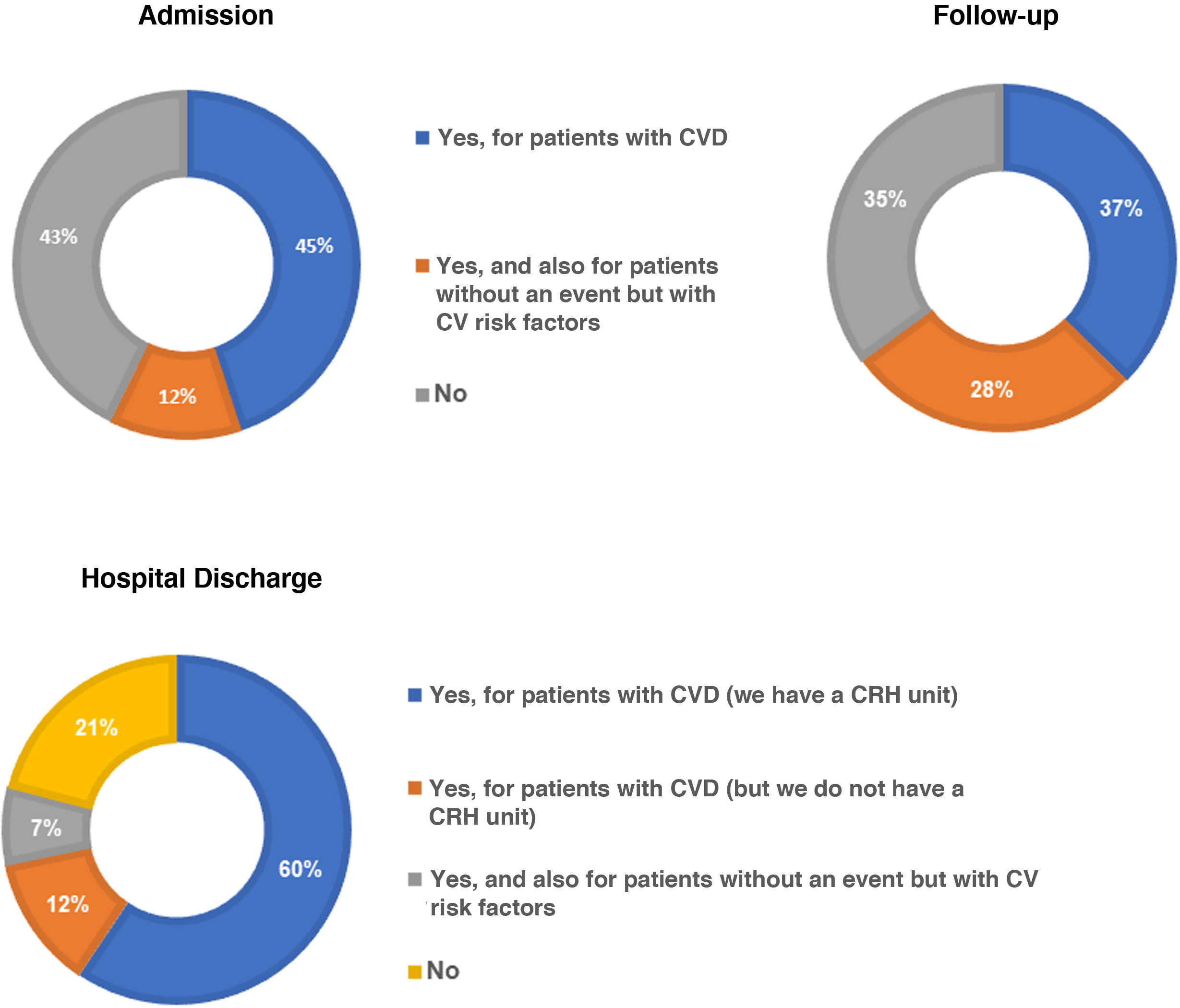
There is a problem with standardising the implementation of clinical practice guideline recommendations, as each centre or hospital does so differently, and certain autonomous communities impose more restrictions than those defined at the national level. Seventy-two percent of clinicians confirmed that their centre had standardised processes for patient monitoring upon discharge due to a cardiovascular event, and 60% had a CHR unit (Fig. 1). Regarding these processes during patient admission and during clinical follow-up in outpatient clinics or outpatient settings, the results were more heterogeneous, with 43% and 35% of professionals, respectively, reporting that their centre did not have a standardised process (Fig. 1). Regarding the normal levels of lipid profile analysis, only 54% confirmed that their centre adjusted the levels to the patient's risk, while the remaining 46% used standard levels (Supplementary Table 2, Appendix A). Clinicians corroborated the varying degrees of standardisation of the various processes across centres, regions, and communities, and although they considered it ideal for these processes to be standardised nationally, they did not see this as currently feasible (Tables 1 and 2). Therefore, the need to begin standardising at the hospital/regional level was highlighted, initially addressing hospital units through the development of care pathways.

Figure 1.

Questions and answers related to the clinician's block regarding standardised processes for patient monitoring at the time of hospital discharge, during admission for CVD, and during clinical follow-up in outpatient clinics or outpatient clinics.

CV: cardiovascular; CVD: cardiovascular disease; CRH: cardiac rehabilitation.

Regarding multidisciplinary management, the majority of clinicians classified patient care as physician-dependent (4.8/7) and several had standardised processes for in-hospital management of ACS and chronic coronary syndrome (CCS) in their centres (4.7/7). However, most participants considered that their centres do not implement a shared hospital-level follow-up plan with interdisciplinary collaboration (2.6/7), nor do they implement coordination between hospital and primary care (PC) (3.1/7) (Supplementary Table 2, Appendix A). Clinicians agreed that difficulties in patient management occur after the first year of follow-up, when referral to PC occurs, since the incentives they receive from the government for prescribing low-intensity statins promote therapeutic inertia and a deterioration in the quality of care. Some clinicians shared specific strategies to improve communication/coordination between hospitalists and PC physicians, with positive results (Table 1).

At the inpatient level, the ACS and CCS management process depends on the department, so clinicians believed that the creation of working groups or committees among multidisciplinary groups at the hospital level would also be useful (Tables 1 and 2). There is a perceived need to raise awareness about CV risk not only among primary care physicians, but also among other specialties such as neurology or vascular surgery, with whom they generally admit to having less coordination.

Regarding the standardisation of criteria for standardised patient management, 95% of clinicians considered it necessary to establish protocols for optimising lipid-lowering therapy and agreed that it should be done taking into account other CV risk factors or incorporating non-HDL cholesterol as another therapeutic target (Supplementary Table 2, Appendix A).

Regarding the hospital discharge report, a high proportion of clinicians confirmed that their centres included a laboratory request for the first follow-up visit (5.7/7), the recommended lipid-lowering treatment (5.3/7), and the target LDL-C levels (5.2/7). However, it was very rare for patients to be scheduled for tele-CRH after an ACS, but they were scheduled for in-person CRH (Supplementary Table 2, Appendix A). Clinicians emphasised the disparity among patients in CRH programmes and the need to establish follow-up protocols for those who are not candidates for a rehabilitation program, as the success of CRH also lies in patient education and awareness, which provides long-term cost-effectiveness benefits.

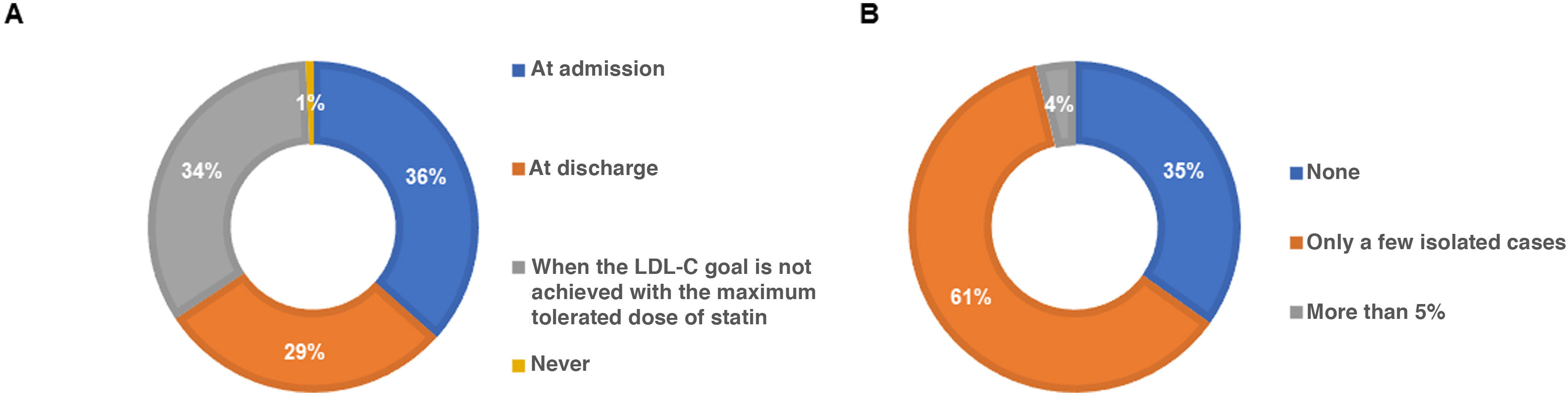
Regarding the timeframe in which therapeutic goals should be achieved in patients, clinicians' responses were heterogeneous, ranging from 4 to 12 weeks, while the 2021 European CV prevention guidelines stipulate that follow-up of a patient after discharge from ACS should be within 4−6 weeks.9 To achieve therapeutic goals in patients after ACS, there was considerable variability regarding when oral combination lipid-lowering therapy should be initiated. Although 65% of centres prescribe it after a CV event, only 36% of cases prescribed it initially (Fig. 2A). Furthermore, upon hospital discharge, 61% of clinicians prescribed proprotein convertase subtilisin/kexin type 9 inhibitors (PCSK9i) in isolated cases, and 35% never prescribed them (Fig. 2B).

Figure 2.

Questions and answers related to the clinician's block regarding patient management: a) the start of combined lipid-lowering therapy and b) how many are treated with PCSK9 inhibitors at discharge.

LDL-C: low-density lipoprotein cholesterol.

On the other hand, most clinicians agreed that the sequential treatment for LDL-C control advocated by the latest European clinical practice guidelines9 may delay therapeutic optimisation and keep the patient at risk (5.7/7). Specifically, many agreed that dual oral therapy (high-intensity statin + ezetimibe) should be the first therapeutic option in patients with high or very high CV risk (5.9/7) and for those who are far from the target levels (5.7/7) (Supplementary Table 2, Appendix A).

About the institutions

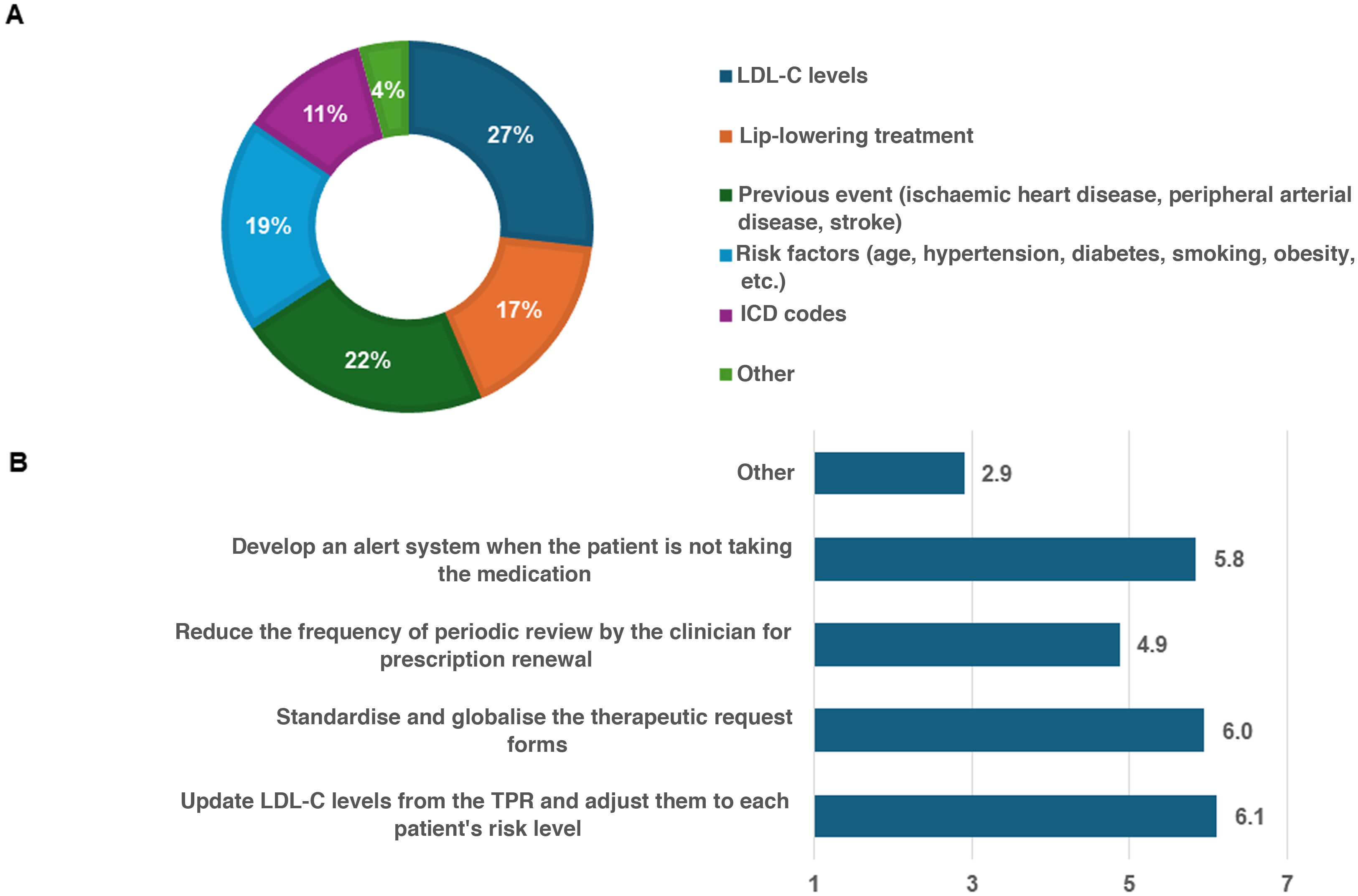
When discussing patient screening strategies, the survey revealed the diversity across centres and regions in terms of access to and use of information, as well as the most relevant patient indicators for this approach (Fig. 3A). In this context, clinicians are forced to proactively search patient histories to identify those at high and very high CV risk. To address these shortcomings, some participants shared strategies developed at their centres to facilitate the detection of these patients (Table 1). Despite this, they emphasised that these warning systems, although already well-established in the PC setting, must be optimised due to the high care burden.

Figure 3.

Questions and answers related to the institutional block regarding: a) indicators available to physicians for patient screening; b) ways to reduce administrative barriers to prescribing PCSK9i.

LDL-C: low-density lipoprotein cholesterol; PCSK9i: proprotein convertase subtilisin/kexin type 9 inhibitors; TPR: Therapeutic Positioning Report.

Ninety-four percent of attendees would accept the inclusion of a risk-based LDL-C target in their centre/department, and 85% considered it feasible to strengthen the role of nursing staff in hospital and primary care settings in identifying individuals at high CV risk (Appendix A, Supplementary Table 2). All participants agreed that the main measure to reduce the administrative barriers at centres that prevent patients who need it from receiving treatment with PCSK9i would be to update the LDL-C levels in the Therapeutic Positioning Report (TPR) and adapt them to the patient's risk (6.1/7) (Fig. 3B). However, they doubt that this would be feasible in all regions, since administration, driven by cost, is the main barrier to accessing the recommended and required lifelong treatments. Additionally, a more viable alternative, already present in some communities, would be to standardise and globalise the therapeutic request form (6.0/7). All the improvement proposals are listed in Tables 1 and 2.

About the patients

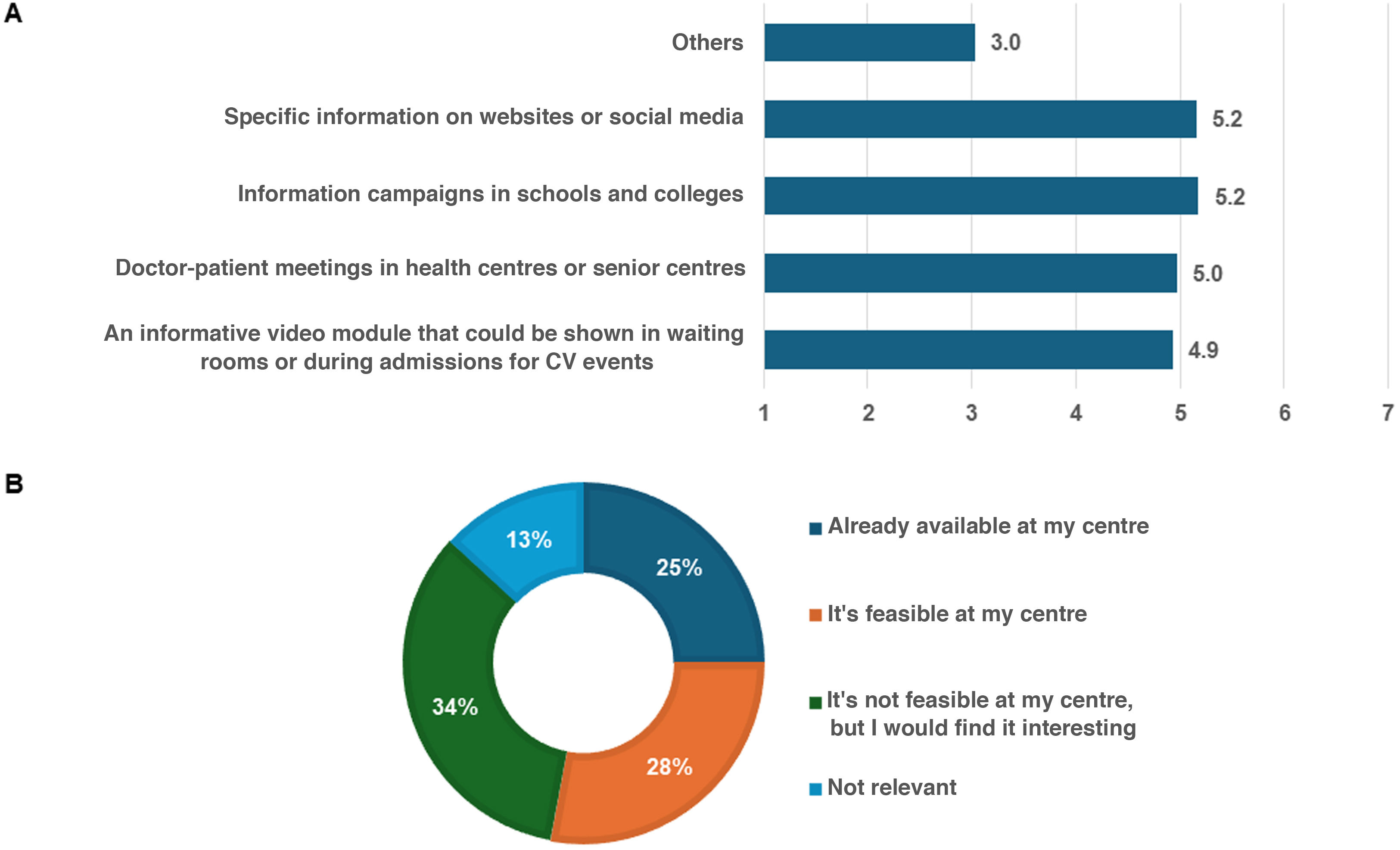
Patient awareness regarding lipid control and available treatments was considered a fundamental action, and the measures presented in the survey obtained similar scores (Fig. 4A). All agreed that patients are key to managing their disease and must be aware of its importance and the risks to which they are exposed, as well as the importance of adhering to a healthy lifestyle and its treatment. Awareness-raising is already being carried out in CRH units and some clinics. Physicians discussed various initiatives they were implementing to increase patient awareness and the different experiences in different regions, as well as improving patient adherence (Tables 1 and 2). These initiatives included specific consultations to work with patients, in-person and remote sessions, and providing access to videos and other training materials.

Figure 4.

Questions and answers related to the patient block, regarding: a) measures to raise awareness among patients and the general public about lipid monitoring; b) physicians' opinions on the dispensing of PCSK9 inhibitors in hospital pharmacies.

CV: cardiovascular.

Regarding treatment dispensing and improving patients' quality of life, 34% of specialists believed that dispensing PCSK9i by the hospital pharmacy would be appropriate in pharmacies where patients had long commutes. Twenty-eight percent of clinicians stated that it would be feasible in their centre, while 25% responded that this was already the case (Fig. 4B). Furthermore, 73% of respondents believed that dispensing PCSK9i by the outpatient pharmacy would be a valuable service for patients (Appendix A, Supplementary Table 2). However, contrary to what was stated in the survey, not all specialists agreed that dispensing PCSK9i could also be done outside the hospital, as patient pickup of the medication in the hospital promoted adherence and continuity of care. (Table 1)

Based on the clinicians' experience, in addition to the need to extend the prescription of PCSK9 inhibitors from 6 to 12 months, they considered the involvement of the hospital pharmacy important to improve patient monitoring, education, and adherence to treatment, and to implement alerts and penalties for non-discontinuation of medication. They also coordinated the medical consultation with the medication withdrawal for the patient's convenience (Tables 1 and 2).

Discussion

The Expert Insights project: Spanish Forum on Cardiovascular Health and the Treatment of Dyslipidaemia has not only confirmed the barriers faced by clinicians in Spain, but has also compiled a series of proposals presented by the specialists themselves, classified according to their stage of development in certain regions and their implementability. The ultimate goal is to produce a white paper to disseminate the problems faced by specialists and these improvement strategies.

One of the main outcomes of the project is the need for a national consensus on standardising patient monitoring processes due to inequalities between regions/communities, as place of residence has become a determining factor for CV health.8,10 The recommendations of the 2019 European Society of Cardiology/European Atherosclerosis Society guidelines,9,11 endorsed by Spanish scientific societies, and the Cardiovascular Health Strategy of the National Health System,12 are reference documents that have not been fully implemented. Although Spain is not the only European country with a decentralised healthcare model,1 the transfer of powers to the regions undoubtedly makes standardisation difficult. Therefore, clinicians advocated, first and foremost, for standardising the process at the regional/hospital level to improve and standardise patient care and ensure it is not physician-dependent (whether specialist or primary care physician). To achieve this, care pathways would need to be implemented based on minimum agreements regarding appointments, laboratory tests, baseline LDL-C concentrations, and lipid targets, and multidisciplinary coordination would be improved. Subsequently, optimising communication between centres would allow for improvements in the models and thus standardise the best processes at the community level.

The widespread perception of a lack of coordination between different specialists across the care continuum was also highlighted as previously reported drawback.10,13 Therefore, different strategies are being implemented in several regions through working groups and agreements to standardise protocols and improve communication and awareness systems for primary care physicians. A successful example of these initiatives is the SEC-PRIMARIA Project,14 the objective of which is to improve continuity of care, training, and communication between professionals at different levels of care in the field of CVD. Thanks to this project, for example, a protocol exists for referring patients to primary care upon discharge for secondary prevention follow-up. Another example is the secondary prevention e-consultation project of the Santiago de Compostela Integrated Health Area (ASISC), which promotes communication between primary care and cardiology and has successfully reduced admissions and first-year mortality.1,15 Furthermore, the implementation of different care continuity models reduces the delay between initial visits to the cardiologist and facilitates LDL-C monitoring.16

The project has once again reflected the need to adjust normal LDL-C levels to the patient's CV risk levels, to standardise and homogenise patient monitoring criteria, to optimise lipid-lowering treatment, and to address the underuse of PCSK9 inhibitors. According to therapeutic guidelines for dyslipidemia, in patients at very high CV risk, a reduction of at least 50% from baseline should be achieved, with an LDL-C <55 mg/dL.9,11 Nationally, only 22% of high-risk and 25% of very high-risk CV patients achieved LDL-C therapeutic targets,8 although there were interterritorial differences in their achievement for these patients, ranging from 50% in La Rioja to 12% in the Region of Murcia.8 These low achievement rates are not only due to the fact that administrations already establish LDL-C levels that do not follow guideline recommendations,11 but also to the underuse of lipid-lowering therapies. In fact, in real-life studies, 18% of patients with CVD are candidates for PCSK9 inhibitors but do not receive them.17 Furthermore, 12 months after ACS, 51.1% of patients with LDL-C >70 mg/dL were not being treated with high-potency statins, 63.1% were not receiving ezetimibe, and only .04% were taking PCSK9 inhibitors.18

Clinicians highlighted the need to update LDL-C concentrations in the TPR and adjust them to each patient's risk level. Although the Ministry of Health recently renewed the TPR for evolocumab and alirocumab,19,20 incorporating the SEA recommendations for PCSK9 inhibitors, the funding conditions remain unchanged.21 The use of PCSK9 inhibitors varies greatly between autonomous communities, as some apply even more restrictive criteria, leading to barriers to the prescription of PCSK9 inhibitors by regional regulatory agencies and hospital pharmacy commissions.21 According to the study by Guijarro et al. as of 2022, processing drug requests requires an average of 1.2 forms with an average of 8.5 variables, in addition to the IPT requirements; 79% of centres require committee approval, and an average of 6 weeks elapse between prescription approval and the patient receiving the first dose. This all leads to underutilisation of PCSK9 inhibitors in real-world clinical practice. PCSK9 inhibitors have already been shown to be the drugs with the greatest LDL-C and severe CV event-lowering effects,22,23 also reducing all-cause mortality in the case of alirocumab.24 PCSK9 inhibitors have also been shown to have an excellent safety profile,25,26 with very high therapeutic adherence and persistence.27 Better use of lipid-lowering therapy, leads to a greater drop in LDL-C levels, a greater regression of atherosclerotic plaque,28 a smaller plaque volume, and a lower percentage of CV events.29

The patient screening strategy is another challenge faced by clinicians, as the tools available for accessing and using information vary widely across regions. There are regional disparities in the quantity and quality of data collected, with only 6 autonomous communities collecting CVD-specific data through registries (Asturias, Cantabria, the Canary Islands, Galicia, the Basque Country, and Catalonia) and only 3 using them (Galicia, the Basque Country, and Catalonia).1 Primary care clinicians and physicians have a heavy healthcare and administrative burden in collecting and managing data,1 which in many cases results in therapeutic inertia.30 To solve this problem, the use of computerised tools incorporated into the clinical history can be useful,31 as well as lipid-lowering treatment tables aimed at achieving therapeutic goals,32 or the application of therapeutic algorithms,33 and the implementation of self-assessments for clinicians to encourage compliance with LDL-C goals

Regarding the patient, awareness of their disease and CV risk is essential to maintain medication adherence and healthy lifestyle habits. The involvement of the hospital pharmacy upon discharge increases the percentage of patients who understand and take the prescribed medication correctly, along with a reduction in hospital readmissions.34 Spending more time in consultations with patients to raise awareness, along with the involvement of nurses, are strategies that are yielding excellent results in various areas. The establishment of national campaigns to raise public awareness about the importance of lipid levels would be a fundamental initiative that, would, however, require the involvement of the Ministry of Health.

The Expert Insights project is not without limitations. The participants were proactive clinicians with a particular interest in dyslipidaemia and cardiovascular health and may not be representative of all regions of Spain. Furthermore, no primary care physicians participated. It is also possible that some of the proposed improvement proposals were based on the professionals' "perceptions." Despite this, some of these strategies have been or are being implemented in their centres, indicating that they could be extended to other centres in the region or to the rest of the autonomous communities.

Conclusions

The Expert Insights project, in which clinicians from different disciplines involved in cardiovascular prevention participated, has allowed us to identify the problems and barriers faced in addressing CVD in different Spanish regions, as well as proposals and improvement strategies to increase the achievement of therapeutic LDL-C targets. All of this would entail effective CV prevention, for which involvement and awareness about CV risk and lipid levels among institutions, patients, specialists, and primary care physicians are essential.

CRediT authorship contribution statement

All authors have contributed significantly to the work presented in this article, meet the criteria for authorship of the Committee of Medical Journal Editors (ICMJE), and approve the article for publication.

Funding

The Experts Insights programme was funded by Sanofi Spain. The authors of this document are responsible for its content. Sanofi Spain was not involved in the design, writing, or content of the manuscript.

Declaration of competing interest

Sanofi Spain provided editing support and administrative support for the Experts Insights programme. Sanofi Spain was not involved in its writing or content.

JP-B received consulting fees, expert testimony fees, conference fees, advisory board fees, presentation fees, manuscript fees, and fees for educational events, and meeting support from Almirall, Amarin, Amgen, Daiichi-Sankyo, Esteve, Ferrer, Novartis, Organon, Sanofi, and Viatris.

RF received conference fees from Sanofi, Ferrer, Organon, Daichi-Sankyo, and Novartis.anofi

JJ-T: has no conflict of interests to declare.

J-LM: received consulting and conference fees from Amgen, Sanofi, Ferrer and Novartis.

R-FO: has no conflict of interests to declare.

O-MG: received fees for conference attendance, consulting, and speaking at conferences from Amarin, Amgen, Bial, Daichii-Sankyo, Ferrer, Novartis, Sanofi, Servier, Sobi, Ultragenyx, and Viatris.

R-VG: has no conflict of interests to declare.

CG: received consulting and conference fees from MSD, Amgen, Ferrer, Sanofi, Daiichi-Sankyo, Servier, Lilly, and Novartis.

L-RP: has no conflict of interests to declare.

JL-DD: has no conflict of interests to declare.

M-BA: received conference fees from Amgen, Sanofi, Ferrer, MSD, Organon, Rovi, Daichii-Sankyo, Novartis, Servier, Boheringher and Lilly.

JL-H: received conference and congress attendance fees from Amgen, Sanofi, Daichii-Sankyo, Novartis, Servier.

JA-AD: received consulting and conference fees from Sanofi, Ferrer and Organon.

JA-MA: has no conflict of interests to declare.

M-GL: has no conflict of interests to declare.

JC-S: received conference fees from Almirall, Amgen, Daiichi-Sankyo, Ferrer, MSD, Novartis, Organon, Rovi, Sanofi. They participated in consultancy for Almirall, Amgen, MSD, Novartis, Sanofi. They received research grants from Amgen, Daiichi-Sankyo, Ferrer, MSD and Sanofi.

Acknowledgements

Medical Statistics Consulting provided editorial assistance in the writing of this article. The authors thank all the participants in the Experts Insights project meetings for their valuable contributions, without which this manuscript would have been impossible to complete. Barcelona Meeting: Cristina Soler Ferrer, Álex Vila Belmonte, Núria Plana Gil, Ana Megía Colet, Hernán Tajes Pascual, Esteve Llargués Rocabruna, Eli Sánchez, Xavier Pintó Sala, Olga Guri Baiget, Ignacio Ferreira González, María Urquizu Padilla, Xavier García-Moll Marimon, Toni Pérez Pérez, Alessandro Sionis, Albert Cano Palomares y José Antonio Gimeno Orna. Las Palmas meeting: Fernando Sansegundo Burgueño, Ariadna Dorta Olivero, Melitón Francisco Dávila Ramos, Onan Pérez Hernández, Paula Soriano Perera, Ricardo Darias Garzón, Alejandro Agüero Sánchez, Octavio José Rodríguez Pérez, Ivan Gabriel Marrero Medina, Claudia Peña Saavedra, Patricia Cabrera García, Maria Carmen Durán Castellón, Juan Fernández Jiménez, Carolina Fernandez-Trujillo Moujir, Jonathan Déniz Rosario, Shahin Mirdavood Mohammad, Mercedes Lorenzo Medina, Lidia Esther Ruiz García, Aida Gil Díaz y Mónica Tejera Blanco. Logroño meeting: José Daniel Mosquera Lozano, Sara Martinez Hernández, Elisa Rabadan Pejenaute, Alejandro Gutierrez Fernández, Favio Anibal Rojas, Carmen García Ibarbia, Zaida Salmón González, Luis Iglesias Alonso, Jean Carlos Nuñez García, Diana Alegre Gonzalez, Julio Sanchez Álvarez y Eduardo José Lezcano Callen. Marid meeting: Joaquín Jesús Alonso Martin, Alejandro Curcio Ruigómez, Agustín Blanco Echevarría, Nieves Tarín Vicente, Adriana Puente García, Lorenzo Silva Melchor, Miguel Ángel Brito Sanfiel, Juan Manuel Escudier Villa, Edurne Lopez Soberon, Elena Mendoza Sierra, Ainhoa Gutierrez Garcia, Pedro Jose Pines Corrales, Carlos Escobar Cervantes, Leopoldo Pérez de Isla, José Tuñón Fernández, José María Mostaza Prieto, Carlos Lahoz Rallo, Ramón Salcedo Martínez, Amparo Marco Martínez, Miguel Ángel Rojas Fernández, Eva Moya Mateo, Nagore Lois Martinez, Elena Bello Martínez, Sharona Azriel Mira, Jorge Gómez Cerezo, Carmen Suárez Fernández, Esther Fernández Pérez. Málaga (Antequera) meeting: Justo Sánchez Gil, Miguel Ángel García Órdoñez, Jesús Olmedo Llanes, José María García Quintana, Juan Francisco Alcalá Díaz, Antonio Garcia Ríos, Pablo Pérez Martínez, Pablo Toledo Frías, Myrian Jiménez Fernández, Ricardo Francisco Rivera López, Javier Espíldora Hernández, Rafael Campos Arjona, Inmaculada Coca Prieto, Begoña Reina Monsó, Maria José Benítez Toledo, María Dolores López Carmona, Sergio Jansen Chaparro, Francisco José Fuentes Jiménez y Francisco Gómez Delgado. Santiago de Compostela meeting: Amelia Carro Hevia, Ignacio Vidal Pardo, Rosa Argueso Armentia, Carlos Nazara Otero, Manuel Suarez Tembra, Paula Sánchez Sobrino, José Manuel Cabezas Agrícola, Gemma Rodríguez Carnero, Sergio Raposeiras Roubín, Ana Román Rego, Patricia Pérez Castro, Lucia Perez Cebey, Regina Palmeiro Carballeira, Avelino Rodríguez González, Antonio Domingo Pose Reino, Miguel Lapeña Reguero. Seville meeting: Eva N. Gutiérrez Cortizo, Alberto Costo Campoamor, Teresa Arrobas Veleda, Francisco Morales Pérez, Manuel J. Romero Jiménez, Miguel Angel Rico Corral, David León Jiménez, Reyes Alcoucer Díaz, Francisco Javier Carrasco Sánchez. Valencia meeting: Ernesto Raúl Centurion Inda, Mariela Martín Berra, Lorenzo Fácila Rubio, Victor Josep Girbes Ruiz, Jacinto Fernandez Pardo, Vicente Arrarte Esteban, Ángel Merchante Alfaro, Rosa Casañ Fernandez, Sergio Martínez Hervás, Pablo Abellan, Belen Roig Espert y José Ignacio Fernández Navarro.

Appendix A
Supplementary data

The following is Supplementary data to this article:

Icono mmc1.doc

References
[1]
PwC. Informe PwC: Hacia una mejor salud cardiovascular en España - Conclusiones de una mesa redonda con diferentes agentes clave. PricewaterhouseCoopers. Published 2023. [Accessed 4 March 2024]. https://www.pwc.es/es/publicaciones/sanidad/pwc-informe-hacia-mejor-salud-cardiovascular-espana.pdf.
[2]
INE. Defunciones según la Causa de Muerte Primer semestre 2023 (datos provisionales) y año 2022 (datos definitivos). Instituto Nacional de Estadísitca (INE). Published 2023. [Accessed 17 March 2024]. https://www.ine.es/prensa/edcm_2022_d.pdf.
[3]
S. Yusuf, S. Hawken, S. Ôunpuu, T. Dans, A. Avezum, F. Lanas, et al.
Effect of potentially modifiable risk factors associated with myocardial infarction in 52 countries (the INTERHEART study): case-control study.
[4]
G. De Backer, P. Jankowski, K. Kotseva, E. Mirrakhimov, Ž. Reiner, L. Rydén, et al.
Management of dyslipidaemia in patients with coronary heart disease: Results from the ESC-EORP EUROASPIRE V survey in 27 countries.
Atherosclerosis, 285 (2019), pp. 135-146
[5]
K.K. Ray, I. Haq, A. Bilitou, M.C. Manu, A. Burden, C. Aguiar, et al.
Treatment gaps in the implementation of LDL cholesterol control among high- and very high-risk patients in Europe between 2020 and 2021: the multinational observational SANTORINI study.
Lancet Reg Health Eur, 29 (2023), pp. 1-11
[6]
K.K. Ray, B. Molemans, W.M. Schoonen, P. Giovas, S. Bray, G. Kiru, et al.
EU-wide cross-sectional observational study of lipid-modifying therapy use in secondary and primary care: The DAVINCI study.
Eur J Prev Cardiol, 28 (2021), pp. 1279-1289
[7]
U. Laufs, A.L. Catapano, R. De Caterina, F. Schiele, A. Sionis, A. Zaman, et al.
The effect of the 2019 ESC/EAS dyslipidaemia guidelines on low-density lipoprotein cholesterol goal achievement in patients with acute coronary syndromes: the ACS EuroPath IV project.
Vascul Pharmacol, 148 (2023),
[8]
J. Pedro-Botet, N. Plana, J.M. Mostaza, J.J. Gómez-Doblas, M.R. Fernández Olmo, C. Escobar Cervantes, et al.
Control de la hipercolesterolemia en España: una misma situación con diferentes realidades autonómicas.
Clin Invest Arterioscler, 35 (2023), pp. 219-225
[9]
F.L.J. Visseren, F. Mach, Y.M. Smulders, D. Carballo, K.C. Koskinas, M. Bäck, et al.
Guía ESC 2021 sobre la prevención de la enfermedad cardiovascular en la práctica clínica.
Rev Española Cardiol, 75 (2022), pp. 429.e1-429.e104
[10]
J. Pedro-Botet, E. Climent, E. Giralt Martínez, J.A. Flores-Le Roux.
Mapa de recursos y necesidades asistenciales del paciente dislipidémico en España: estudio MADI.
Clin Invest Arterioscler, 28 (2016), pp. 257-264
[11]
F. Mach, C. Baigent, A.L. Catapano, K.C. Koskinas, M. Casula, L. Badimon, et al.
Guía ESC/EAS 2019 sobre el tratamiento de las dislipemias: modificación de los lípidos para reducir el riesgo cardiovascular.
Rev Española Cardiol, 73 (2020), pp. 403.e1-403.e70
[12]
Sistema Nacional de Salud. Estrategia en Salud Cardiovascular del Sistema Nacional de Salud (ESCAV). Gobierno de España. Ministerio de Sanidad. Published 2022. https://www.sanidad.gob.es/organizacion/sns/planCalidadSNS/pdf/Estrategia_de_salud_cardiovascular_SNS.pdf.
[13]
J. Cosin-Sales, D. Orozco Beltrán, R. Ledesma Rodríguez, A. Barbon Ortiz Casado, G. Fernández.
Percepción de los médicos de atención primaria sobre la integración con cardiología mediante programas de continuidad asistencial en prevención secundaria.
Semergen, 44 (2018), pp. 400-408
[14]
SEC-PRIMARIA proyecto integrador de cardiología y atención primaria SEC-PRIMARIA proyecto integrador de cardiología y atención primaria,
[15]
D. Rey-aldana, S. Cinza-Sanjurjo, M. Portela-Romero, J.L. López-Barreiro, A. Garcia-Castelo, J.M. Pazos-Mareque, et al.
Programa de consulta electrónica universal (e-consulta) de un servicio de cardiología. Resultados a largo plaz.
Rev Española Cardiol, 75 (2022), pp. 159-165
[16]
J. Cosin-Sales, R. Freixa, M. Bravo, J. Ruvira, P.B. Gràcia, F.E. Calvo Iglesias, et al.
Impact of different models of improvement of continuity of care on lipid control and the delay of visits to cardiology.
Future Cardiol, 16 (2019), pp. 33-41
[17]
J. Cosín-Sales, R. Campuzano Ruiz, J.L. Díaz Díaz, C. Escobar Cervantes, M.R. Fernández Olmo, J.J. Gómez-Doblas, et al.
Dyslipidemia observatory: Treatment of hypercholesterolemia in Spain, context and levers for improvement in clinical practice.
Clin Invest Arterioscler, 34 (2022), pp. 253-260
[18]
M. Anguita Sáncheza, J.J. Gómez Doblasc, V. Barrios Alonsod.
Grado de control del cLDL tras un síndrome coronario agudo en España. ¿Se utilizan adecuadamente los recursos terapéuticos existentes?.
Rev Española Cardiol, 74 (2021), pp. 194-196
[19]
Informe de Posicionamiento Terapéutico de Evolocumab (Repatha®) en hipercolesterolemia. Agencia Española de Medicamentos y Productos Sanitarios (AEMPS). Published 2020. [Accessed 16 March 2024]. https://www.aemps.gob.es/medicamentosUsoHumano/informesPublicos/docs/IPT_12-2020-evolocumab-Repatha.pdf.
[20]
Informe de Posicionamiento Terapéutico de Alirocumab (Praluent®) en hipercolesterolemia. Agencia Española de Medicamentos y Productos Sanitarios (AEMPS). Published 2020. [Accessed 16 March 2024]. https://www.aemps.gob.es/medicamentosUsoHumano/informesPublicos/docs/IPT_13-2020-alirocumab-Praluent.pdf.
[21]
C. Guijarro, F. Civeira, J. López-Miranda, L. Masana, J. Pedro-Botet, X. Pintó, et al.
Situación en 2020 de los requerimientos para la utilización de inhibidores de PCSK9 en España: resultados de una encuesta nacional.
Clin Invest Arterioscler, 34 (2022), pp. 10-18
[22]
G.G. Schwartz, P.G. Steg, M. Szarek, D.L. Bhatt, V.A. Bittner, R. Diaz, et al.
Alirocumab and cardiovascular outcomes after acute coronary syndrome.
N Engl J Med, 379 (2018), pp. 2097-2107
[23]
M.S. Sabatine, R.P. Giugliano, A.C. Keech, N. Honarpour, S.D. Wiviott, S.A. Murphy, et al.
Evolocumab and clinical outcomes in patients with cardiovascular disease.
N Engl J Med, 376 (2017), pp. 1713-1722
[24]
J. Pedro-Botet, J. López-Miranda, L. Badimón, F. Civeira, C. Guijarro, J. Millán, et al.
Overall mortality and LDL cholesterol reduction in secondary prevention trials of cardiovascular disease.
Am J Cardiovasc Drugs, 20 (2020), pp. 325-332
[25]
R. Rodríguez Escobedo, S. González Martínez, L. Díaz Naya, L. Suárez Gutiérrez, J.L. Fernández Morera, M. Riestra Fernández, et al.
Efectividad y seguridad del tratamiento con iPCSK9 en vida real: experiencia de tres hospitales asturianos.
Med Fam Semer, 47 (2021), pp. 369-375
[26]
D. Gaudet, J.L. López-Sendón, M. Averna, G. Bigot, M. Banach, A. Letierce, et al.
Safety and efficacy of alirocumab in a real-life setting: the ODYSSEY APPRISE study.
Eur J Prev Cardiol, 28 (2022), pp. 1864-1872
[27]
P. Gargiulo, C. Basile, A. Cesaro, F. Marzano, D. Buonocore, G. Asile, et al.
Efficacy, safety, adherence and persistence of PCSK9 inhibitors in clinical practice: a single country, multicenter, observational study (AT-TARGET-IT).
Atherosclerosis, 366 (2023), pp. 32-39
[28]
L. Räber, Y. Ueki, T. Otsuka, S. Losdat, J.D. Häner, J. Lonborg, et al.
Clinical trial protocol effects of the PCSK9 antibody AliroCuMab on coronary atherosclerosis in patients with acute myocardial infarction: a serial, multivessel, intravascular ultrasound, near-infrared spectroscopy and optical coherence tomography ima.
JAMA, 327 (2022), pp. 1771-1781
[29]
R. Bhindi, M. Guan, Y. Zhao, K.H. Humphries, G.B.J. Mancini.
Coronary atheroma regression and adverse cardiac events: a systematic review and meta-regression analysis.
Atherosclerosis, 284 (2019), pp. 194-201
[30]
E. Galve, A. Cordero, A. Cequier, E. Ruiz, J.R. González-Juanatey.
Degree of Lipid Control in Patients With Coronary Heart Disease and Measures Adopted by Physicians. REPAR Study.
Rev Española Cardiol (English Ed., 69 (2016), pp. 931-938
[31]
A. Zamora, F. Fernández De Bobadilla, C. Carrion, G. Vázquez, G. Paluzie, R. Elosua, et al.
Pilot study to validate a computer-based clinical decision support system for dyslipidemia treatment (HTE-DLP).
Atherosclerosis, 231 (2013), pp. 401-404
[32]
L. Masana, N. Plana.
Update of therapeutic planning tables oriented towards obtaining therapeutic objectives.
Clin Invest Arterioscler (English Ed), 31 (2019), pp. 271-277
[33]
J. Pedro-Botet, E. Climent.
LDL cholesterol in one step.
Med Clin (Barc), 155 (2020), pp. 316-317
[34]
A. Sanchez Ulayar, S. Gallardo Lopez, N. Pons Llobet, A. Murgadella Sancho, L. Campins Bernadàs, R. Merino Mendez.
Intervención farmacéutica al alta hospitalaria para reforzar la comprensión y cumplimiento del tratamiento farmacológico.
Farm Hosp, 36 (2012), pp. 118-123
Copyright © 2024. Sociedad Española de Arteriosclerosis
asdasdasd
Article options
Tools
Supplemental materials