





To determine the current status of retinal artery occlusion (RAO) management in Spain.
Material and MethodsAn anonymous questionnaire of 22 questions was carried out on the Google Forms® platform between April 27 and May 28, 2023. This questionnaire was distributed via email by the Spanish Society of Retina and Vitreous and the Spanish Society of Ophthalmology.
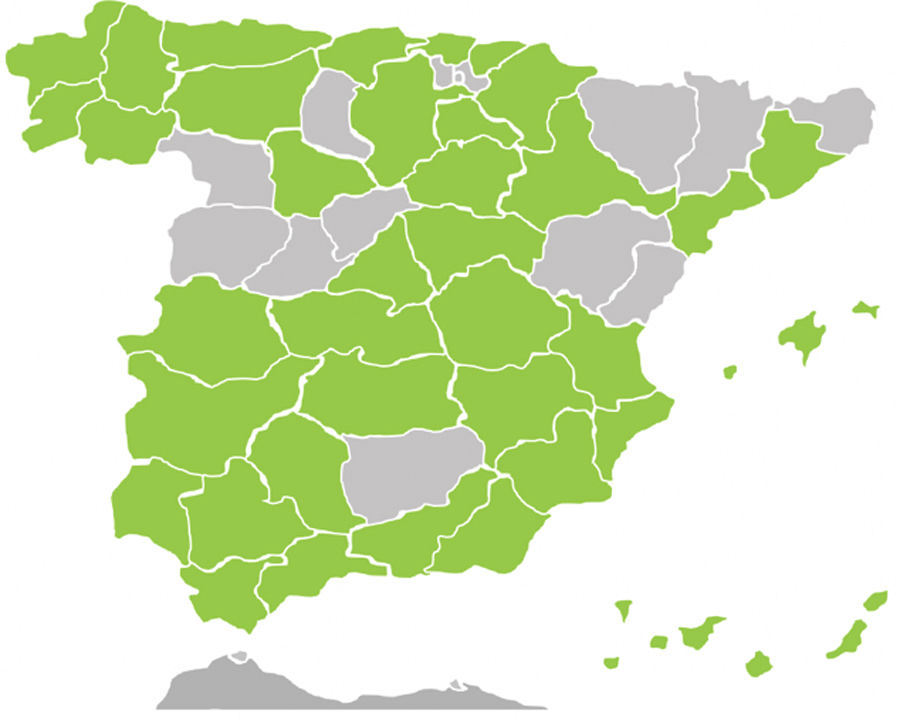
Results159 ophthalmologists from 91 public and 44 private centers in the 17 autonomous communities answered the questionnaire. Fifty-one percent of the ophthalmologists who answered the survey were women, 56.6% worked in public centers, 9.4% in private centers and 34% in both centers. Of the ophthalmologists working in public centers, 41.7% attend ophthalmologic emergencies 24&#¿;h a day, 365 days a year, while the rest delay their attention outside the usual hours. In 62.6% of the public centers with responses collected there are no protocols for the management of OAR in the ophthalmology services and as for multidisciplinary protocols, 57% recognize that they do not have one, 23% have one with neurology or internal medicine and only 13% of the centers include OAR within the stroke code. The most frequently reported treatments are hypotensors and anterior chamber paracentesis. In private centers, 73.7% report not having their own protocol, and 78.9% do not have a protocol with other services.
The main barriers perceived by the ophthalmologists surveyed were: patients arriving outside the window period (77.2%), no specific treatment and lack of established protocols (55.4%), low incidence (32.9%). Suggestions for improvement were: need to implement protocols, coordination with other services and that OAR be included as a stroke code.
ConclusionsDespite its limitations, (simple questionnaire, open design of some questions, lack of representation of centers and provinces and contradictory responses within the same center), we consider that it can serve as an approximation to the current management of RAO in Spain. It is necessary to develop protocols adapted to the different centers and to comply with them effectively in order to improve accessibility and equity.
Conocer el estado actual del manejo de las oclusiones arteriales retinianas (OAR) en España.
Material y MétodosSe realizó un cuestionario anónimo de 22 preguntas en la plataforma Google Forms®, entre el 27 de abril y el 28 de mayo de 2023. Este cuestionario se difundió vía email por las Sociedad Española de Retina y Vítreo y la Sociedad Española de Oftalmología.
ResultadosContestaron 159 oftalmólogos de 91 centros públicos y 44 centros privados, de las 17 comunidades autónomas. El 51% de los oftalmólogos que respondieron la encuesta fueron mujeres. El 56,6% ejerce su trabajo en centros públicos, el 9,4% en centros privados y el 34% combinan ambos centros. De los oftalmólogos que trabajan en centros públicos, el 41,7% atienden urgencias oftalmológicas de manera presencial las 24 horas del día los 365 días de año, mientras el resto demoran su atención fuera del horario habitual. En el 62,6% de los centros públicos con respuestas recogidas no hay protocolos para el manejo de la OAR en los servicios de oftalmología y en cuanto a protocolos multidisciplinares, el 57% reconoce que no tiene, el 23% tiene con neurología o medicina interna y so&#¿;lo un 13% de los centros incluyen las OAR dentro del código ictus. Los tratamientos que se reportan con mayor frecuencia son los hipotensores y la paracentesis de cámara anterior. En los centros privados el 73,7% refieren no tener un protocolo propio, ni tampoco con otros servicios en un 78,9%. En cuanto las principales barreras percibidas por los oftalmólogos encuestados destacan: los pacientes llegan fuera del periodo ventana (77,2%), no existe tratamiento específico y la falta de protocolos establecidos (55,4%), baja incidencia (32,9%). Las sugerencias de mejora fueron: necesidad de implantar protocolos, coordinación con otros servicios y que se incluya la OAR como código ictus.
ConclusionesPese a sus limitaciones, (cuestionario simple, diseño abierto de algunas preguntas, falta de representación de centros y provincias y respuestas contradictorias dentro de un mismo centro), consideramos que puede servir como aproximación al manejo actual de las OAR en España. Es necesario desarrollar protocolos adaptados a los diferentes centros y cumplirlos de forma efectiva para mejorar accesibilidad y equidad.

